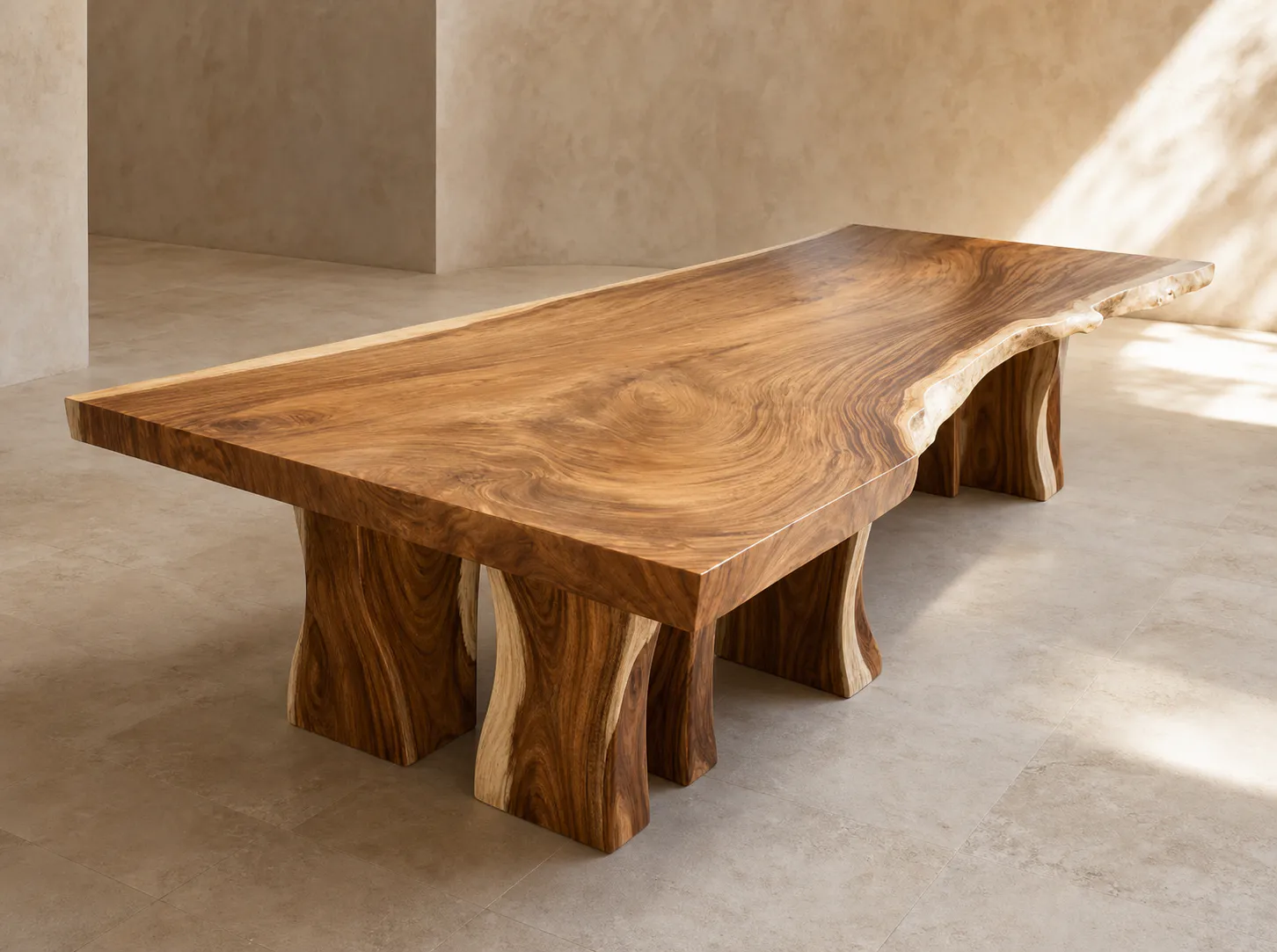
The short answer
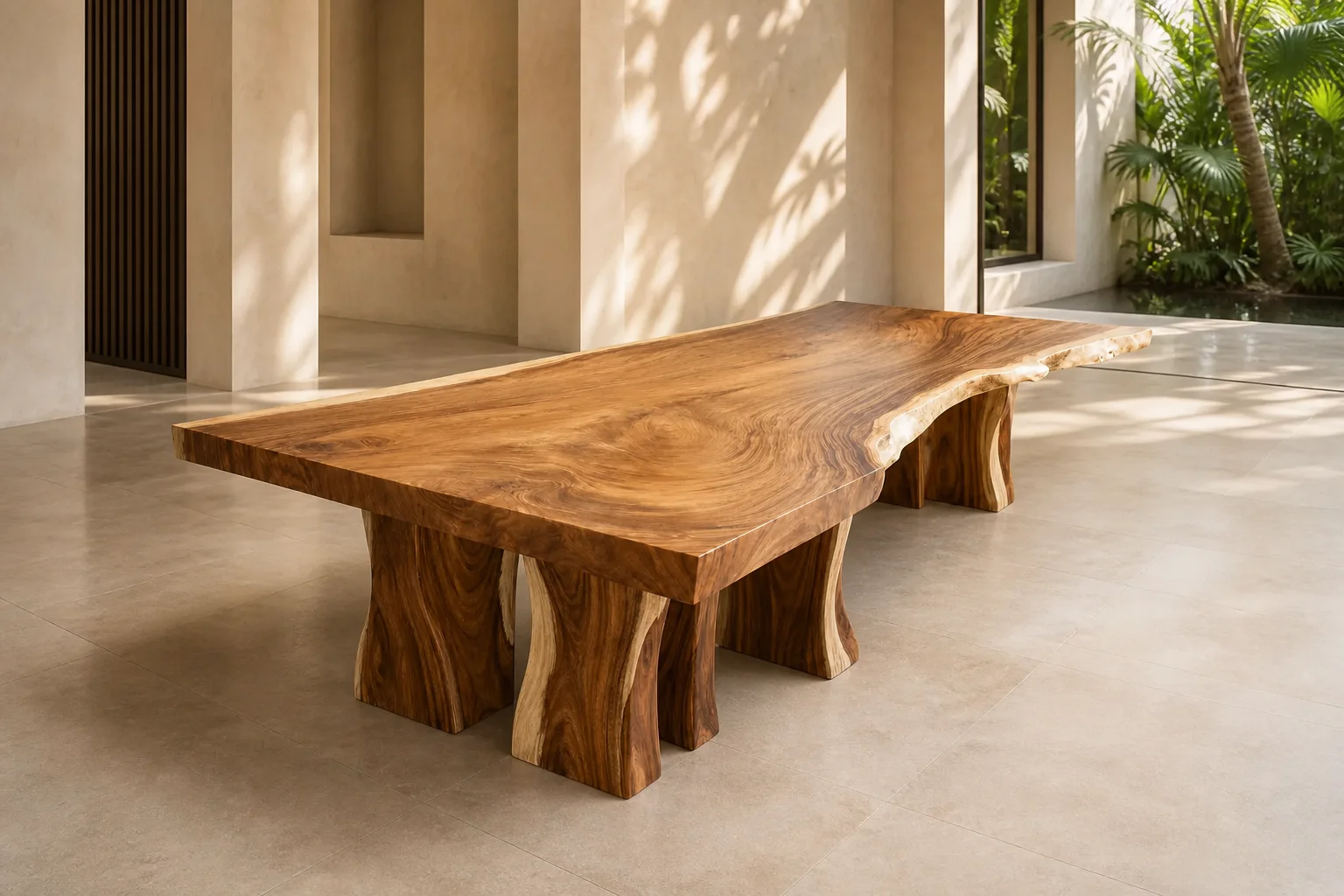
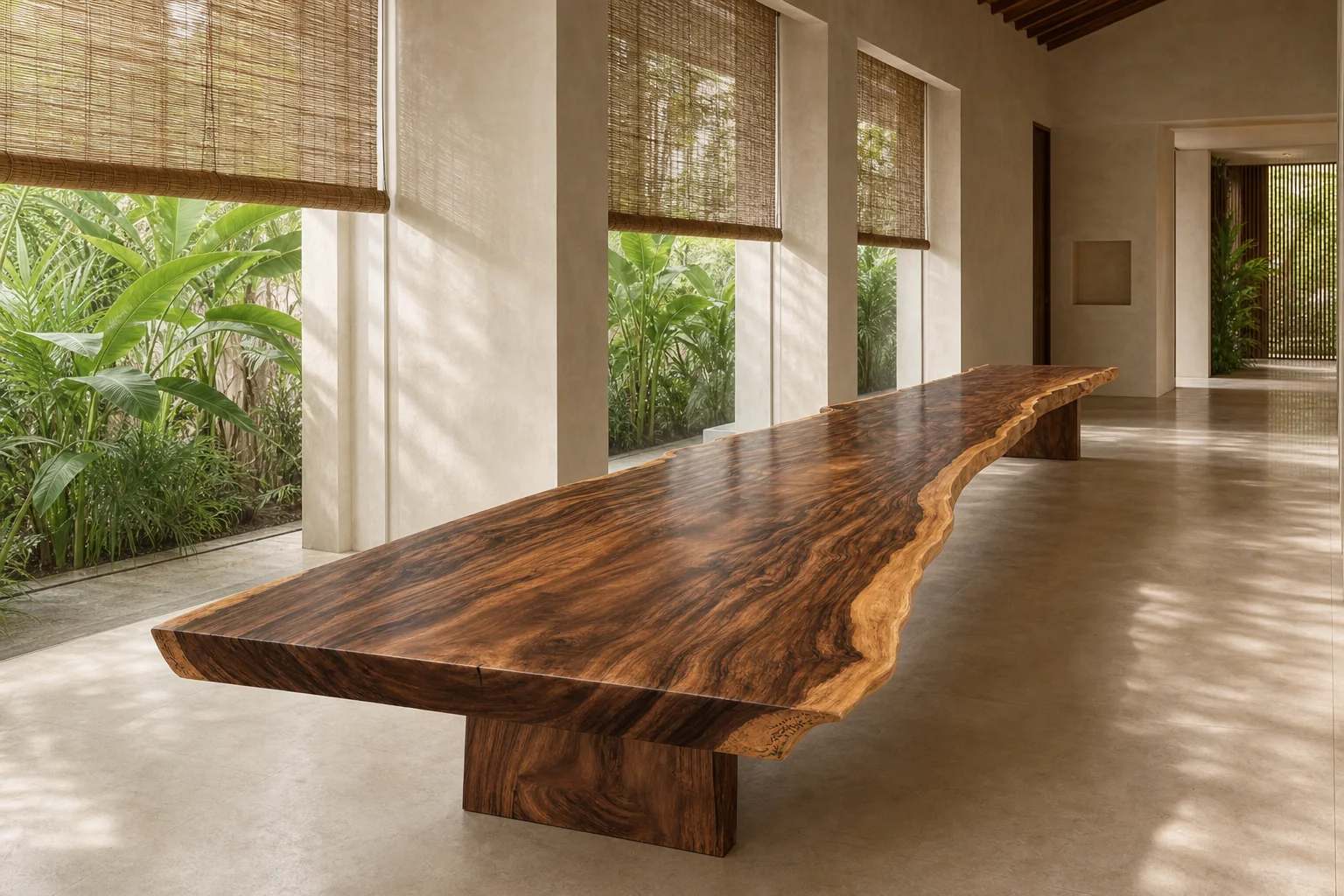
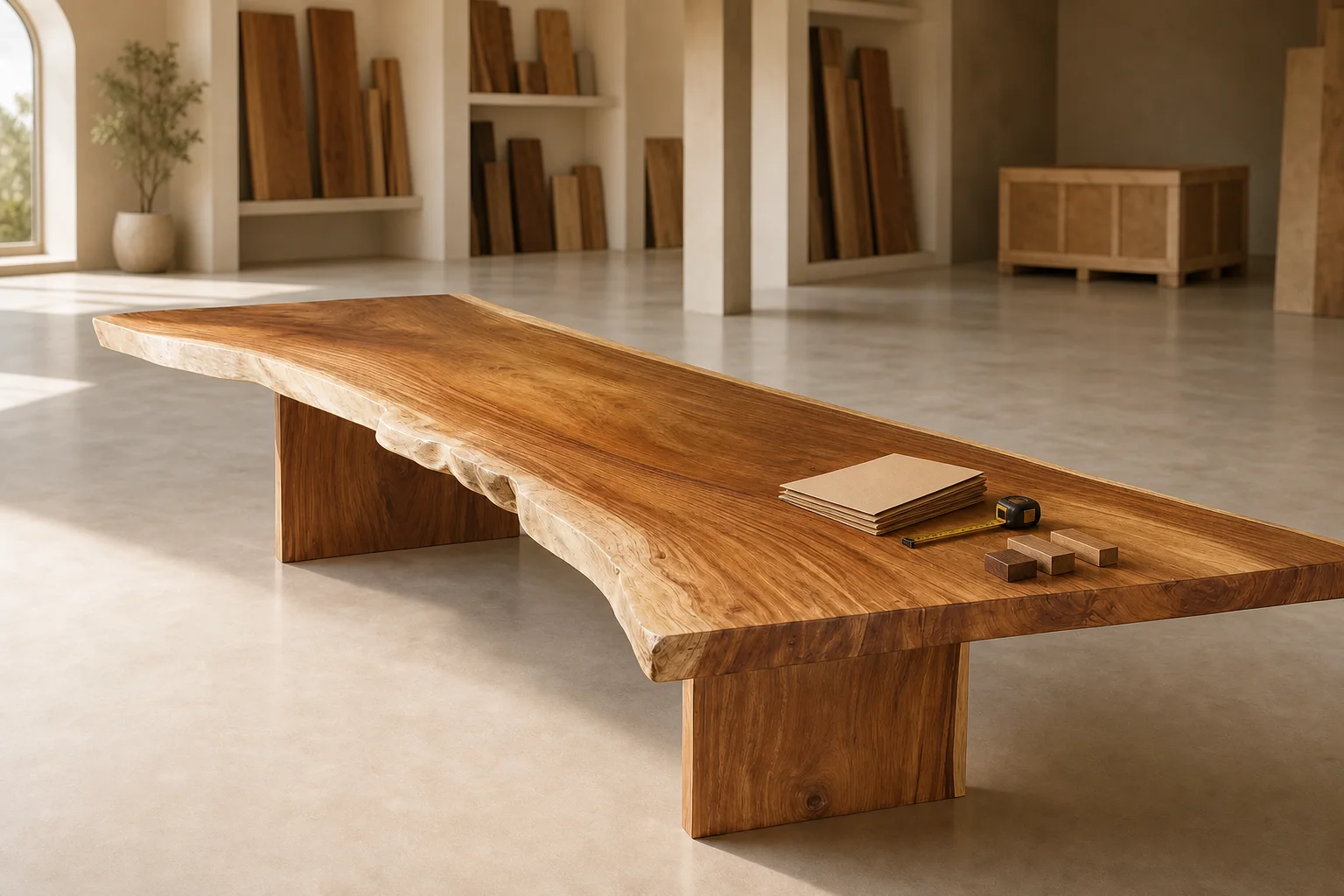
Teak is the most trouble-free dining hardwood for most households: naturally oily and stable, it resists moisture, rot and insects, needs less finish than oak or walnut, and ages well with simple care. Oak is harder and cheaper but more reactive to humidity; walnut is beautiful and softer; acacia is affordable but less consistent. Choose teak when durability and low maintenance matter most, and confirm the piece is solid teak before ordering.
1. Why teak behaves the way it does
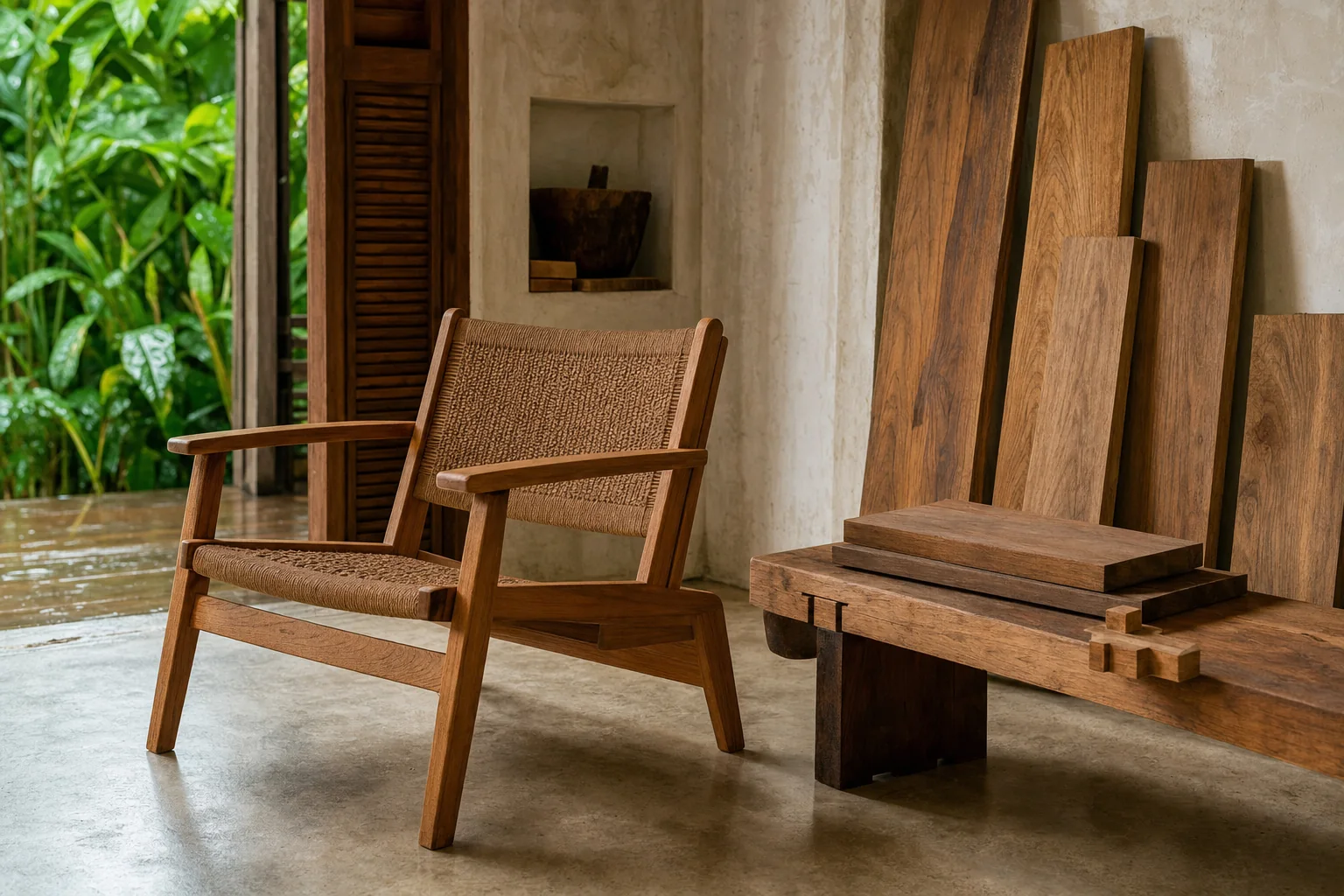
Teak contains natural oils that do most of the protective work. The oils make the wood water-resistant, slow to rot and unappealing to insects, which is why teak has a long history in boat decks and outdoor furniture as well as dining rooms.
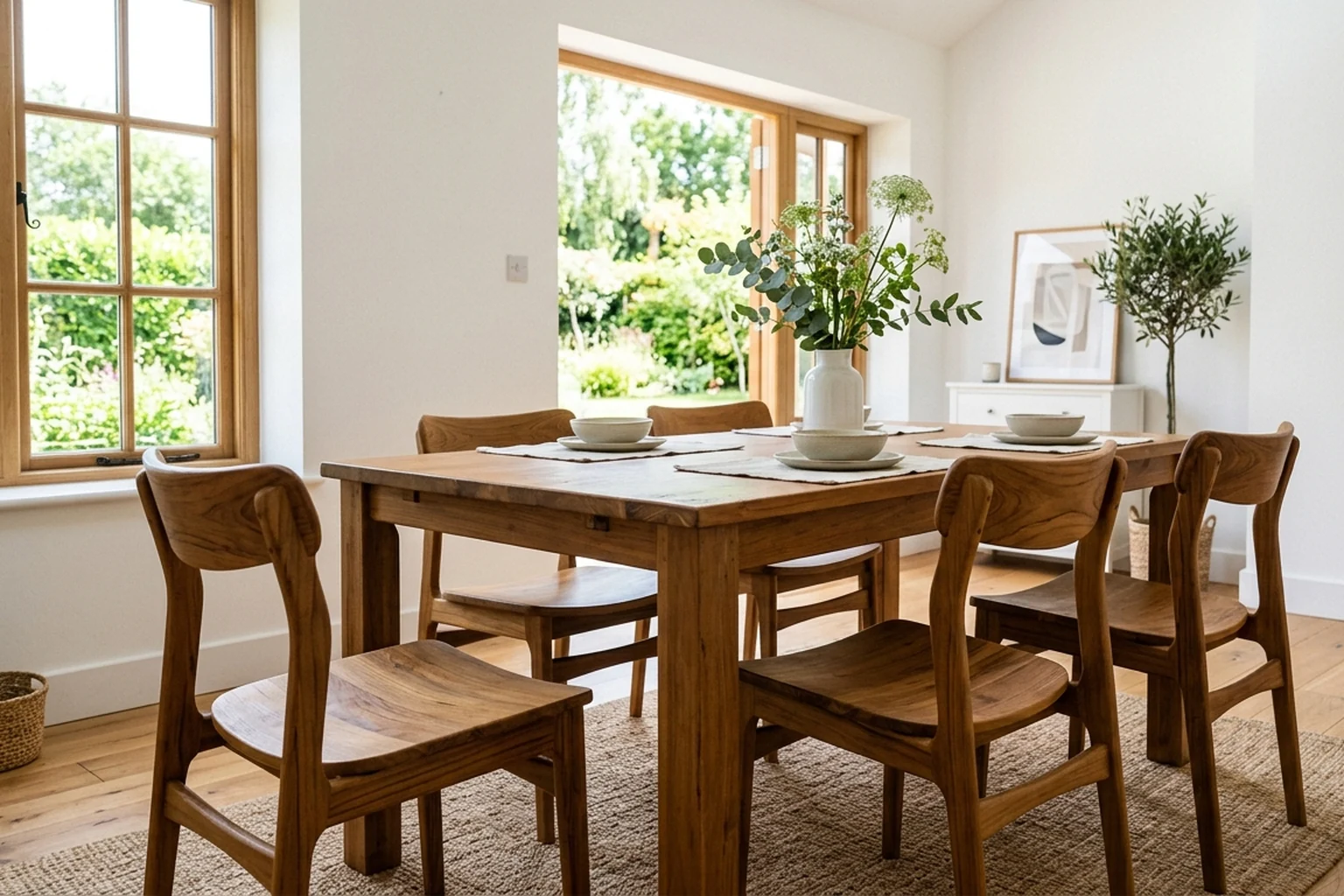
The same character is why teak dining tables tolerate everyday life. Spills, humidity changes and light use do not punish the surface the way they do on more open-pored woods. That is the core of the teak advantage: the wood protects itself.
2. Teak versus oak
Oak is harder and denser than teak, so it resists dents well, and its pronounced grain is a design feature for many buyers. But oak is more reactive: it moves noticeably with humidity, and its open grain needs a robust finish to stay clean.
For a dining table, teak tends to be the lower-maintenance choice, while oak can be the choice when a very hard, heavily grained surface and a lighter colour are the priority. Both are excellent solid woods; the question is how much maintenance you want.
3. Teak versus walnut
Walnut is prized for its rich chocolate-brown colour and silky feel, and it makes beautiful furniture. It is, however, softer than teak and oak, so dining use means more visible dents and scratches over time.
Teak offers more durability for a dining surface, with a warm golden-brown tone that deepens with age. If colour is the deciding factor and the table is used gently, walnut is a strong choice; if daily use and low maintenance lead, teak wins.
4. Teak versus acacia and other budget hardwoods
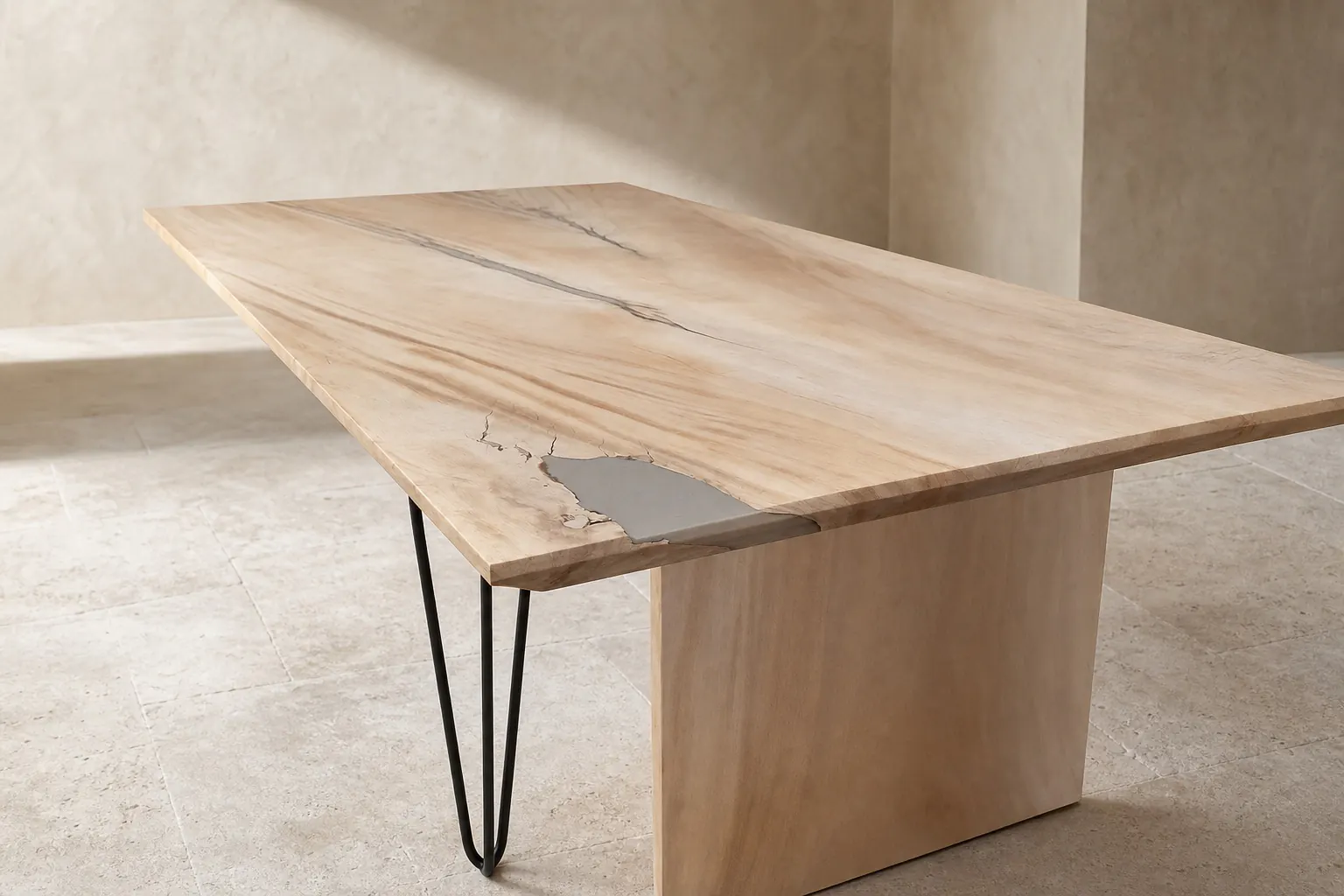
Acacia and other plantation hardwoods offer an affordable solid-wood option, and some pieces are attractive. The trade-offs are consistency and durability: grain and colour vary more, and the wood generally needs more finish and care to hold up in dining use.
Teak costs more, and the price buys behaviour: stability, natural oil, long service life and lower maintenance. For a piece that will be used every day for years, the difference in total cost of ownership usually favours teak.
5. Solid teak, confirmed
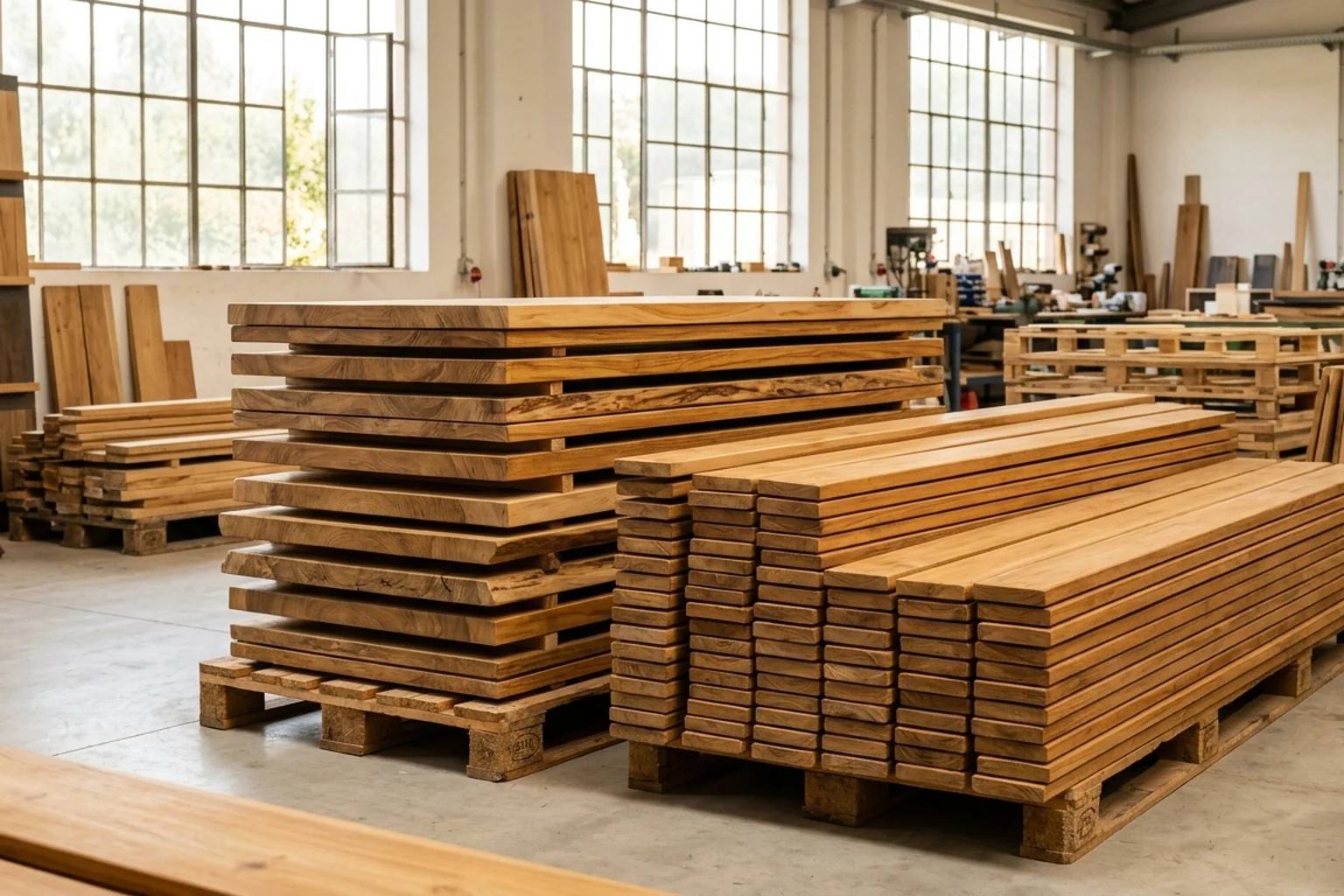
The advantages above assume solid teak, not teak veneer. Check the underside and end grain, and ask the seller to confirm in writing that the top is solid teak and how the legs and rails are constructed. Species, source records and legality documentation should be available for the exact piece or lot.
A genuinely solid teak table can be refinished and repaired for decades, which is exactly what you want from a piece of dining furniture bought to last.
- Top is solid teak (check underside and end grain)
- Natural oils and stability matter more than hardness
- Maintenance level matches your household
- Species and source records confirmed in writing
- Finish chosen for daily dining use
Choose the wood for the life it will live
Teak is rarely the cheapest option and often the wisest one for a dining table, because it combines stability, natural durability and simple care. Compare it honestly with oak, walnut and acacia on your own priorities, then confirm the piece is solid teak before you commit.