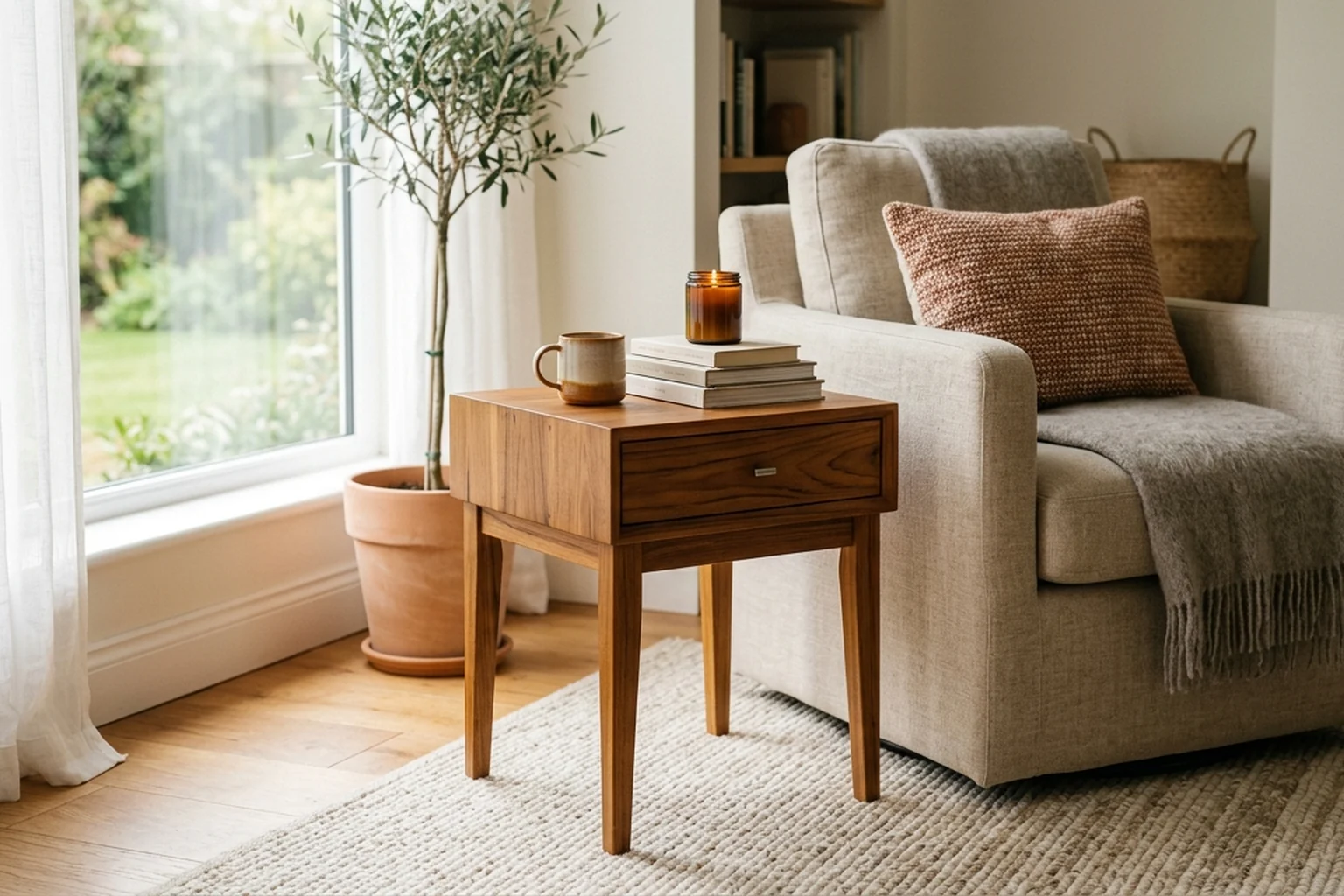
The short answer
Start with the job: what will rest on the table and how high should it sit beside the furniture it serves. Confirm solid teak construction and honest joinery, choose a size and finish that fit the room, and decide whether you need storage. For made-to-order or export work, agree dimensions, finish and delivery in writing.
1. Define the job before the table
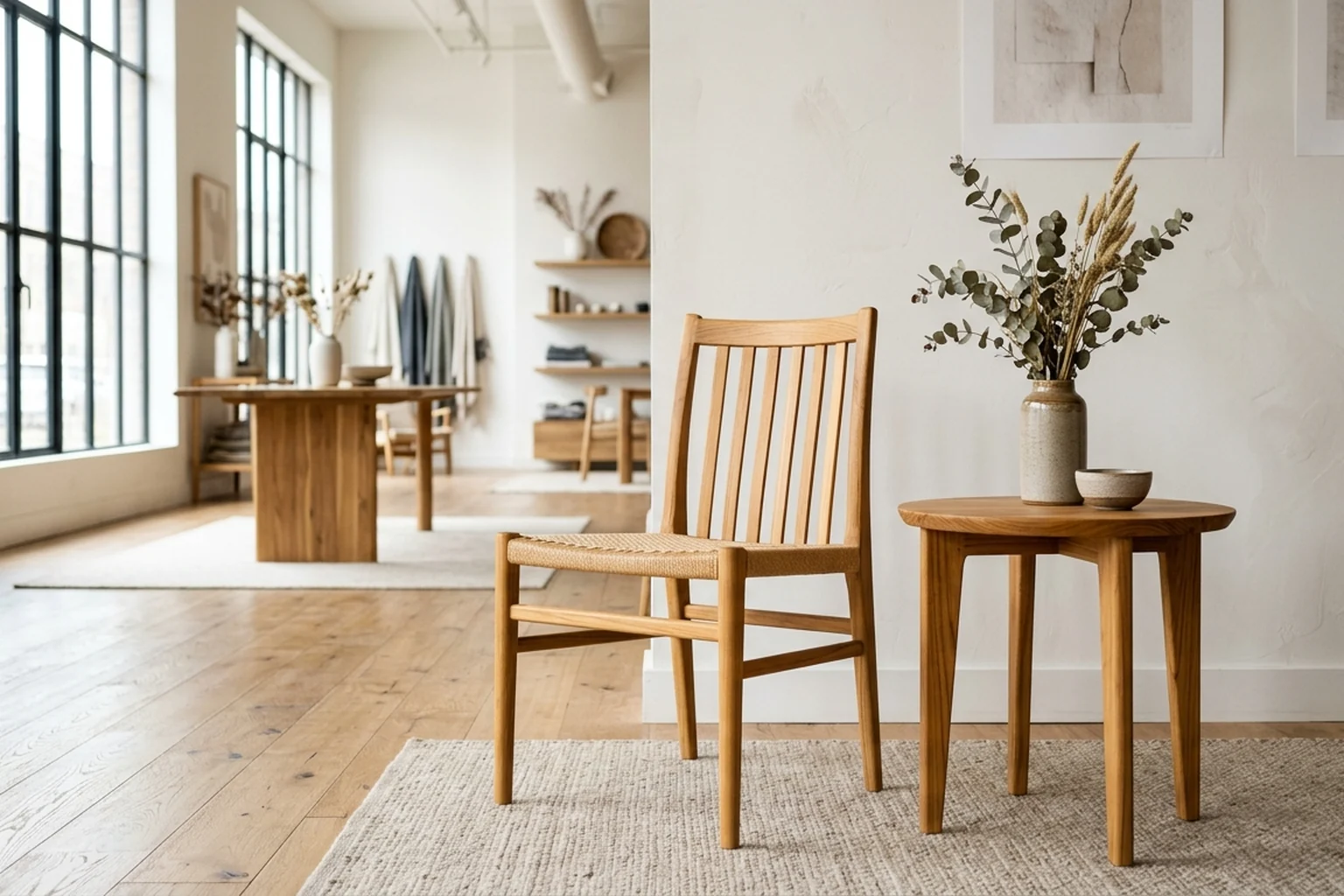
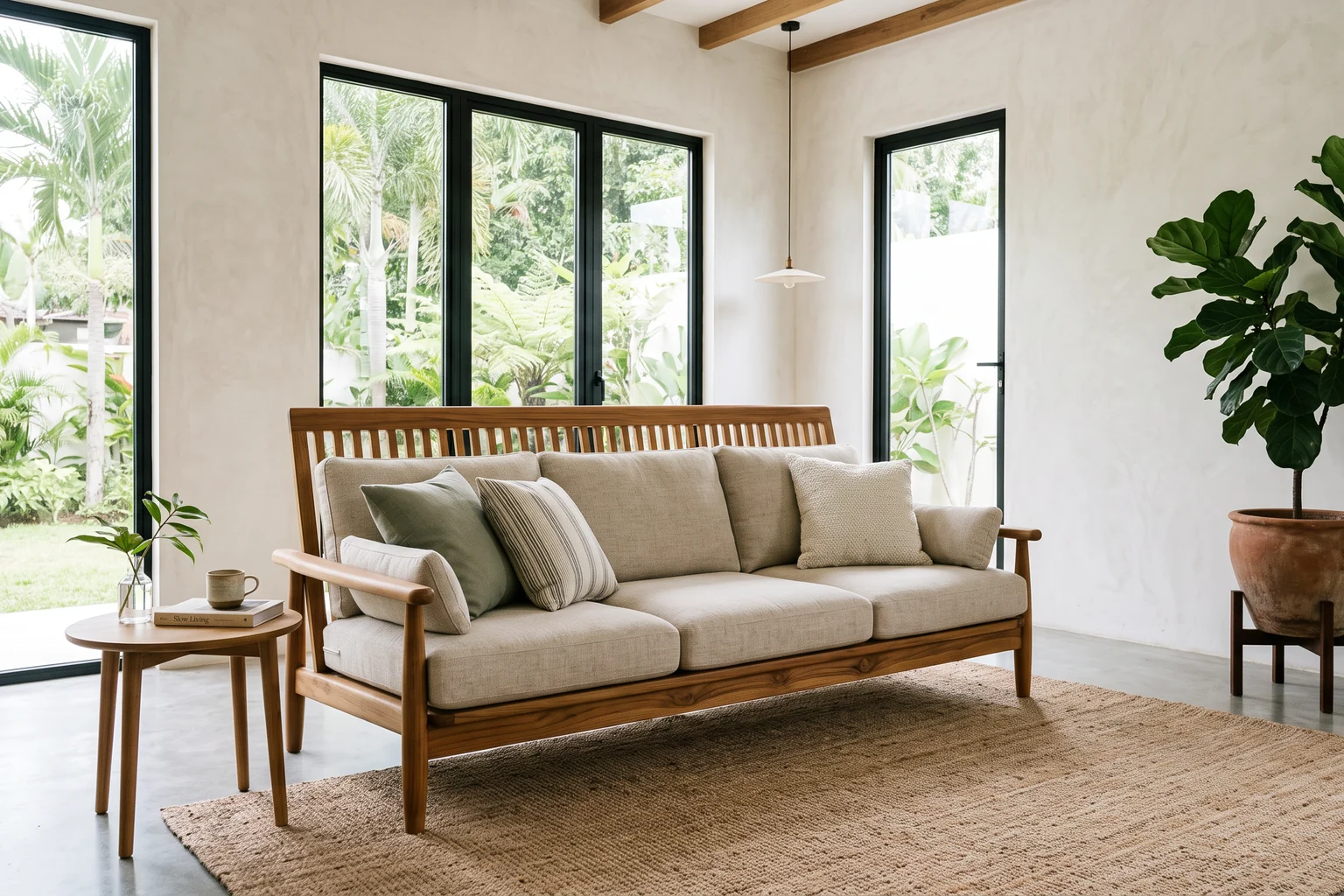
Side tables look similar but serve different jobs: a sofa side table holds a drink and a book at arm height, a bedside table needs a lamp and a charging point within reach of a lying person, and an accent table may carry nothing but a plant and a sculpture. Each job sets a different ideal height, surface size and need for storage.
Measure the furniture the table will serve. A sofa arm typically sits around 55 to 65 centimetres from the floor, so a table a little below or level with the arm is most comfortable to reach. A bedside table is usually close to mattress height. Photographs of the spot help a maker understand proportions as much as dimensions do.
- Primary job: sofa side, bedside or accent
- What will rest on it daily
- Height of the sofa arm or bed it serves
- Storage needed: shelf, drawer or none
2. Solid teak and honest construction
Teak is prized for its natural oils, stability and longevity, but those qualities only come from solid teak, not veneer over a cheaper core. Ask the seller to confirm in writing that the top, frame and any drawer are solid teak, and check the underside, where materials and workmanship are easiest to assess.
Because a side table is small, construction details matter more than they appear. Look for proper joinery at the legs and rails, a top that is attached so it can move slightly with humidity, and drawer construction that will not rack with use. A well-made teak side table can be refinished and kept for generations.
- Solid teak confirmed in writing
- Underside checked for materials and workmanship
- Leg and rail joinery inspected
- Drawer or shelf construction understood
3. Size for the space and the proportions
A side table that is too tall or too wide can disrupt a whole seating arrangement. Measure the space beside the sofa, armchair or bed, and allow room for the table plus the space people need to move past it. Consider the tabletop area honestly: a bedside table with a lamp and a book needs a larger surface than a purely decorative accent table.
Proportion also matters visually. A large table beside a slim armchair can overwhelm it, while a tiny table beside a deep sofa can look incidental. If the room has several seating pieces, decide whether the tables should match each other or respond individually to what they serve.
- Available floor space measured
- Tabletop area for the daily load
- Height aligned to sofa arm or mattress
- Visual proportion against the seating piece
4. Storage: shelf, drawer or open
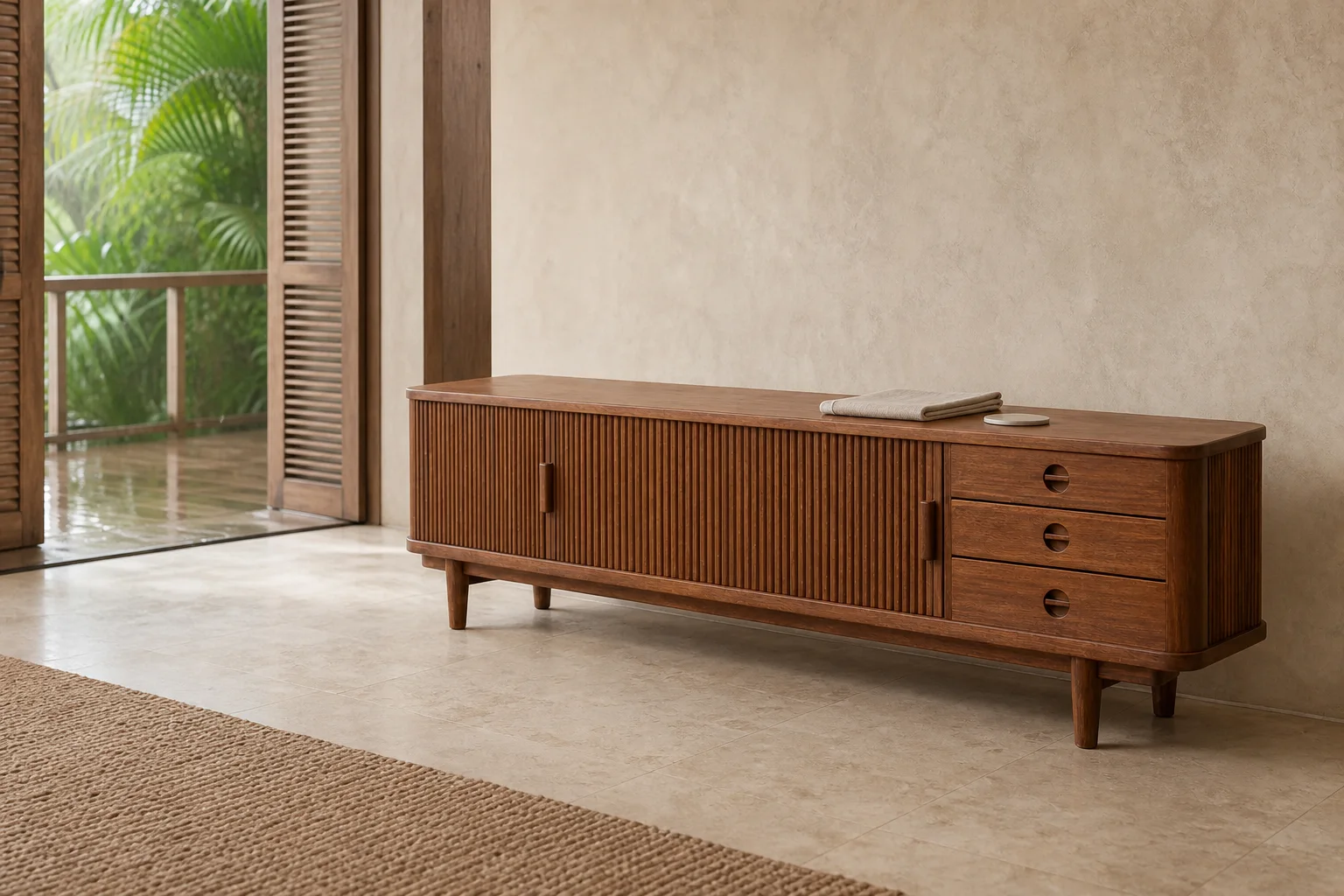
Storage turns a side table from a surface into a small workhorse. A drawer keeps remotes, glasses and chargers out of sight; a shelf displays books or baskets; an open table keeps the room feeling light. Decide what needs to be hidden and what can be shown before choosing.
If a drawer is important, ask how it is constructed and whether it runs smoothly on proper runners or guides. Drawer fronts and pulls can also be made to match other furniture in the room, which is where custom work adds real value beyond a standard piece.
- What to hide vs what to display
- Drawer, shelf or open construction
- Drawer mechanism quality
- Match to existing furniture where useful
5. Finish and placement
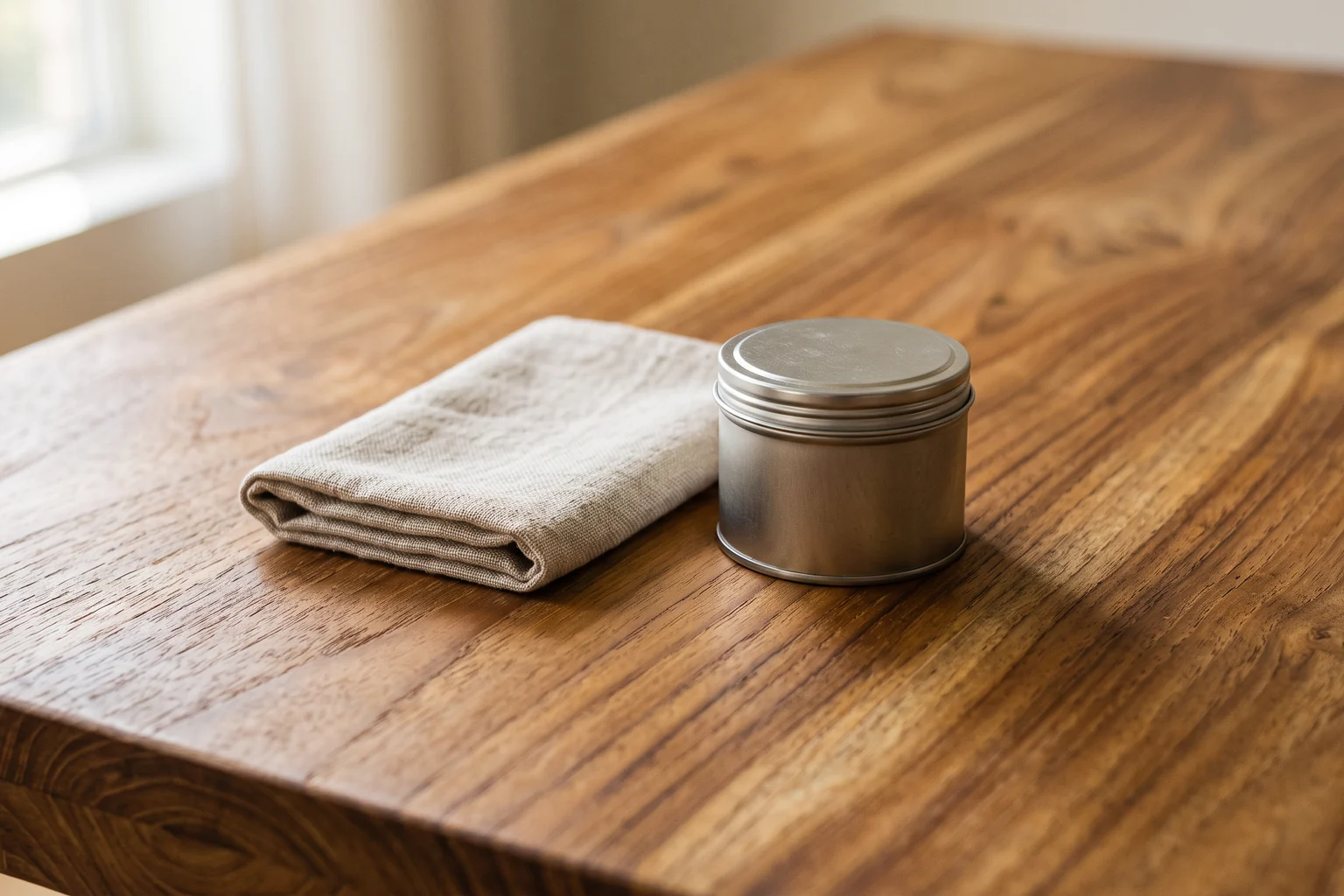
A side table finish should suit its position and the surface it protects. A hardwax or lacquer finish resists the water rings and marks of everyday drinks, while a natural oil finish emphasises the grain and ages warmly but needs more attention. Near a window, expect some colour change over time no matter the finish.
Teak takes well to a range of looks, from pale natural tones to deeper browns, so ask for a sample on similar wood when possible. For outdoor terraces, an exterior finish or the natural silvering of weathered teak are both legitimate choices; confirm which look you want before buying.
- Finish chosen for the position
- Sample seen on similar wood
- Window or outdoor exposure considered
- Care and refresh routine understood
6. Made-to-order and export from Thailand
Side tables are a natural fit for custom work: a height that exactly matches a low sofa, a corner-sized top, or a pair that balances the two ends of a room. M Furniture & Decor has made custom furniture for more than five decades from its showroom on Phet Kasem Road in Cha-am, with a second viewing location in Bangkok.
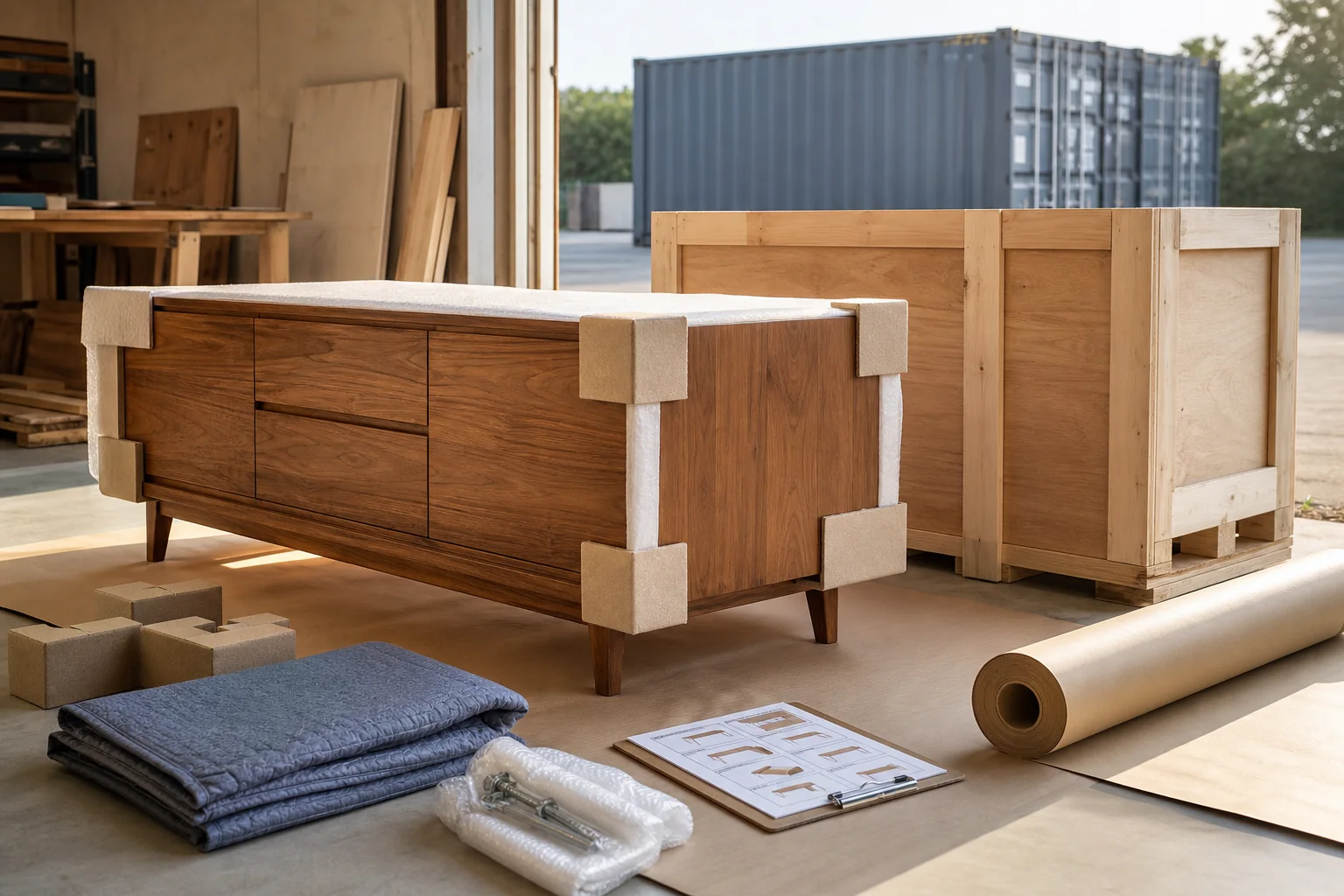
The workshop also ships internationally, including single pieces, project orders and container orders, with packing, freight, customs and insurance coordination. For export orders, pricing can be quoted on FOB or CIF terms depending on destination and order size, and species and source records are confirmed for the exact piece or lot. For a quotation, share the piece or brief, dimensions, quantity, destination and timeline; the fastest direct channel is WhatsApp at +66 614 456 154.
- Standard piece or custom brief
- Dimensions, finish and quantity agreed
- Destination and incoterms (FOB or CIF)
- Lead time confirmed with the order
Choose the table for the life around it
Teak side tables reward a simple brief: decide what the table must do, confirm solid teak and honest construction, size it to the space and the piece it serves, and choose a finish that suits the position. Whether it holds a lamp, a book or nothing but a vase, a well-chosen teak side table makes the corner it lives in feel finished.