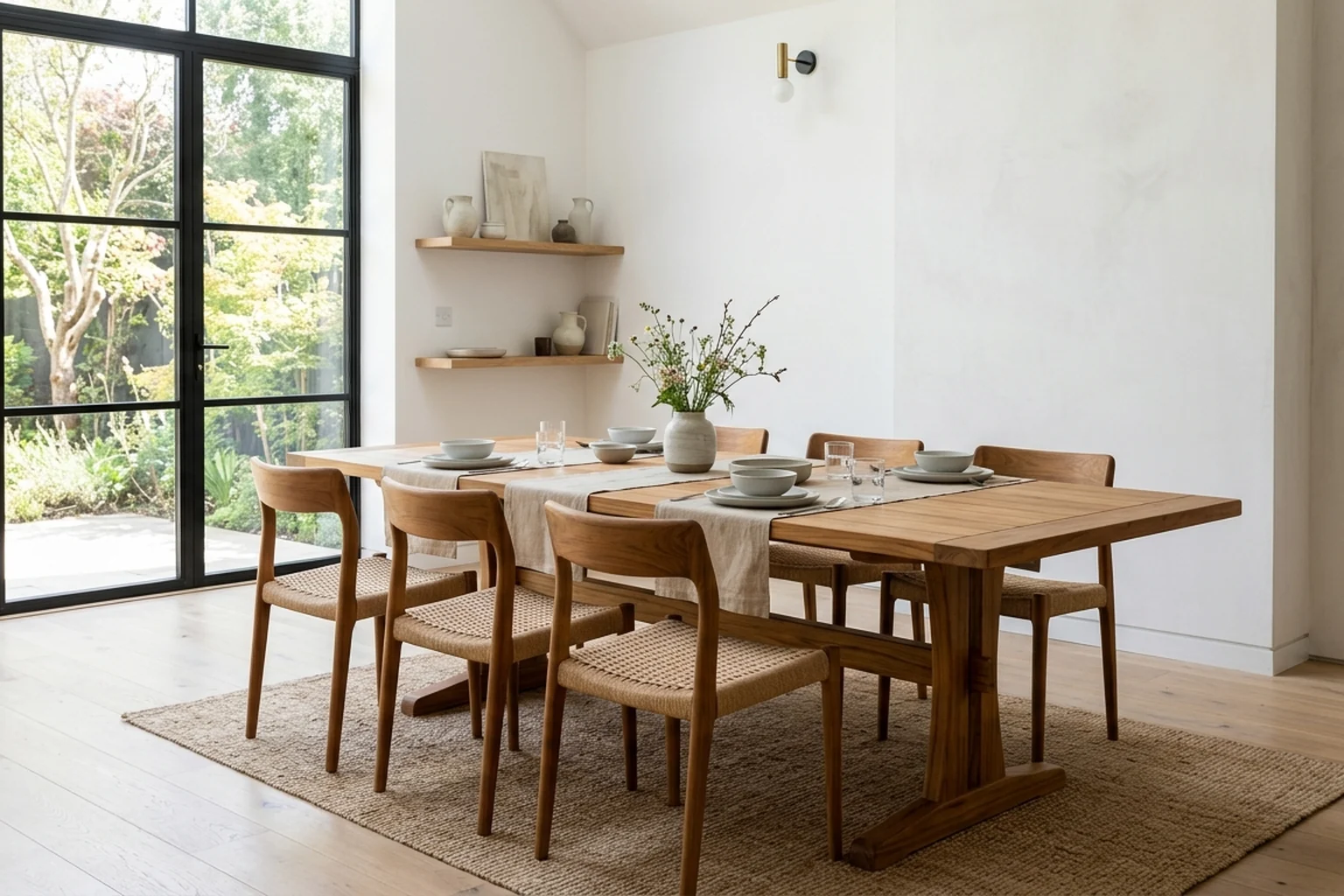
The short answer
Measure the room and decide the everyday seat count before looking at tables. Prefer solid teak construction you can verify, choose a top style and base that suit the room, plan the seating around the table so chairs and benches pull out comfortably, pick a finish that matches how the table is used, and for made-to-order or export work confirm dimensions, wood, finish and terms in writing before production.
1. Measure the room and count the everyday seats
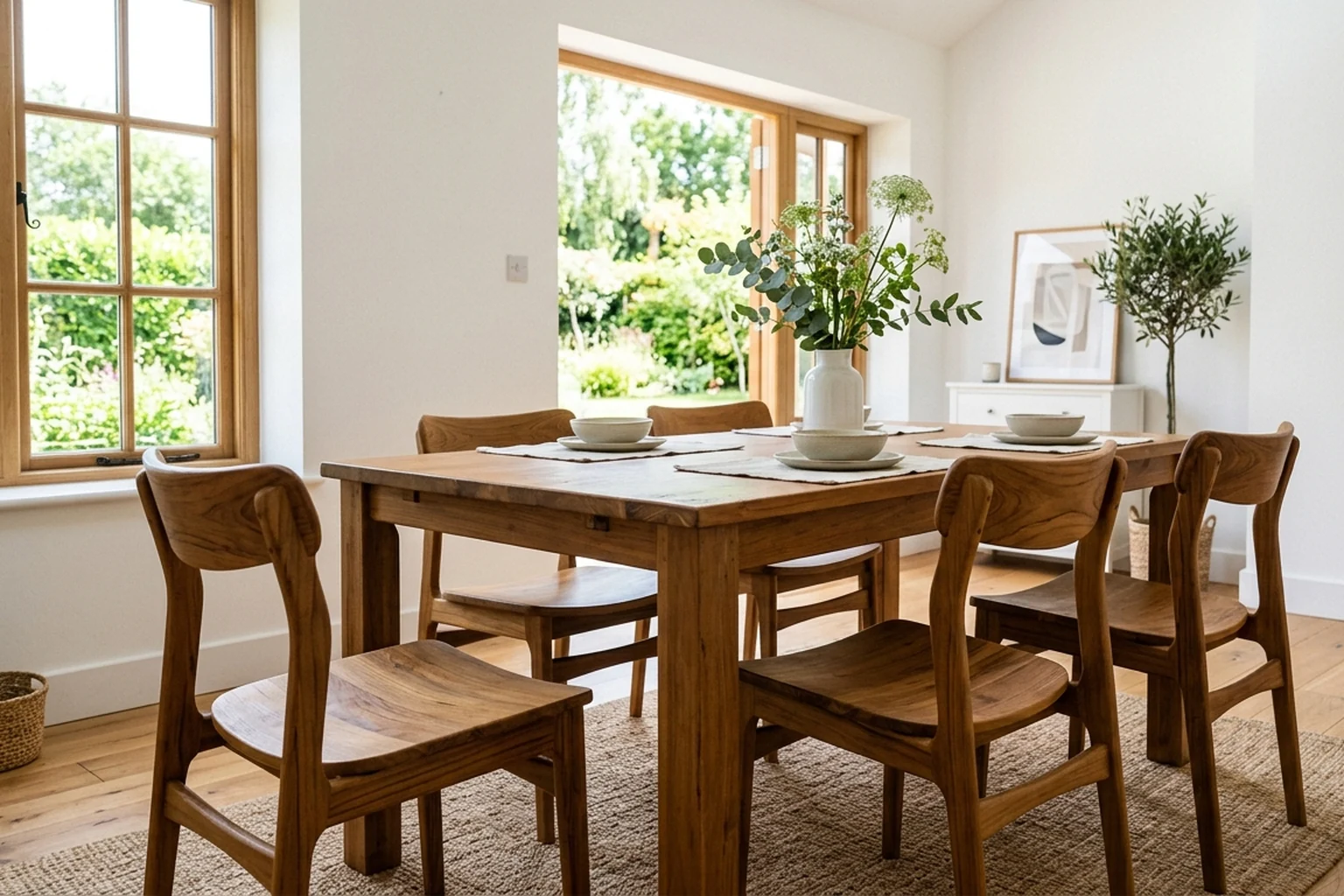
A dining table is chosen in the room it will live in, not from a photograph. Measure the length and width, mark doors, windows and sideboards, and leave roughly 90 centimetres between the table edge and a wall or fixed cabinet so chairs can pull out and people can pass. Count the people who eat at the table most days; occasional guests can be managed at the ends, but an oversized everyday table makes the room feel smaller and conversation harder.
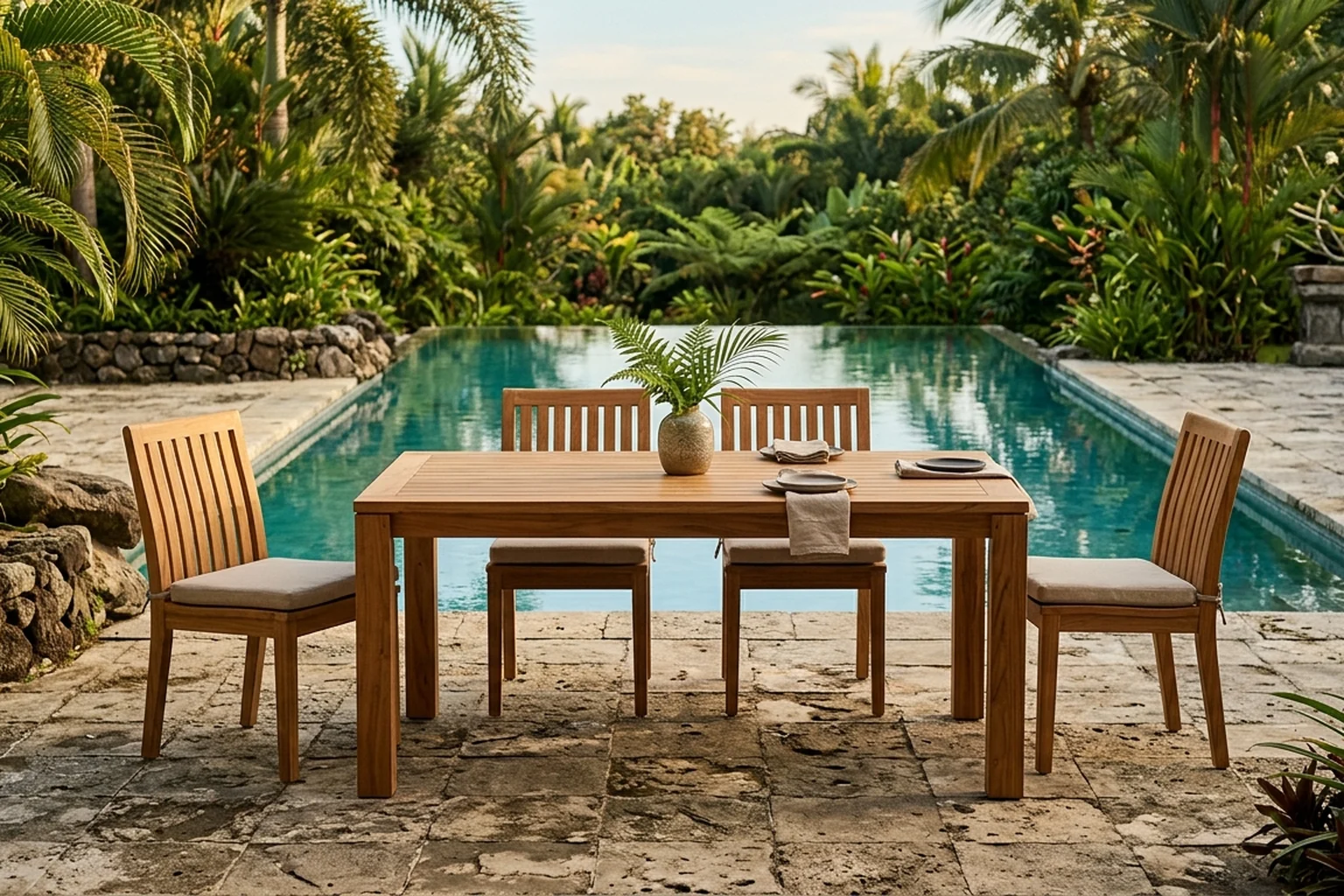
As a practical reference, a table about 150 to 180 centimetres long seats four comfortably, 180 to 220 centimetres seats six, and longer tables add pairs of seats as the room allows. Round tables save floor space in square rooms and make conversation easier, while rectangular tables suit longer rooms and simplify serving. Width matters too: about 90 to 100 centimetres leaves room for plates, glasses and a centre dish without crowding.
- Room length, width, doors and sideboards marked
- Roughly 90 cm clearance for chairs and walking
- Everyday seat count decided
- Table shape matched to the room
2. The material questions behind a solid teak top
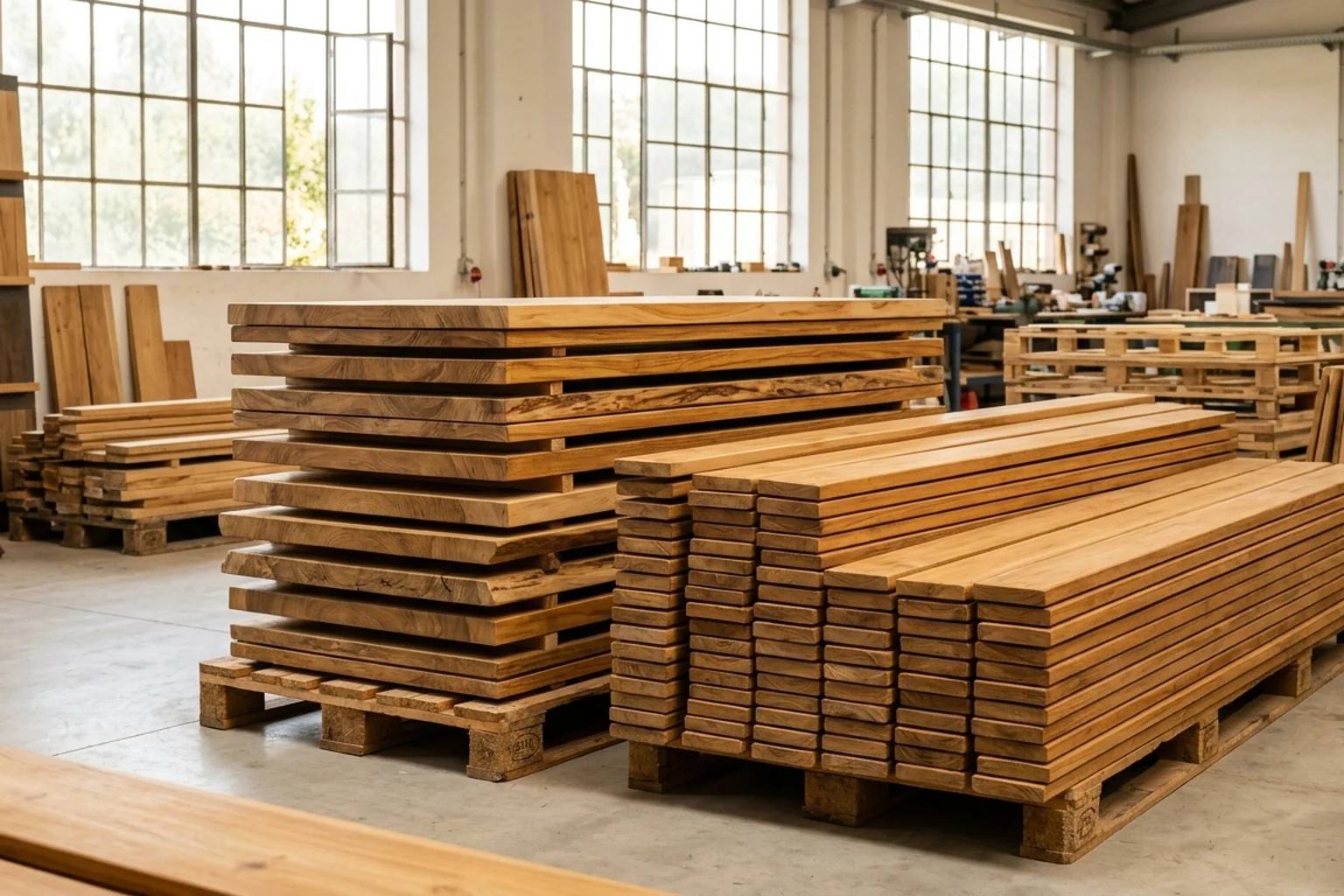
Solid teak and teak veneer can look identical in a photograph and differ completely over decades of use. A solid top is real teak through its full thickness, so it can be sanded, repaired and refinished; a veneered top carries a thin layer of teak over another core, and once wear or moisture reaches that core the repair options are limited. On a table that sees daily meals, the distinction is not cosmetic.
Within solid teak, ask how the top is made. Wide tops are usually several planks edge-glued together, and the best ones are cut from well-seasoned timber so the boards stay flat as humidity changes. Ask about seasoning, how the planks are joined and whether the maker keeps species and source records for the wood; a serious maker answers these questions directly and confirms them in writing.
- Solid teak, not veneer, confirmed in writing
- Plank widths and edge joints inspected
- Well-seasoned timber and stable construction
- Species and source records available
3. Top styles, edges and bases
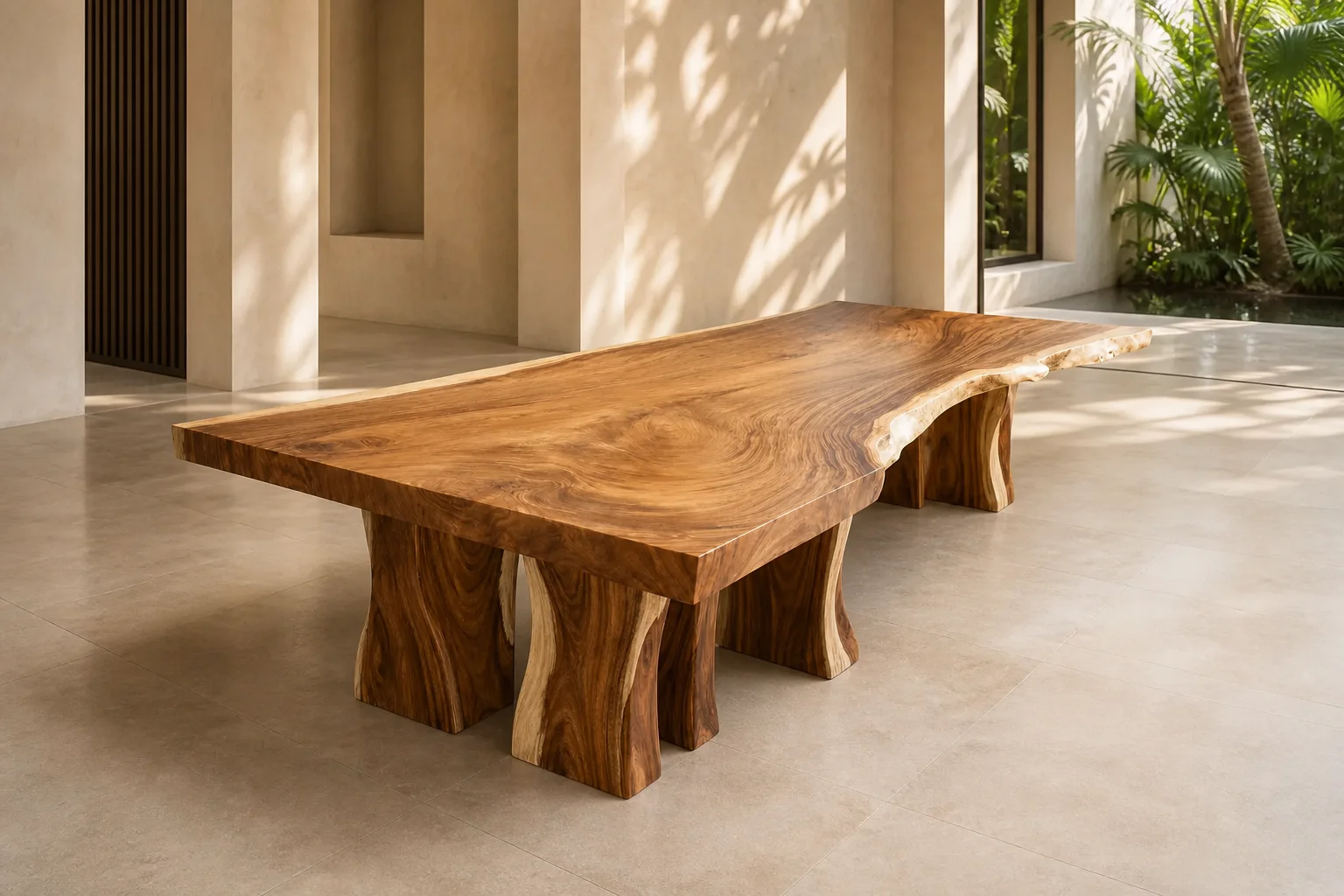
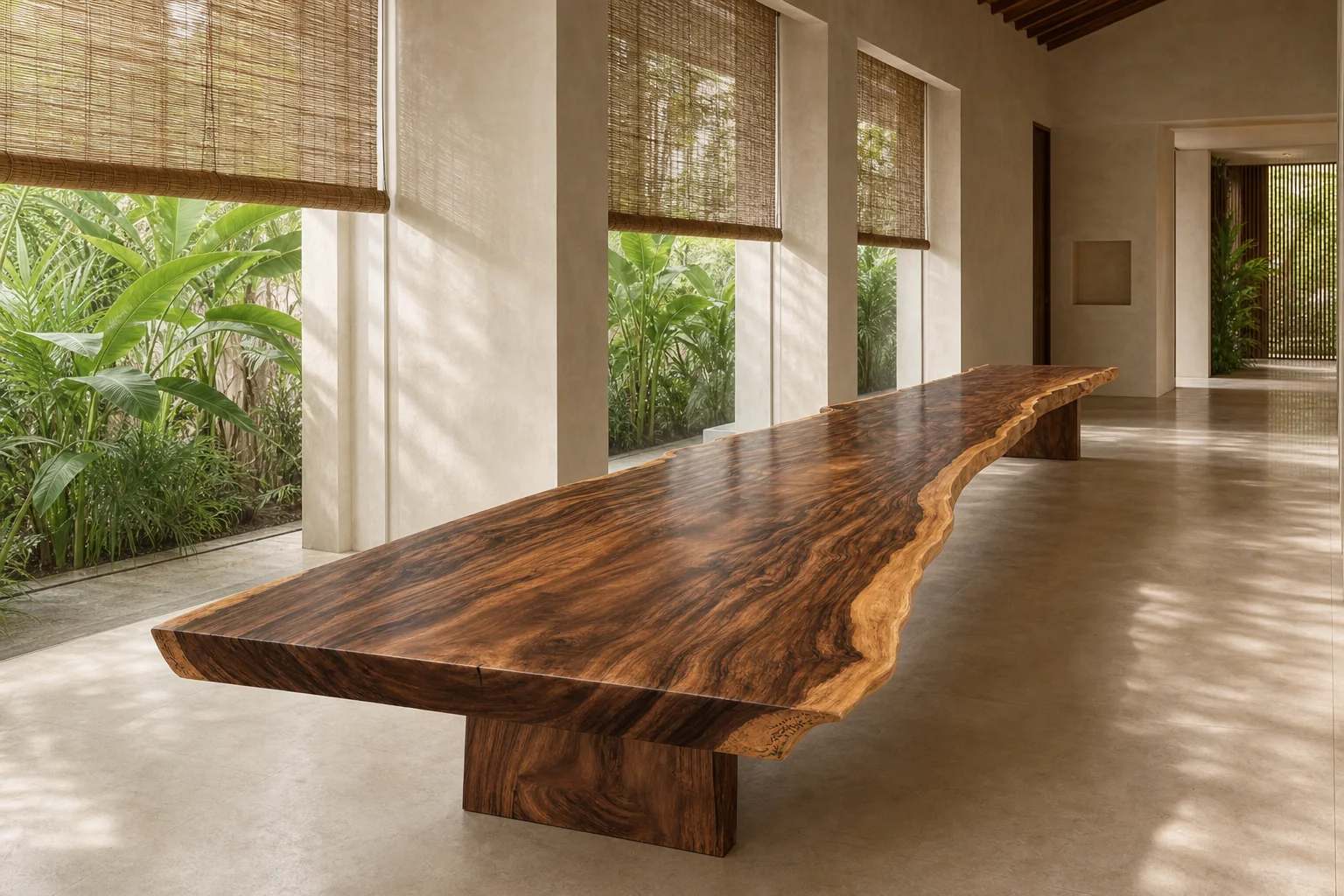
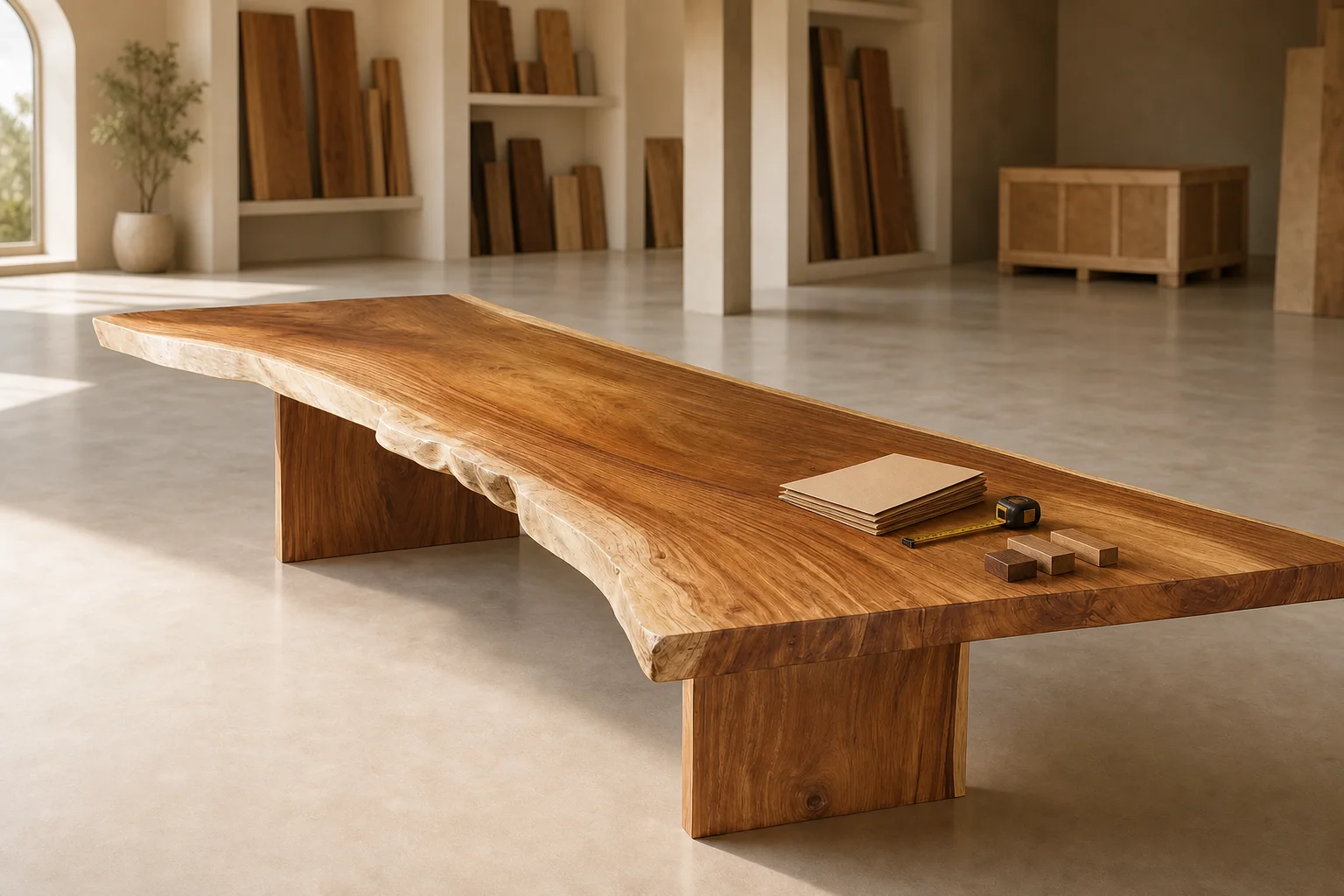
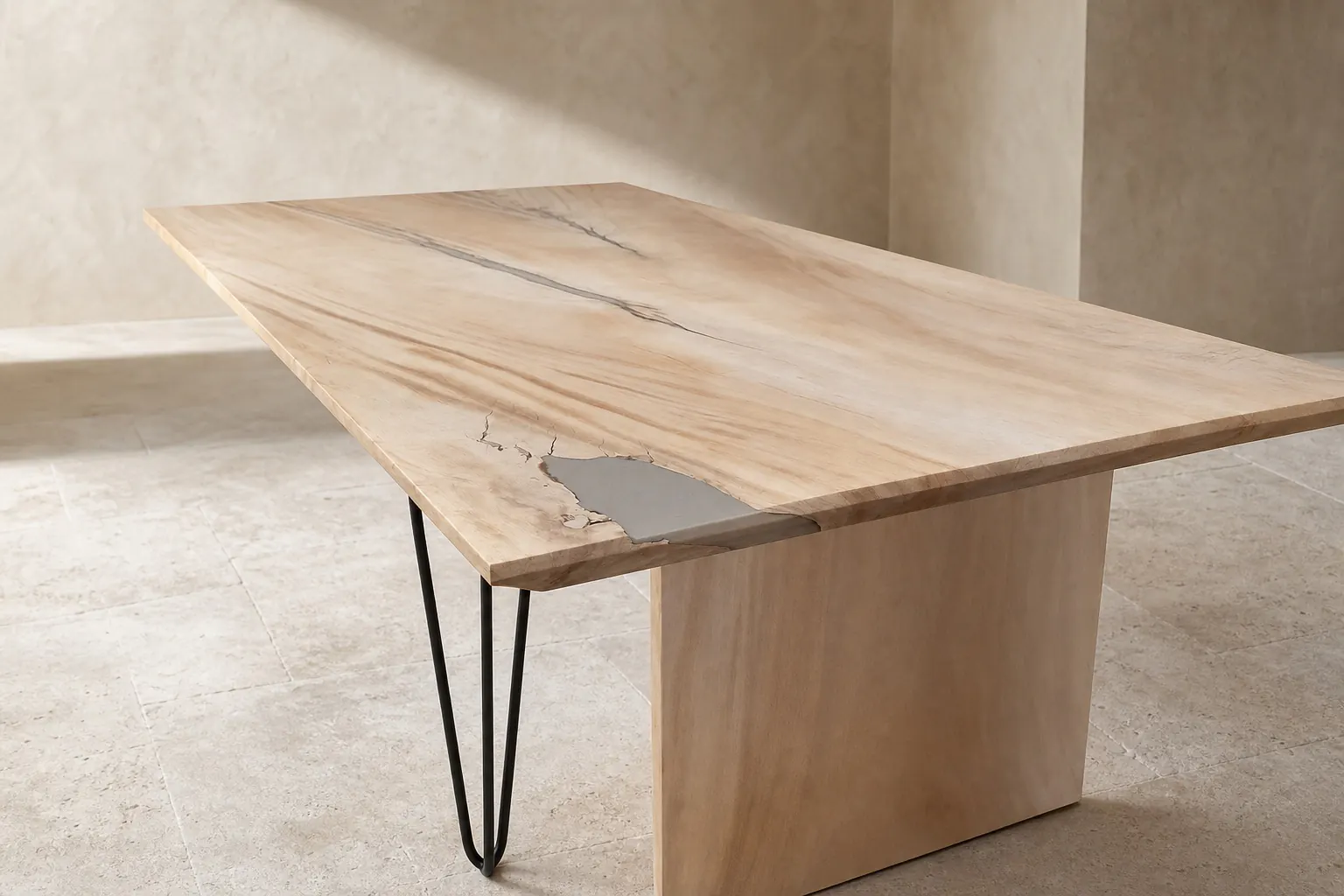
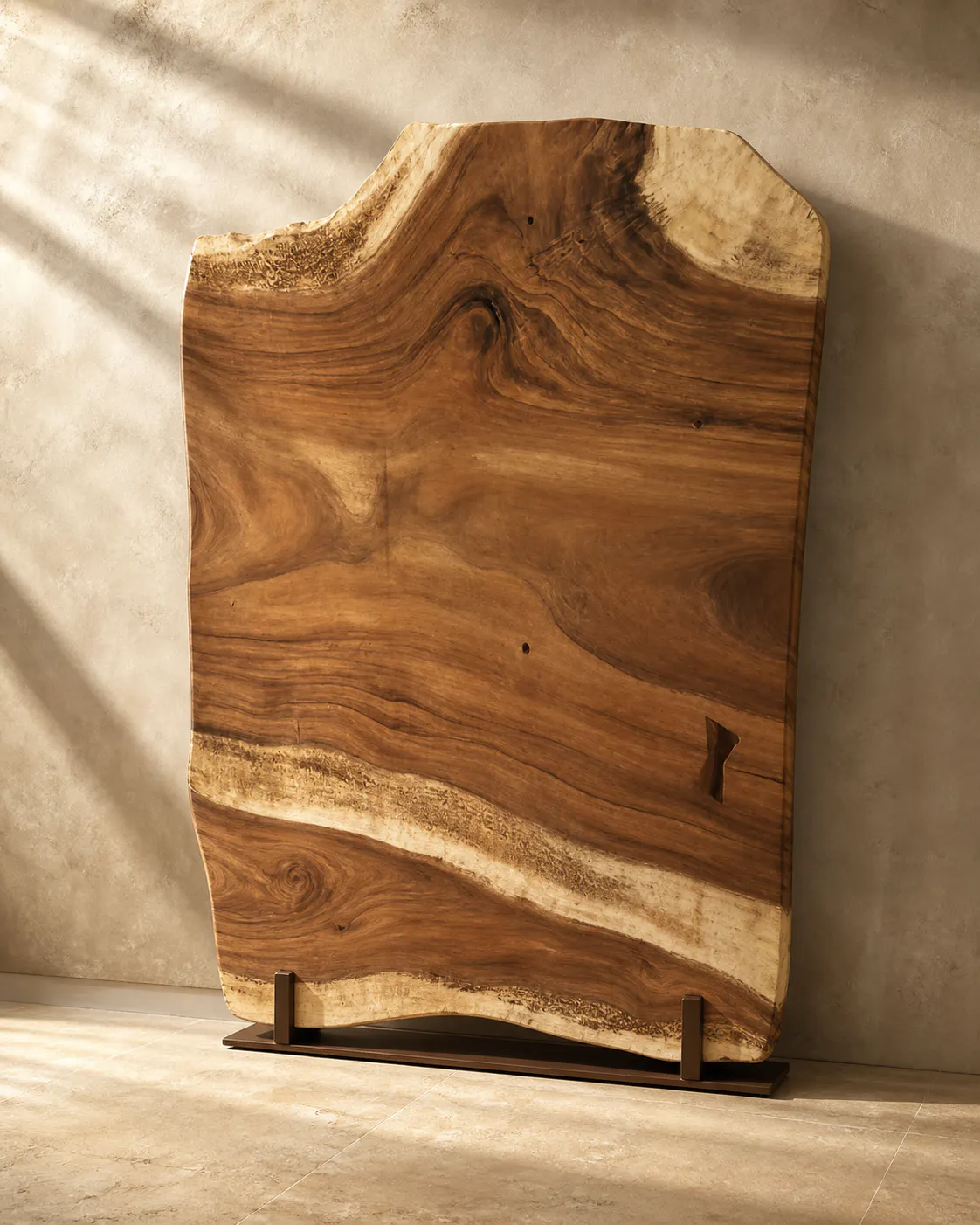
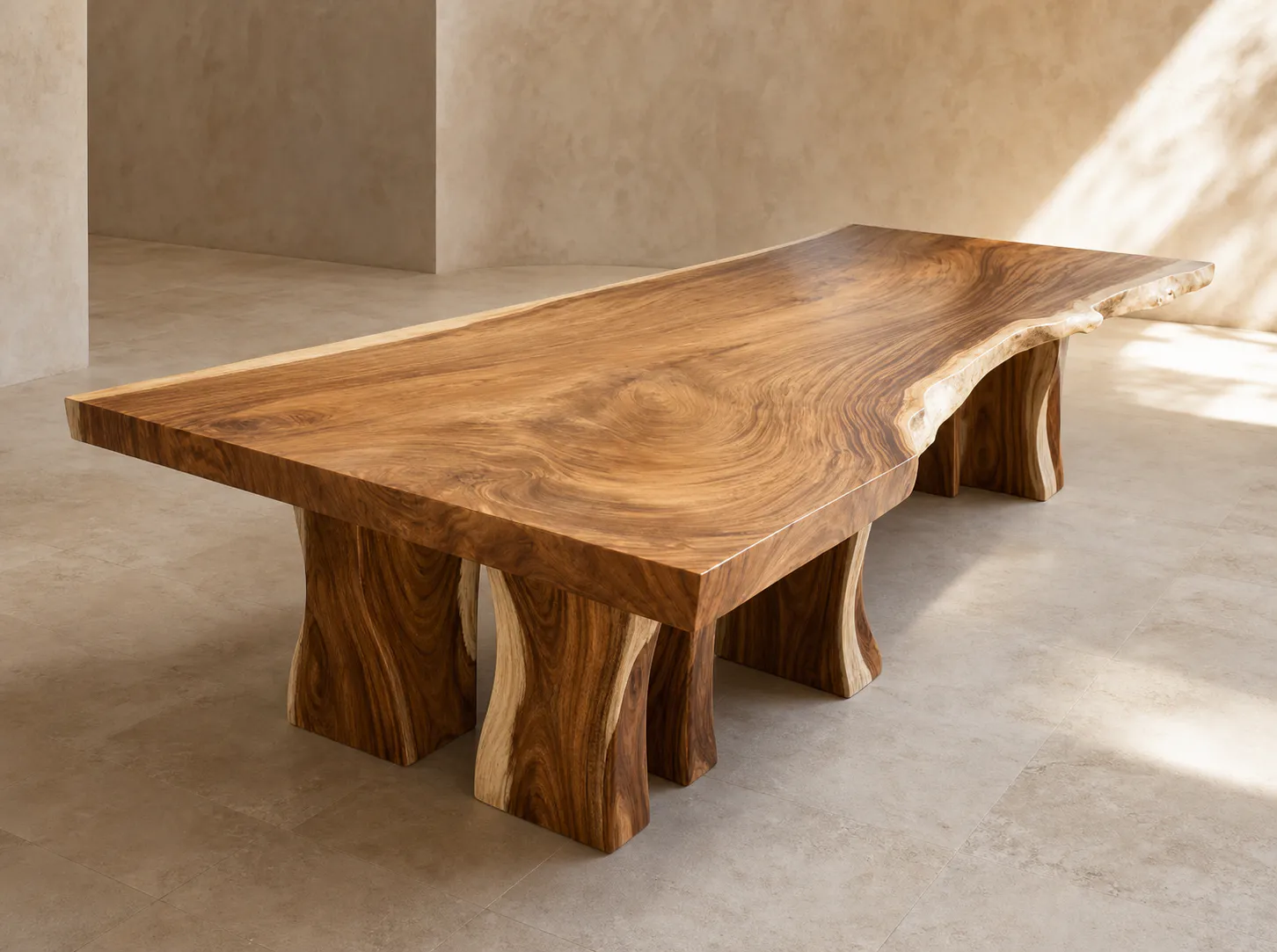
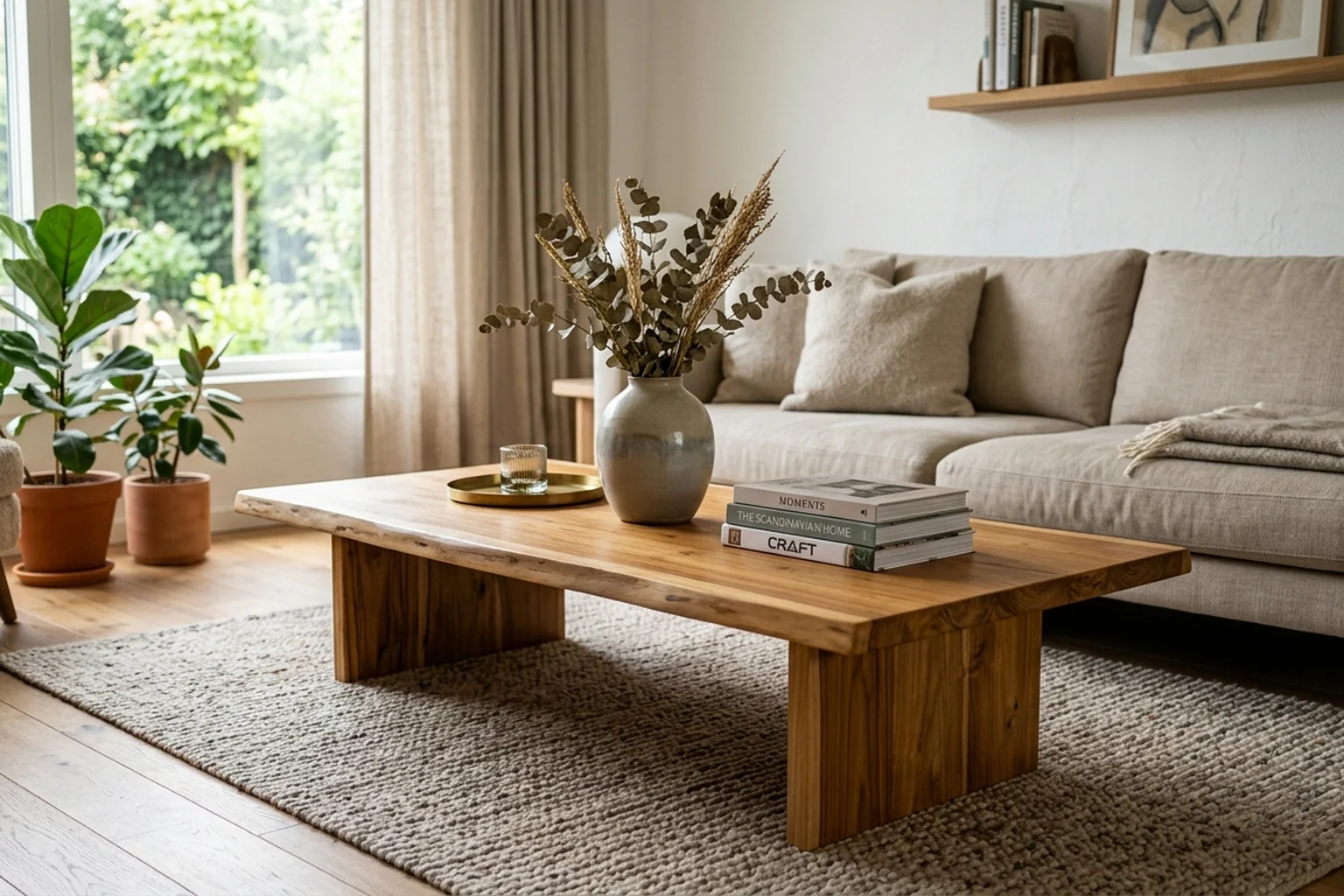
The top sets the character of the table and the base sets its stability. Plank tops with straight, eased edges suit most rooms and clean easily; live-edge tops keep the natural outline of the tree and work best when the room can carry a more sculptural centrepiece; resin-filled tops preserve selected fissures and need a colour and finish you agree on with the maker.
Match the base to the top and the room. Four straight legs are classic and stable, pedestal bases free up legroom and seat more people at the ends, and trestle or slab bases give a strong architectural presence. Confirm how the base is fixed to the top, where the legs sit, and whether the design leaves comfortable knee space at every seat. If you are drawn to a natural live-edge slab, our separate guide to choosing a live-edge dining table covers that option in detail.
- Top style chosen for the room and the way you eat
- Base matched to top span and legroom
- Knee space at every seat confirmed
- Top-to-base fixing method understood
4. Plan the seating around the table
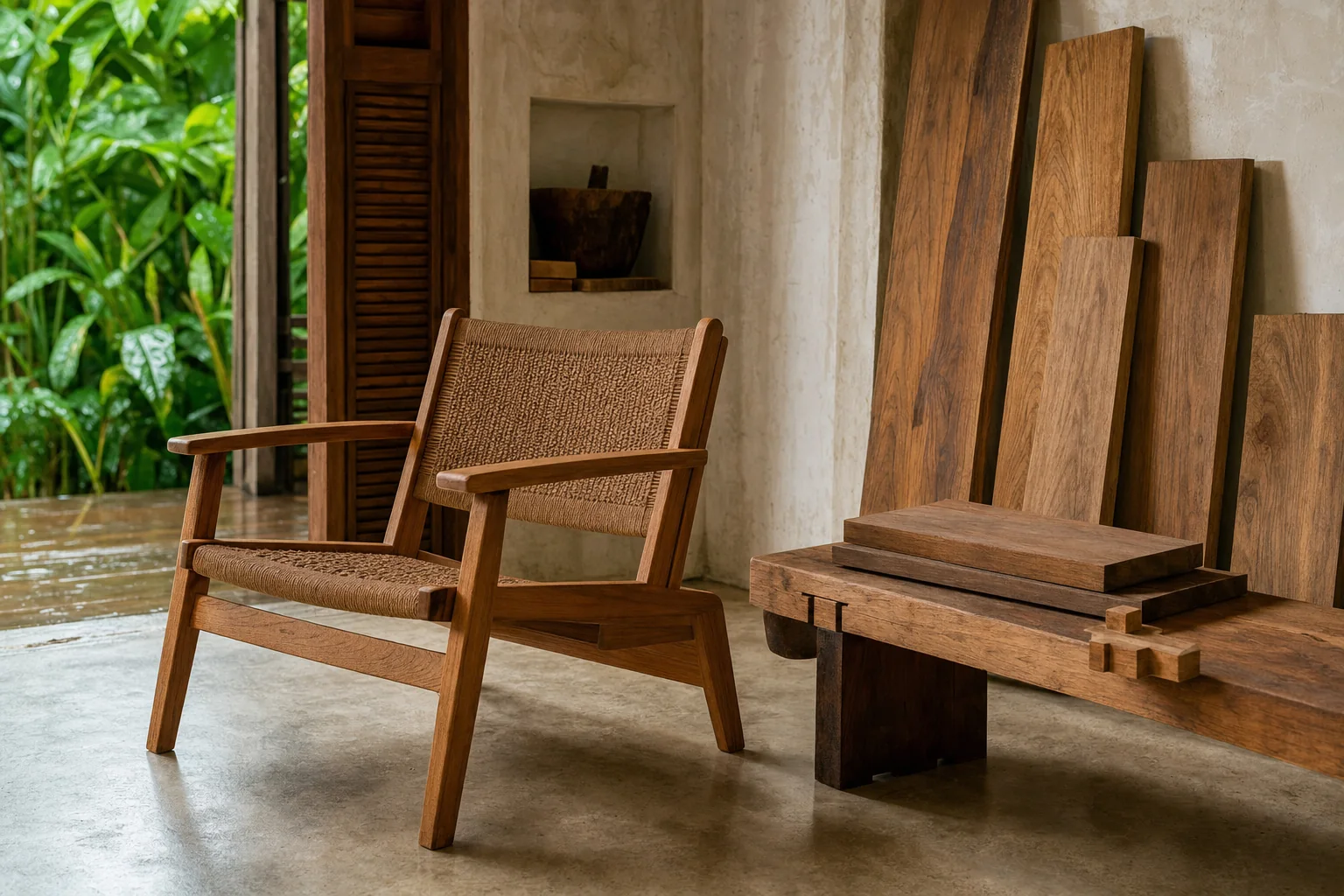
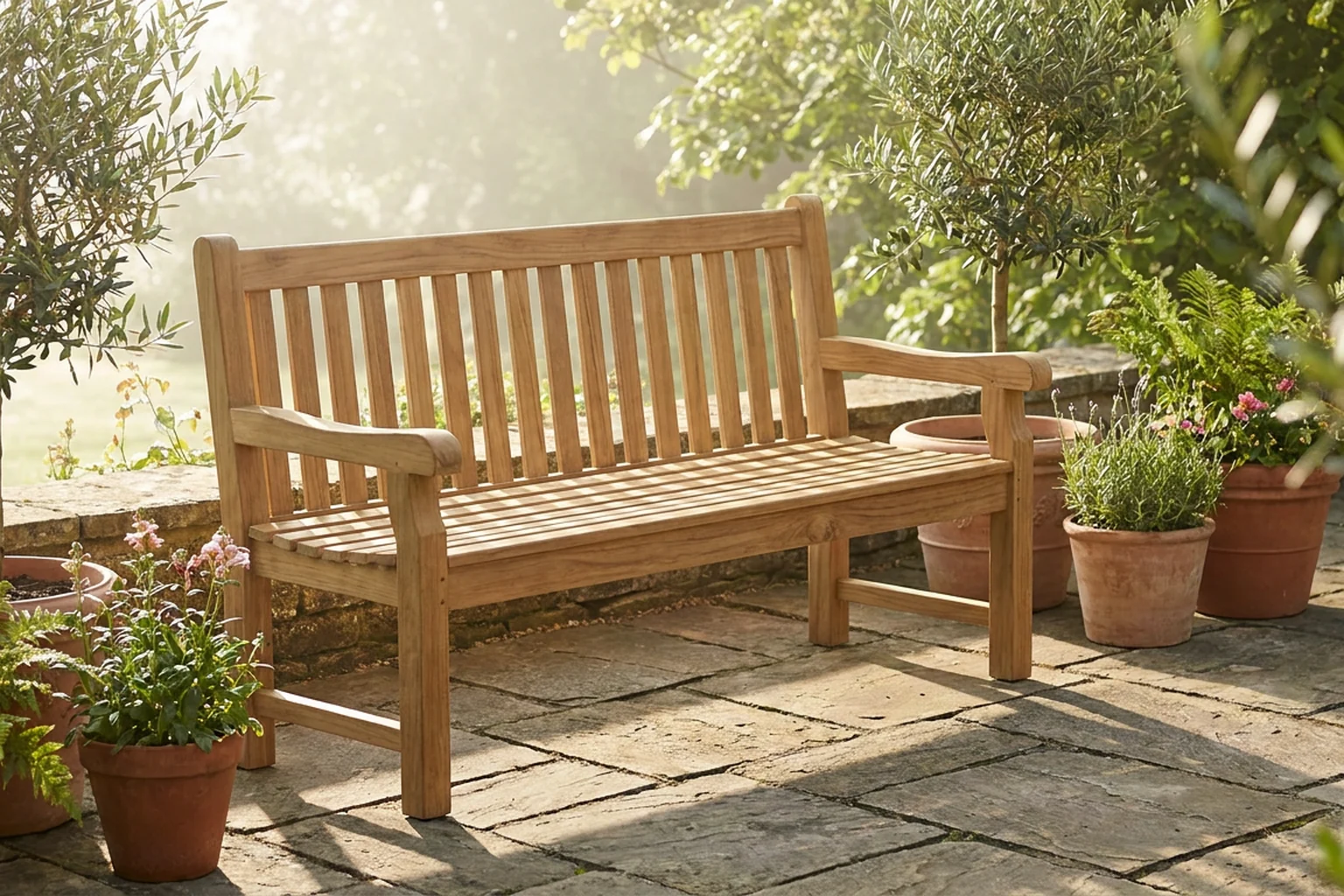
The best dining tables are bought together with the way they will be seated. Chairs need pull-out space that the table width and leg position allow, armchairs at the ends need extra room, and benches seat more people in less width but fix everyone in place, which suits casual meals more than formal ones. Allow roughly 60 to 65 centimetres of table edge per seated person so elbows and place settings do not collide.
If you are buying chairs separately, match the seat height to the table and check the chair style against the table's character; our teak dining chairs guide walks through comfort, construction and sets in detail. Many makers, including M Furniture & Decor, can produce the table and chairs as one made-to-order set, which guarantees that the proportions, wood and finish all match.
- Pull-out space at every seat
- Seat height matched to table height
- Table edge allowance per person
- Table and chairs considered as one set
5. Finish and everyday care
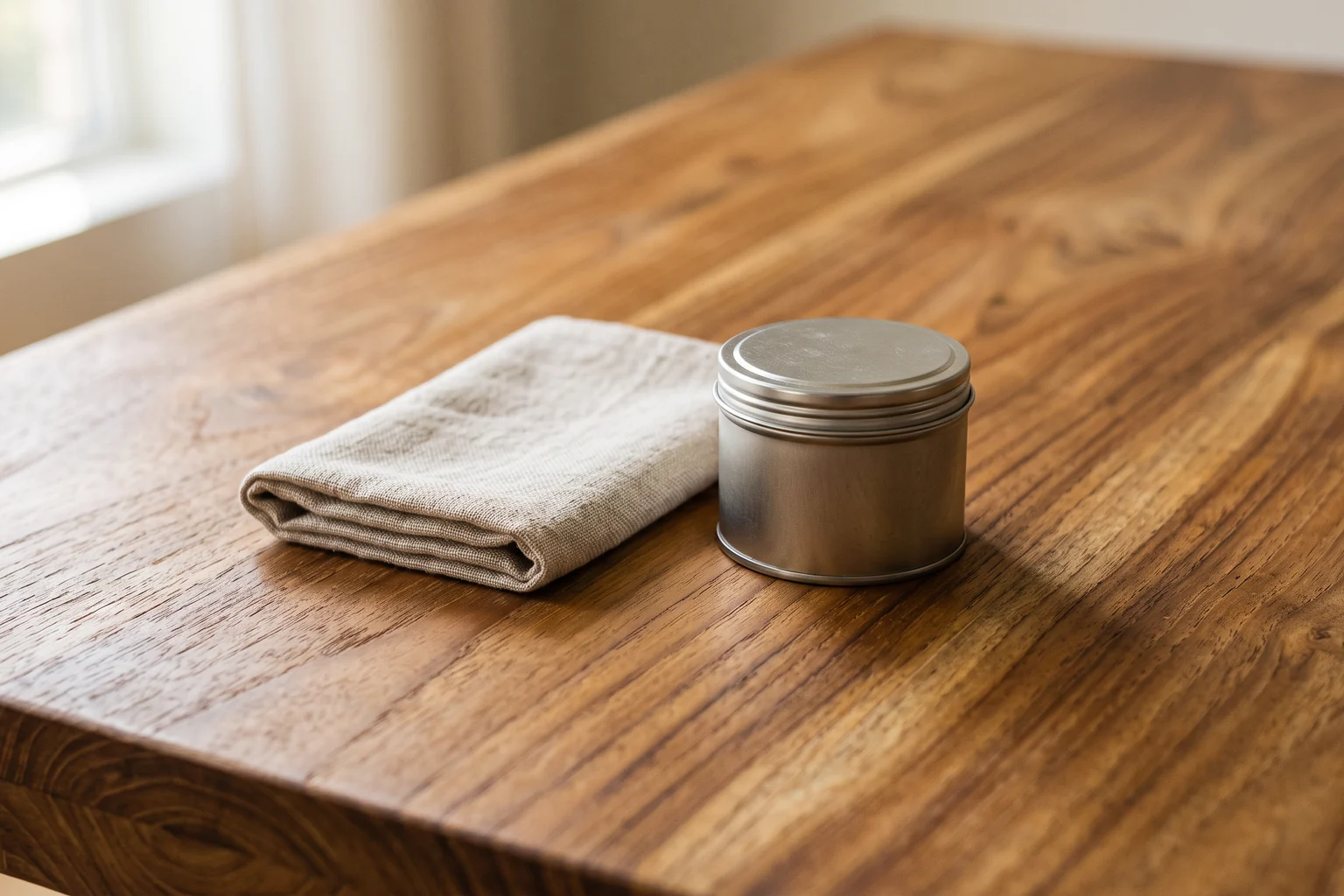
The finish decides colour, sheen and maintenance. A natural oil finish keeps the wood warm and is simple to refresh, while a harder lacquer resists spills and wear but changes the feel of the surface. For a table used daily, discuss water resistance, heat precautions and how local repairs would be handled before choosing.
No finish makes solid wood indifferent to moisture and heat. Use coasters and placemats, wipe spills promptly, and avoid letting hot dishes sit directly on the surface. In humid climates, allow air to circulate around the table and avoid pressing it flat against a wall. With ordinary habits, a well-finished teak dining table develops a deeper, richer tone over the years rather than wearing out.
- Finish matched to daily use and maintenance
- Coasters, placemats and heat protection
- Prompt care for spills and condensation
- Airflow around the table in humid climates
6. Made-to-order sizes and buying from Thailand
Dining rooms vary far more than standard sizes allow for, which is why made-to-order tables are common: exact lengths for a long room, narrower tops for a small apartment, or a table built to match chairs you already own. M Furniture & Decor has made teak furniture for more than five decades from its showroom on Phet Kasem Road in Cha-am, Phetchaburi, with a second viewing location in Bangkok, and produces made-to-order dining tables in custom dimensions, woods and finishes.
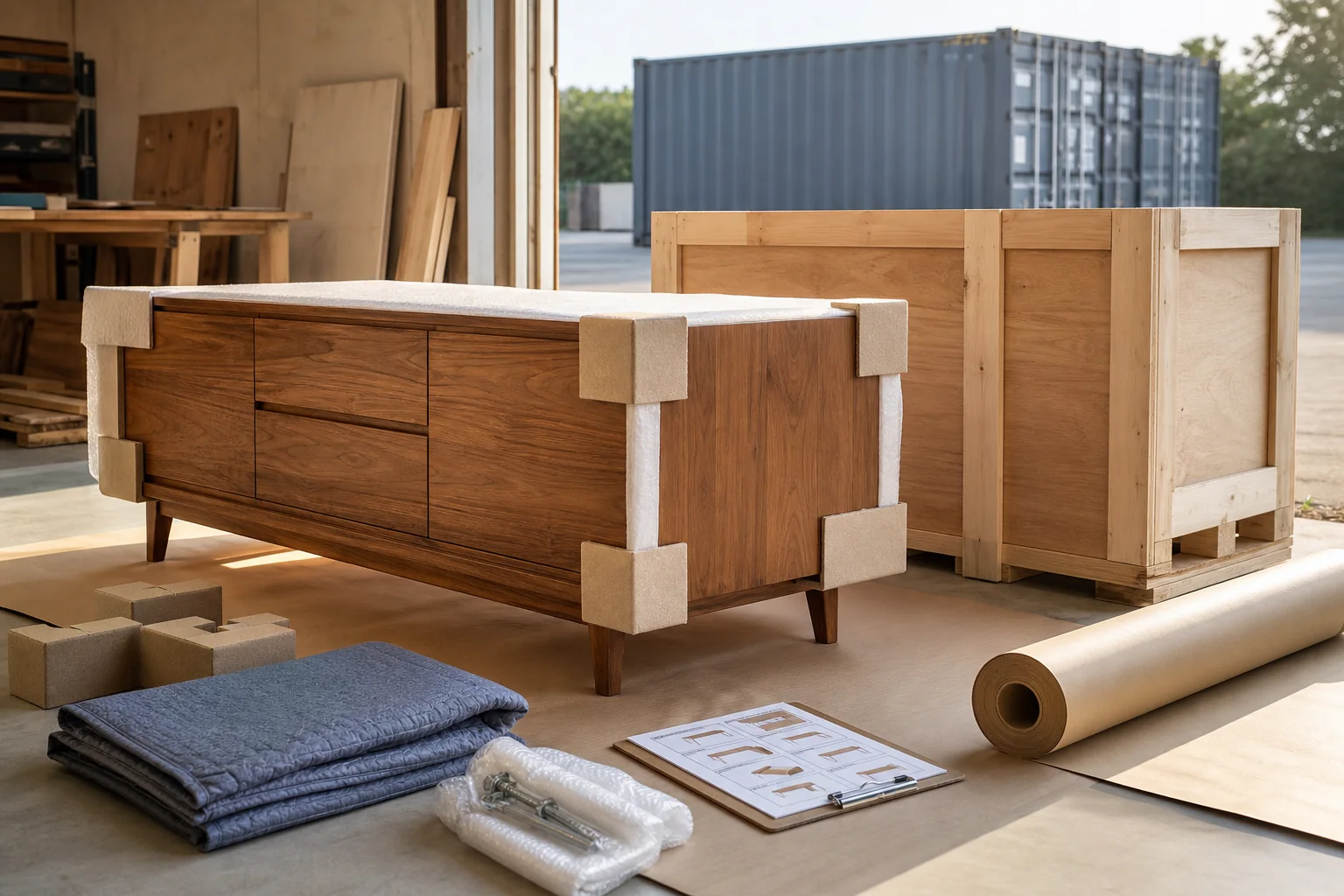
For made-to-order work, agree the finished dimensions, top style, base, finish, timeline and price in writing before production. For export orders, pricing can be quoted on FOB or CIF terms with packing, freight, customs and insurance coordinated, and species and source records confirmed for the exact piece. The fastest direct channel is WhatsApp at +66 614 456 154.
- Dimensions, top style and finish confirmed in writing
- Timeline and price agreed before production
- Export terms and wood documents for overseas orders
- Delivery access route confirmed
Choose the table around the life it will serve
A teak dining table earns its place through fit, material and honest construction. Measure the room first, verify solid teak, choose a top, base and finish that suit how you actually eat, plan the seating as part of the same decision, and confirm the details in writing before you order. Chosen that way, a teak dining table becomes the piece the family gathers around for decades.