
The short answer
Begin with a coded item schedule, quantities, dimensions, destination, budget direction and target timing. Separate ready pieces from made-to-order work, define how natural variation will be approved, confirm the commercial and delivery terms in writing, and make sure packing labels connect every item to its receiving location.
1. Define the type of order
A designer sourcing several statement pieces needs a different workflow from a dealer assembling a mixed collection or a hotel buying repeated items. State the intended use, resale or project context, destination and approximate scale in the first enquiry.
If the order may grow, share the initial phase and the possible full scope. This lets the supplier identify which designs can repeat, which pieces are one of one and where material needs to be reserved or reselected.
2. Build one controlled item schedule
Give every item a code and keep that code across quotations, drawings, approvals, packing lists and room plans. Record quantity, finished dimensions, material direction, finish, reference image and destination. A single schedule reduces confusion when similar tables or chairs appear in several sizes.
Mark open decisions instead of filling gaps with assumptions. If the width depends on a selected slab, record an acceptable range. If a finish sample is pending, show its status and the person responsible for approval.
- Unique item code and clear description
- Quantity and finished dimension requirements
- Ready piece or made-to-order status
- Material, finish and variation direction
- Approval status and destination reference
3. Approve natural variation deliberately
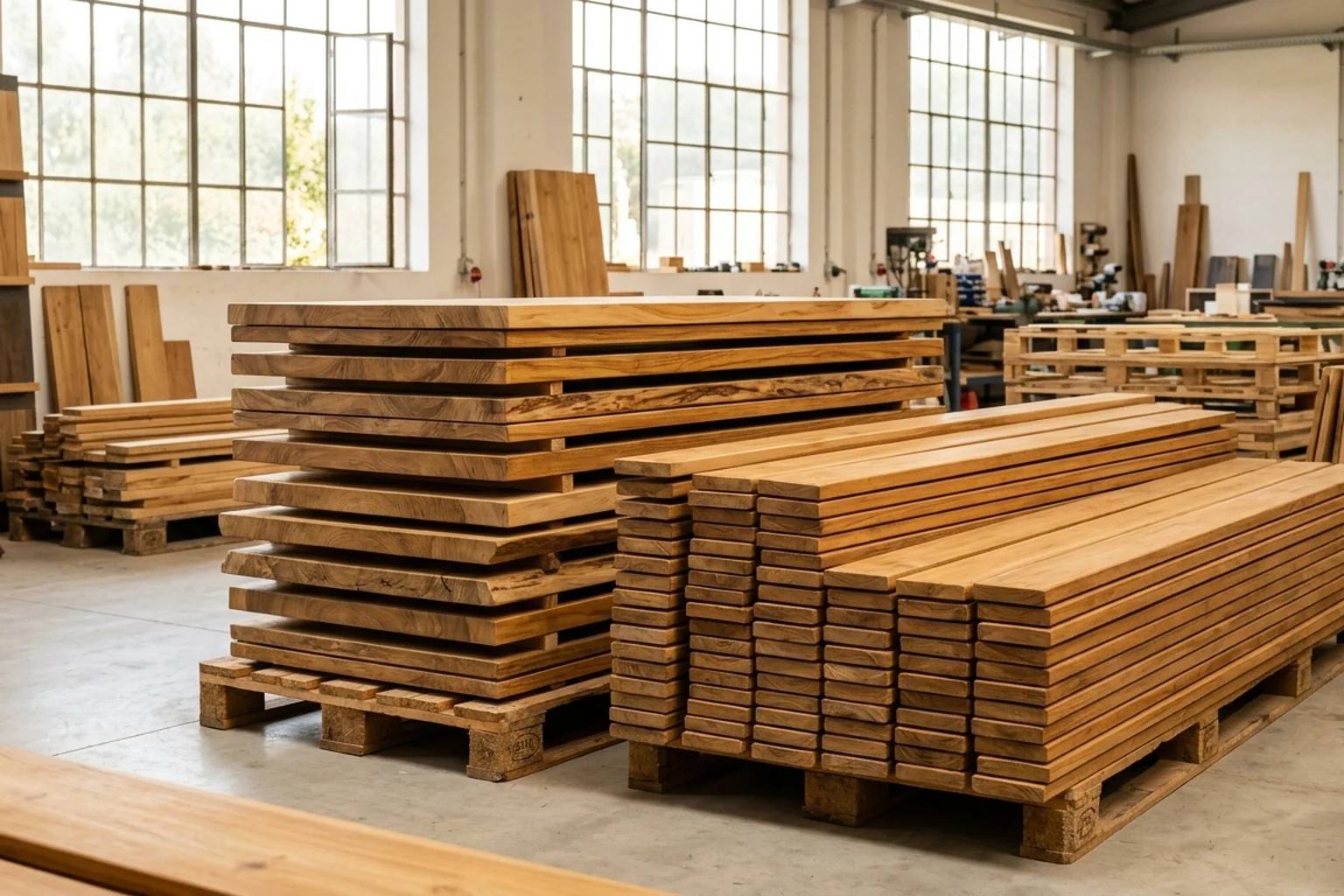
Solid wood, live edges and handmade details will vary. Decide whether approval happens through a material range, individual photographs, a physical sample or a finished prototype. One-of-one pieces should be identified individually; repeat orders need an agreed visual range.
Ask for photographs that show the full piece as well as important details. Confirm whether the images represent the actual item, a finish reference or a previous example. Each serves a different purpose and should not be treated as interchangeable.
4. Confirm the commercial scope in writing
A quotation should make clear what is included and excluded. Confirm currency, quantities, unit prices, payment stages, validity, production estimate and the point at which responsibility transfers under the agreed delivery arrangement.
Freight, insurance, duties, taxes, port charges, inland delivery and installation may be handled by different parties. Do not infer them from a single phrase such as shipping included. Ask each party to state its scope and required documents.
5. Connect packing to the receiving plan
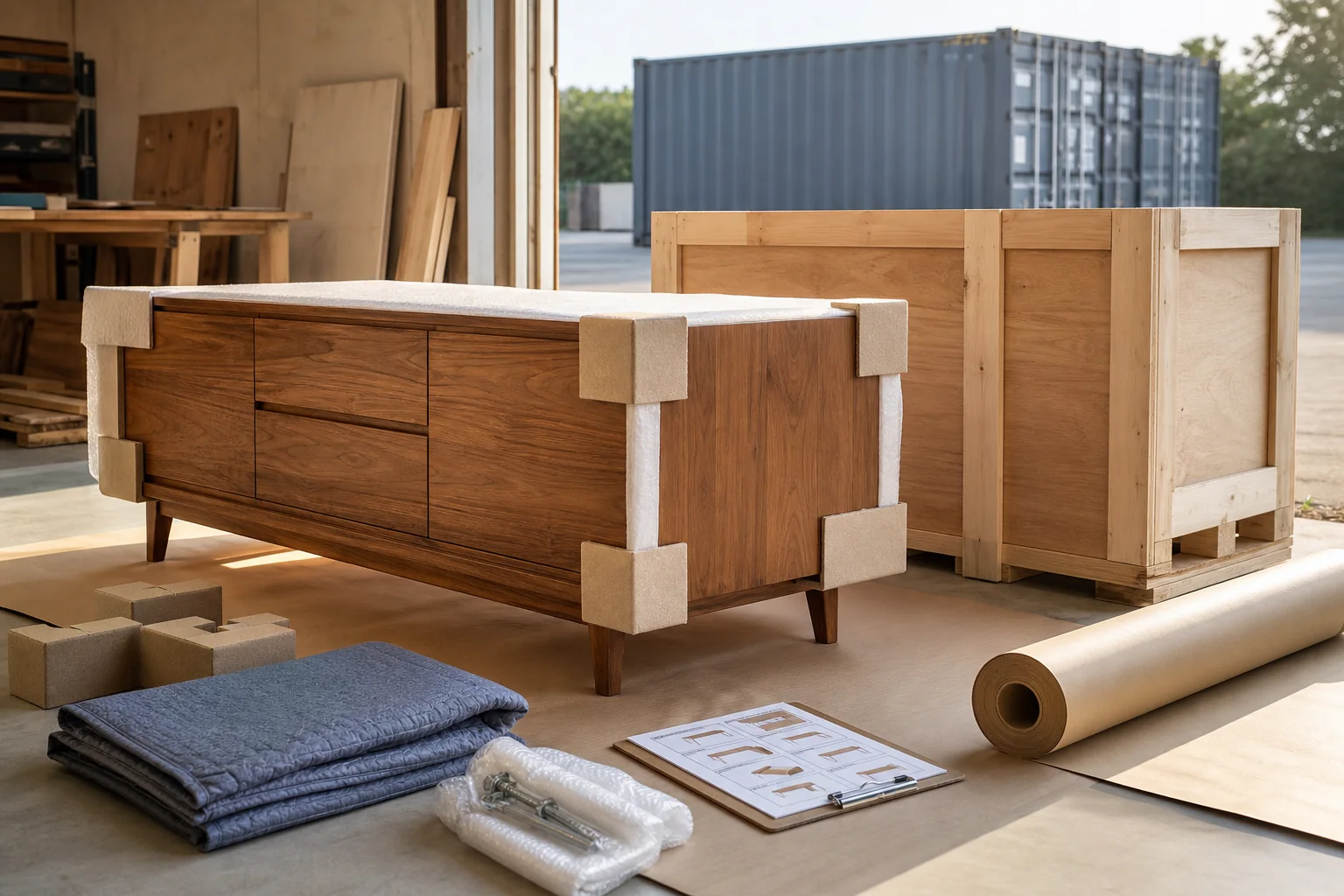
Packing must protect the furniture and help the receiving team identify it. Agree how pieces, detachable bases, hardware and care information are labelled. Match every package to the item schedule, room or customer destination.
Share constraints at the destination, including forklift access, loading dock, lift size, restricted delivery hours and storage conditions. Large solid-wood pieces may require a planned handling team even when they fit inside the shipping volume.
6. Identify document needs before dispatch
Document requirements depend on destination, material, shipment and commercial arrangement. The buyer, supplier and freight specialist should confirm the exact set required for the order rather than relying on a generic checklist.
Check names, addresses, item descriptions, quantities and reference numbers across documents before dispatch. Small inconsistencies can create avoidable questions later. Keep approved drawings, invoices, packing information and logistics contacts together in one shared record.
7. Plan a timeline with decision points
An order timeline includes selection, quotation, revisions, deposits, material approval, shop drawings, finish approval, production, inspection, packing and transport. Delays in approval can move later stages even when workshop time remains unchanged.
Use target dates with status labels rather than treating the first estimate as a fixed promise. Identify the latest dates for buyer decisions and the event that confirms each next phase. For project work, coordinate furniture arrival with site readiness and secure storage.
8. Send an enquiry that can become an order
Share your business or project context, destination, item list, quantities, dimensions, reference images, budget direction and desired timing. Mention whether you need a mixed selection, repeated specification or container-scale proposal.
A strong supplier response should clarify missing information, distinguish ready pieces from made-to-order options and propose the next approval step. The aim is not an instant promise; it is a traceable path from interest to a confirmed order.
Treat the order as one connected system
The product, paperwork and receiving plan are parts of the same purchase. When item codes, approvals, commercial terms and packing information stay connected, an international order becomes easier to review and easier to receive—whether it contains a few distinctive pieces or a broader project collection.