How should furniture be shipped internationally from Thailand?
Start with a confirmed item list, delivery address and target date. Ask the supplier for estimated packed dimensions and gross weight, then have a freight specialist compare sea and air options for the actual route. Packing should protect each finish, joint and detachable part while keeping every package tied to a clear item code. If crates, pallets or dunnage use raw wood, confirm whether ISPM 15 treatment and marking apply. Keep the invoice, packing list, export declaration and transport document consistent. Define who books freight, clears customs, pays duties and destination charges, arranges insurance, unloads and installs the pieces. Finally, check truck access, lifts, doors and reporting deadlines before dispatch. Requirements vary by destination, material and shipment, so the freight forwarder, customs broker and relevant authority should verify the current rules for the exact order.
1. Define the shipment before requesting freight
A useful freight quotation starts with a stable item schedule. List every piece, quantity, finished dimensions, whether parts detach and the delivery address. State whether the order is ready-made, made to order or a combination, because production approval and packing dates affect the booking.
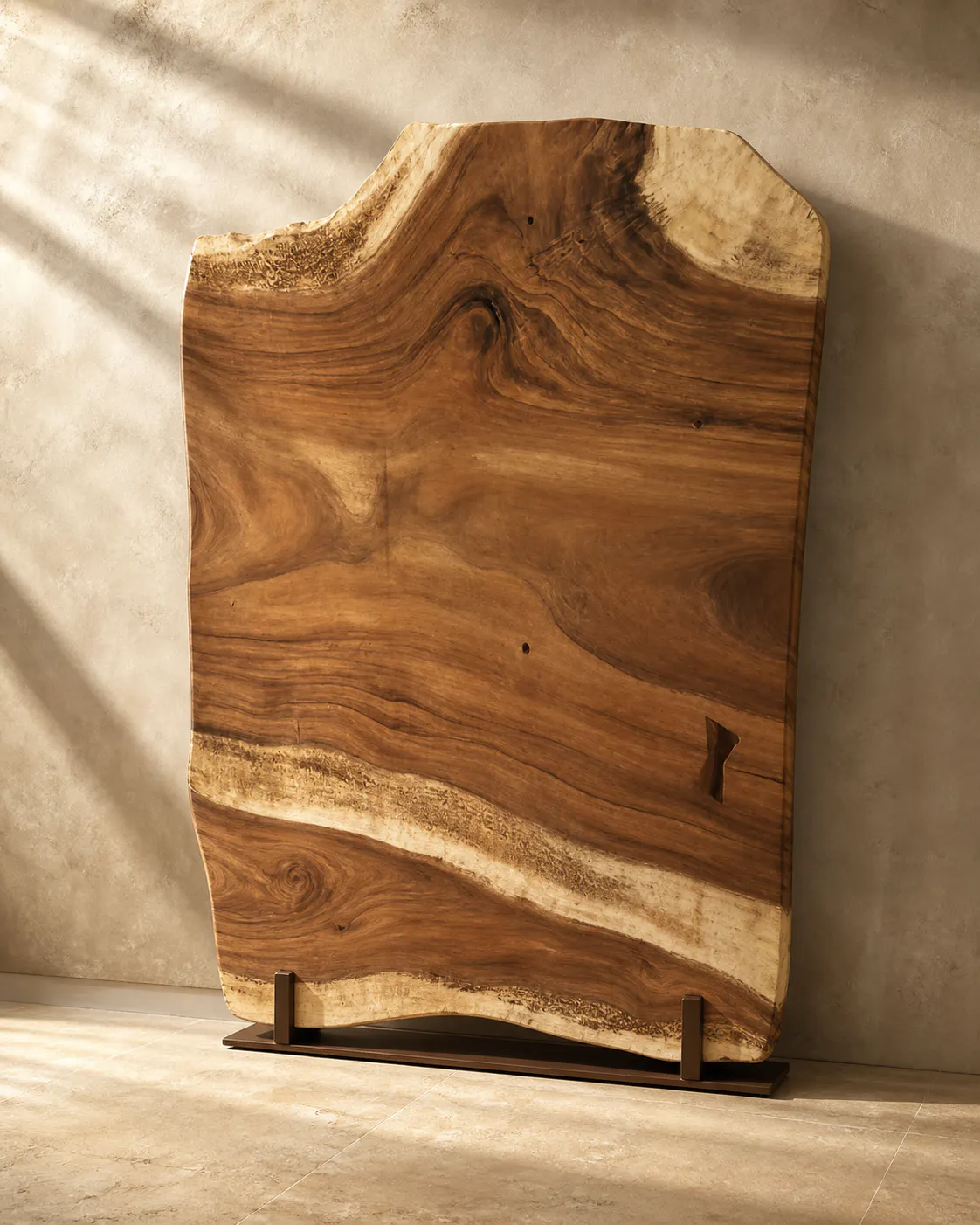
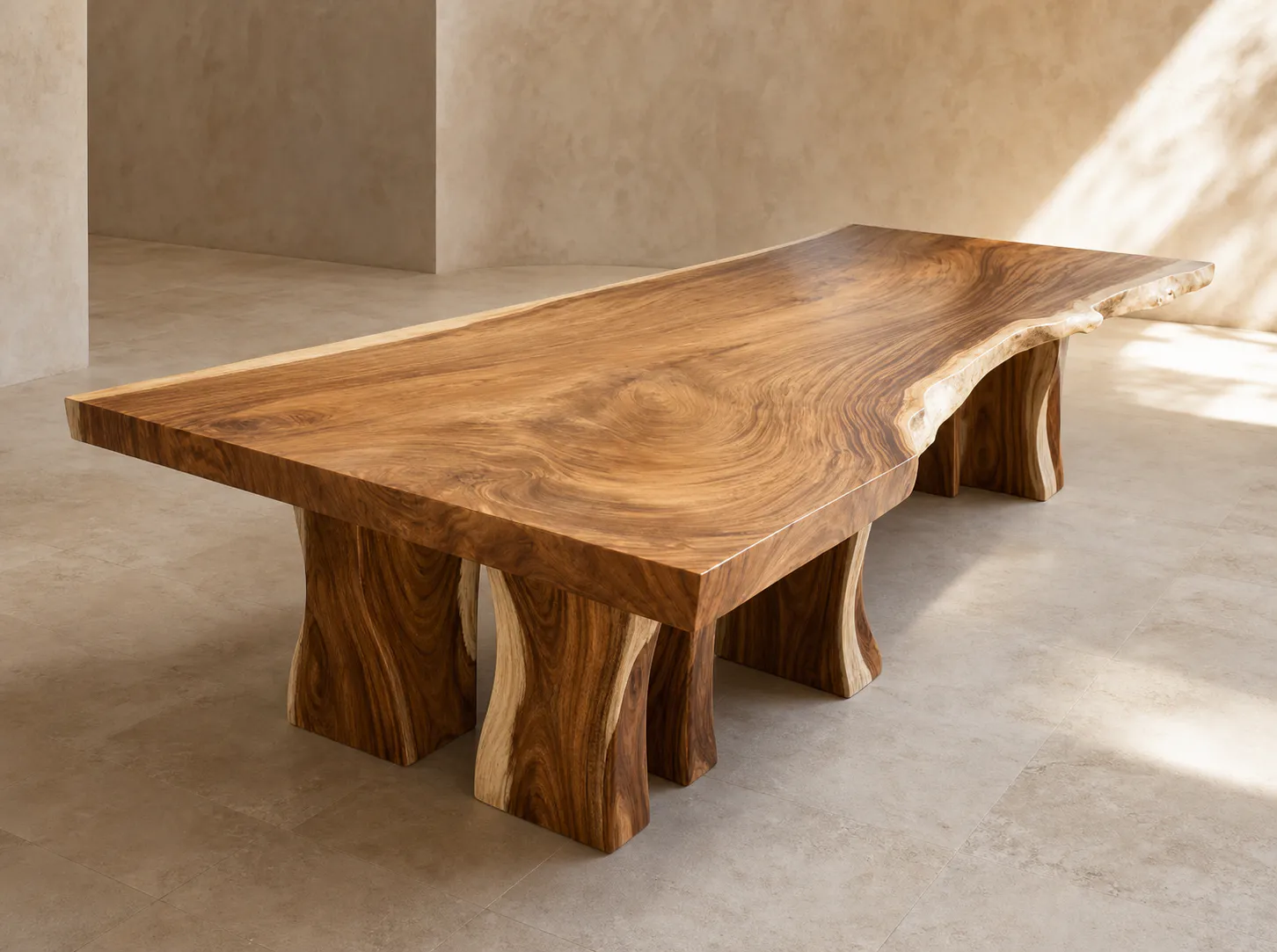
Ask for estimated packed dimensions and gross weight, not only furniture dimensions. Protective materials, crates and pallets change the chargeable volume. Oversized slabs, stone components and sculptural bases can also change handling requirements even when the total shipment is small.
- Item code, description and quantity
- Finished and estimated packed dimensions
- Net and estimated gross weight
- Collection address and final destination
- Target readiness date and receiving constraints
2. Compare the freight mode against the actual order
Air freight can suit urgent, compact or high-value pieces, while sea freight is commonly considered for larger furniture volumes. Sea shipments may move as a shared load or a dedicated container. The right choice depends on volume, route, handling exposure, timing and the services available at both ends.
Do not compare freight quotations by the headline transport charge alone. Ask whether collection, export handling, terminal charges, documentation, destination handling, customs brokerage, duties, taxes, final delivery and unloading are included or excluded. A lower initial figure can represent a narrower scope.
3. Design packing around the furniture and route
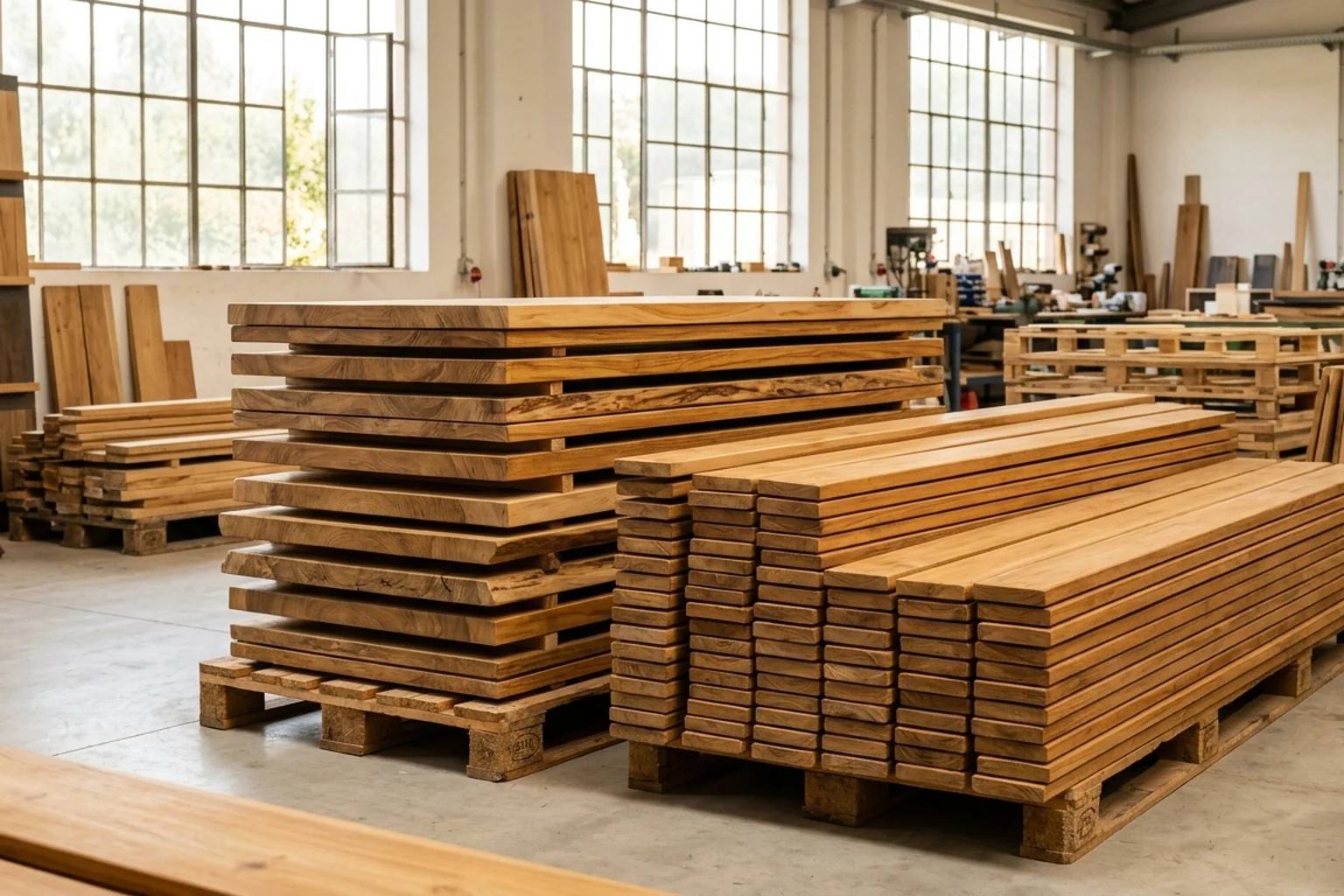
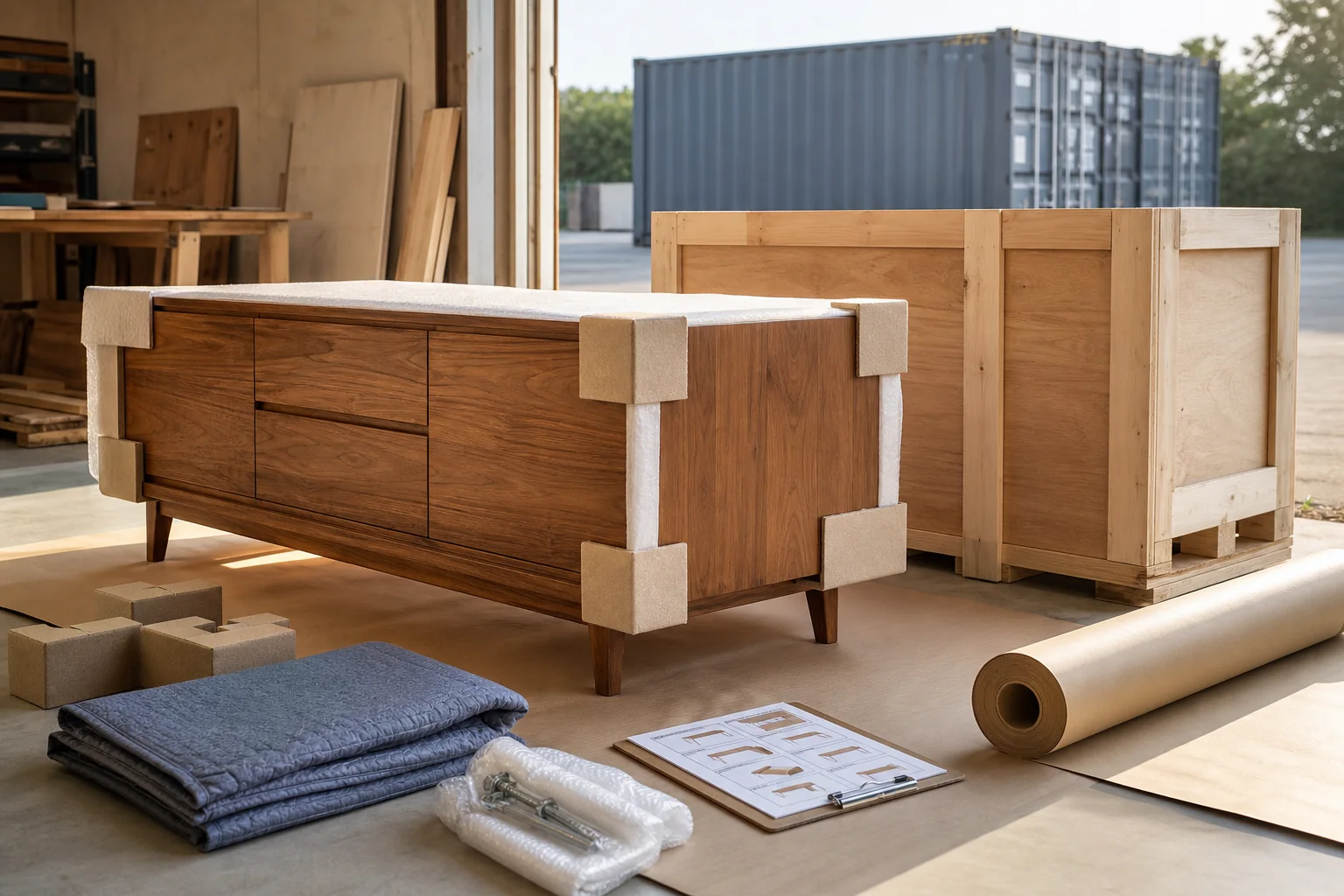
Solid-wood furniture needs protection from impact, abrasion, pressure and uncontrolled moisture. Packing may combine soft surface protection, corner blocks, hardware bags, rigid outer protection and a crate or pallet designed for the piece. Finished surfaces should be adequately cured before wrapping, and materials touching them should be confirmed as compatible.
Detachable bases and fragile elements should be secured so they cannot move independently. Keep fasteners, assembly instructions and care information with the correct item code. Photograph the piece before packing, during protective wrapping and after the package is closed so the condition and packing sequence remain traceable.
4. Check the rules for raw-wood packaging
ISPM 15 is an international phytosanitary standard for raw-wood packaging such as pallets, crates and dunnage. Compliant material is treated and carries an authorised mark. The rule addresses the packaging material; it should not be confused with a blanket certification of the finished furniture inside.
Import requirements still vary by destination and product. Before packing, ask the freight forwarder or destination customs and biosecurity adviser to confirm the current rules for the furniture material, crate, pallet and any natural components. Processed packaging such as plywood may be treated differently from raw wood, but the final packing specification should be confirmed for the chosen route.
5. Make the documents describe the same shipment
International furniture shipments commonly require a commercial invoice, packing list, export declaration and transport document such as a bill of lading or air waybill. Other records may be needed depending on origin, destination, timber species, product construction and the commercial arrangement. Thai Customs also requires export information to be submitted through its electronic customs process.
Use consistent buyer and seller names, addresses, quantities, values, item descriptions, country information and package references across every document. Agree the appropriate customs classification with a qualified broker rather than selecting a code from appearance alone. If a permit, origin document or timber record is required, identify it before dispatch—not after the cargo arrives.
6. Define cost, risk and responsibility in writing
State the agreed delivery term and the named place precisely. Clarify who books freight, prepares export documents, arranges insurance, completes import clearance, pays duties and destination charges, and organises final delivery. Commercial terms allocate responsibilities, but they do not replace a detailed quotation or local import advice.
Ask for a landed-cost worksheet that separates known charges from estimates and buyer-paid amounts. Allow for storage, inspection, demurrage or redelivery risk if documents, customs clearance or the receiving site are not ready. The objective is not to predict every exceptional fee; it is to make ownership of each decision visible.
7. Connect insurance with condition evidence
Confirm what the cargo policy covers, its insured value, exclusions, deductible and claim procedure. Carrier liability and cargo insurance are not necessarily the same. High-value or one-of-one furniture deserves a conversation about coverage before the shipment is handed over.
At delivery, inspect external packaging before signing where local procedure allows. Photograph impacts, moisture marks or broken seals, note exceptions on the delivery record and preserve the packaging while asking the insurer or logistics provider for instructions. Open and inspect the furniture promptly within the applicable reporting period.
8. Plan the last fifty metres
A shipment can clear the port and still fail at the building entrance. Confirm truck access, loading restrictions, lift and doorway dimensions, stair turns, floor protection, carrying labour, assembly tools and the final placement path. Large tops and bases may need to arrive separately and be assembled by an experienced team.
Keep the item schedule, package numbers, assembly notes and room destinations available to the receiving team. A clear handover closes the chain that began with selection in Thailand and helps every piece reach the place for which it was chosen.
Frequently asked questions
Is sea or air freight better for furniture from Thailand?
Neither mode is automatically better. Air freight can suit urgent, compact or high-value pieces, while sea freight is commonly considered for larger volumes. Compare the complete route, handling exposure, timing and landed cost for the actual order.
Does ISPM 15 certify the furniture?
No. ISPM 15 applies to raw-wood packaging material such as crates, pallets and dunnage. It is not a blanket certification of the finished furniture inside the package.
Which documents are normally used for an international furniture shipment?
A commercial invoice, packing list, export declaration and transport document are commonly used. The destination, timber species, product construction and commercial arrangement may require additional permits or records.
Sources and verification
We use primary sources to review facts that can change. Check the current requirements for the exact order and destination.
A successful shipment is designed, not merely booked
Good international shipping connects the furniture, its protection, the paperwork and the destination. Confirm the scope with the supplier, freight specialist, customs broker and receiving team before dispatch, and treat route-specific requirements as details to verify rather than assumptions to inherit from a previous shipment.