The short answer
Measure the floor-to-counter height first: a 25–30 cm gap under the seat means a 61–66 cm seat for a 90–95 cm counter and a 71–76 cm seat for a 105–110 cm bar. Check that the footrest catches your foot without lifting your knee, look for a seat 35–40 cm deep and 35–45 cm wide, and choose solid teak with a finish matched to where it stands. Allow 60–65 cm of counter width per person, and buy a set rather than a single stool if the counter seats more than one.
1. Match the stool to the counter, not to the room
Measure from the floor to the top surface of the counter or island, then subtract 25–30 cm. That is the seat height you need. Counters at 90–95 cm, which is the usual kitchen island and breakfast bar, take a stool with a seat at about 61–66 cm, sold as a 65 cm counter stool. Bars and outdoor counters at 105–110 cm take a 71–76 cm stool, sold as 75 cm. Anything outside those ranges should be a made-to-order height, and it is worth measuring at three points across the counter because a stone top on an uneven floor is rarely perfectly level.
- Measure floor to counter top at three points
- Seat 25–30 cm below the counter surface
- 90–95 cm counter → 65 cm stool
- 105–110 cm bar → 75 cm stool
2. Seat shape, size and long-sitting comfort
A stool seat of about 35–40 cm deep and 35–45 cm wide suits most adults. Beyond that, shape matters more than size. A contoured or saddle seat spreads weight under the thighs and is noticeably better than a flat disc over a long dinner, because it removes the pressure point at the front edge. A low backrest helps posture without making the stool bulky, and a backless stool is the right choice only where the stool is tucked away or used briefly.
- Seat 35–40 cm deep and 35–45 cm wide
- Contoured or saddle seat for long sitting
- Low backrest rather than a tall one at a counter
3. Footrests, stretchers and stability
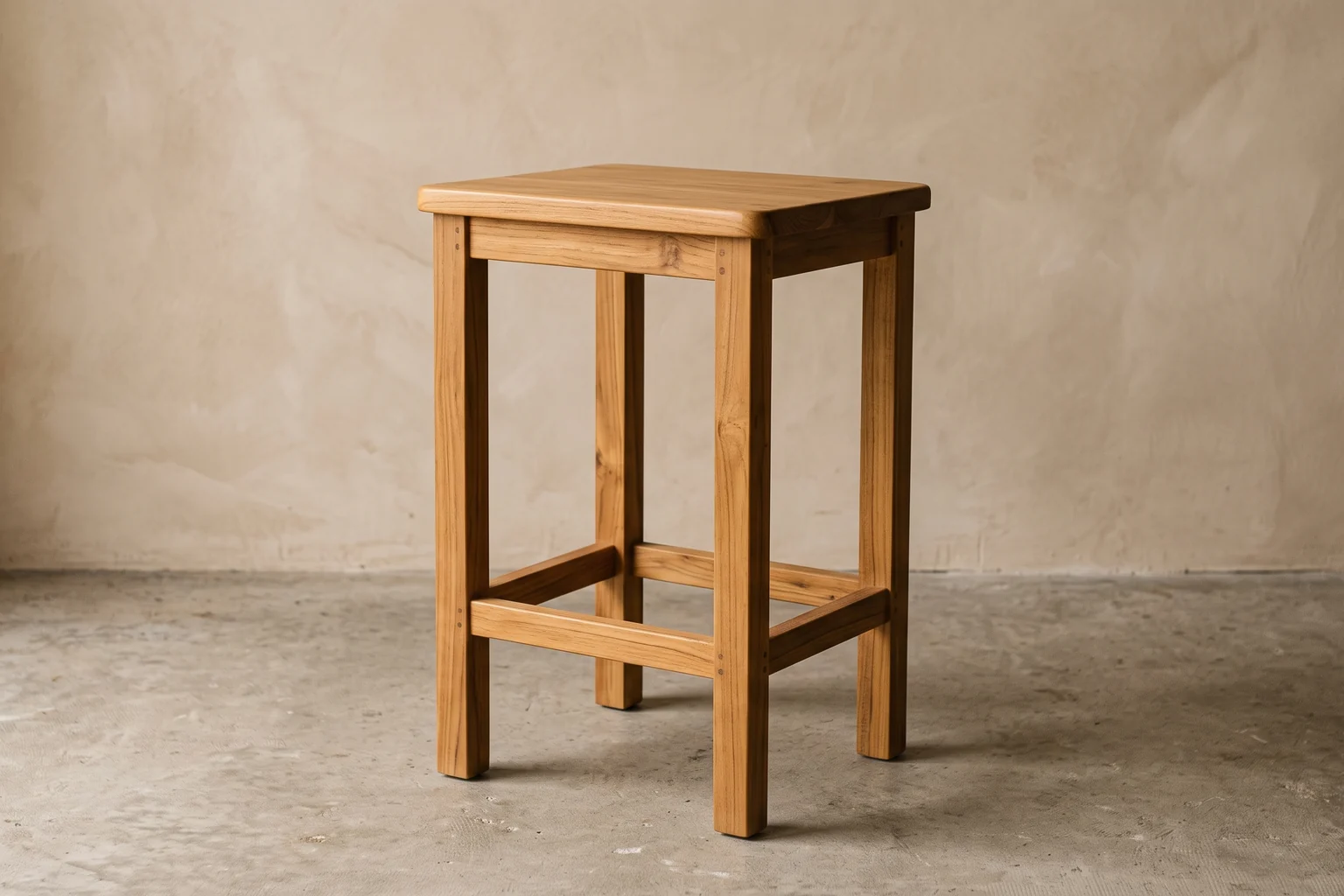
The footrest does more for comfort than the seat does. Most people want it roughly 20–30 cm above the floor on a 65–75 cm stool, so the thigh stays level and the lower back is not hanging. A stool without a footrest, or with one that is too high, converts weight onto the thighs and makes an otherwise comfortable seat tiring. Check it in the position you will actually use: sit on the stool, put your feet where they naturally fall and see whether the rail is there.
- Footrest 20–30 cm above the floor on a 65–75 cm stool
- Stretchers bracing the legs near the base
- Sit and test the footrest position before buying
- Glides to protect floors and stop rocking
4. Indoor, outdoor and hospitality teak stools
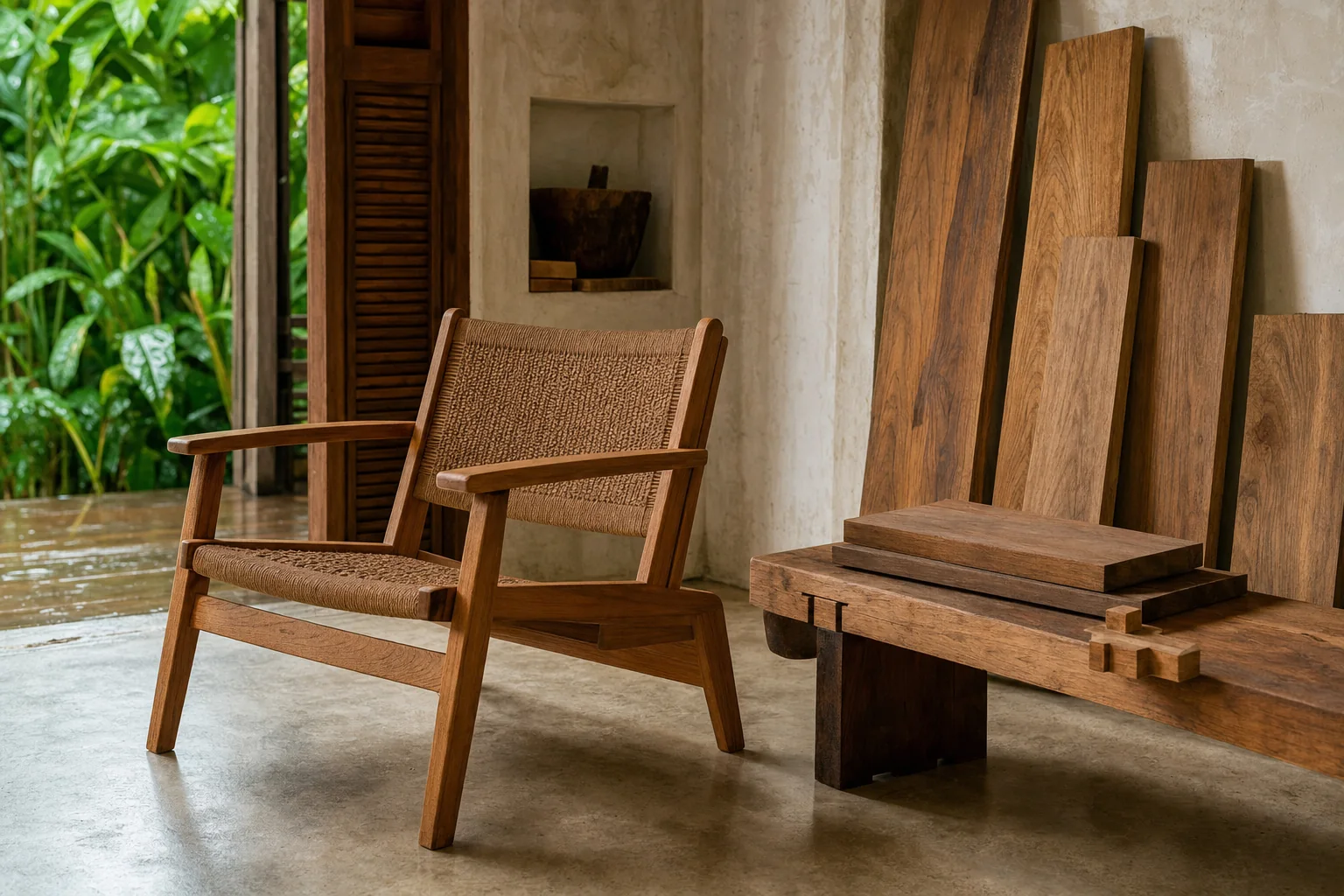
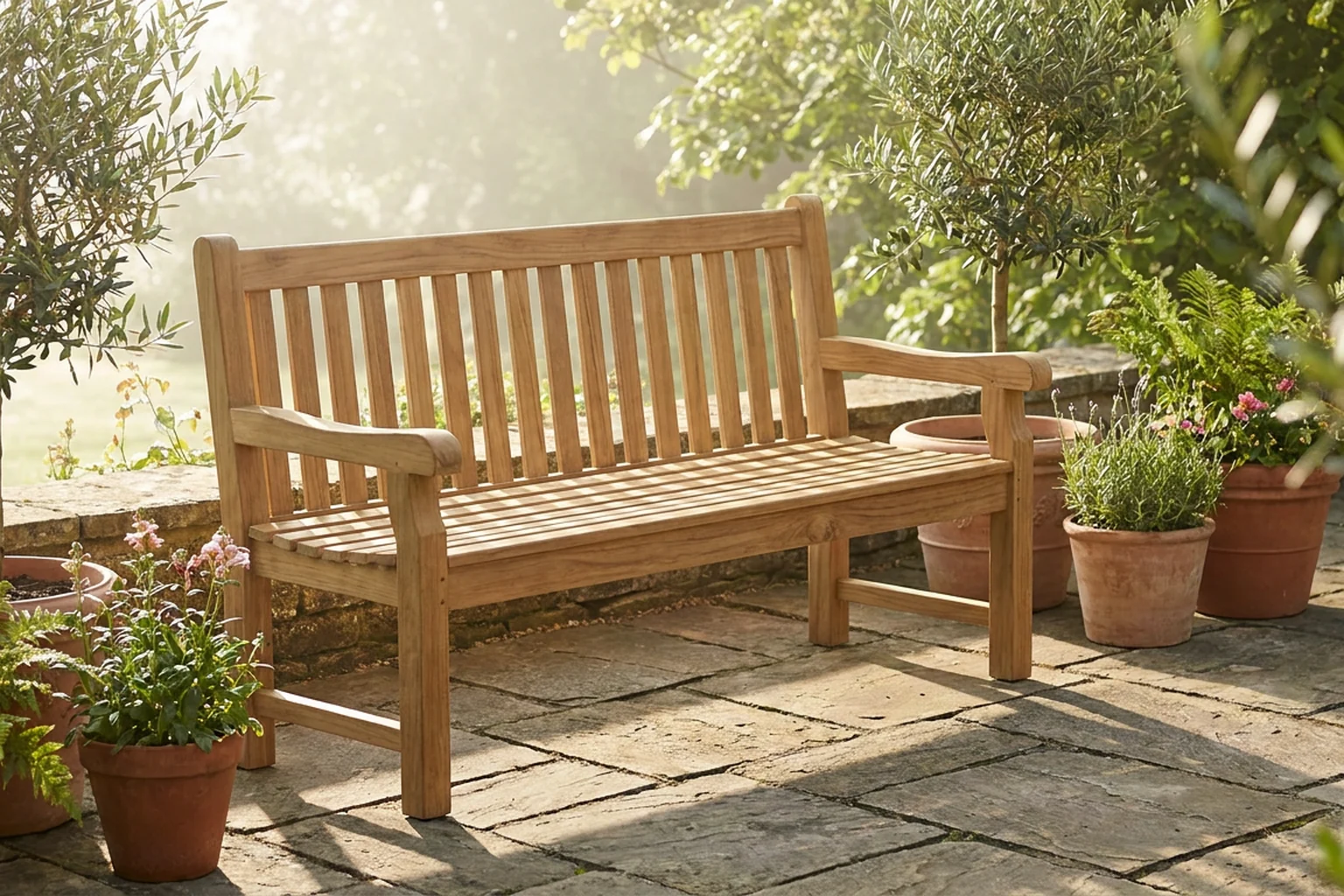
Teak is one of the few timbers that genuinely suits both sides of a glass door, because the wood itself resists rot and insects rather than depending on a coating. Indoors it can be finished to a warm even tone and treated like any other furniture. Outdoors, the finish should be chosen by exposure: leave the surface untreated and it weathers to a soft silver-grey that needs no maintenance beyond cleaning, or oil it and top the finish up seasonally to keep the golden tone. Salt air, pool splash and monsoon rain are all survivable as long as water drains and the stool does not stand in a puddle.
- Untreated for silvered outdoor teak, oiled to stay golden
- Drainage so water never stands in the seat
- Hospitality: solid frame and cleanable finish
- Quick-dry cushions removed at night
5. How many stools, and how they sit together
Allow 60–65 cm of counter width per person. A 240 cm island therefore seats three comfortably and four only if the outer seats overhang the ends; a 180 cm counter is a two-stool bar. That figure is what keeps elbows and plates from colliding, and it is the same spacing hotels and restaurants use, so a home bar laid out this way feels deliberate rather than improvised. Buying in pairs or fours is also the practical choice, since a single stray stool at a counter always looks like an afterthought.
- 60–65 cm of counter per person
- 25–30 cm overhang for knee room
- 75–90 cm clearance behind an occupied stool
- Buy sets, not single stools
6. What to confirm before ordering
Send the counter height, the number of stools, the seat height you believe you need, the finish and the cushion specification if you want one. Mention whether the stools stay inside or outside, and whether the counter has a deep overhang. If the order is for a restaurant, resort or project, say so early: hospitality quantities are quoted differently from single pieces, and the design details that matter for a hotel bar — heavier frames, drainage, cleanable finishes — are easier to build in than to change after production starts.
M Furniture & Decor has been making solid teak and hardwood furniture for more than five decades, from the main showroom on Phet Kasem Road in Cha-am, Phetchaburi, with a second viewing location in Bangkok. Dimensions, timber and finish are agreed per order, and species and source records are confirmed for the actual pieces. Export orders are quoted FOB or CIF with packing, freight, customs and insurance coordinated. The fastest route is WhatsApp on +66 614 456 154.
- Counter height and number of stools sent together
- Indoor or outdoor, and whether there is an overhang
- Hospitality or project quantities flagged early
- Finish, timber and export terms confirmed before production
Frequently asked questions
What height bar stool do I need for a 90 cm counter?
A 65 cm stool. The rule is a 25–30 cm gap between the seat and the counter surface, so counters at 90–95 cm take a 65 cm seat height and bars at 105–110 cm take a 75 cm seat height.
How much counter space should each person get?
Plan 60–65 cm of counter width per stool. That leaves room for elbows and plates without stools crowding each other, and it is the same spacing restaurants and resorts use for bar seating.
Are teak bar stools suitable for outdoor use?
Yes, teak is one of the best outdoor stool timbers because the wood resists rot and insects. Leave it untreated to weather to silver, or oil it and top up seasonally to keep the golden tone. Cushions should be quick-dry and taken in at night.
What is a comfortable seat size for a bar stool?
A seat 35–40 cm deep and 35–45 cm wide suits most adults. Contoured or saddle seats distribute weight better than a flat disc over a long evening, and a low back helps posture without making the stool heavy-looking.
Can teak bar stools be made to a custom height or in sets for a hotel?
Yes. Made-to-order solid teak seating is normal work — give the counter height, the number of stools, the finish and any cushion specification, and hospitality orders can be quoted as a full set in FOB or CIF terms.
Measure the counter, then build the set around it
A bar stool is bought by the centimetre: seat 25–30 cm below the counter, footrest where your foot naturally lands, seat sized and shaped for how long people actually sit there, and a solid teak frame that keeps its bracing as the seasons move. Add 60–65 cm of counter width per person, keep 75–90 cm of passing space behind the seats, and confirm the finish against where the stool will live. Do those four things and the rest of the decision is style.