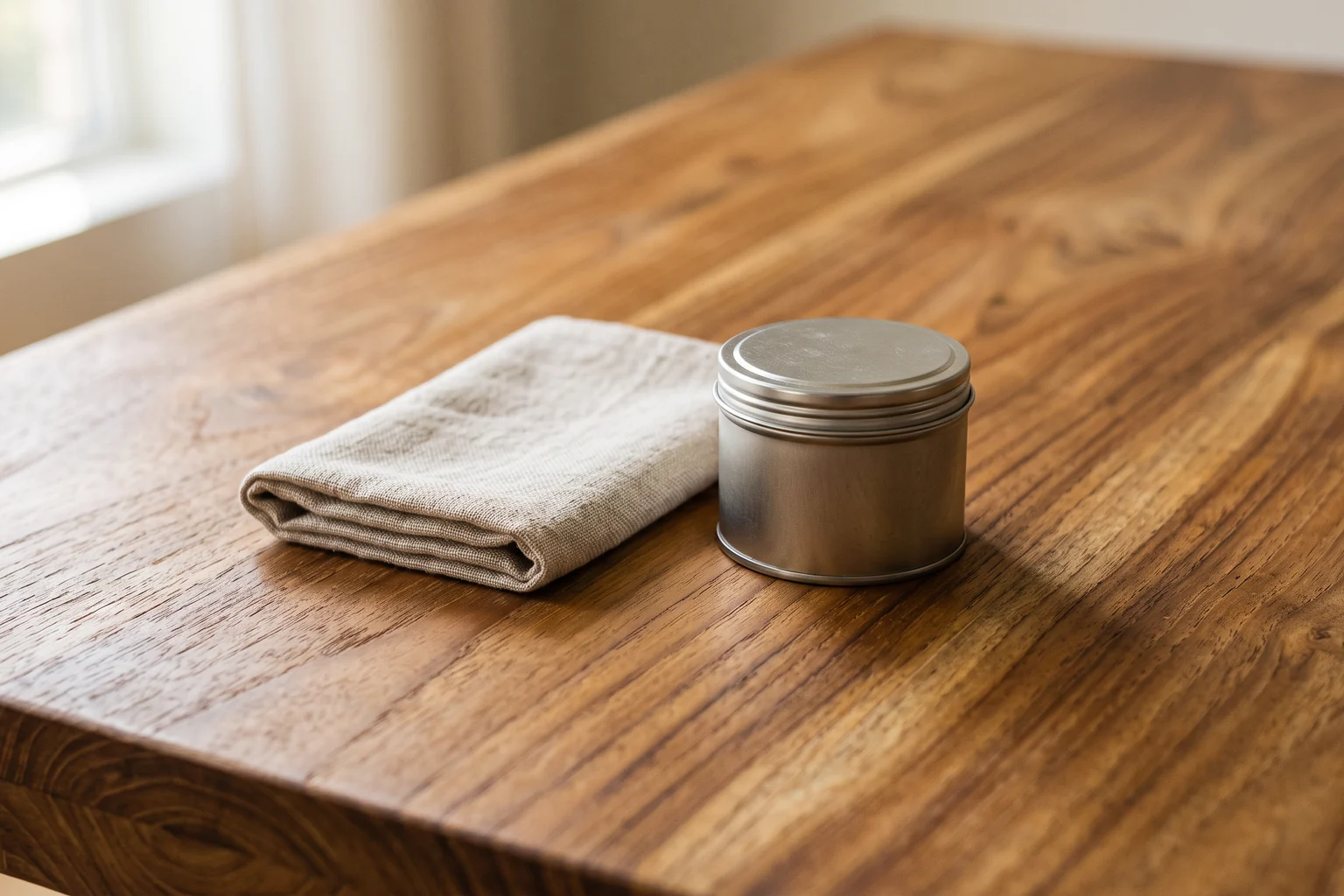
The short answer
Untreated teak silvers outdoors and darkens to honey indoors; penetrating oil keeps the warm tone and is easy to top up; lacquer and varnish give a harder, more stain-resistant film finish for tables and high-traffic pieces. Ask which product and how many coats were applied, keep the same product for top-ups, and never put oil over a sealed surface.
1. What a finish actually does
A finish sits between the wood and the room. It slows moisture movement, makes spills easier to wipe, and settles the colour and sheen of the surface. It does not make wood waterproof: teak's own oils and density already resist rot and insects, so a good finish protects the appearance rather than replacing the wood's natural durability.
That is why the honest question is not which finish is best but which finish suits this piece, this room and the maintenance the owner will actually do. A dining table used every day and a decorative bench under a covered terrace have different answers. Whatever is chosen, the finish must be repeatable later — a surface that cannot be topped up or spot-repaired turns a small scratch into a full refinish.
- Finish protects the appearance; teak's own oils protect the wood
- Maintenance routine agreed at the point of purchase
- Finish repeatable and repairable later
- Finish chosen per piece and per room, not as a blanket rule
2. Natural teak: no finish, and how patina works
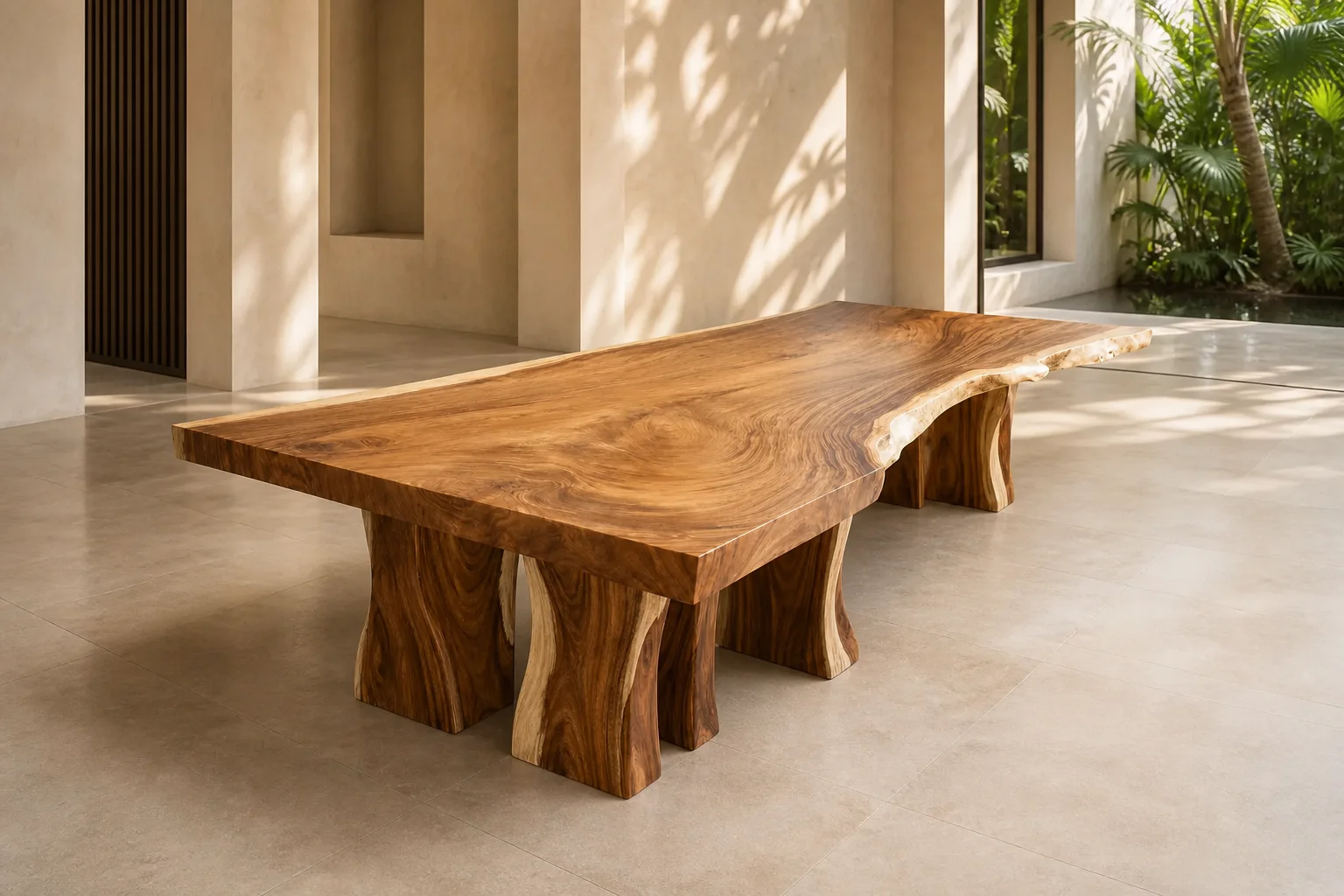
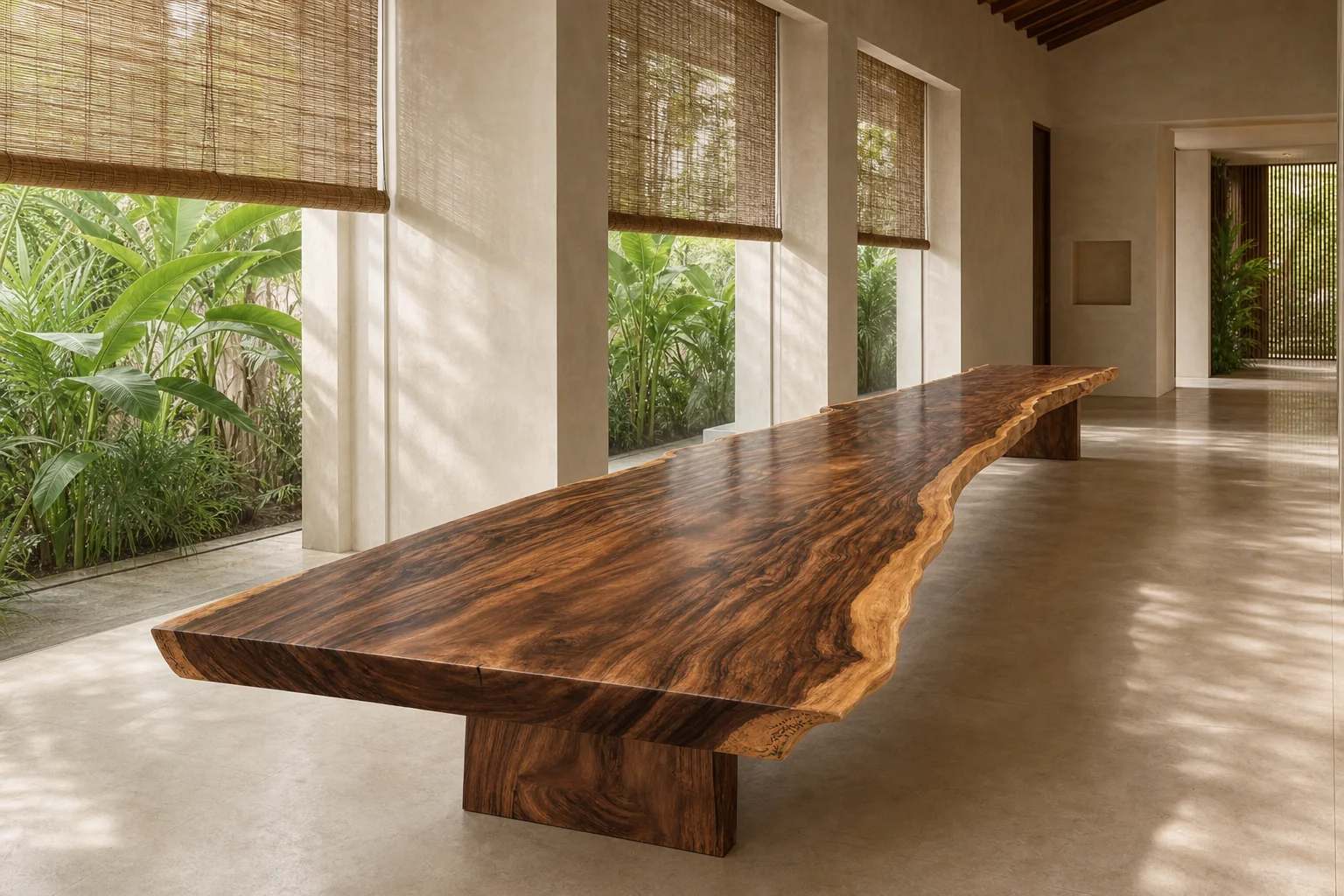
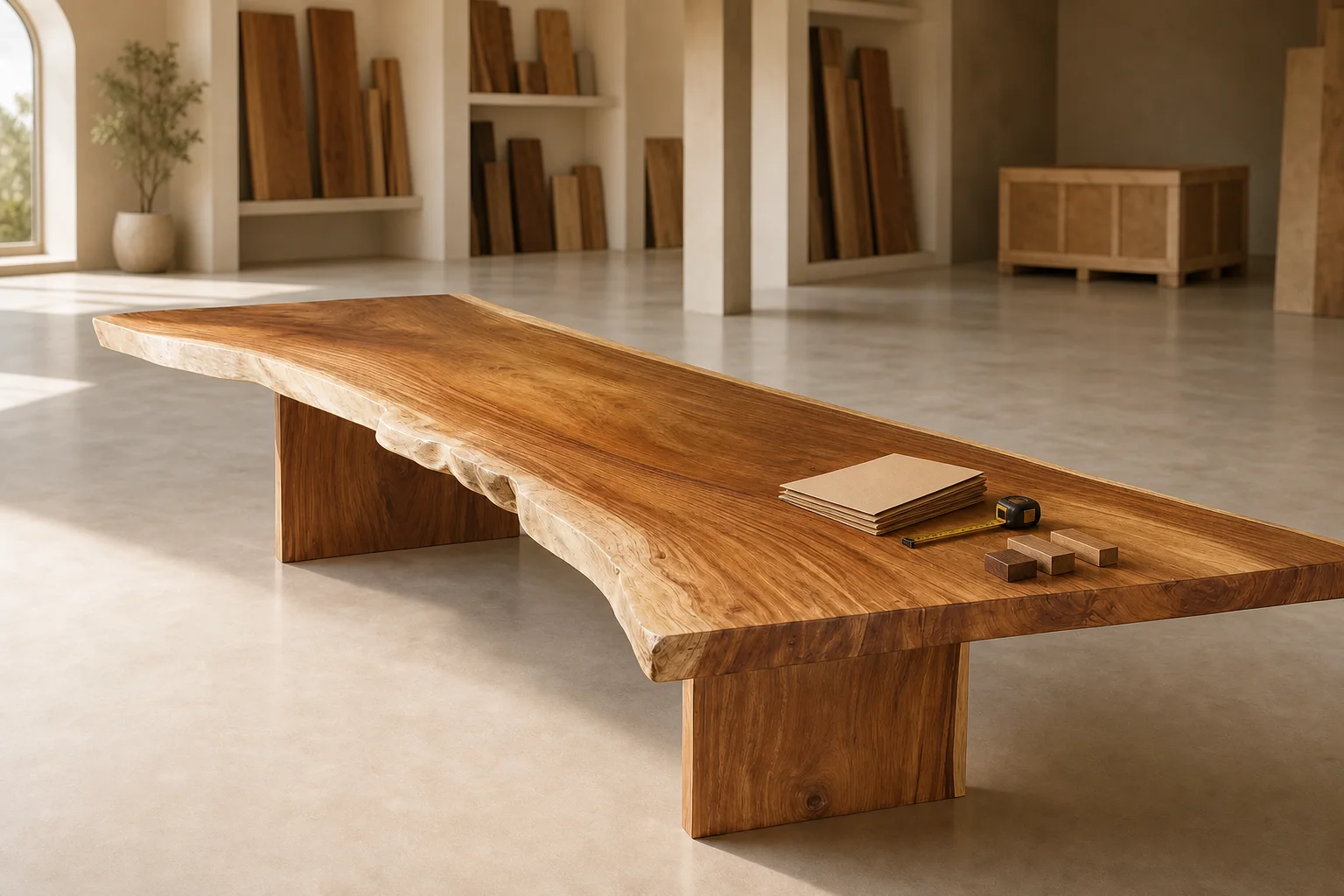
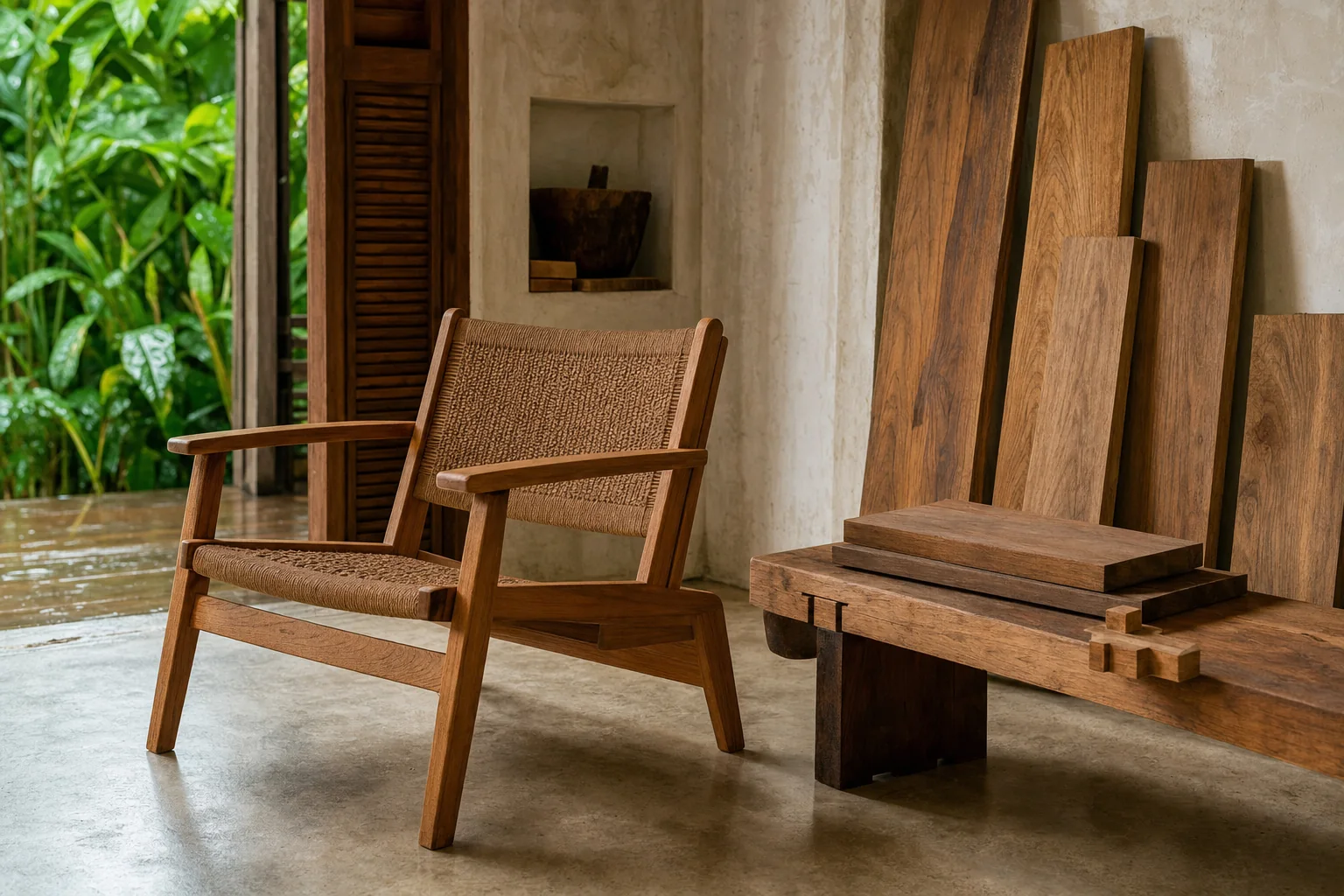
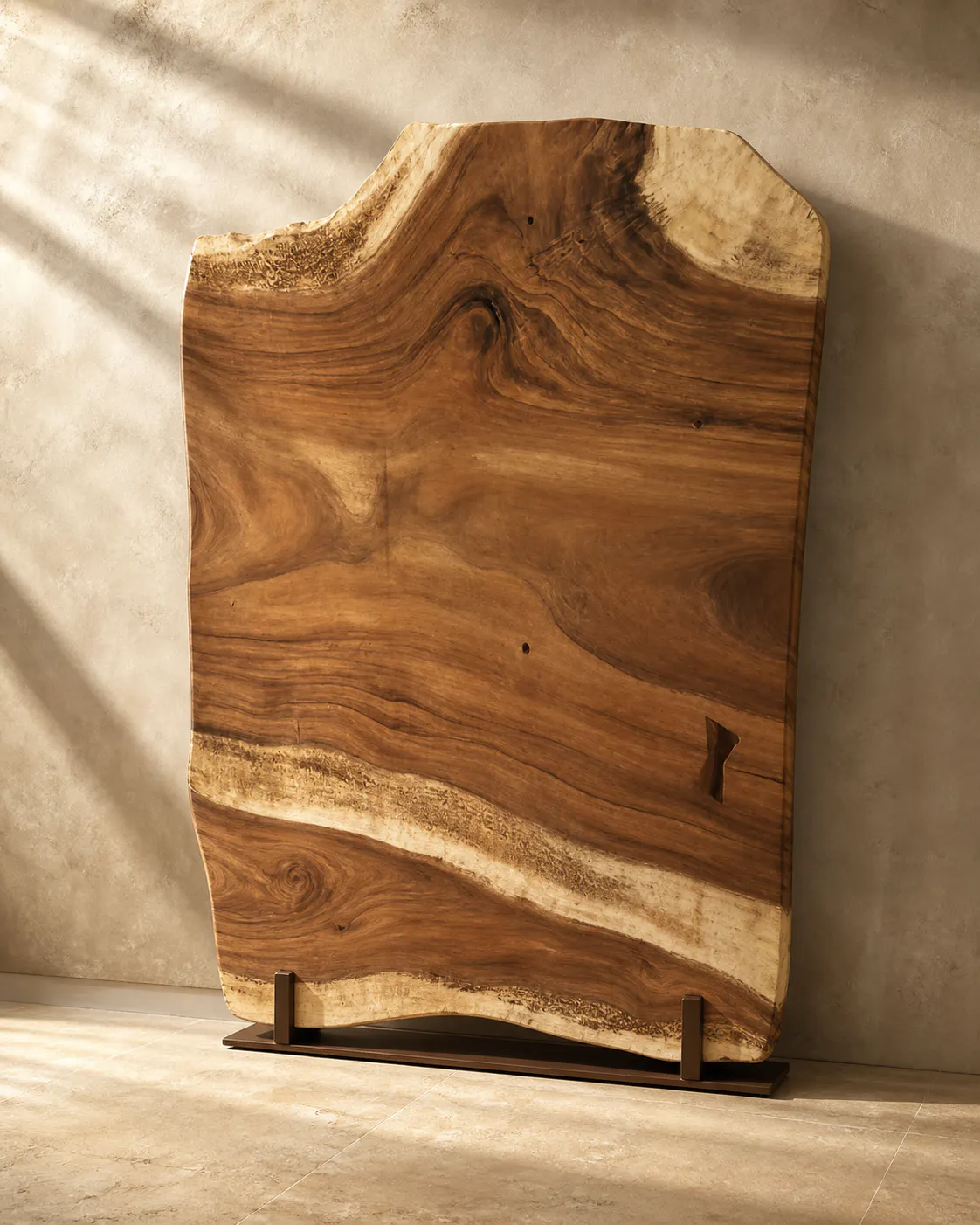
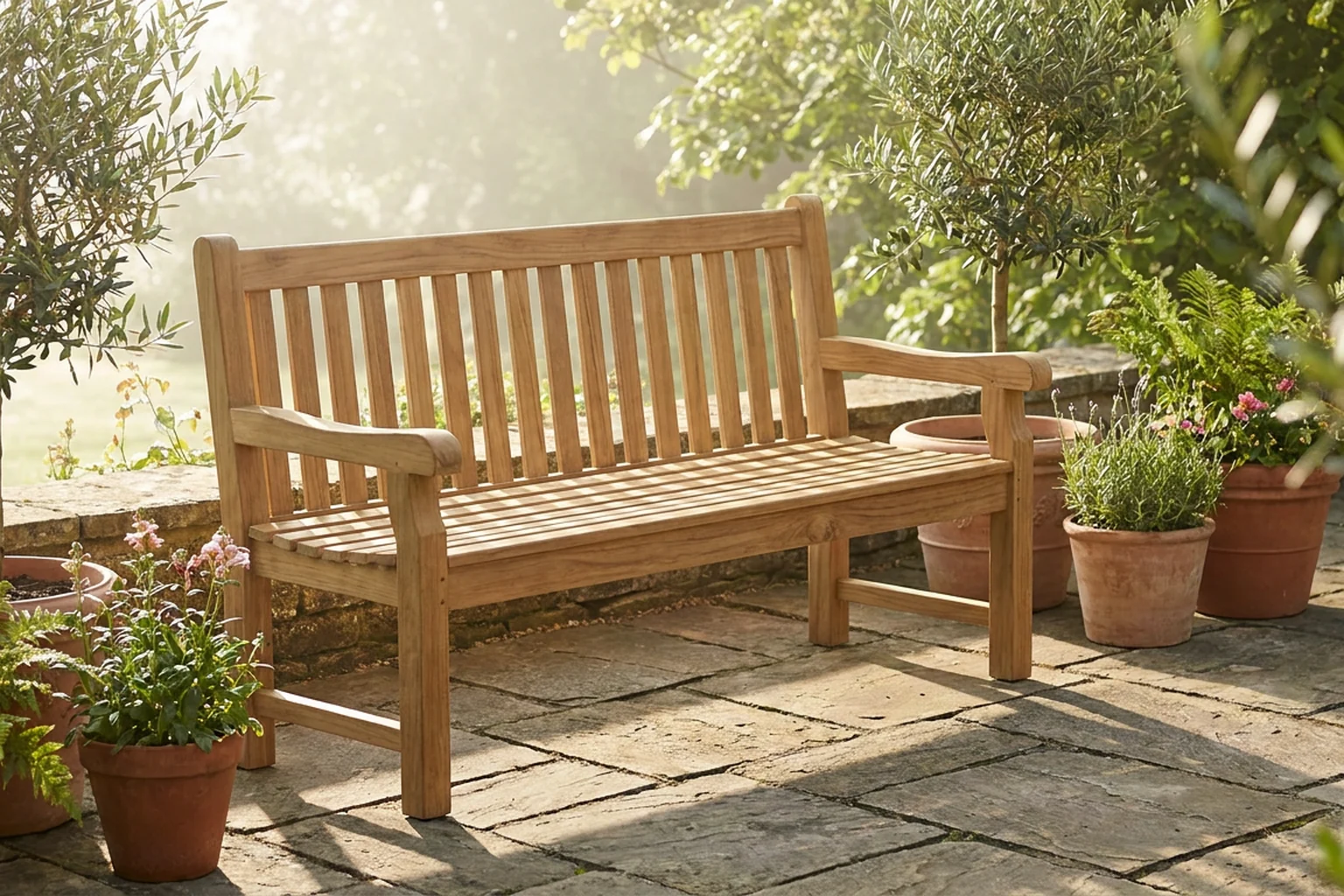
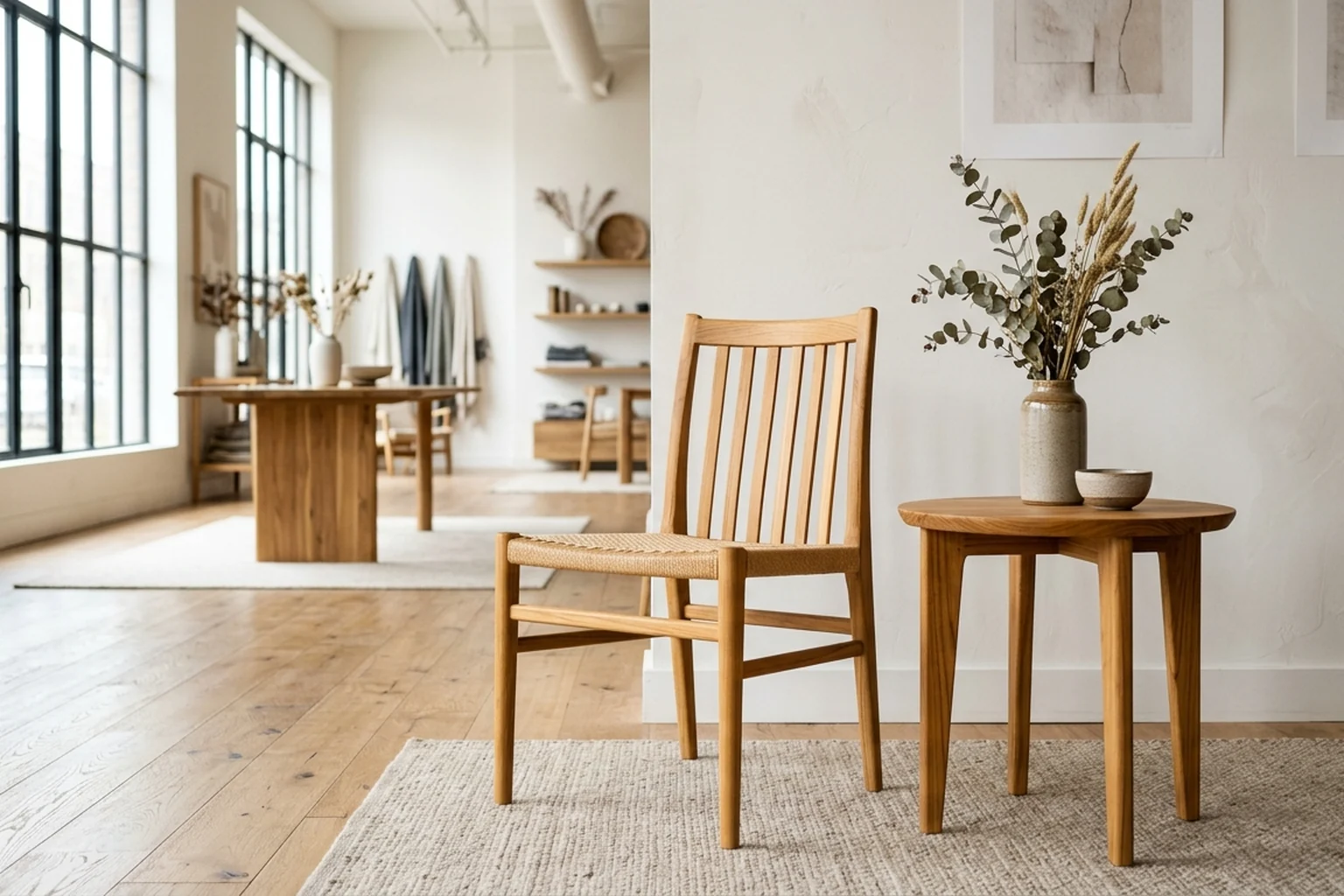
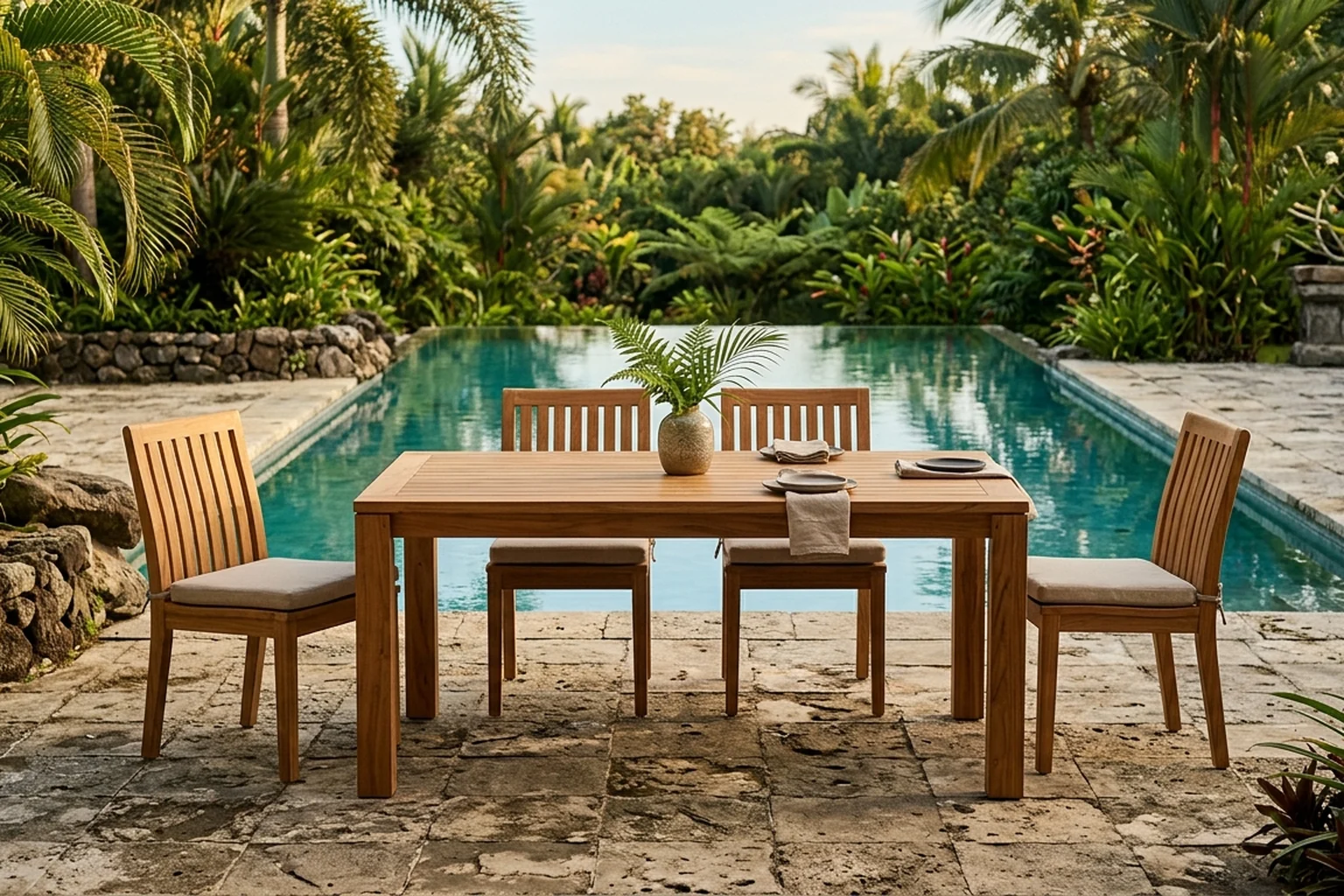
Untreated teak is a legitimate long-life choice, not an unfinished product. Outdoors, sunlight and rain gradually wash the surface to a pale silver-grey patina while the timber underneath stays sound. That weathering is even, and it is the look most teak garden furniture is designed to reach. Indoors, where rain never reaches it, untreated teak instead darkens slowly toward honey and amber as it is exposed to light.
A patina is kept clean with soft brushing and occasional washing, and it can be brought back to a warmer tone later with light sanding and oil if the owner changes their mind. What patina does not give you is stain resistance: red wine, oil and turmeric mark untreated wood more easily than a finished surface, so untreated teak suits low-risk placements better than a family dining table.
- Outdoor untreated teak silvers evenly; indoor teak darkens
- Patina cleaned by brushing and washing, no product needed
- Can be sanded and oiled later if the look changes
- Untreated surfaces stain more easily, so placement matters
3. Oil finishes: the warm, renewable option
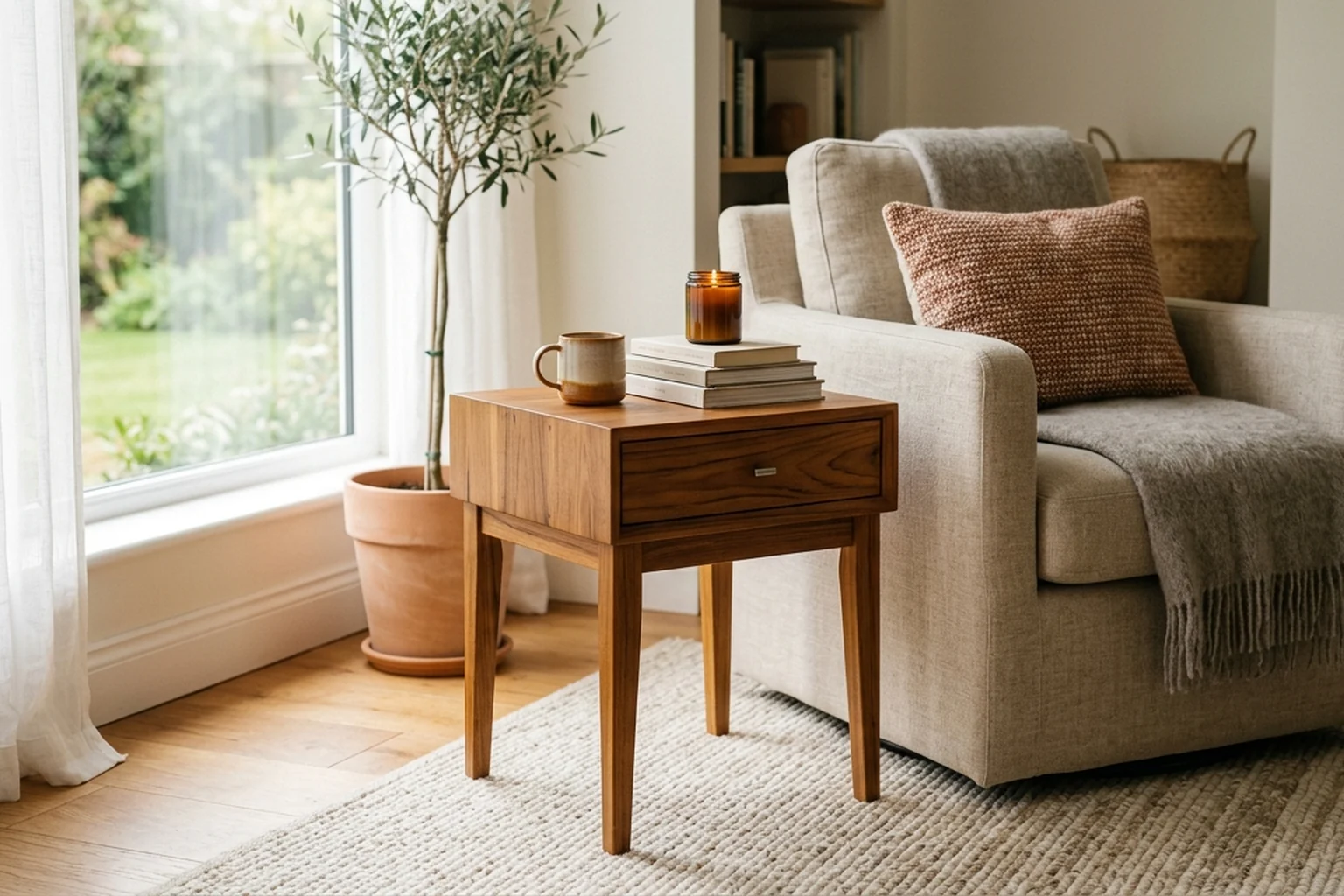
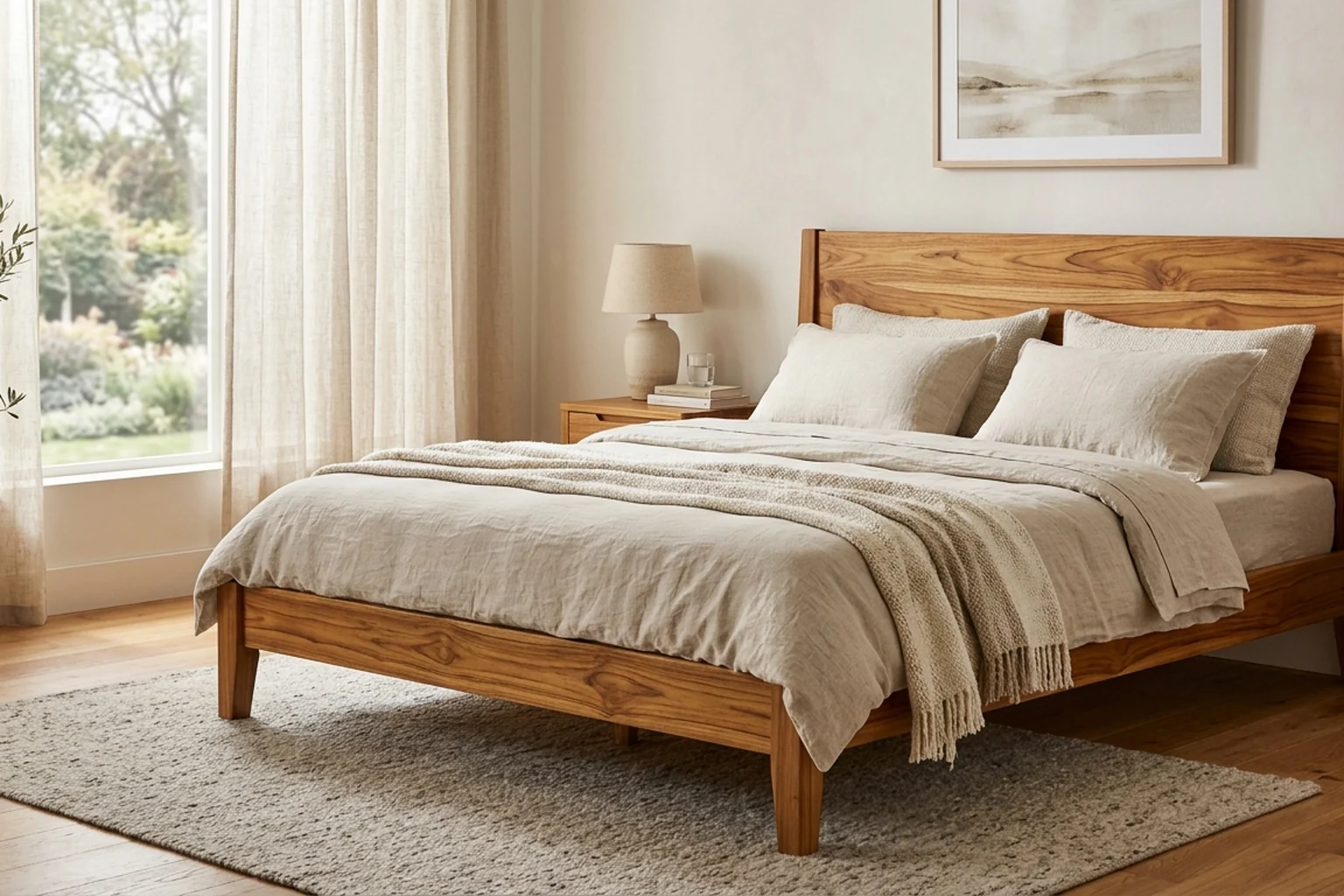
Penetrating oil soaks into the surface instead of building a film on top of it. It leaves a matte, natural sheen and deepens teak to a warm honey-brown, which is the finish most buyers picture when they think of teak furniture. Because nothing is layered on the surface, oiled teak can be refreshed with a cloth in a few minutes rather than sanded back.
Read the label carefully: many products sold as teak oil are blends containing varnish or resin, which behave like a thin film finish and cannot be topped up the same way. Pure penetrating oils — tung, linseed or dedicated furniture oils — are the ones that stay renewable. Expect to top up indoor oiled pieces roughly every six to twelve months, and outdoor pieces more often, especially through the first year when the surface absorbs the most.
- A penetrating oil, not a varnish-blend teak oil
- Indoor top-up roughly every 6–12 months
- Thin coats wiped back, never a wet sticky layer
- The same product kept for future top-ups
4. Lacquer, varnish and sealed finishes
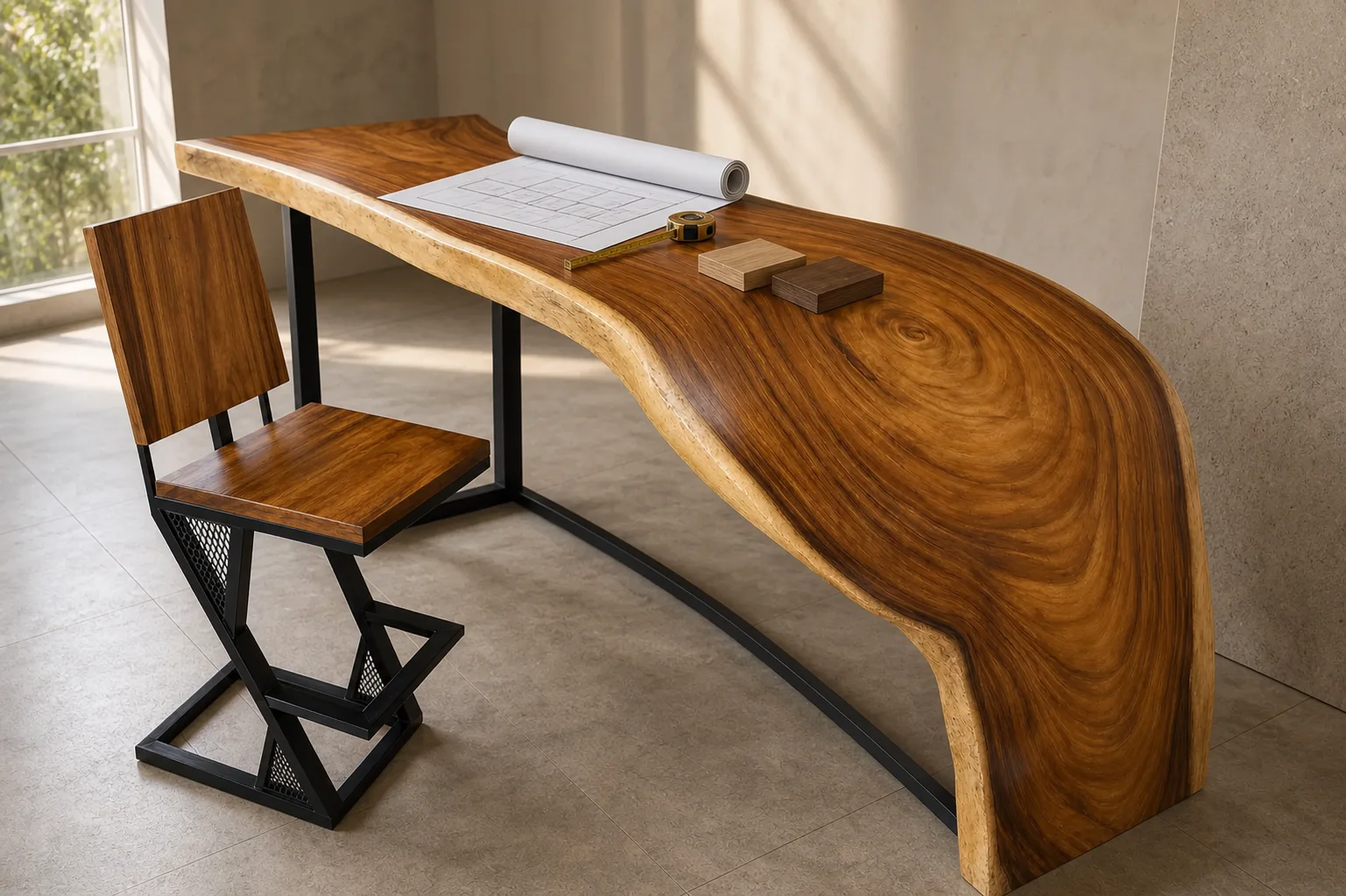
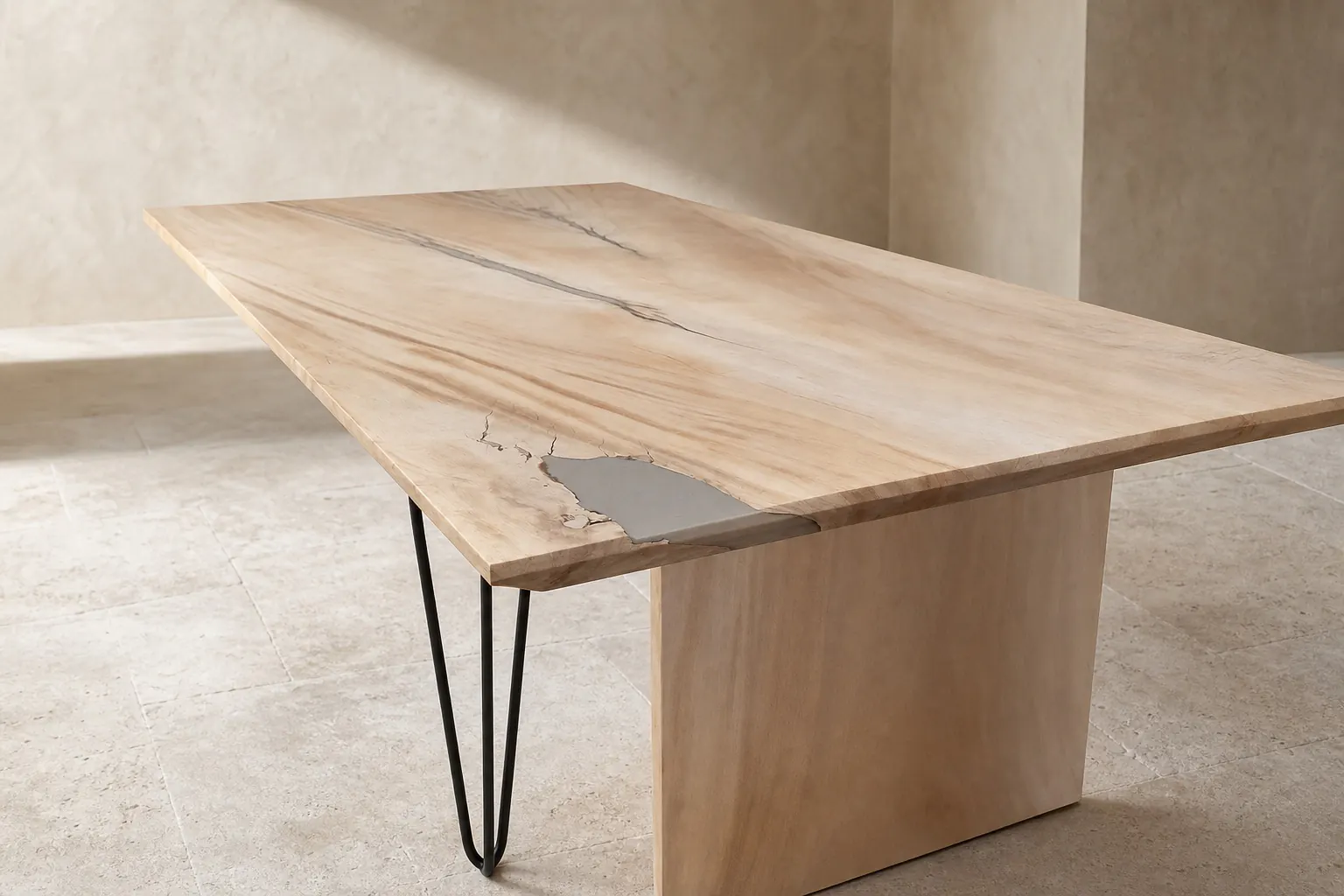
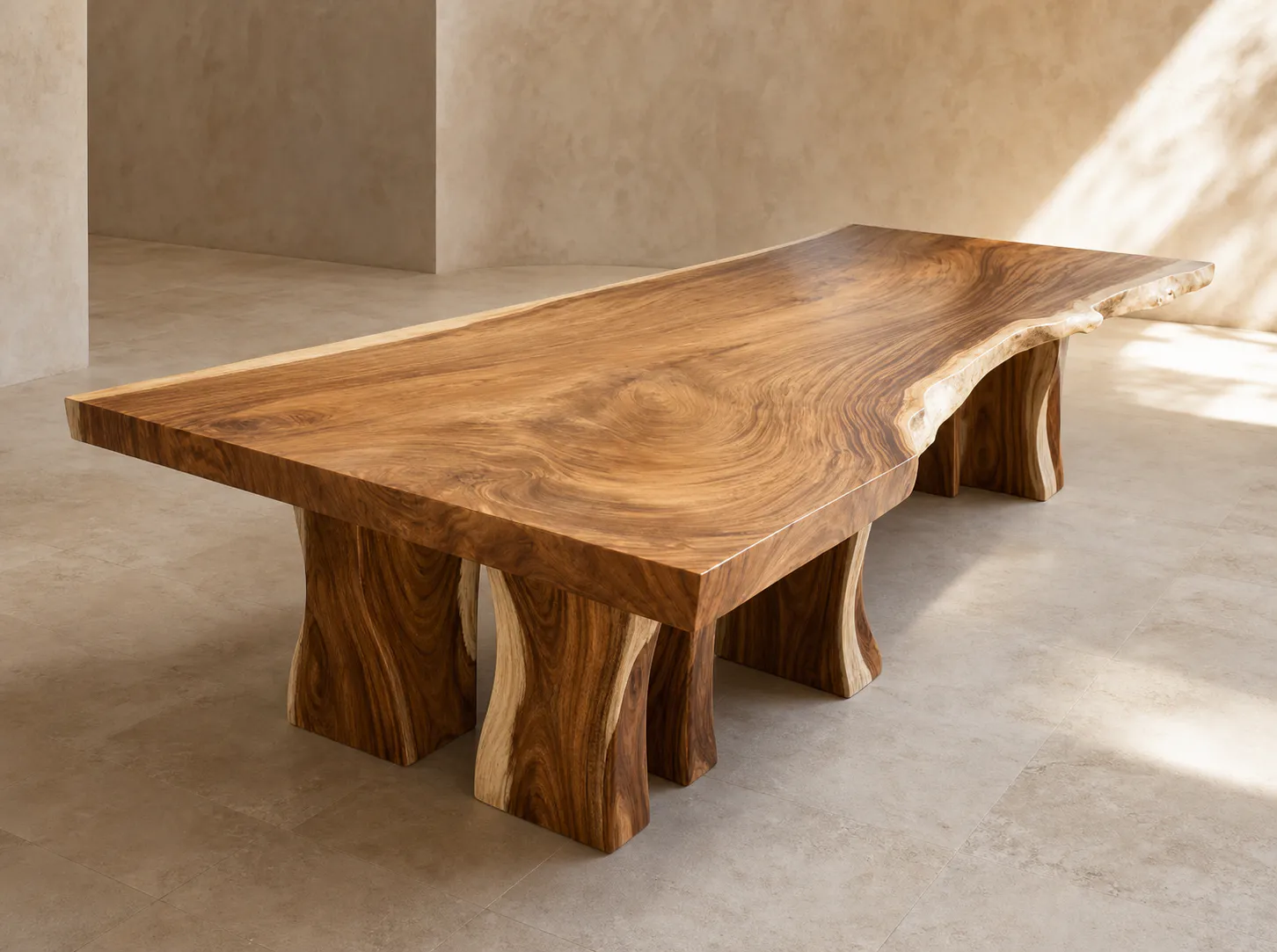
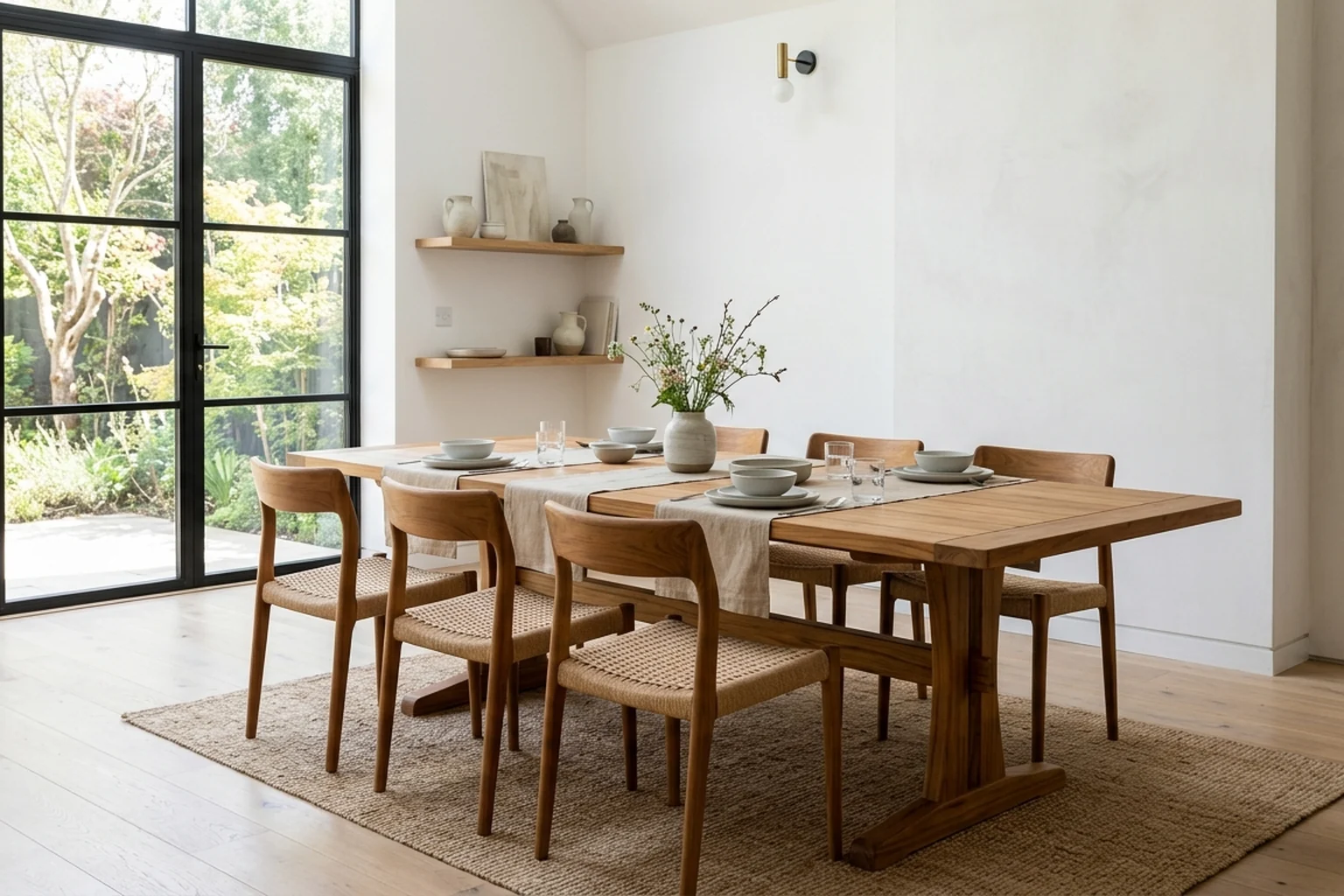
Film finishes sit on the surface as a continuous layer. Lacquer, varnish, polyurethane and sealing hard-wax oils give a smoother, more uniform look and much better resistance to water rings, spills and the daily wiping a dining table receives. A satin or matte lacquer still reads as wood rather than plastic, while high gloss shows every scratch and fingerprint.
The trade-offs are repair and feel. A sealed surface feels slightly less like bare wood, needs gentler cleaning with no oil or abrasive polish, and damage is repaired by sanding the affected area back to wood and recoating — a workshop job rather than a cloth job. Sealed finishes are usually the right answer for dining tables, desks, and hotel and restaurant furniture where the surface must survive constant use.
- Film finish chosen for tables and high-traffic pieces
- Satin or matte sheen rather than high gloss
- No oil and no abrasive polish on sealed surfaces
- Local sand-and-recoat repair accepted as the trade-off
5. Choosing by room and by climate
In Thailand the finish decision is partly a climate decision. Humidity and monsoon rain mean outdoor and semi-outdoor pieces do best with either no finish at all, so nothing can peel, or an oil finish that can be renewed seasonally. Heat and direct sun dry and lighten oiled surfaces faster than in temperate climates, so an annual top-up before the rainy season is a practical rhythm.
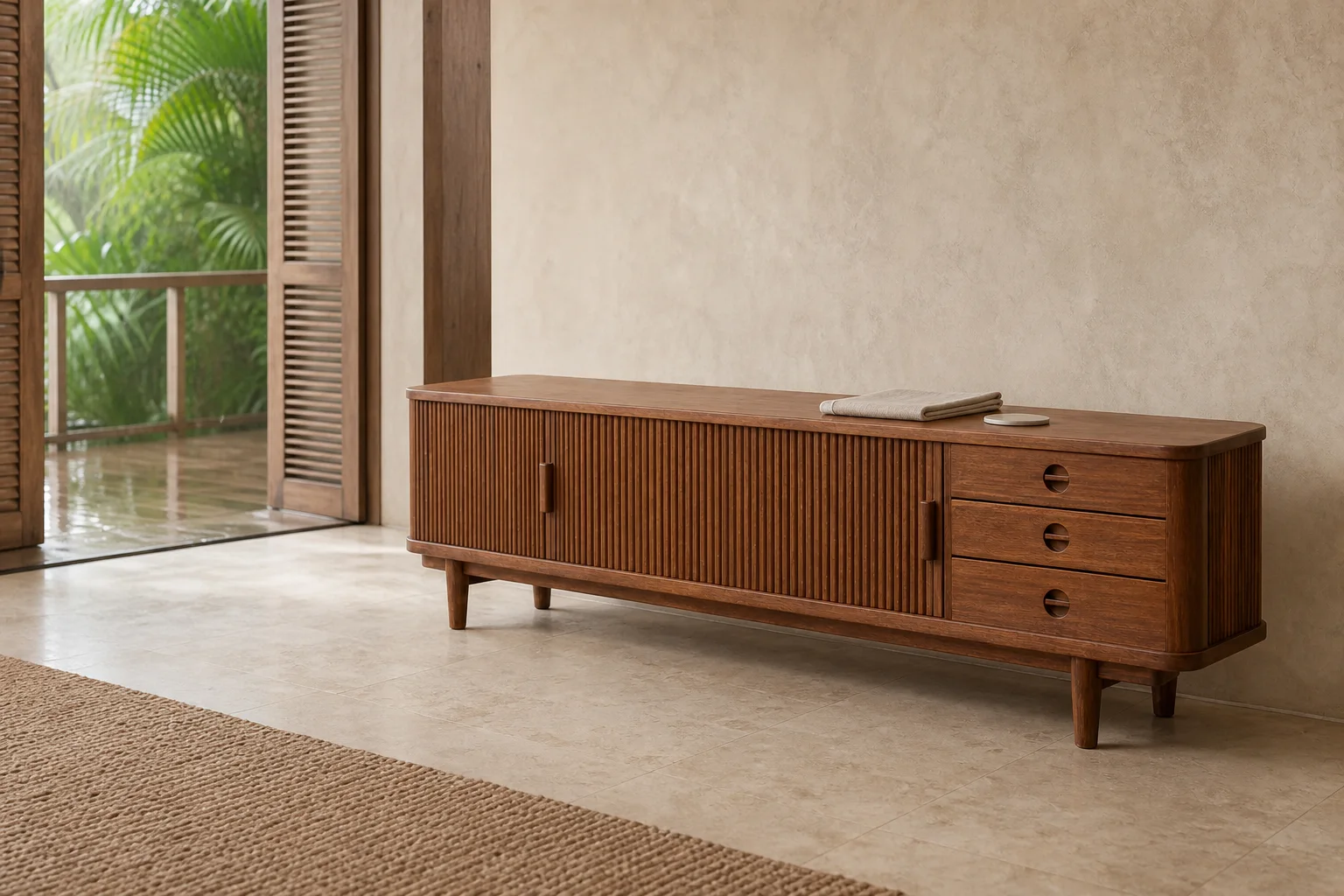
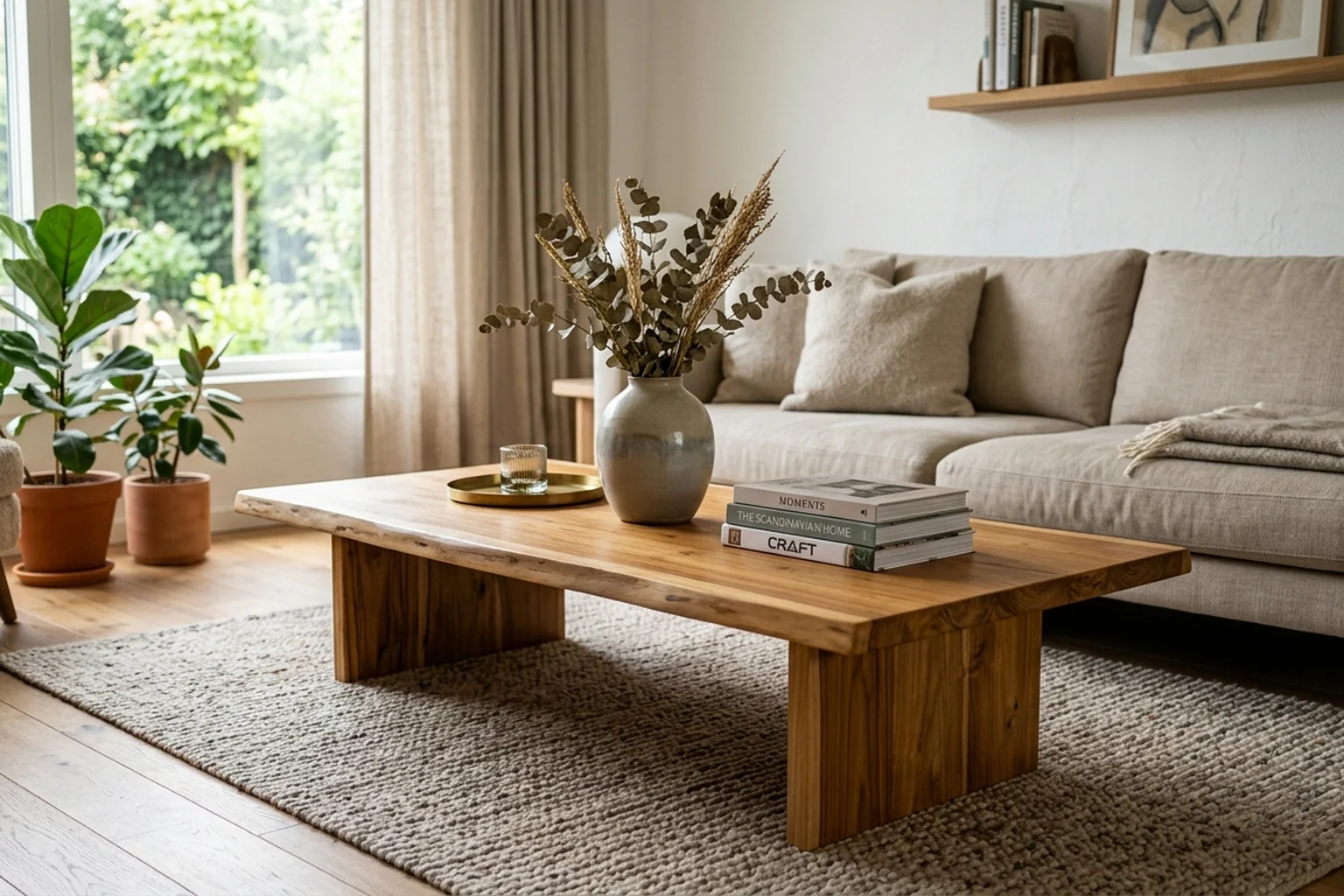
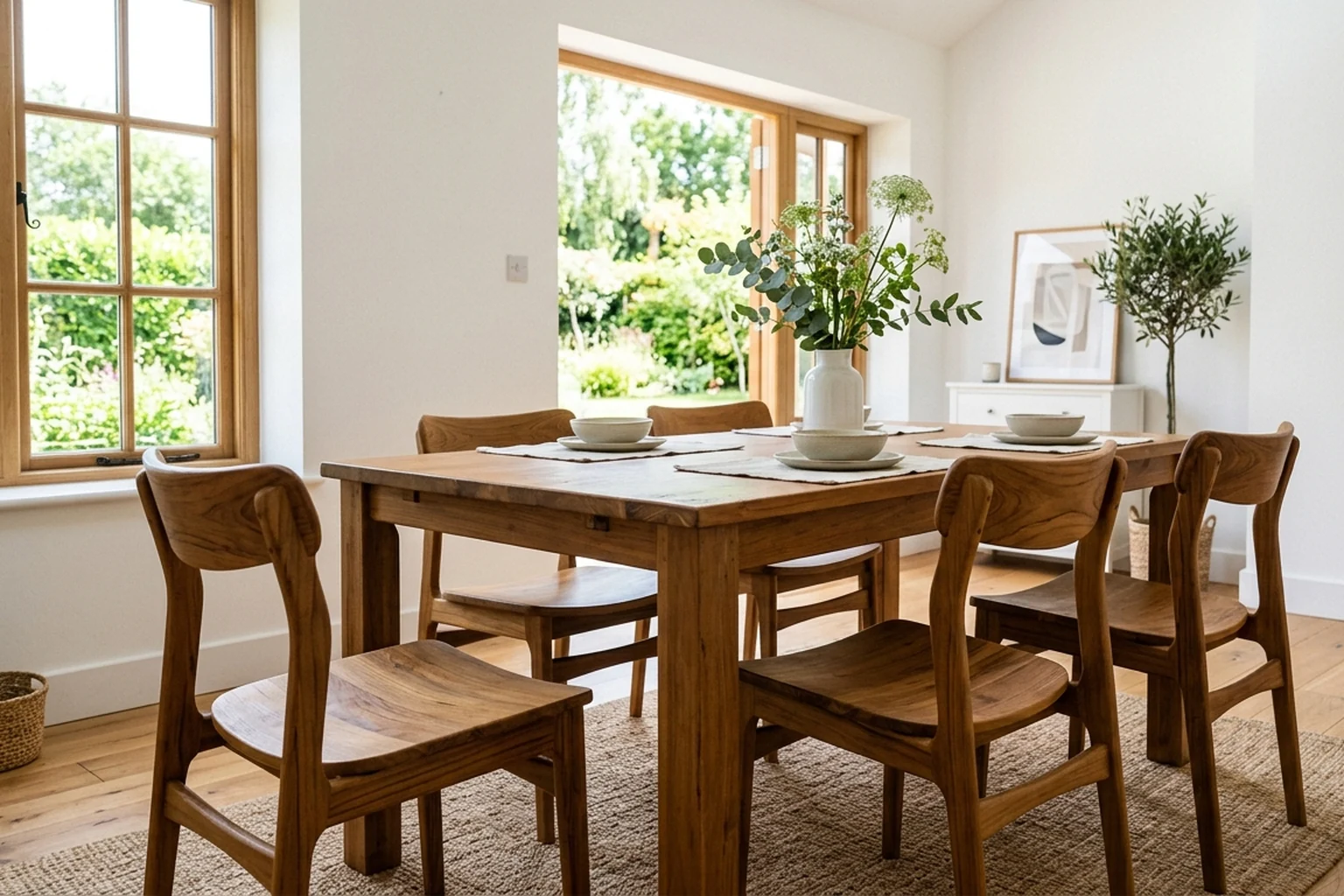
Indoors, the split usually follows use: lacquer for dining tables, coffee tables and anything that meets food and drink; oil for beds, benches and pieces chosen for the look of the timber; untreated teak acceptable for decorative or structural pieces. Bathrooms and kitchens reward a sealed surface. Whichever you choose, keep the routine simple — wipe spills promptly, use coasters and trivets, avoid standing water, and let air move around the piece. Our teak furniture care and restoration guides cover what to do when a surface eventually needs attention.
- Outdoor: leave natural or oil, renewed each season
- Indoor tables and drinks surfaces: a sealed finish
- Beds, benches and decorative pieces: oil is enough
- Bathroom and kitchen: sealed and wiped promptly
6. What to confirm before you order
Finish is where misunderstandings happen in custom furniture, because the same wood arrives warm and matte or cool and glossy depending on what was applied to it. Ask for the product name, the number of coats, and a sample or photograph of the same finish on the same timber before production starts. Ask whether a touch-up kit or a small quantity of the same product can be supplied with the order.
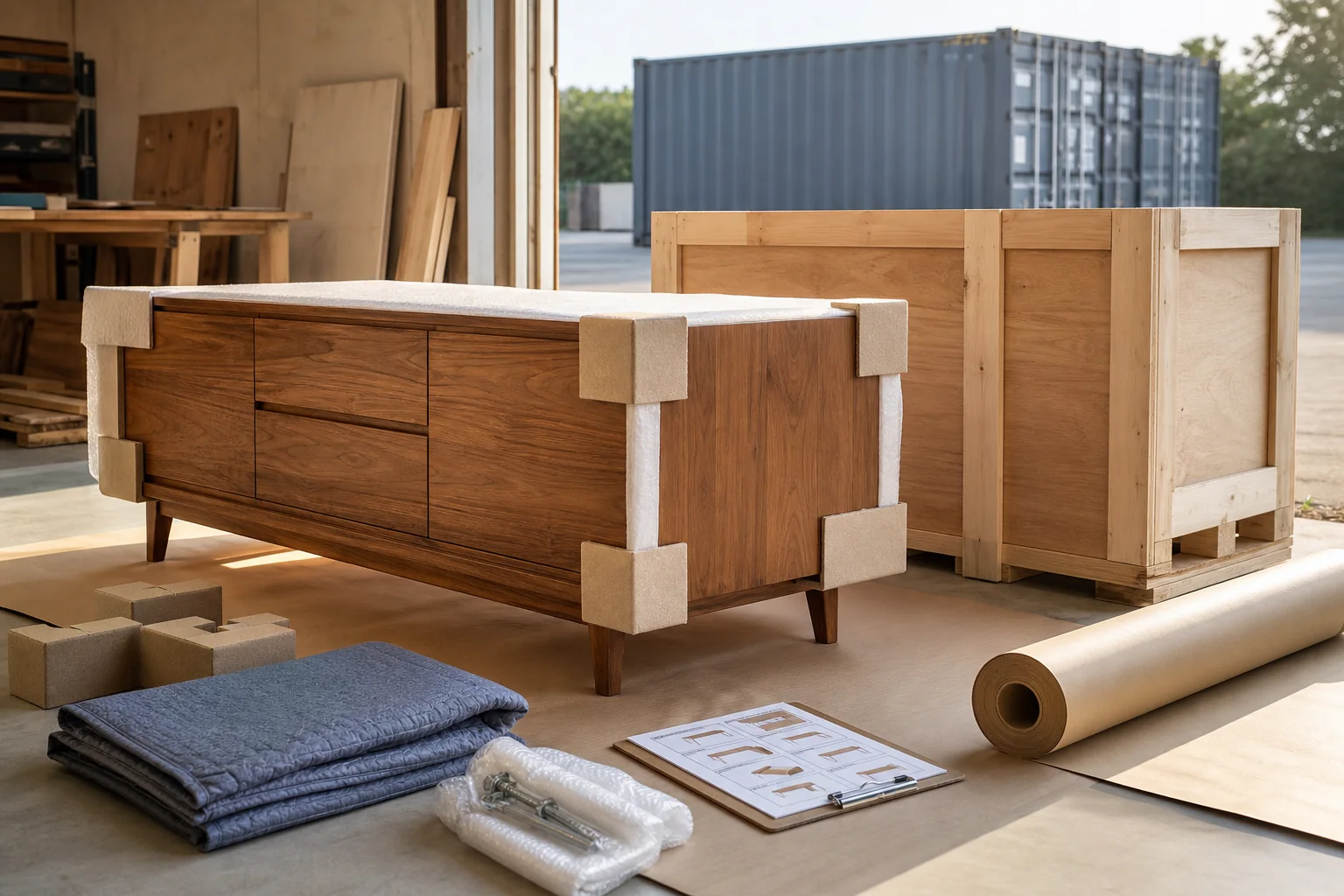
M Furniture & Decor has been building solid teak furniture for more than five decades, from the main showroom on Phetkasem Road in Cha-am, Phetchaburi, with a second viewing location in Bangkok. Finish, dimensions and timber are agreed per order, and the species and source of the teak are confirmed for the actual pieces. For export orders we quote FOB or CIF and coordinate packing, freight, customs and insurance. The fastest route is WhatsApp on +66 614 456 154.
- Product name and number of coats confirmed
- Sample or photograph of the finish on the same timber
- Touch-up product supplied where possible
- Written confirmation before production starts
Pick the finish you are willing to maintain
The right teak finish is the one that suits how the piece will be used and how much care it will honestly receive. Leave outdoor teak to silver if you want the least maintenance, oil it if you want the warm tone and are happy to top it up, and seal the tables and high-traffic surfaces that must resist spills. Confirm the product, the coats and the touch-up route before production, and the finish becomes part of the furniture rather than a problem to manage later.