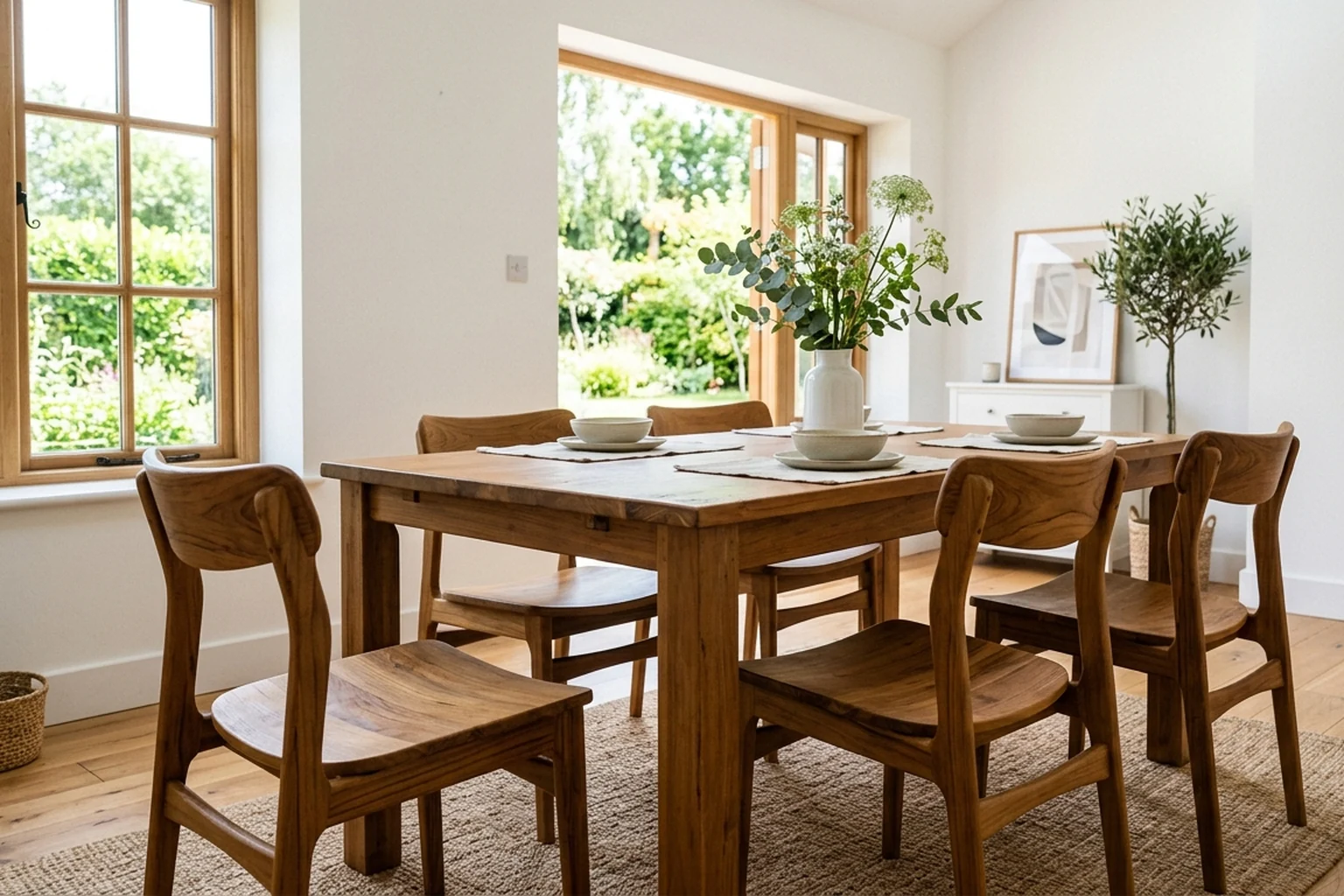
The short answer
Match the chair to the table and the people first: seat height, seat depth and backrest angle decide real comfort. Confirm solid teak in the frame and seat, choose a finish that copes with daily dining, and decide whether you need a full set or pairs that can grow. For made-to-order or export work, agree dimensions, finish, quantity and delivery in writing.
1. Comfort comes before style
A dining chair gets hours of use a day, so fit matters more than on any other seat in the house. The most useful starting points are seat height, seat depth and backrest angle. A typical dining chair seat sits around 45 to 47 centimetres from the floor, which pairs with standard dining tables of 73 to 76 centimetres; confirm both measurements against your own table before ordering.
Seat depth should leave a few centimetres between the back of your knees and the front edge of the seat, and the backrest should support the lower back without pushing you forward. If the chairs will be used by people of very different heights, a mid-range seat height and a gently angled backrest usually serve everyone better than a design optimised for one body type.
- Seat height vs your table height
- Seat depth and knee clearance
- Backrest angle and lower-back support
- Armrests or armless, and how they fit the table
- Comfort for the tallest and shortest user
2. Confirm the wood is solid teak
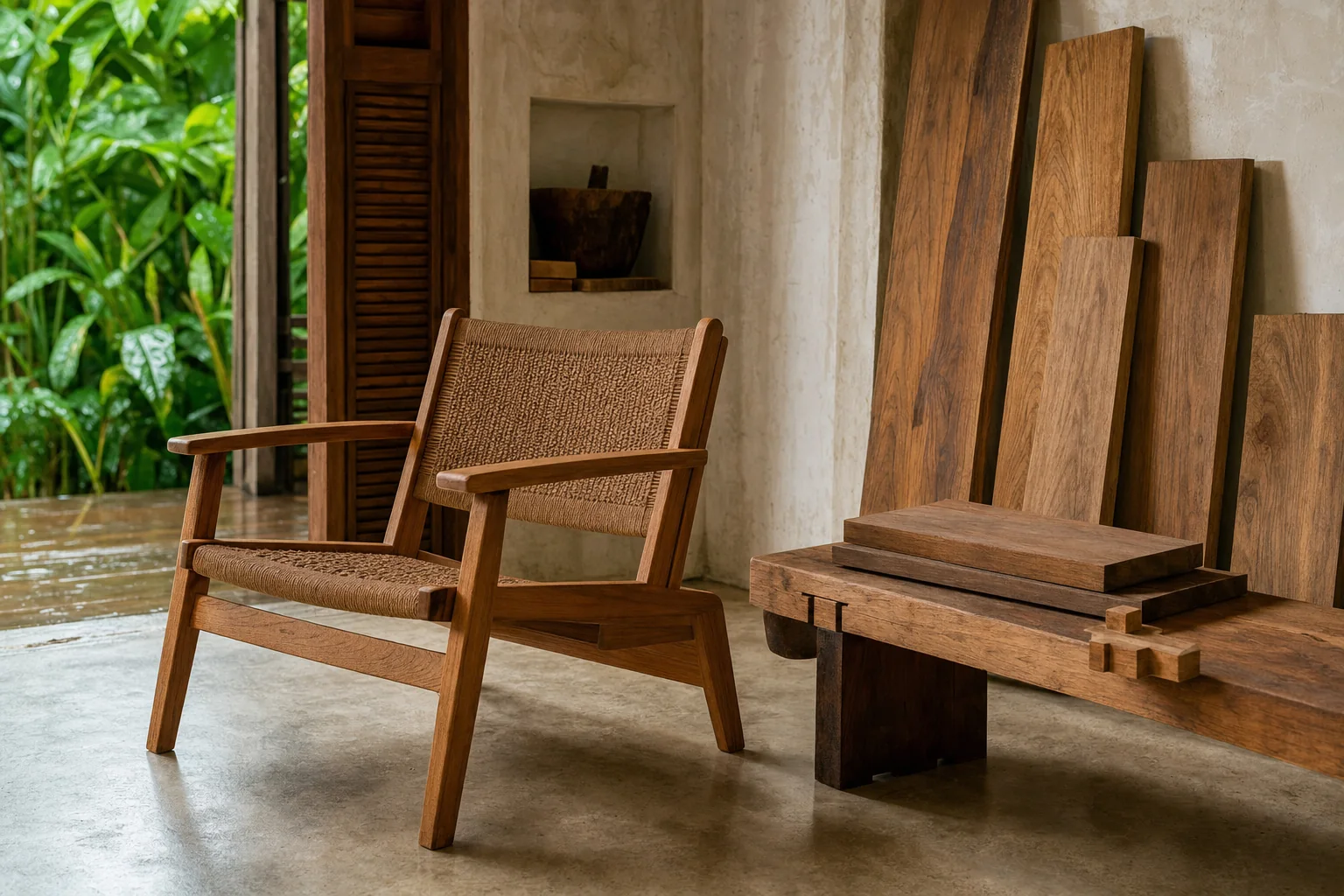
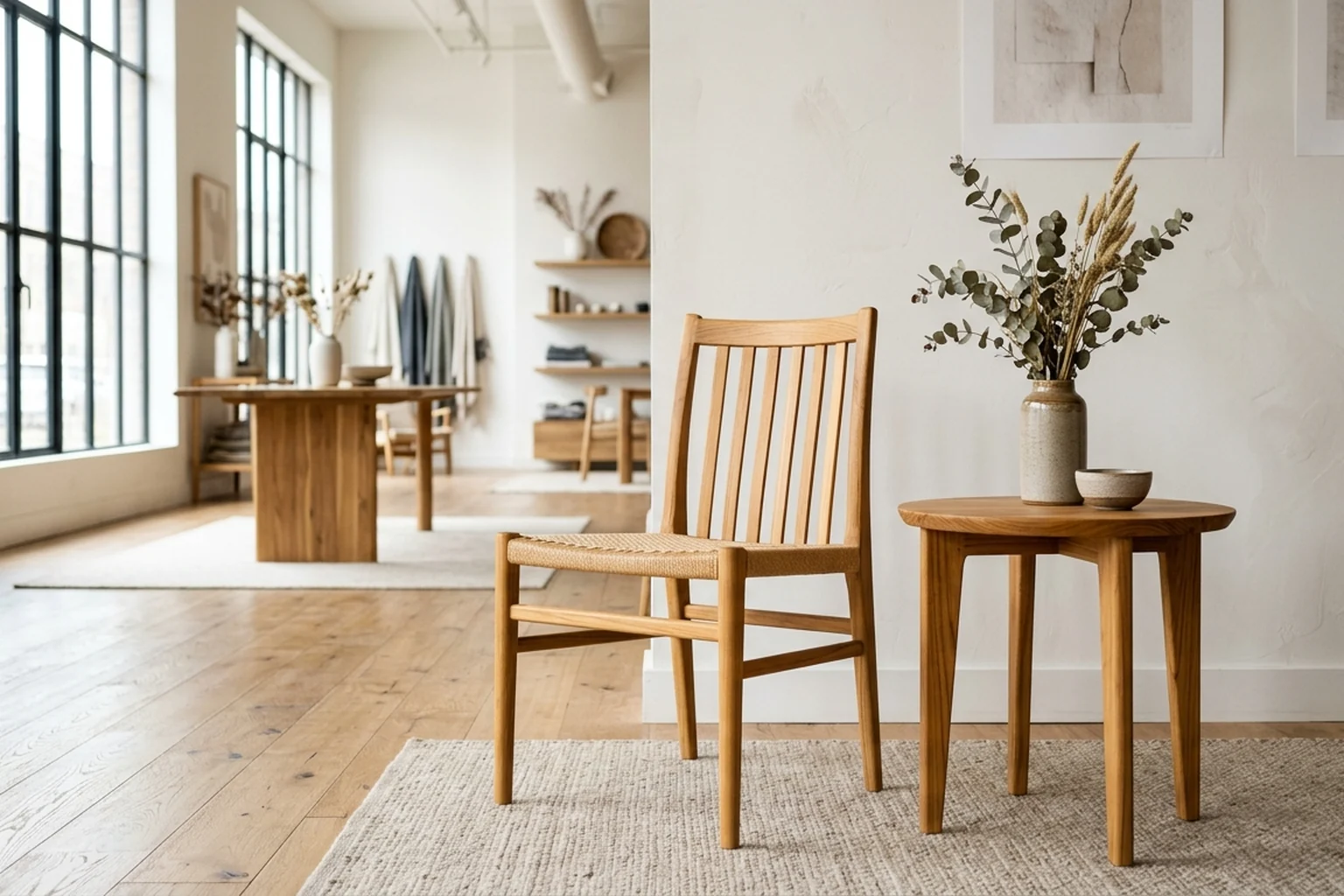
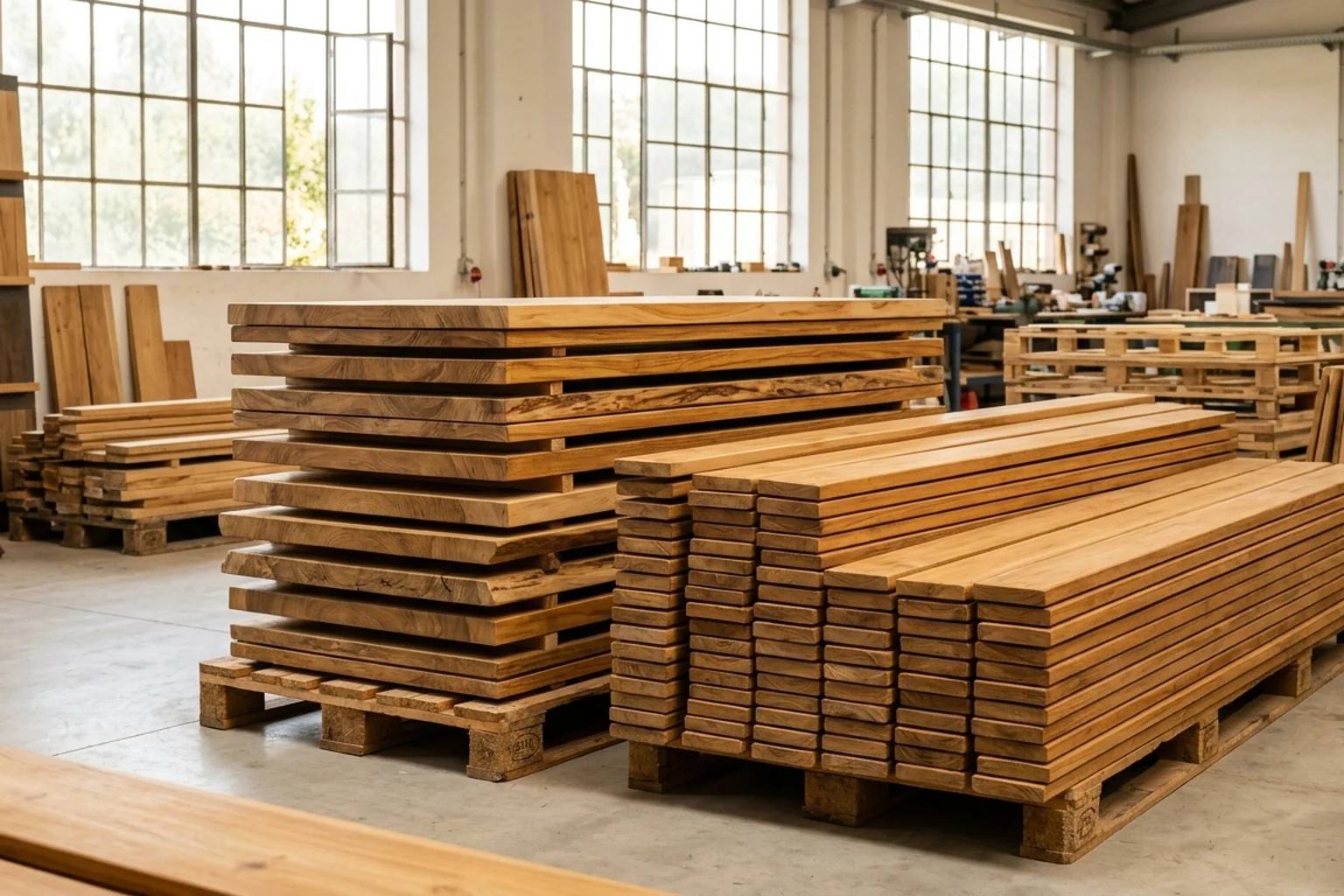
Teak is chosen for its natural oils, stability and long service life, but those benefits only come from solid teak, not from thin veneer over cheaper wood. Ask the seller to confirm in writing that the frame, seat and backrest are solid teak, and check the underside of the seat and rails, where materials are easiest to assess.
Dining chairs carry repeated weight and movement, so joinery matters. Mortise-and-tenon or similar structural joints at the seat-to-leg and rail connections are a good sign; screws driven into end grain are not. A well-made teak chair can be repaired, refinished and handed down, which is exactly what the material is known for.
- Solid teak confirmed in writing
- Underside checked for materials
- Structural joinery at seat and rails
- Frame and backrest construction understood
3. Match the set to the table and the room
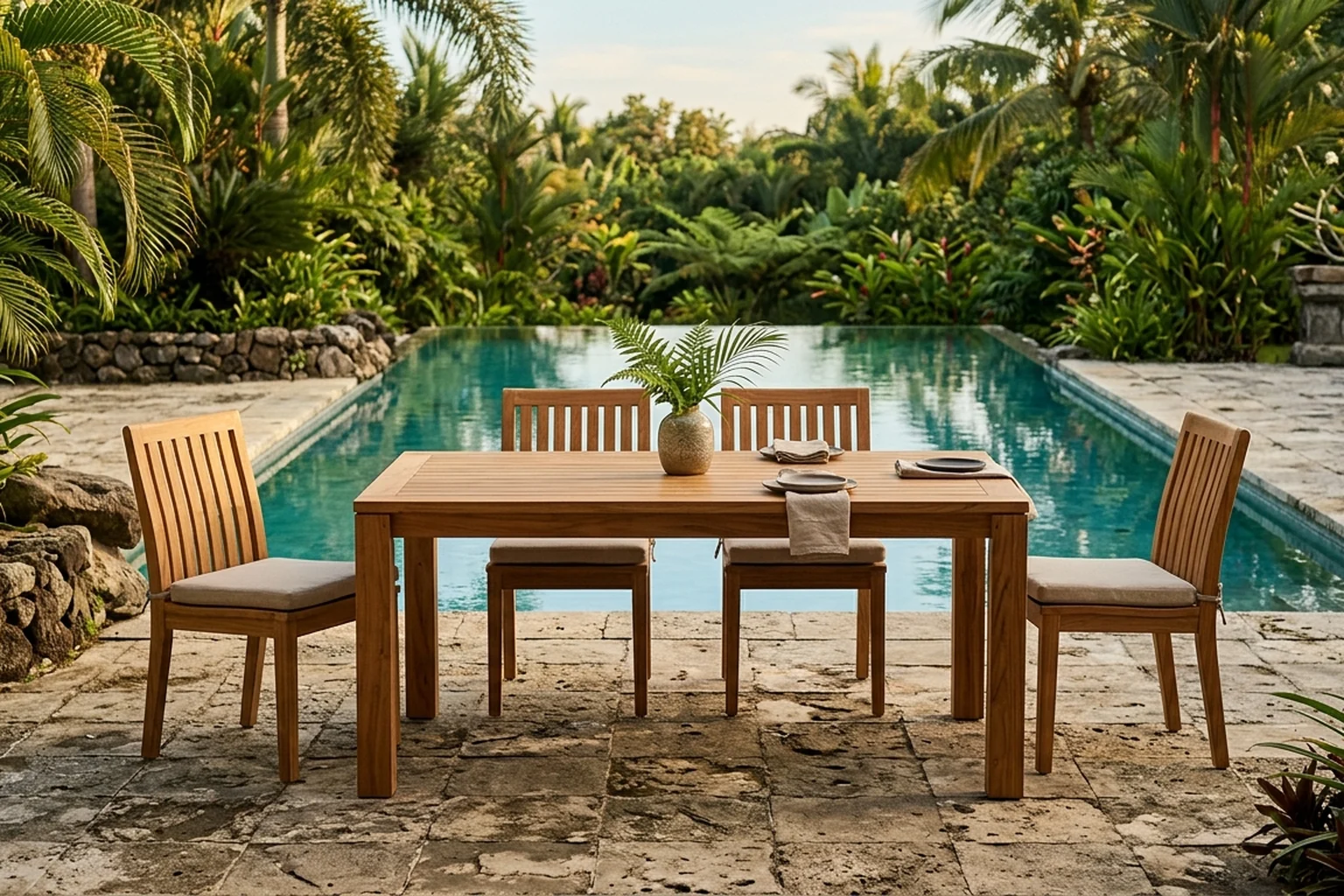
Chairs and table should be considered together. Check the seat height against the table height, allow roughly 60 centimetres of width per diner, and think about how chairs tuck under the table when not in use. A chair that cannot slide fully under a table apron can make a room feel permanently cluttered.
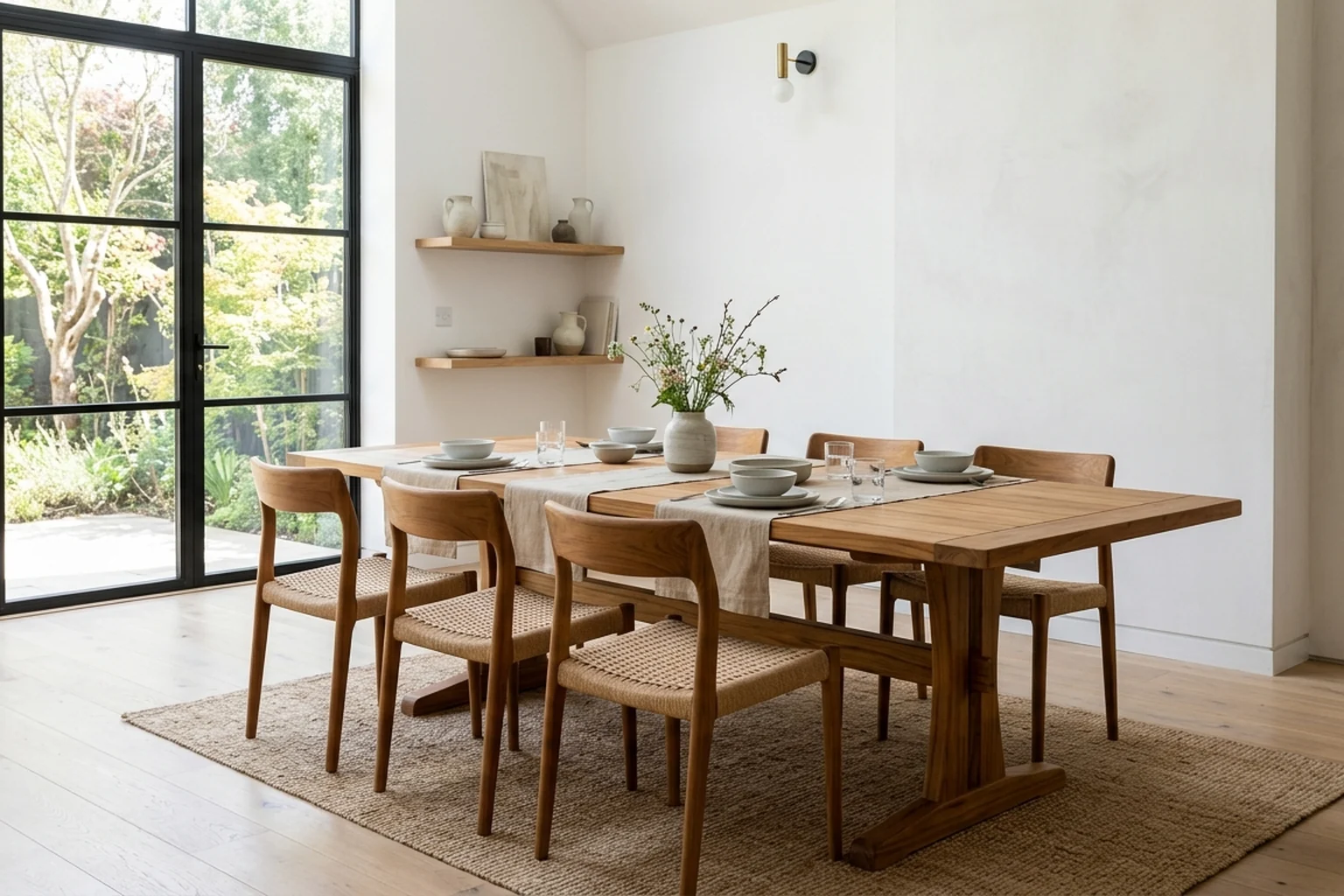
Sets are not the only option. Many buyers start with four matching chairs and add pairs later, which works well when the maker keeps the same design available. Mixing two armchairs at the ends with armless chairs along the sides is a classic dining-room arrangement that keeps corner spaces usable.
- Seat height vs table height confirmed
- Width per diner and tuck-under clearance
- Full set or pairs that can grow
- Armchair and armless mix planned
- Style kept available for future additions
4. Finish and care for daily dining
Dining chairs face spills, heat and constant handling, so the finish should be chosen for use, not just colour. A hardwax or lacquer surface protects against moisture and is simple to refresh; a natural oil finish highlights the grain but needs more regular attention. Ask for a sample on similar wood when possible, because photographs shift both colour and sheen.
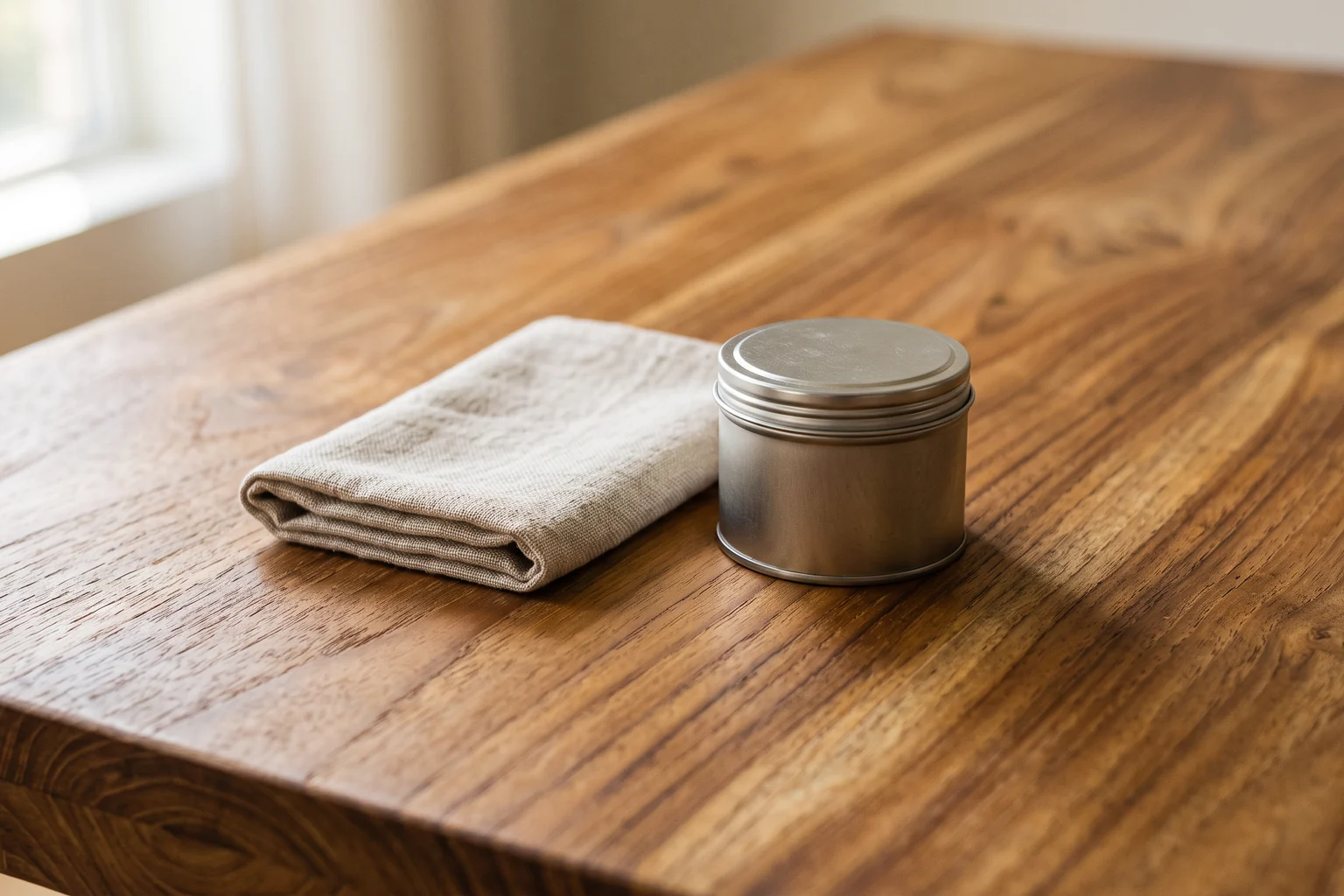
No finish makes teak completely indifferent to hot plates, standing water or harsh cleaners. Coasters, placemats and prompt wiping keep a dining set looking new far longer than any single coating. For routine care, a soft cloth and mild soap and water are usually all a teak chair needs.
- Finish chosen for daily use
- Sample seen on similar wood
- Heat and spill habits planned
- Care and refresh routine agreed
5. Sets, custom sizes and made-to-order chairs
Standard sets cover most dining rooms, but custom work solves the cases standard sizes cannot: a counter-height breakfast bar, a very long family table, or a room where four chairs are too many and three are exactly right. M Furniture & Decor has made custom furniture for more than five decades from its showroom on Phet Kasem Road in Cha-am, with a second viewing location in Bangkok, and can match chairs to an existing table or build a full set to a brief.
For made-to-order chairs, agree the finished seat height, seat depth, backrest design, finish, quantity and timeline in writing before production. Photographs of the table and room help as much as measurements, especially when matching an existing piece.
- Standard set or custom brief
- Seat height, depth and backrest agreed
- Finish and quantity in writing
- Timeline confirmed before production
6. Ordering and export from Thailand
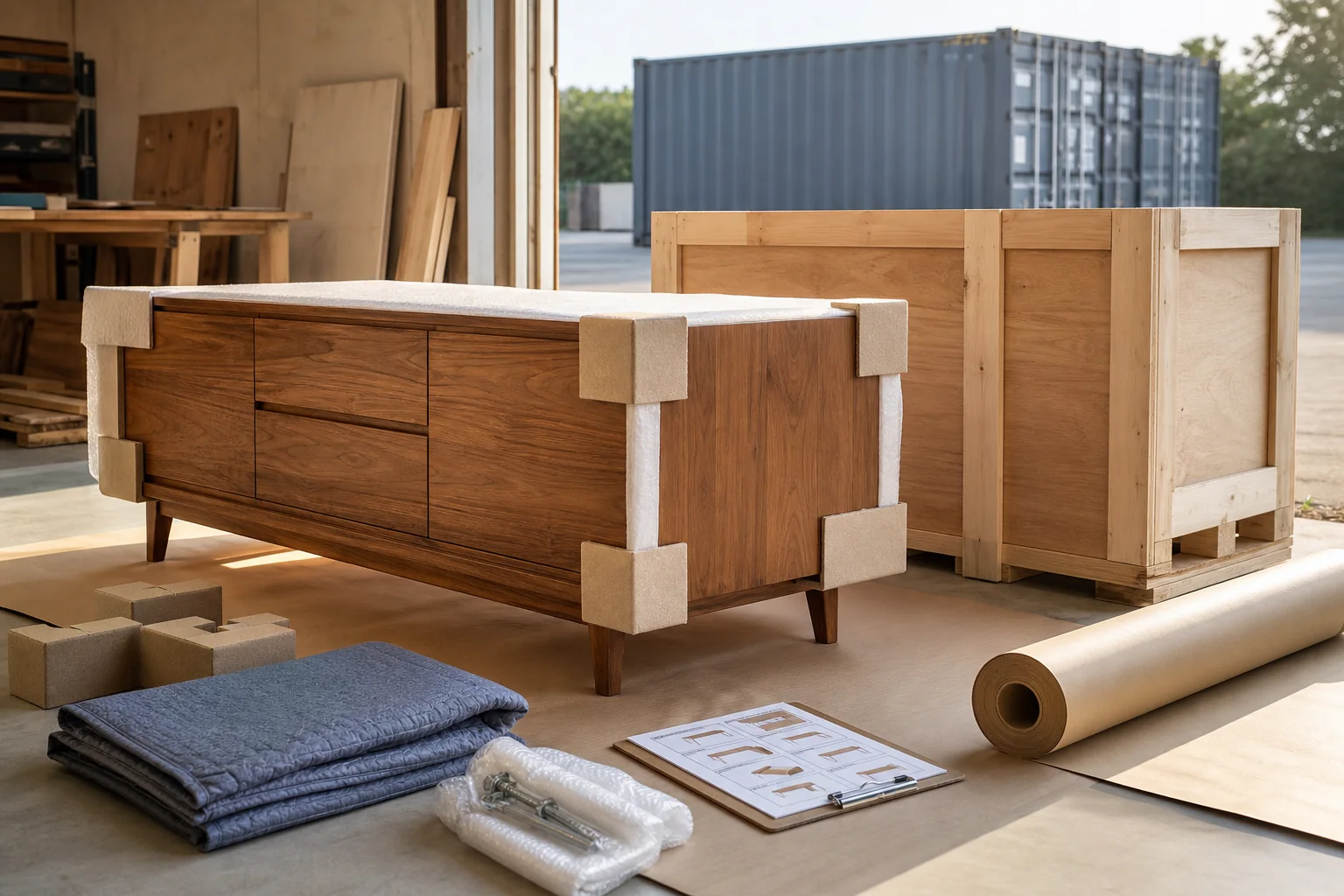
M Furniture & Decor ships internationally, including single pieces, project orders and container orders, with packing, freight, customs and insurance coordination. For export orders, pricing can be quoted on FOB or CIF terms depending on the destination and order size, and species and source records are confirmed for the exact piece or lot.
For a quotation, share the piece or brief, dimensions, quantity, destination and timeline. The fastest direct channel is WhatsApp at +66 614 456 154. Lead time depends on design, materials and quantity, so confirm timing with your order.
- Piece or brief, dimensions and quantity
- Destination and incoterms (FOB or CIF)
- Lead time confirmed with the order
- Species and source records for export
Choose chairs the whole table will share
Teak dining chairs reward a clear brief: fit the chair to the table and the people, confirm solid teak and honest joinery, and choose a finish that survives real meals. Whether you buy a matching set, add pairs over time or commission a custom size, a well-chosen teak chair is the piece everyone reaches for at every meal, for decades.