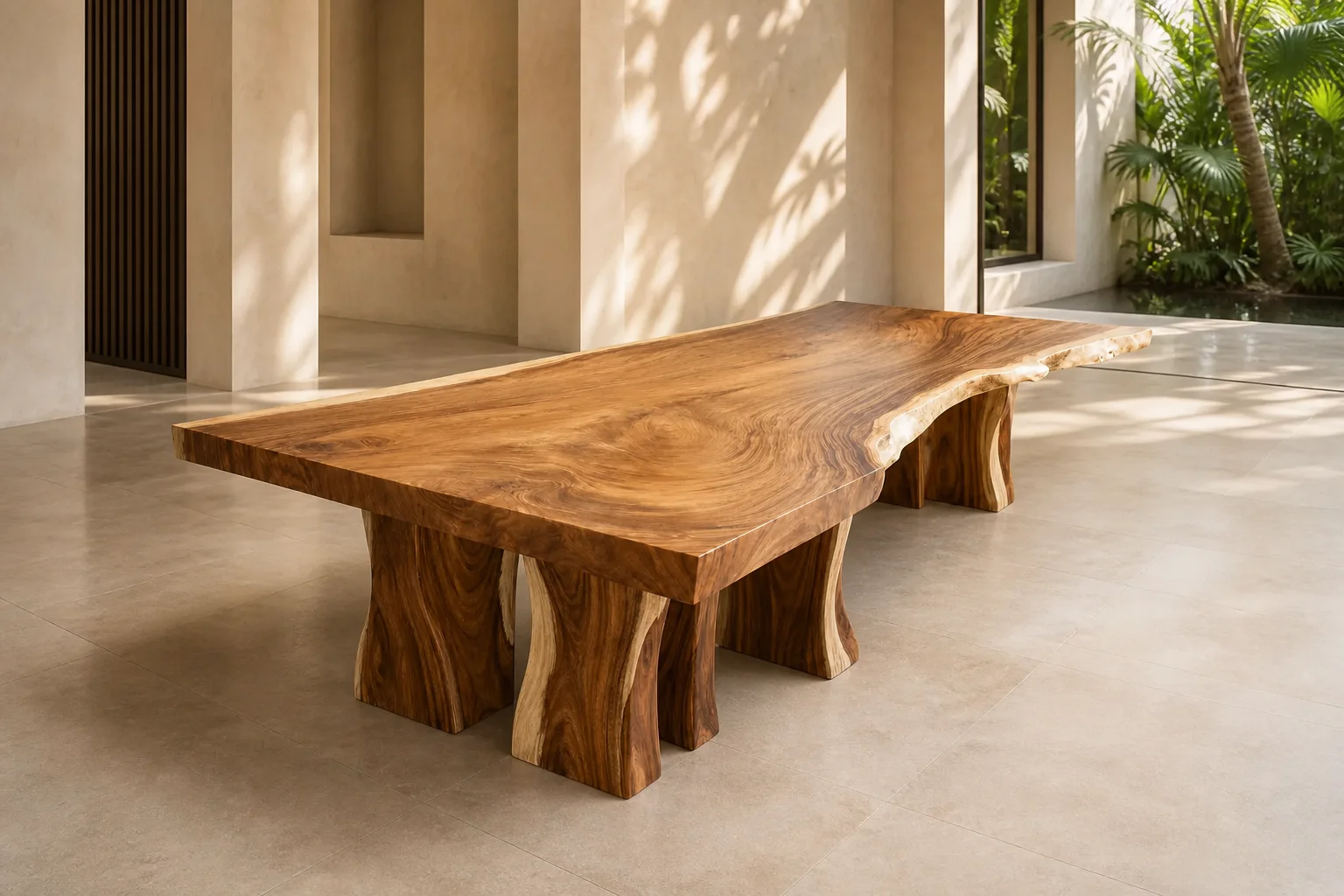
The short answer
Start with usable room dimensions, not a preferred slab. Allow comfortable circulation, decide how many seats you genuinely need, then compare slabs for proportion and character. Confirm the finished size, thickness, base position, surface treatment, natural openings and delivery route in writing before production or purchase.
1. Measure the room before choosing the wood
The room sets the useful limits. Measure its length and width, then mark doors, walkways, cabinets and any chair that must pull out near a wall. A table can fit on a floor plan and still feel crowded once people are seated.
As a practical starting point, leave roughly 90 centimetres between the table edge and a wall or fixed cabinet where people need to pass. More space may be helpful behind frequently used chairs. Treat this as a planning guide rather than a universal rule: chair depth, traffic flow and the shape of the room all matter.
- Room length and width
- Door swings and main walking routes
- Chair width and depth
- Position of lighting, rugs and nearby cabinetry
- Lift, stair, doorway and final delivery access
2. Decide the everyday seating count
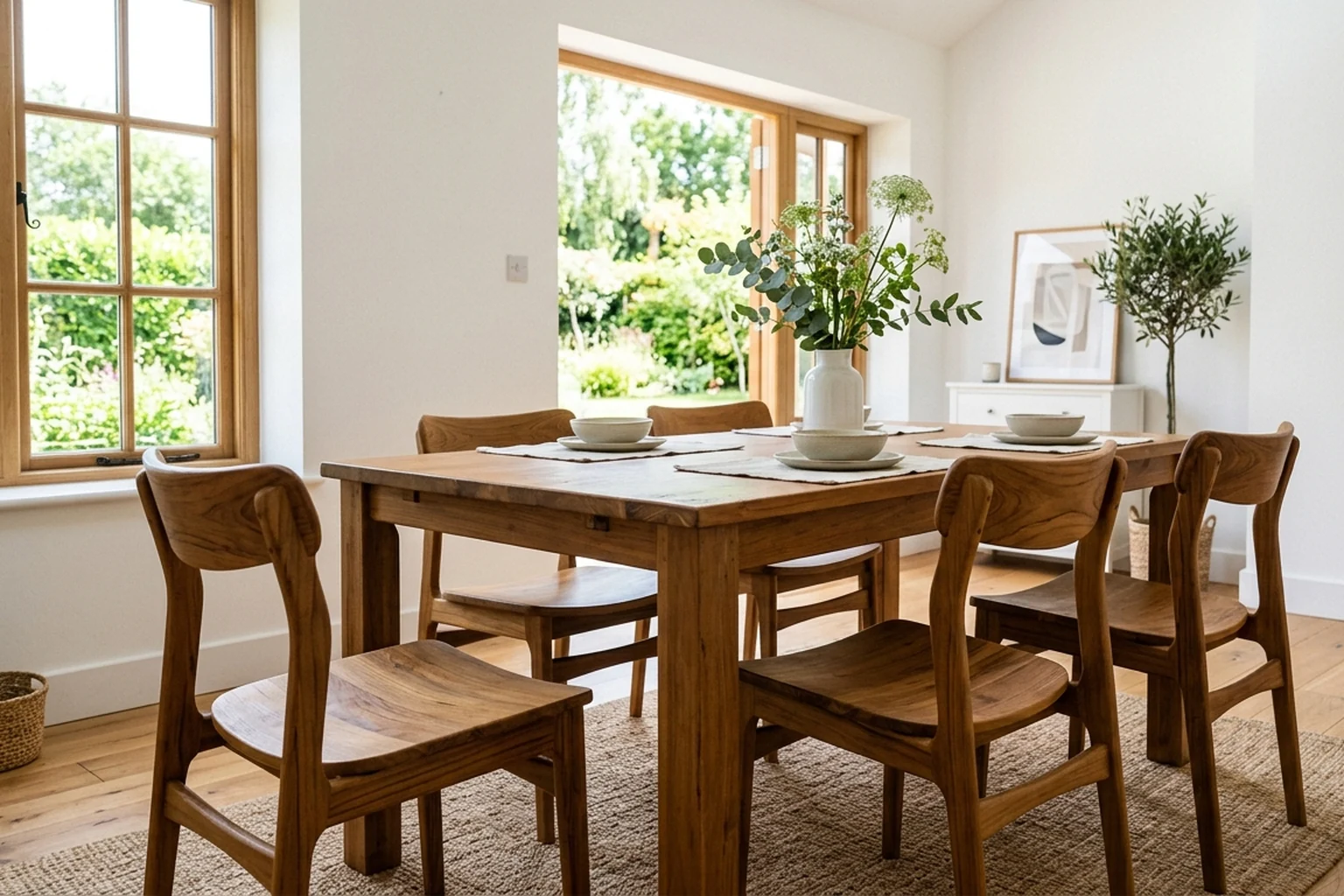
Design for the number of people who use the table most often. Occasional guests can sometimes be accommodated at the ends, but an oversized everyday table can make the room less comfortable and conversations more distant.
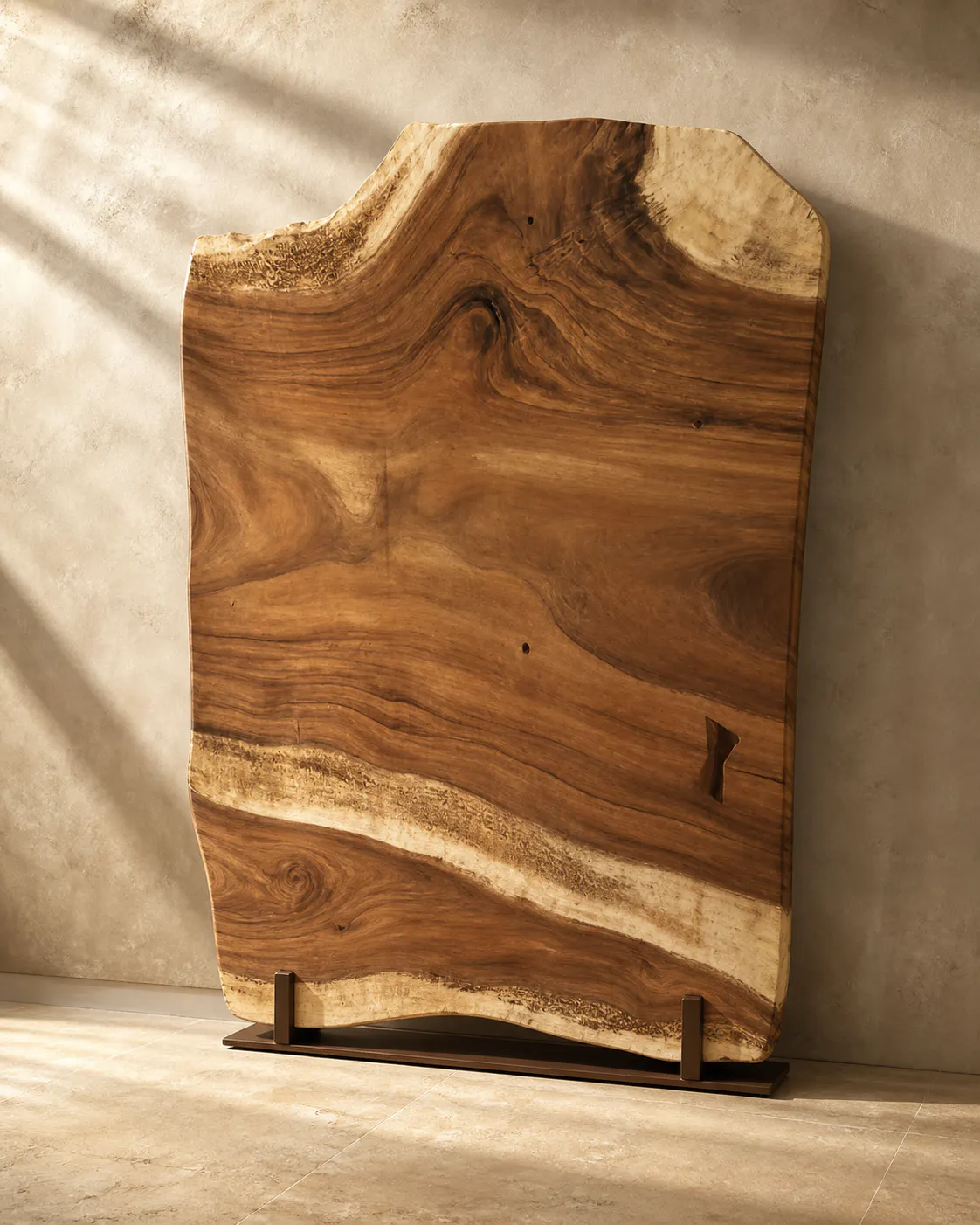
Natural edges are not perfectly straight, so nominal width does not tell the whole story. Ask for the narrowest usable width as well as the overall maximum. Check where plates, serving dishes and forearms will actually sit, especially when the edge has deep curves or openings.
3. Read the slab as a composition
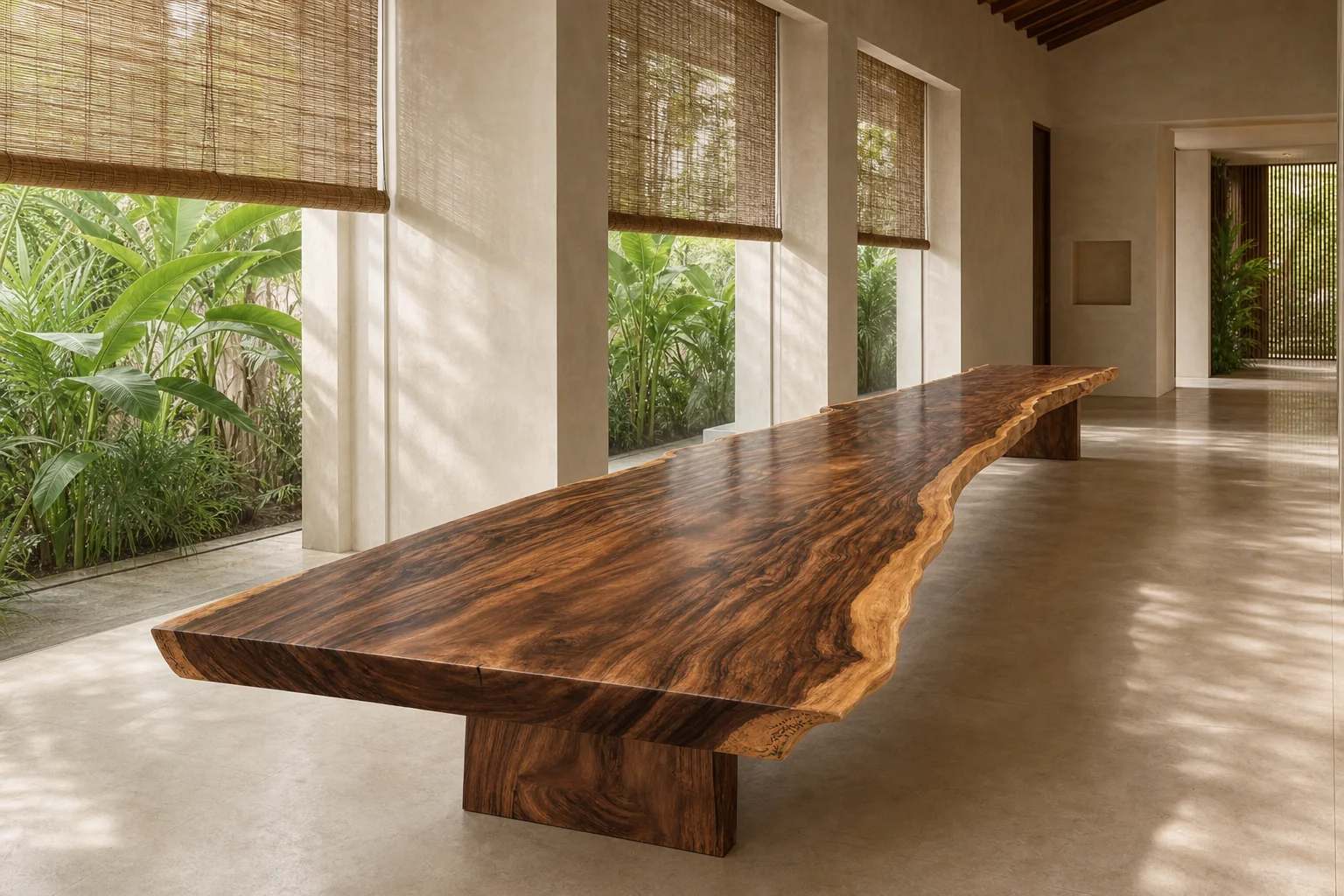
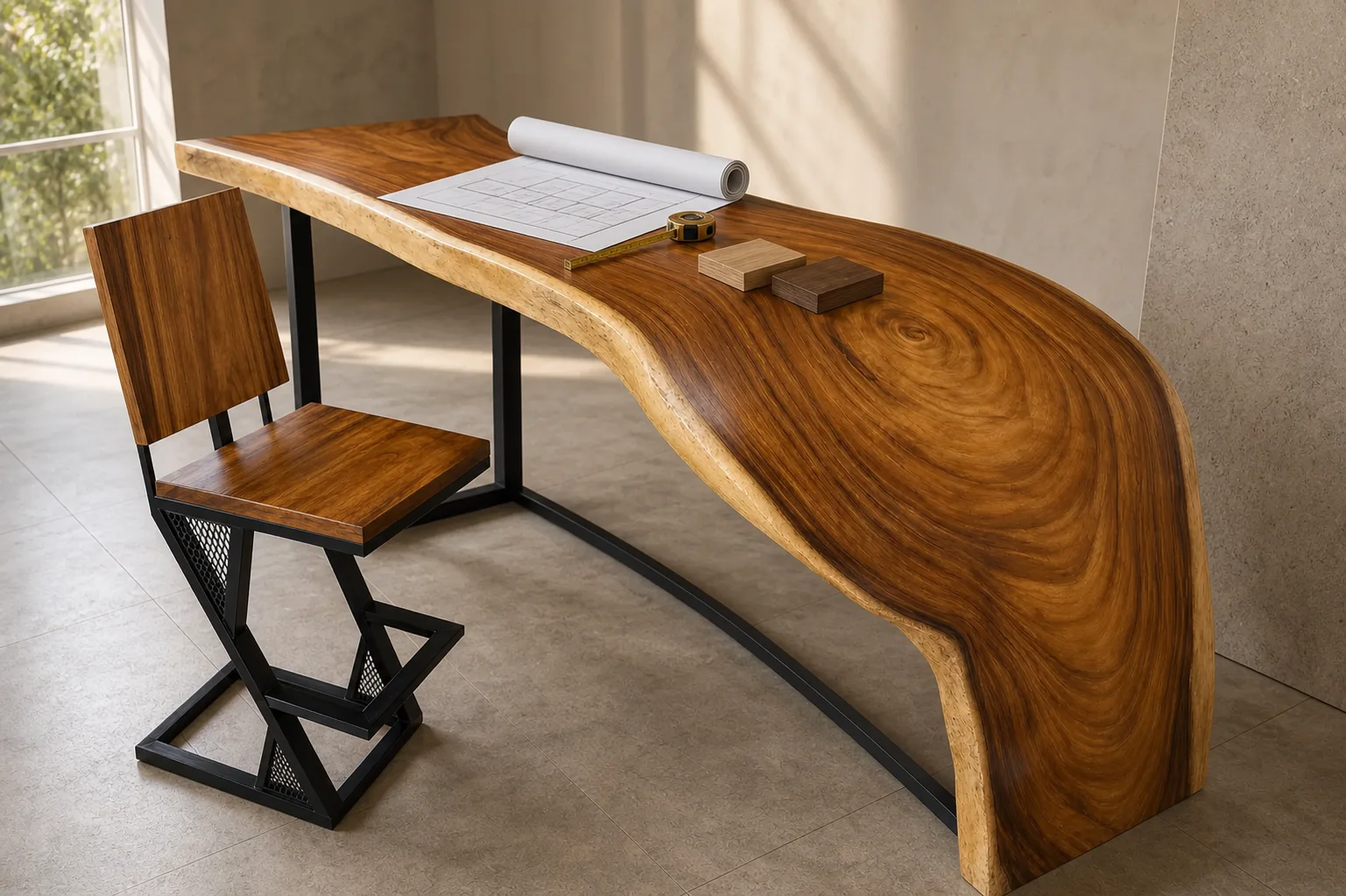
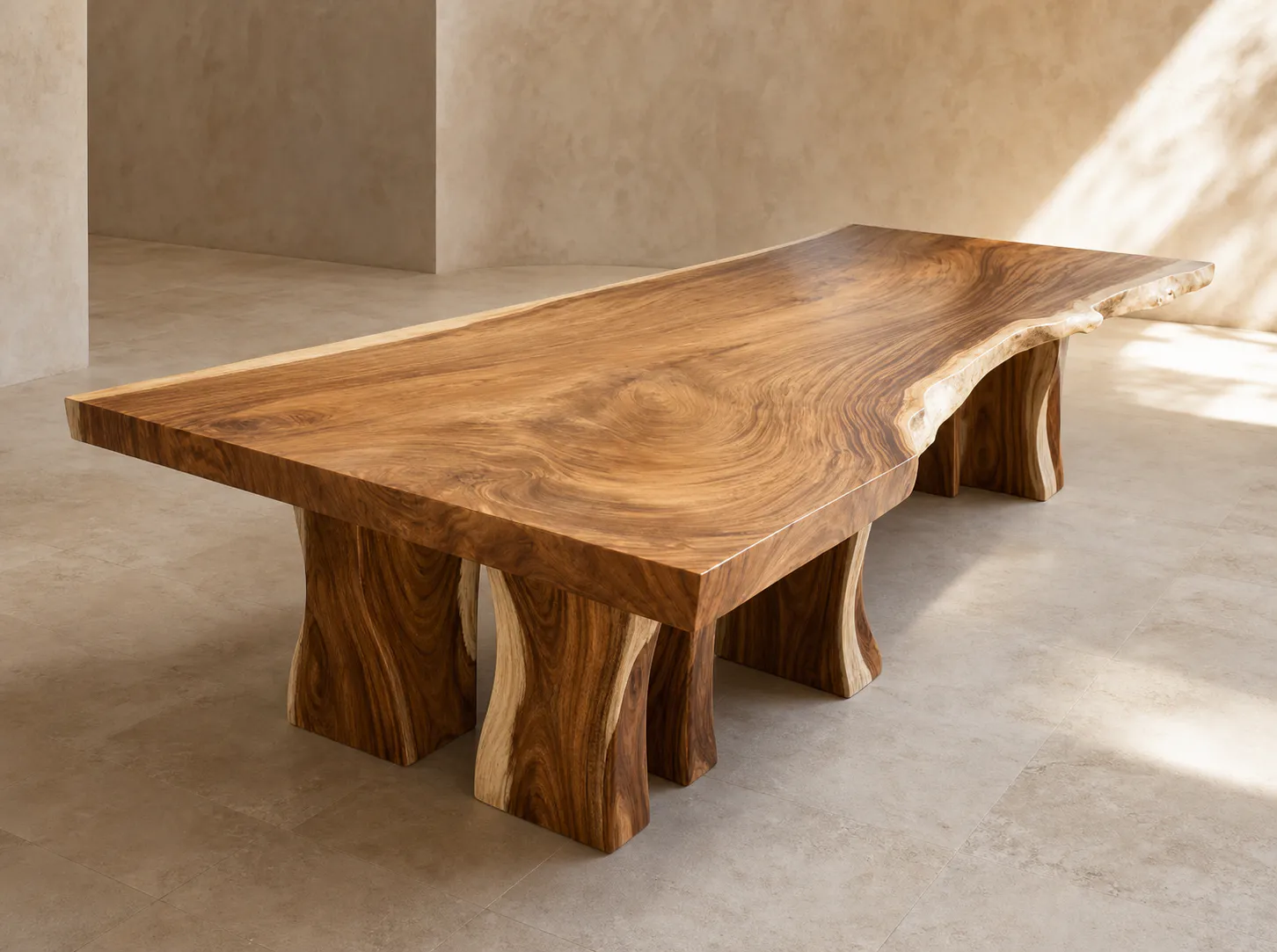
Look beyond colour. Follow the grain from one end to the other and notice how the outline, knots, tonal changes and natural voids balance across the full length. A strong slab has visual movement without placing every dramatic feature in the same area.
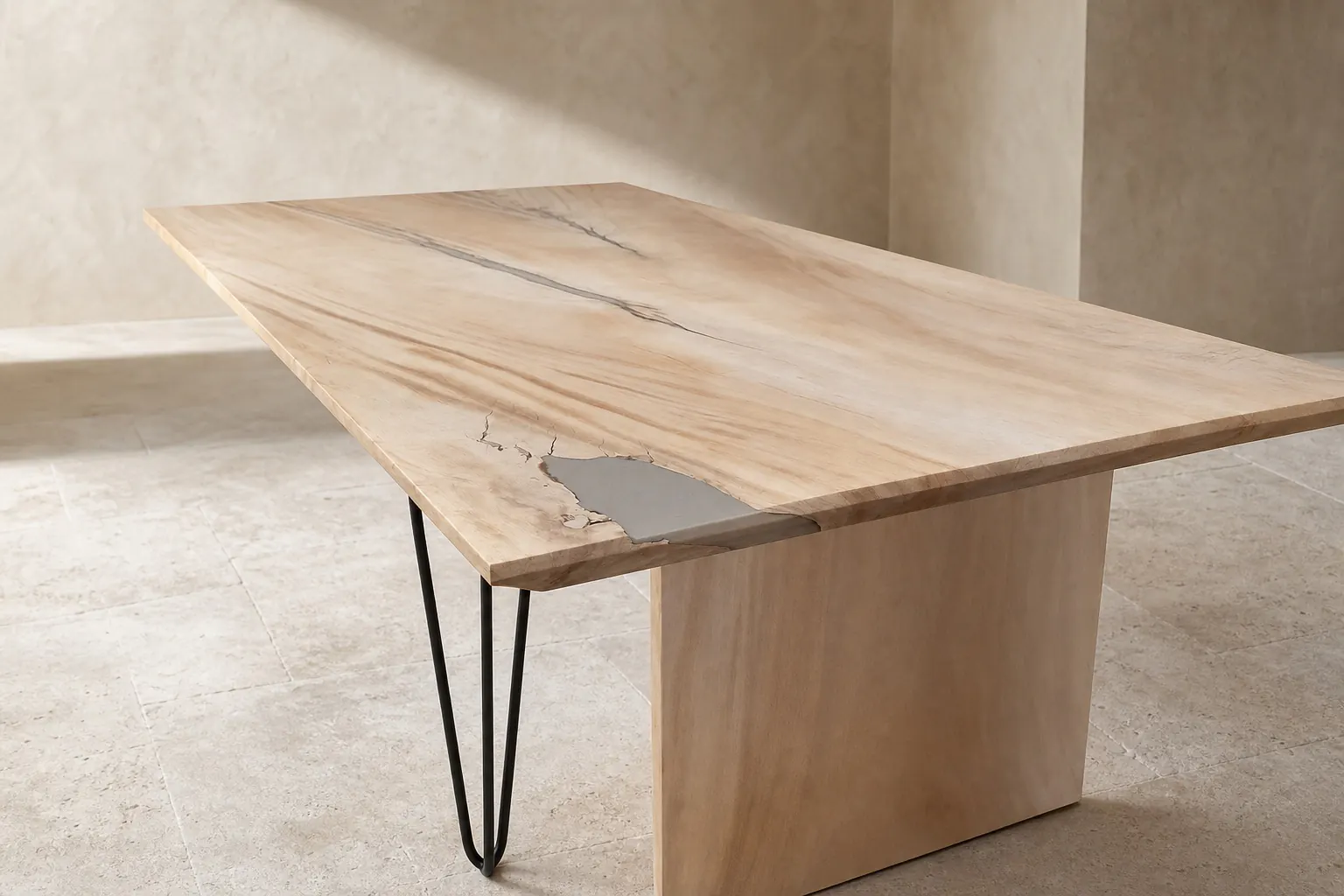
Variation is part of solid wood, not a defect to edit away. The important question is whether the features suit the intended use. A deep opening can be beautiful in a low table yet inconvenient where a dining plate or glass needs support. Resin can preserve selected fissures, but its colour, opacity and extent should be agreed rather than assumed.
4. Match the base to both weight and legroom
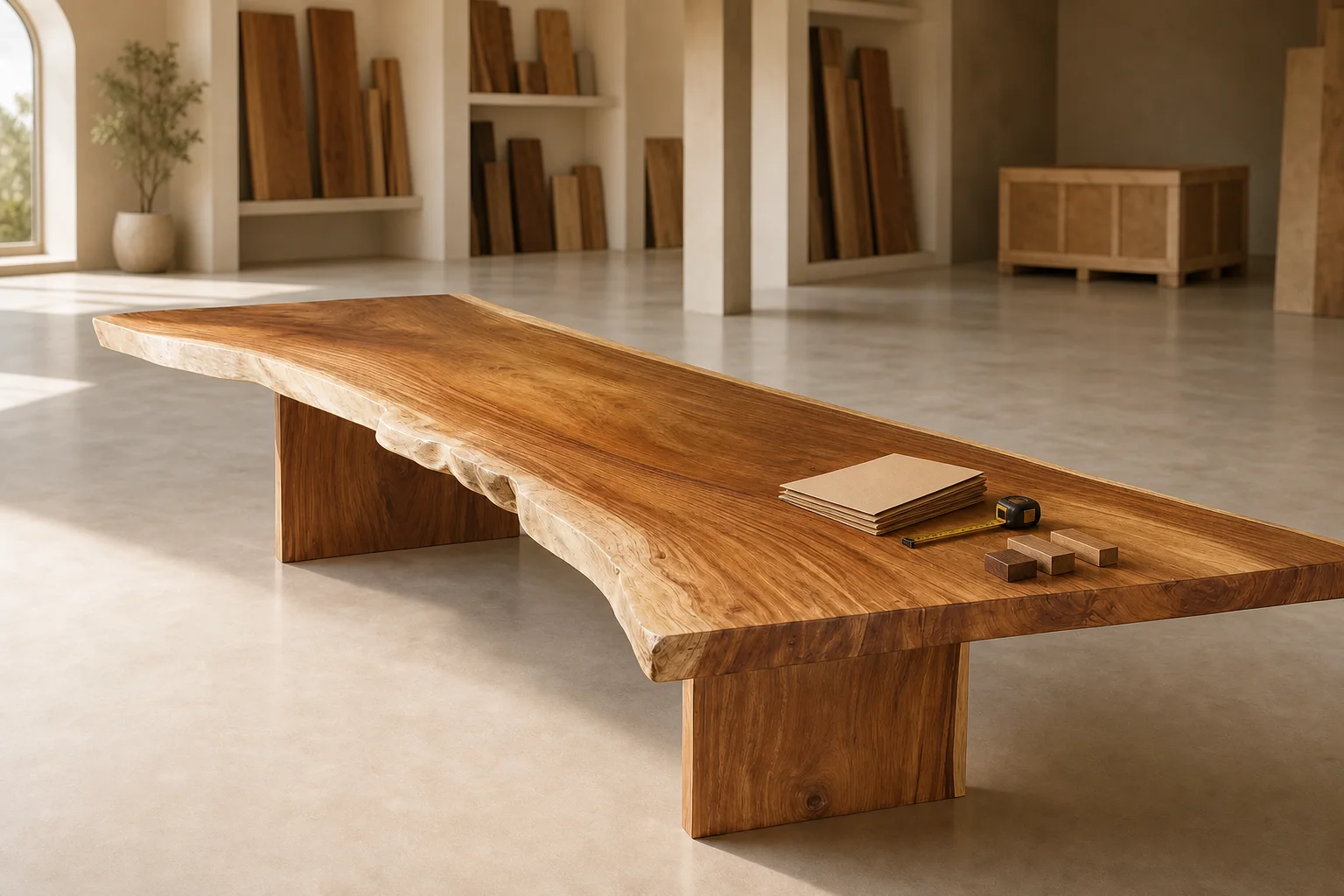
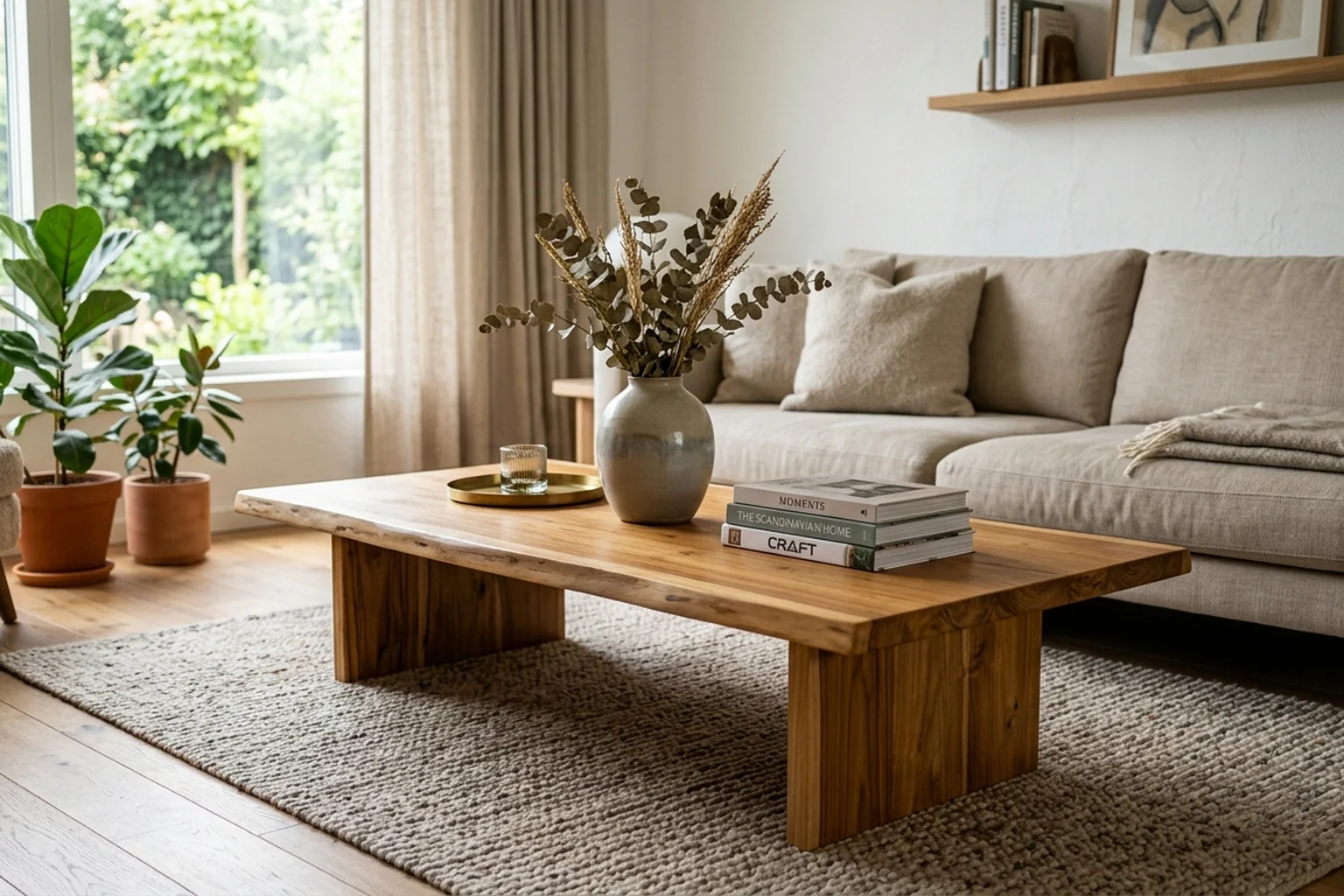
The base must support the top and let people sit comfortably. Sculptural root bases create a strong centrepiece, while paired pedestals or legs can give a calmer architectural rhythm. Each arrangement changes knee space, chair positions and the visual weight of the table.
Ask to see the base position on a measured drawing or marked photograph. Confirm the distance from each end and whether chairs can be added there. For long tops, support design also needs to respond to the span and the behaviour of the individual slab; this is a maker decision, not a styling afterthought.
5. Choose a finish for the way the table will be used
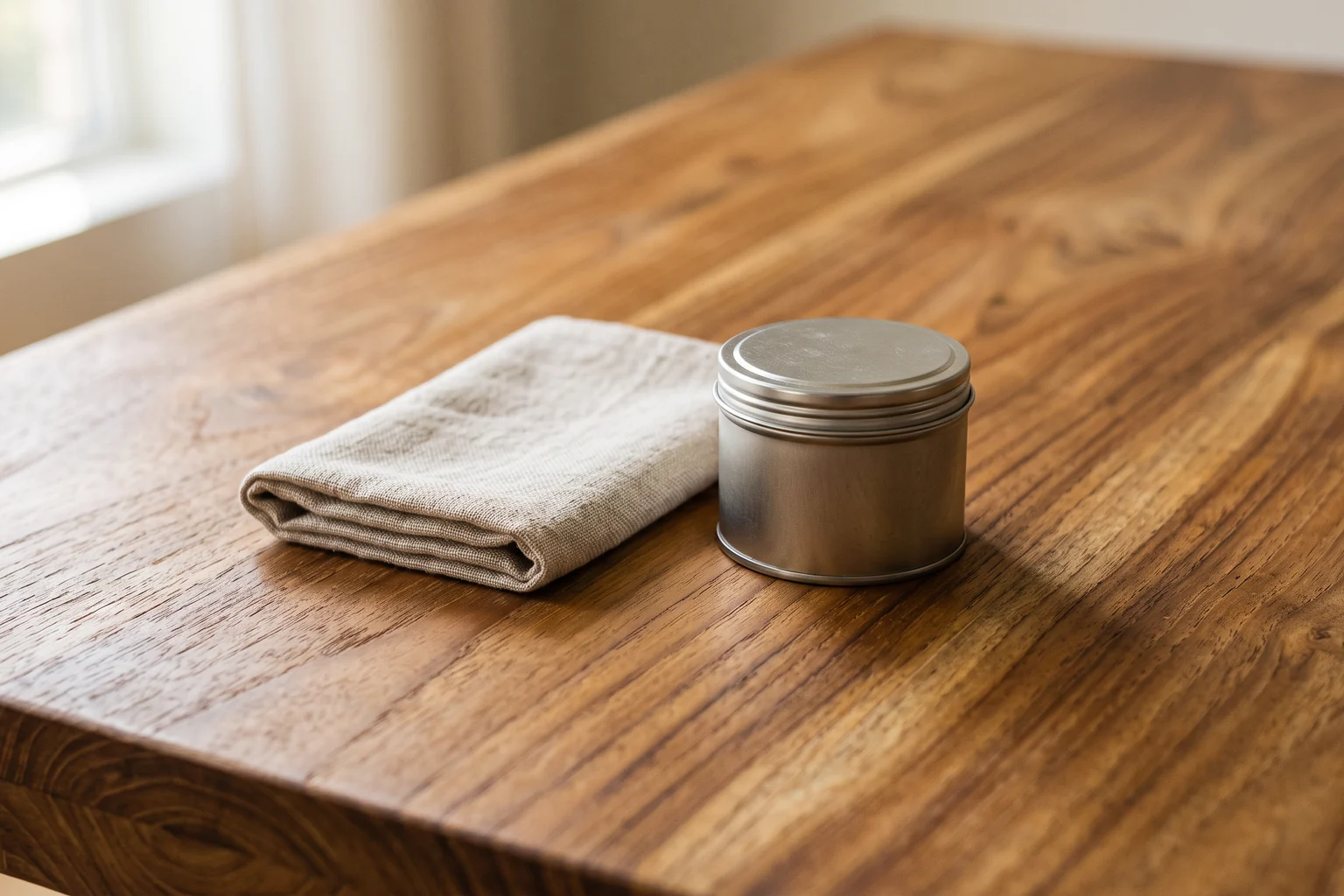
A finish changes colour, sheen, texture and maintenance. The right choice depends on daily use, the desired feel and how willing you are to maintain the surface. Ask for a physical sample on similar wood whenever possible, because photographs can shift both colour and gloss.
For a busy dining table, discuss water resistance, heat precautions, cleaning products and how local repairs are handled. No finish makes solid wood completely indifferent to moisture, heat or sunlight. Coasters, placemats and prompt cleaning remain sensible habits.
6. Confirm the details that photographs cannot prove
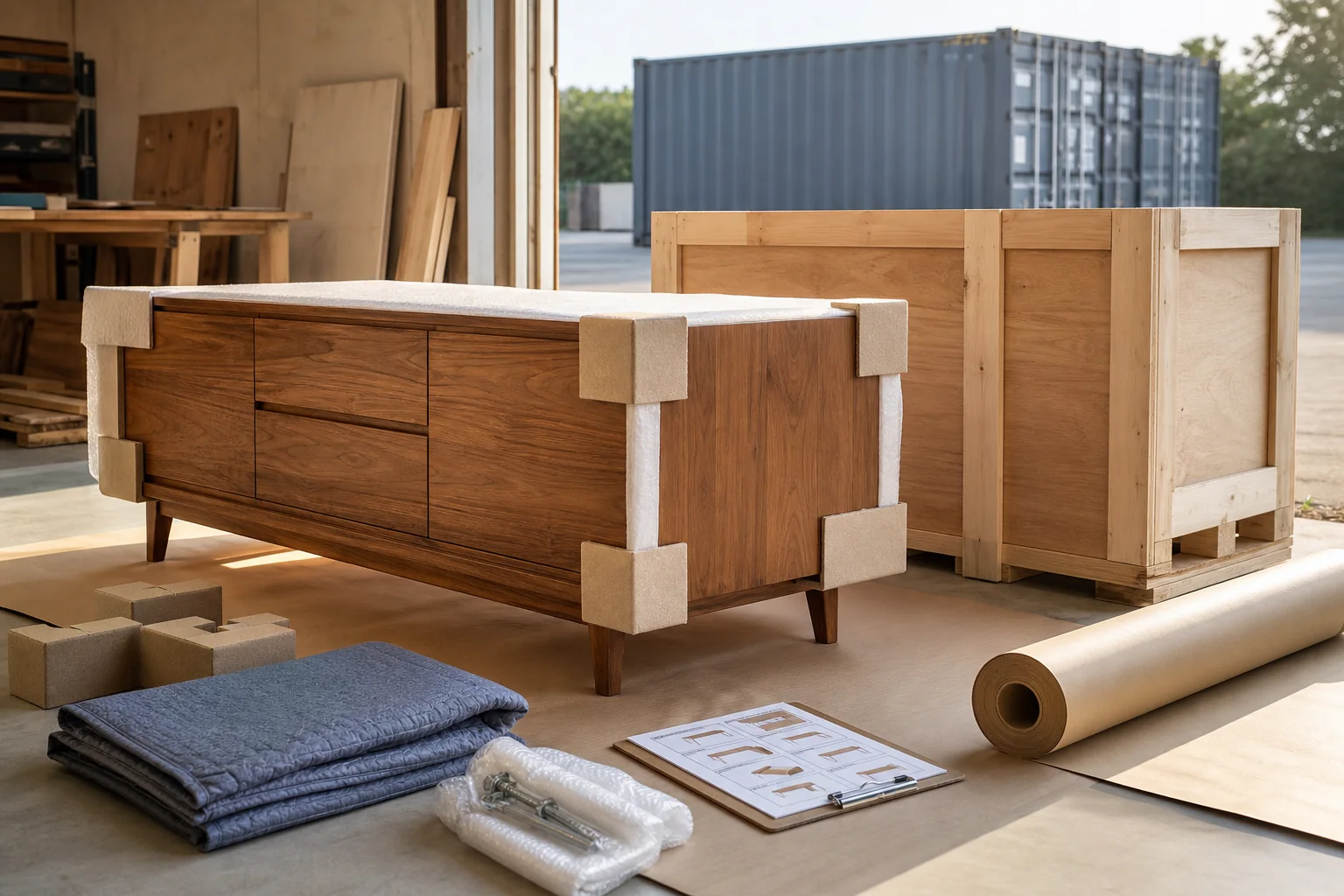
A photograph communicates character, but not every specification. Before paying a deposit or arranging delivery, request a written confirmation of the exact piece or approved reference, finished dimensions, base, finish, price, timing and destination.
For one-of-one slabs, ask which natural marks will remain, which will be stabilised and whether the images show the actual piece. For made-to-order work, agree which parts of the reference are fixed and where natural variation is expected.
- Finished length, width range, height and top thickness
- Base material, position and finish
- Treatment of cracks, voids and loose areas
- Surface finish and care instructions
- Delivery, access, assembly and placement responsibilities
- Price, payment stages and estimated timing
Choose with the room in mind
The best live-edge table feels inevitable in its setting: large enough to gather around, restrained enough to leave the room breathing, and detailed in a way that rewards a closer look. Bring room measurements, photographs and your everyday seating count when you begin the conversation.