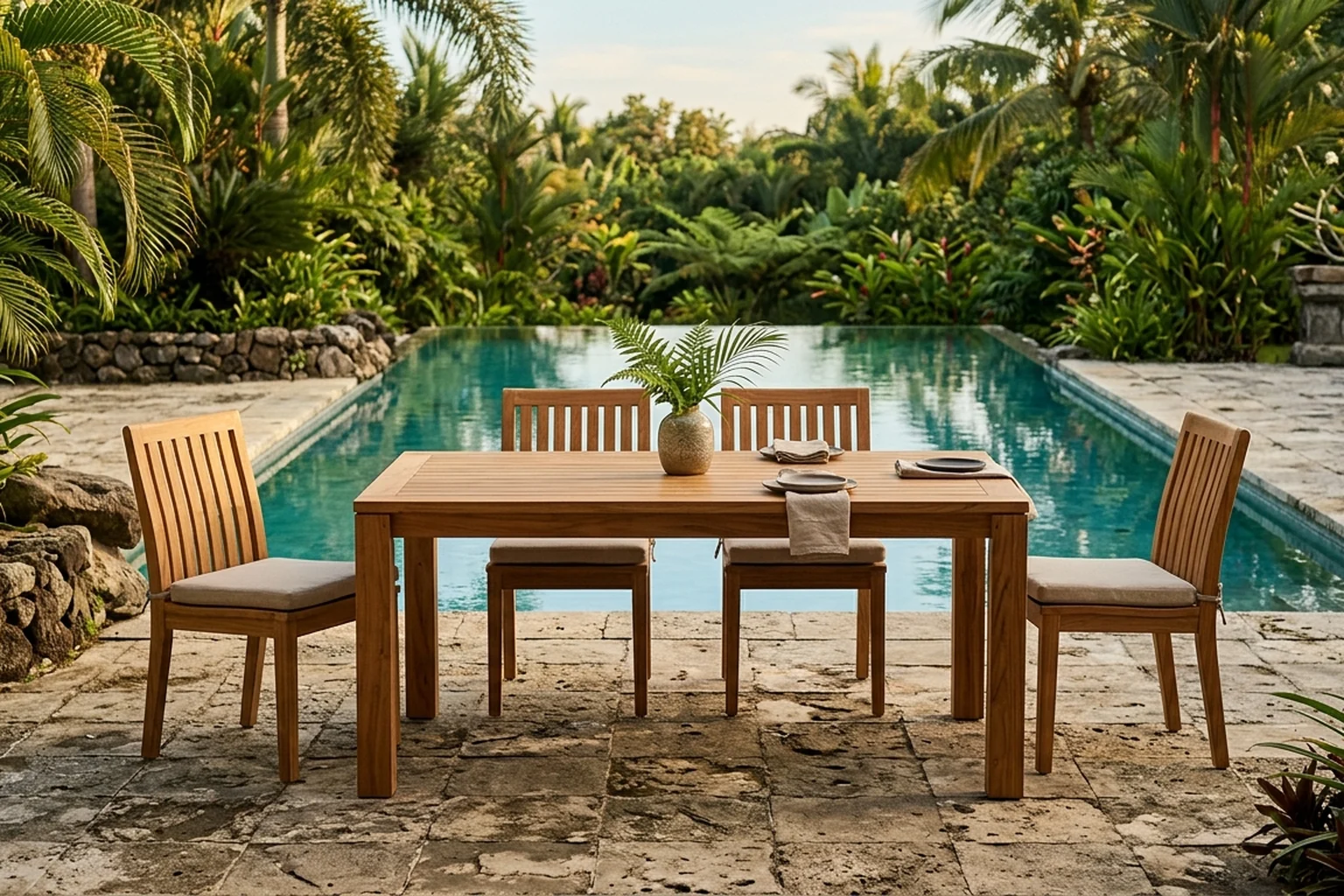
The short answer
Choose genuine solid teak rather than teak-look alternatives, confirm the construction details that decide outdoor life — real joinery, non-corroding hardware and drainage where water can sit — and decide how you want the surface to age: a natural silver-grey patina or a maintained oiled look. Match every piece to its position in sun, rain or salt air, and put dimensions, finish and delivery terms in writing before you order.
1. Why teak is a serious outdoor wood
Teak earns its outdoor reputation from the wood itself, not from a protective coating. The heartwood is rich in natural oils that resist water penetration, rot, termites and fungal attack, and the timber is unusually stable, expanding and contracting less than most woods as humidity changes. That is why teak has a long history in marine and outdoor use rather than a claim invented recently.
Not every product sold as outdoor teak is equal. Plantation teak is a renewable and responsibly grown material, and young trees can make perfectly good furniture, but the grade matters: dense, slow-grown heartwood behaves very differently outdoors from fast-grown wood with wide sapwood content. Ask where the wood was grown, whether the piece is heartwood, and whether species and source records are available for the exact furniture you are considering.
- Genuine teak confirmed, not a teak-look hardwood
- Species and source records available
- Heartwood content confirmed
- Reference or track record for outdoor use
2. Solid teak and the checks that matter outdoors
Outdoor pieces should be solid teak through and through. Veneered or teak-faced furniture uses a thin layer of teak over a cheaper core; once moisture passes the surface, the core can swell, delaminate or rot in ways solid wood does not. Check the underside of the tabletop, the inside of chair frames and the back edges of benches — if you can see a different wood or a ply edge, it is not solid teak.
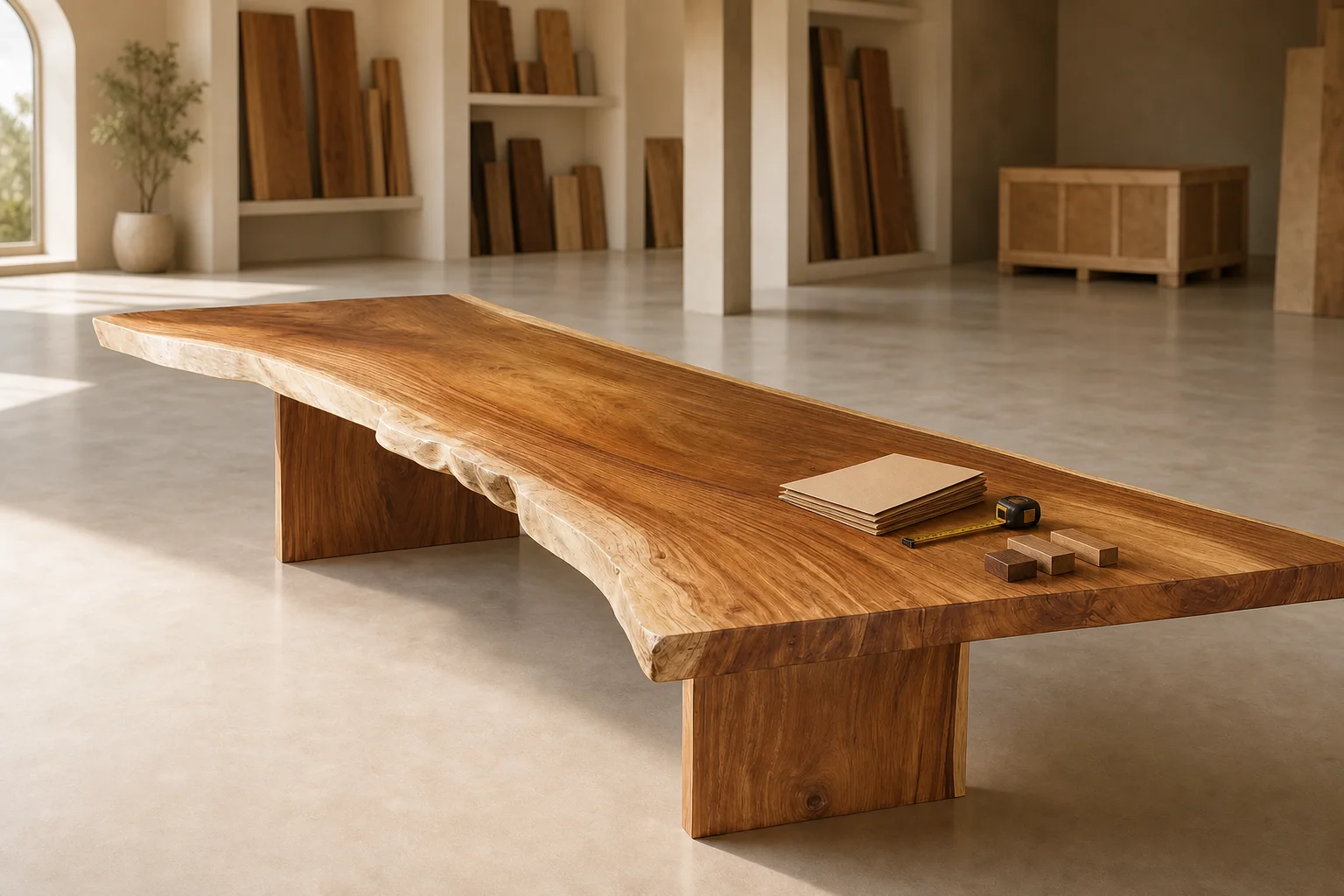
Look at how individual boards are joined. Wide tops made from several planks should be edge-glued with the grain running together, and outdoor surfaces should let water escape rather than pool. Ask directly whether the piece is solid teak, how the planks are joined, and whether the maker will confirm the construction in writing.
- Solid teak on visible and hidden surfaces
- No plywood or veneer core
- Plank joints and edge treatment checked
- Construction confirmed in writing
3. Joinery and hardware that survive weather
Sun, rain and temperature swings punish the details first. Screws and brackets that rust will stain the wood and eventually weaken the piece, so outdoor furniture should use stainless steel or another non-corroding hardware throughout, and every metal-to-wood connection should be designed to shed water.
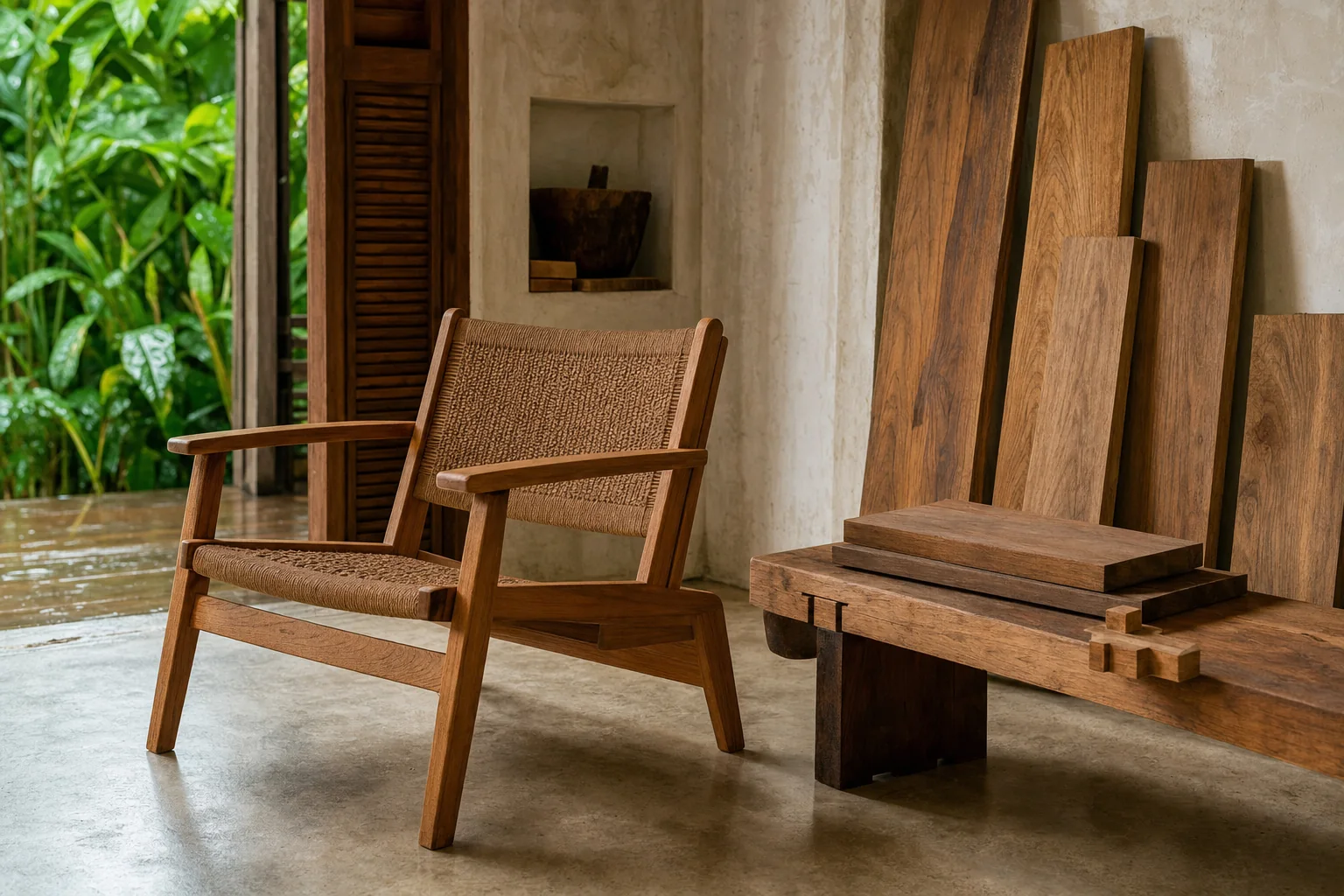
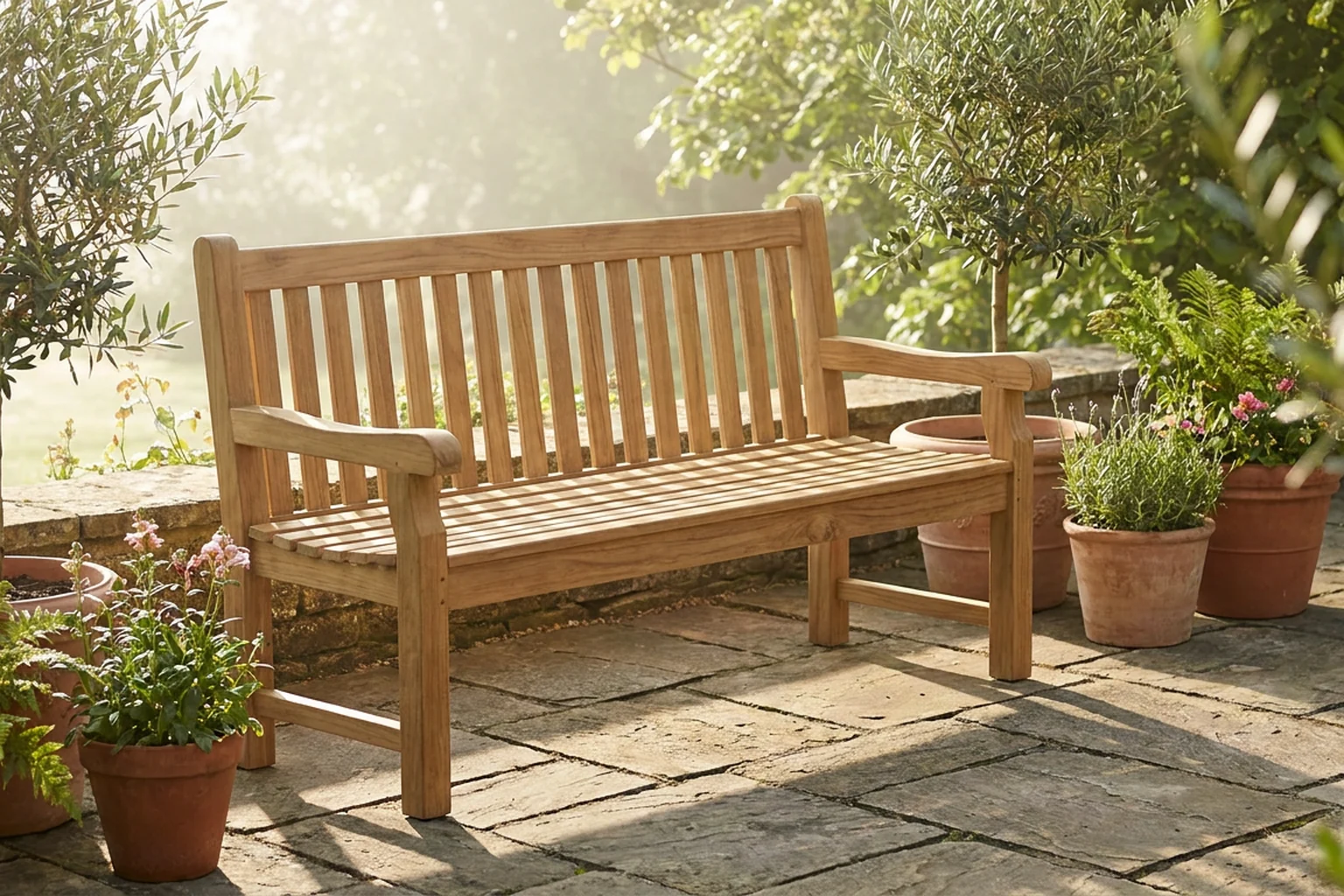
Traditional joinery — tenons fitted into mortises, sometimes pinned with dowels — holds up better outdoors than pieces assembled with staples and glue alone, because the joint carries the load without relying on adhesives that break down in heat and moisture. Turn the piece over and look: the way a bench or table is assembled tells you more about its outdoor future than the colour of the finish.
- Stainless or non-corroding hardware
- Mortise-and-tenon or equivalent joinery
- No staples or glue-only load joints
- Water can drain from tops, seats and planters
4. Patina, finish and how the surface will age
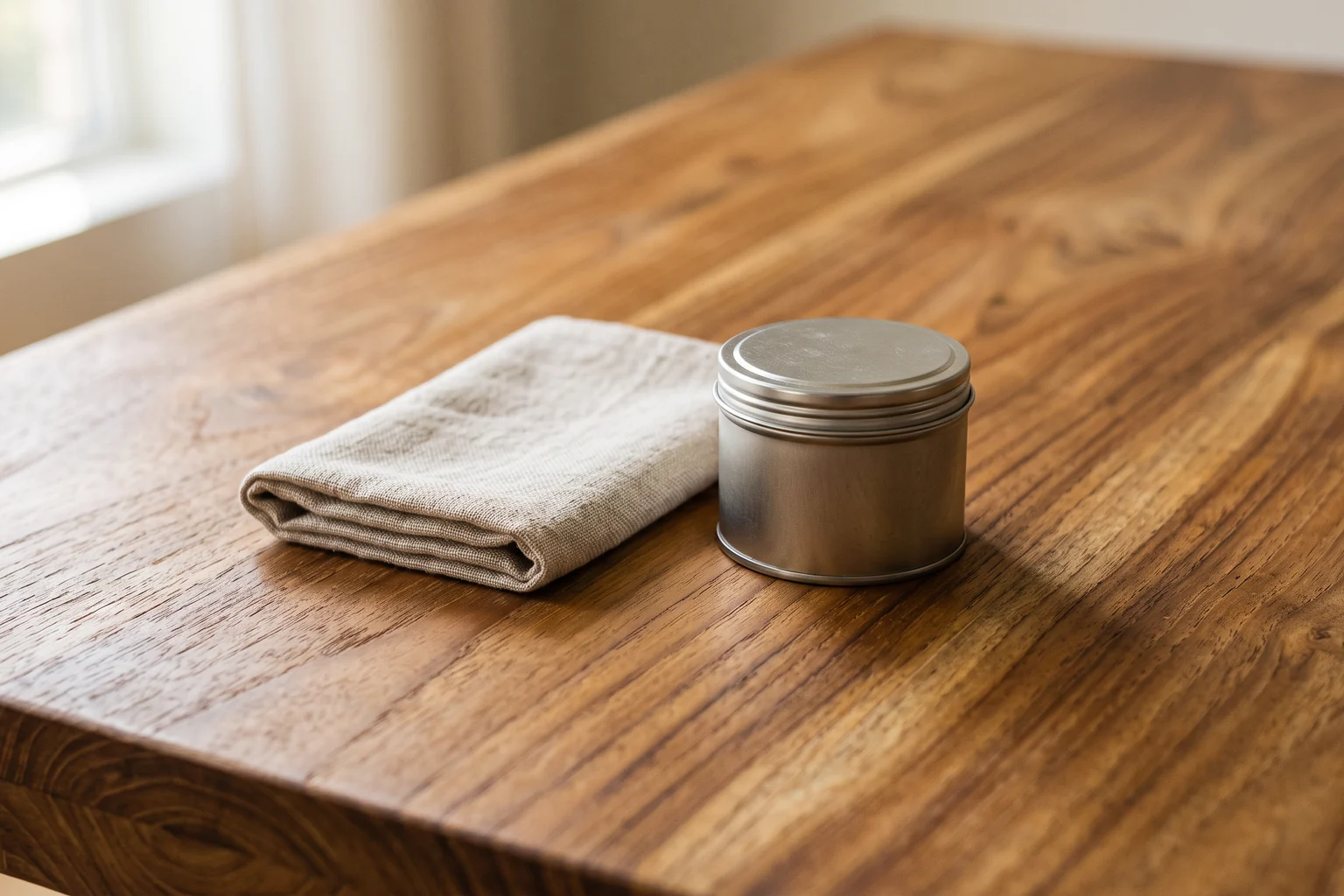
Left unfinished, teak weathers to a handsome silver-grey and needs no coating at all; many owners prefer this natural look precisely because there is nothing to maintain. If you want to keep the warm golden-brown colour, the surface needs periodic cleaning and a teak oil or sealer, and that is an ongoing routine, not a one-time treatment.
A painted or heavily coated outdoor piece is a different decision: the coating protects the wood but must be maintained and eventually redone, and if moisture gets under a failing coating the result can be worse than no finish at all. Decide on the look you want first, then match the maintenance to it. In humid or rainy climates, let air move around the piece and keep it clear of standing water.
- Silver-grey natural or oiled golden look chosen
- Maintenance routine you will actually keep
- Airflow under and around the piece
- Clearance above wet ground or lawn
5. Cushions, fabric and placement
The wood may be weatherproof, but cushions are not. For outdoor seating, choose quick-drying foam and fabric made for outdoor use; they resist water, fading and mildew far longer than indoor materials. Store or cover cushions in heavy rain or when the furniture sits unused for weeks, and let wet cushions dry before stacking them.
Placement shapes how long any outdoor piece stays beautiful. Prolonged direct sun fades fabric and dries the wood surface faster; near the sea, salt air is demanding on both wood and metal; under trees, falling leaves and sap create staining that needs regular cleaning. None of this should stop you buying teak — it simply decides where each piece lives and how often it is cleaned.
- Outdoor-rated fabric and quick-dry foam
- Cushions dried or stored after rain
- Position chosen for sun, salt or leaf exposure
- Cleaning routine set before the piece arrives
6. Sizes, made-to-order pieces and buying from Thailand
Outdoor spaces are rarely standard sizes, and made-to-order teak handles that well: tables sized to a specific terrace, benches built around existing planters, and hospitality pieces for resorts, pool clubs and restaurants. M Furniture & Decor has made teak furniture for more than five decades, working from its showroom on Phet Kasem Road in Cha-am, Phetchaburi, with a second viewing location in Bangkok, and produces custom outdoor furniture in agreed dimensions, materials and finishes.
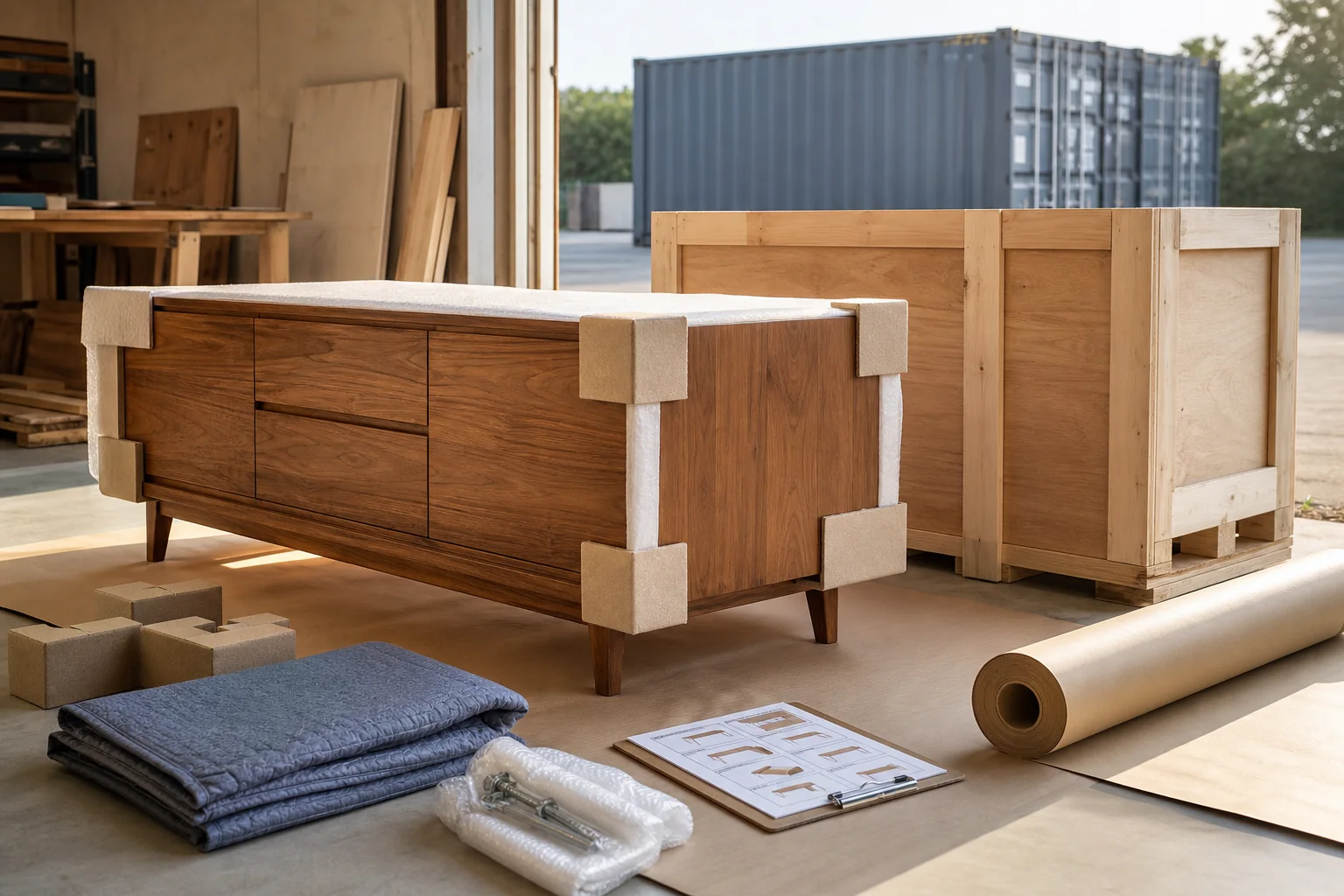
For made-to-order work, confirm the finished dimensions, construction, finish, timeline and price in writing before production. For export orders, pieces can be quoted on FOB or CIF terms with packing, freight, customs and insurance coordinated, and species and source records confirmed for the exact pieces. The fastest direct channel is WhatsApp at +66 614 456 154.
- Dimensions, finish and timeline confirmed in writing
- Construction agreed for outdoor use
- Export terms and wood documents for overseas orders
- Delivery and access route confirmed
Buy for decades, not for one season
Outdoor teak rewards the same honesty as any good furniture purchase. Confirm the wood is genuinely solid teak, look at the joinery and hardware as if your money depended on them, choose a surface treatment you are willing to maintain, and place each piece where it can drain, dry and breathe. Done that way, a good teak outdoor set stops being a purchase and becomes part of the garden.