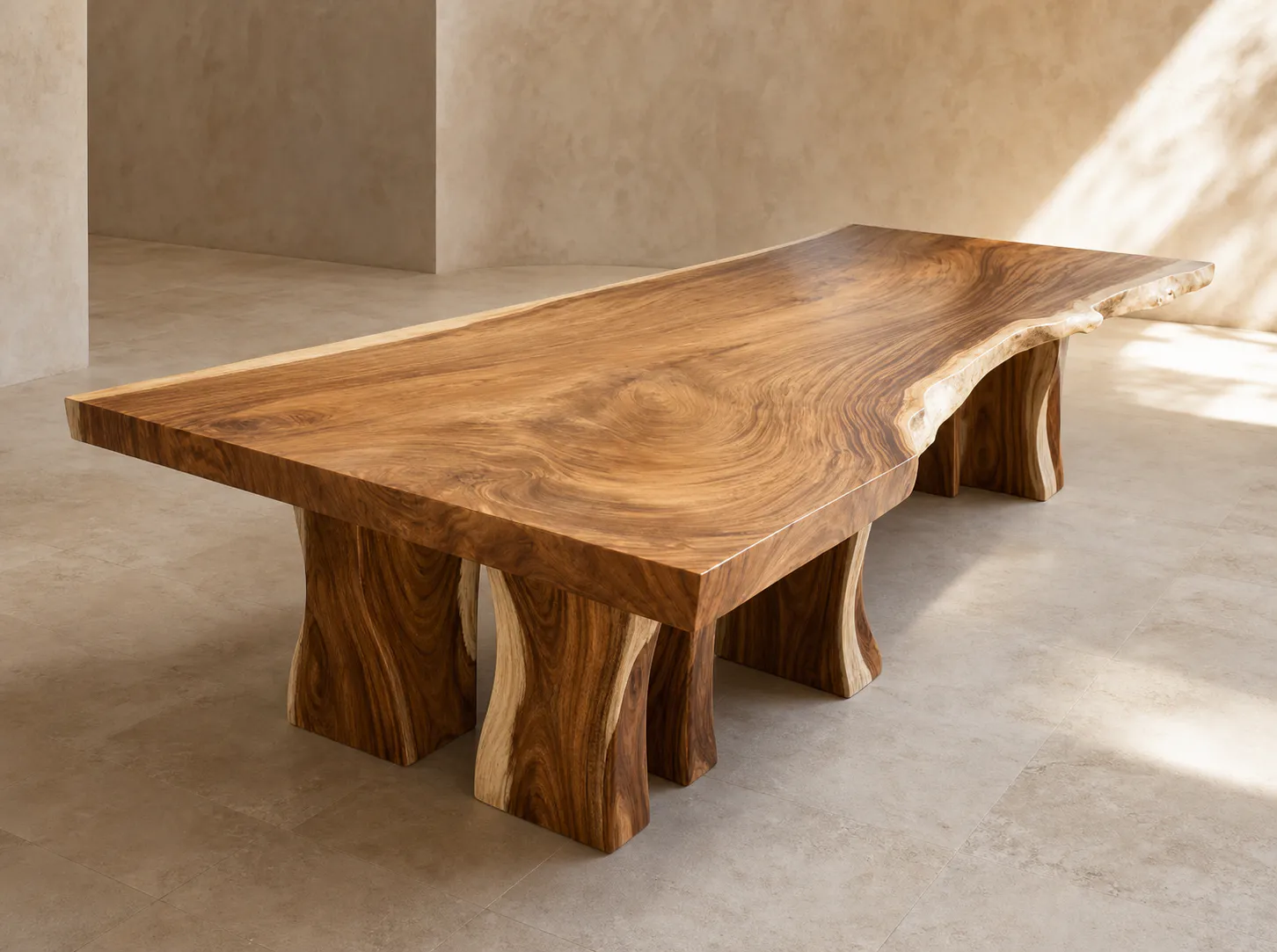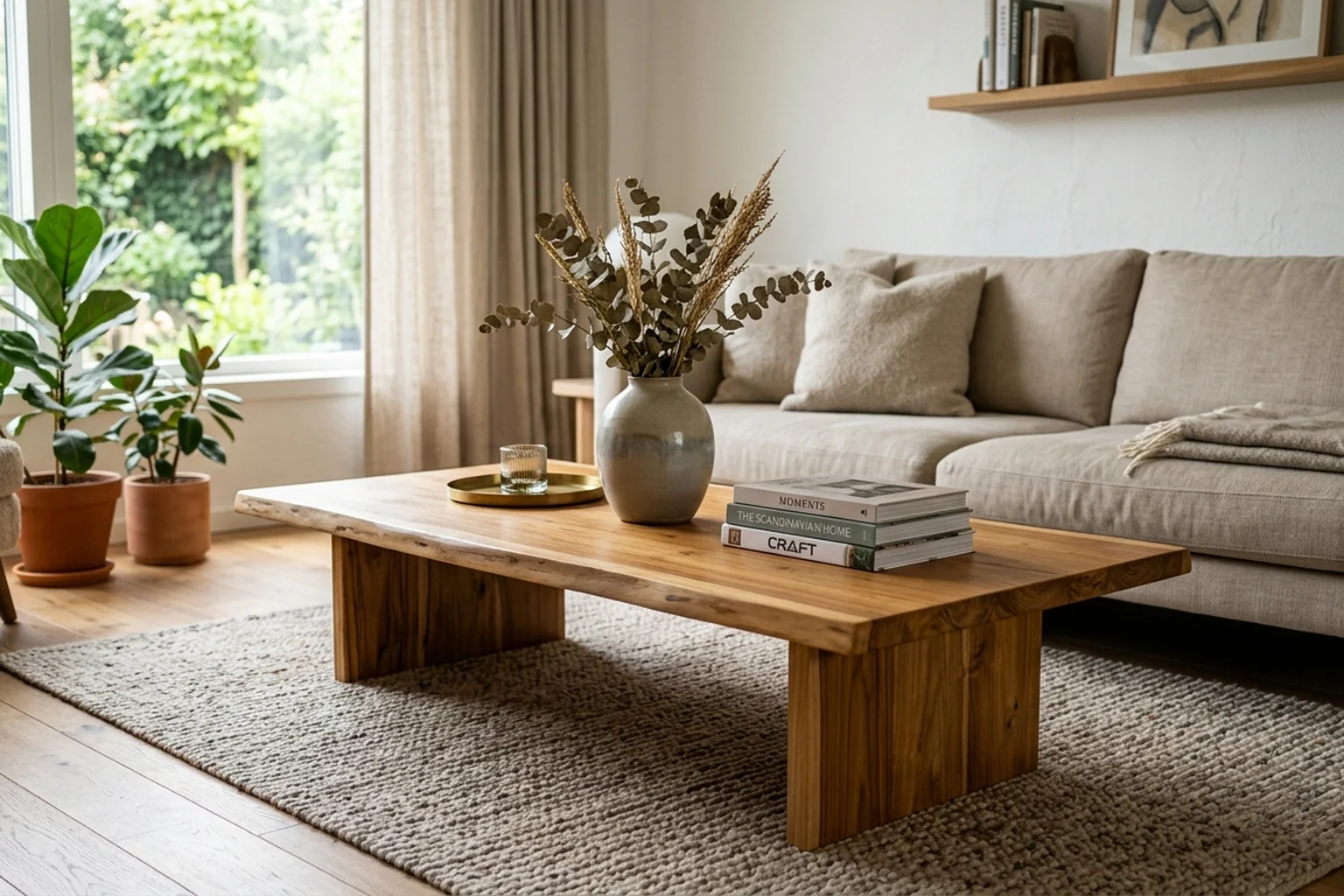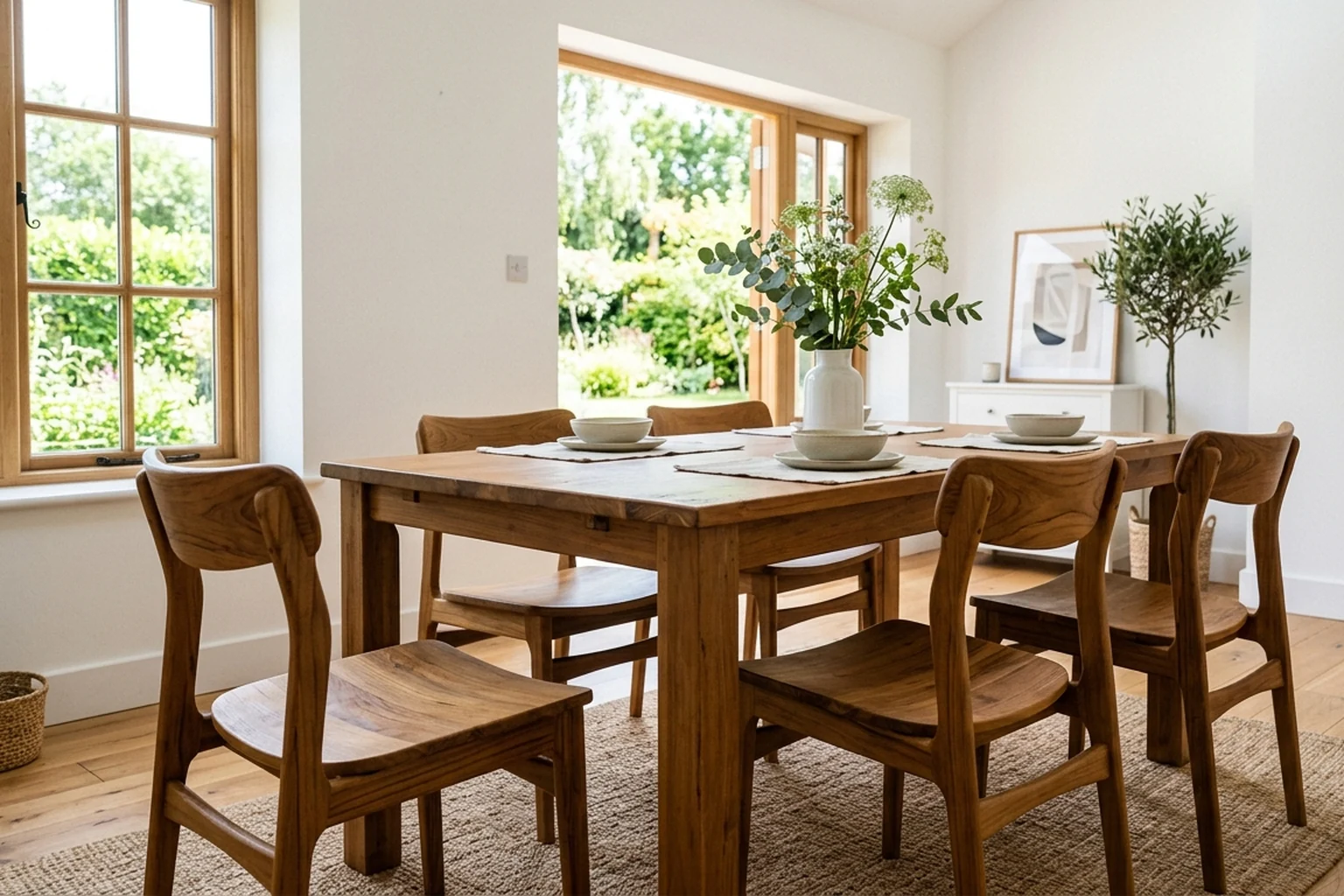
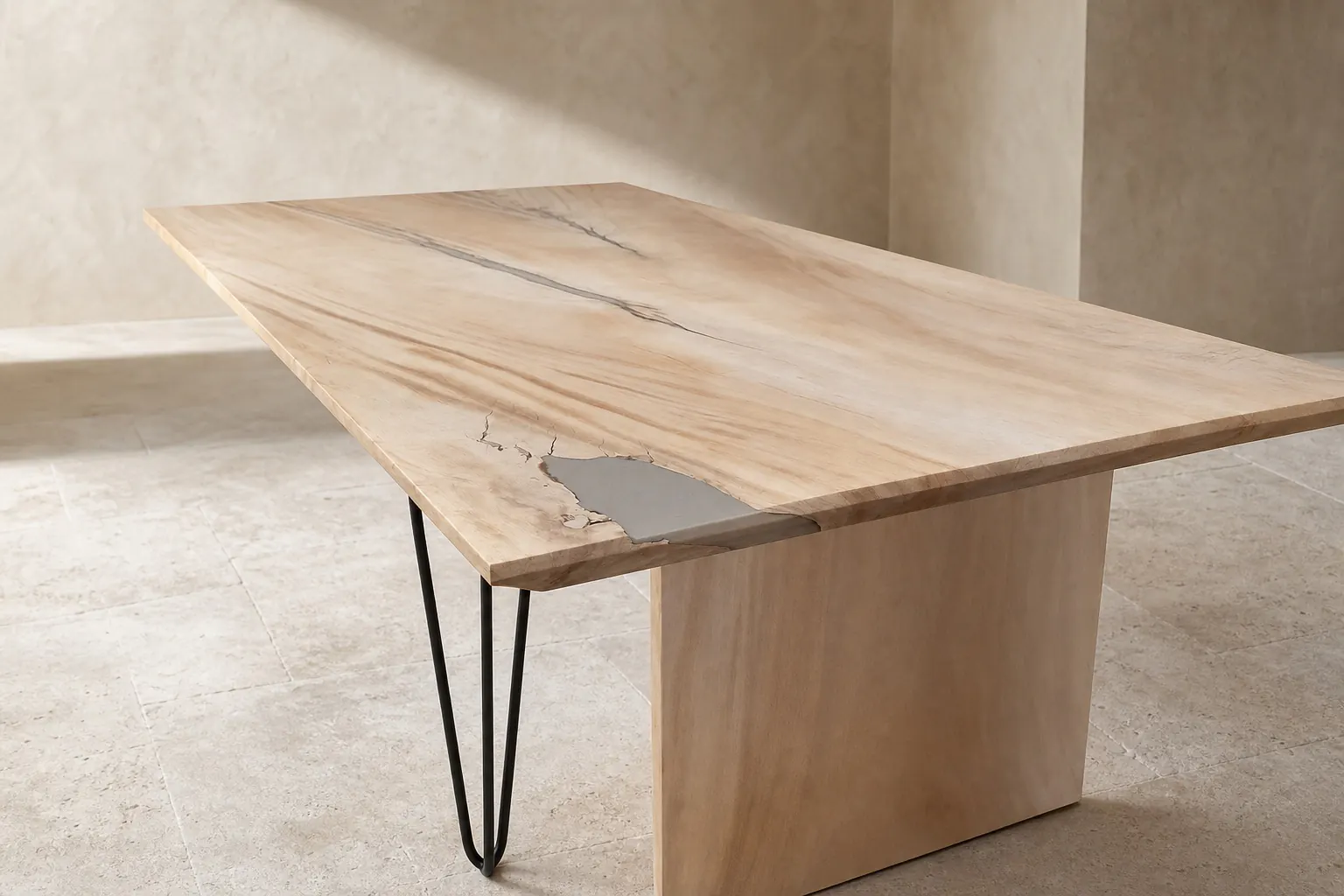
The short answer
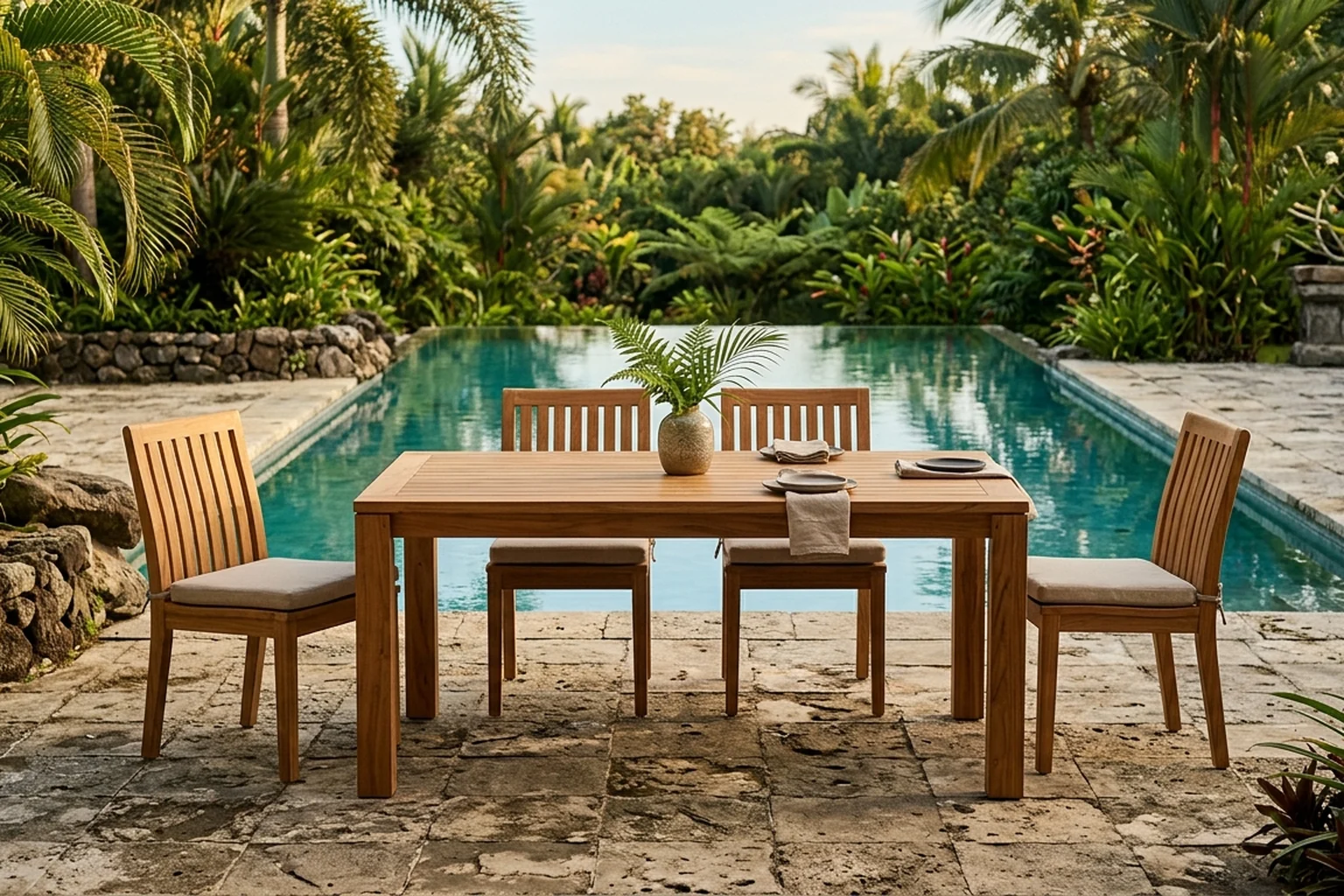
Decide first whether you want an original vintage piece or a new custom-made table in the same style. Confirm the wood is solid teak (check the underside and end grain), measure the room before choosing a size, and ask the maker or seller about joinery, finish, source records and delivery before you order. A new custom table gives you the mid-century look in the exact size you need, in solid wood, without the condition risk of a fifty-year-old piece.
1. What makes a dining table mid-century
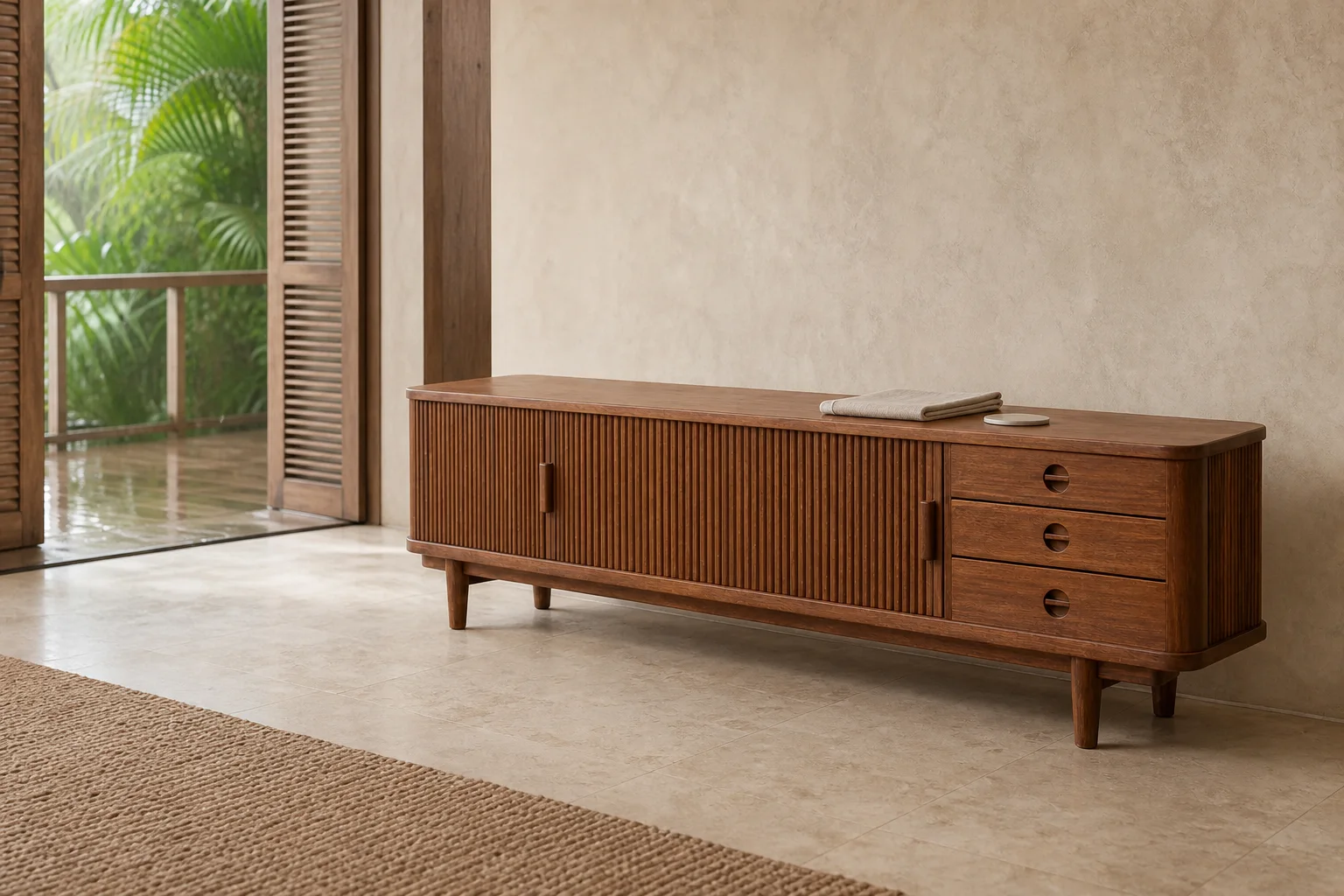
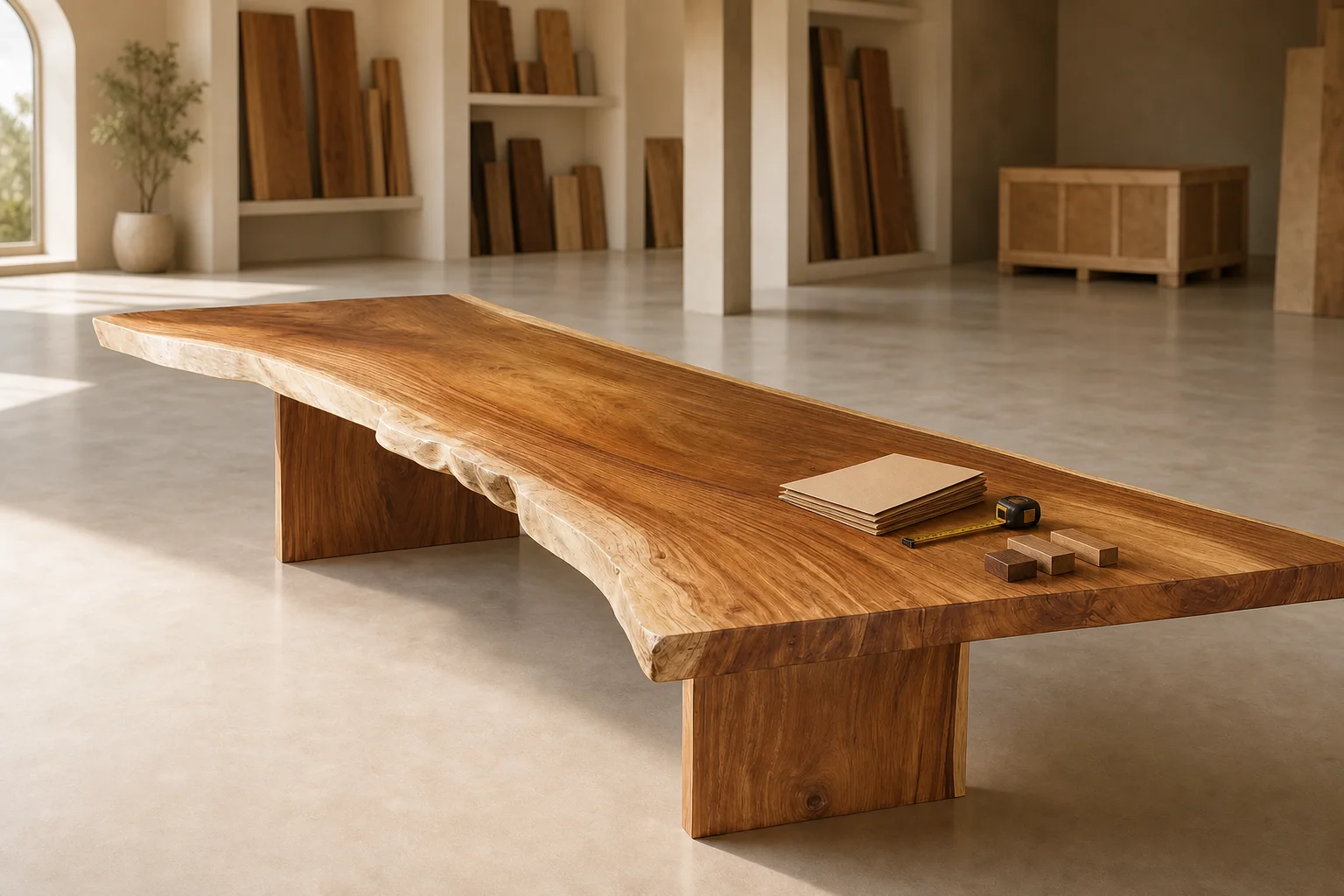
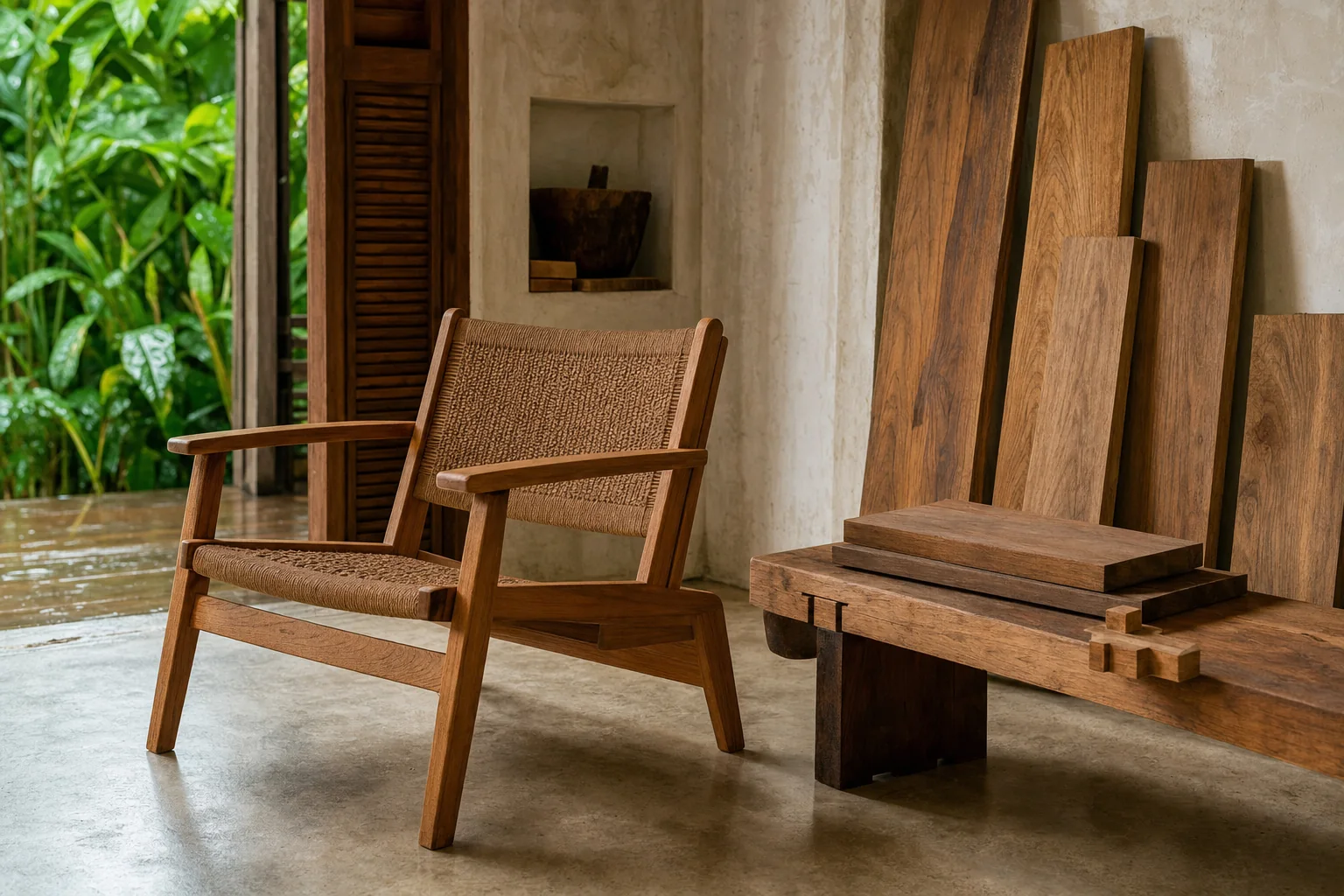
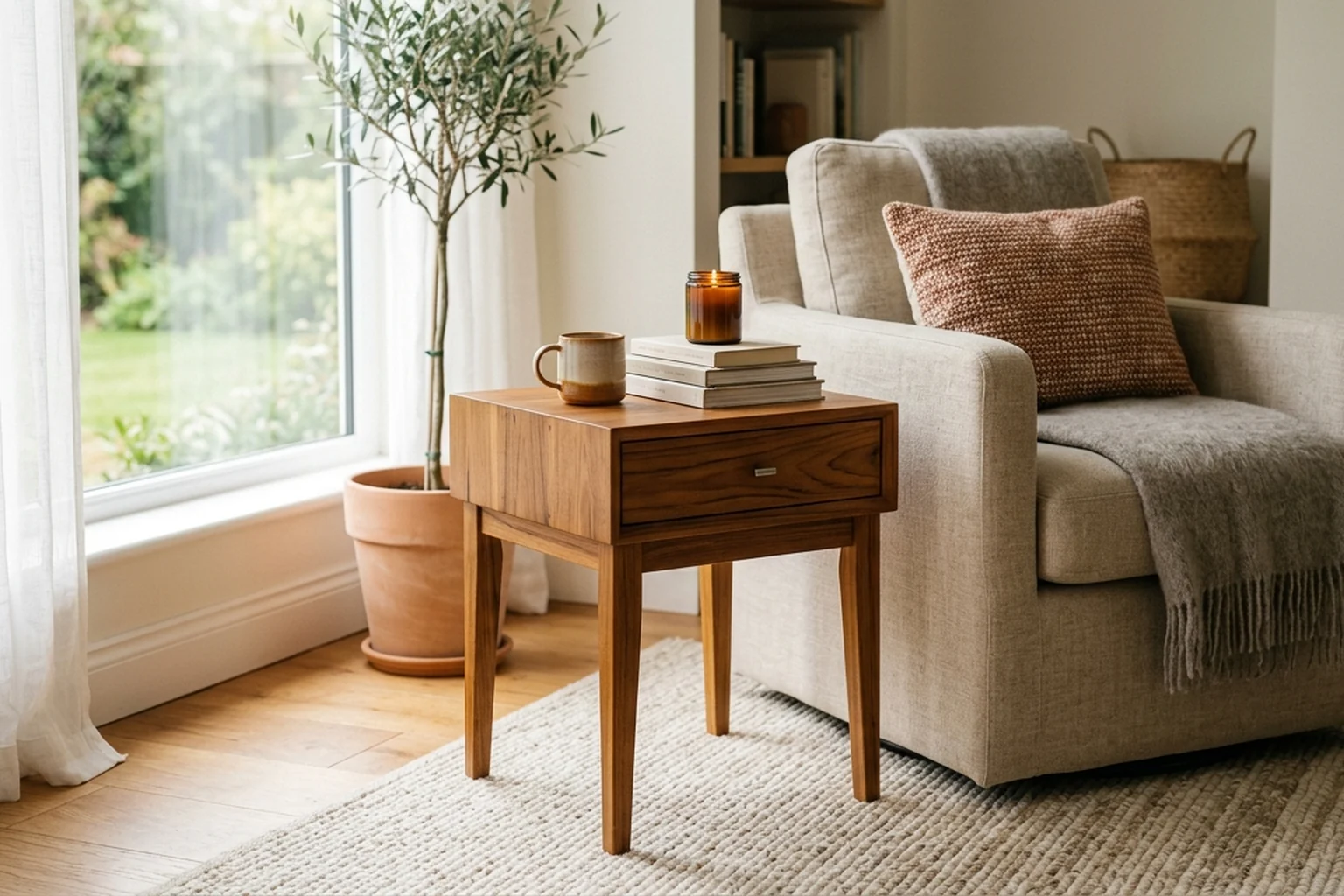
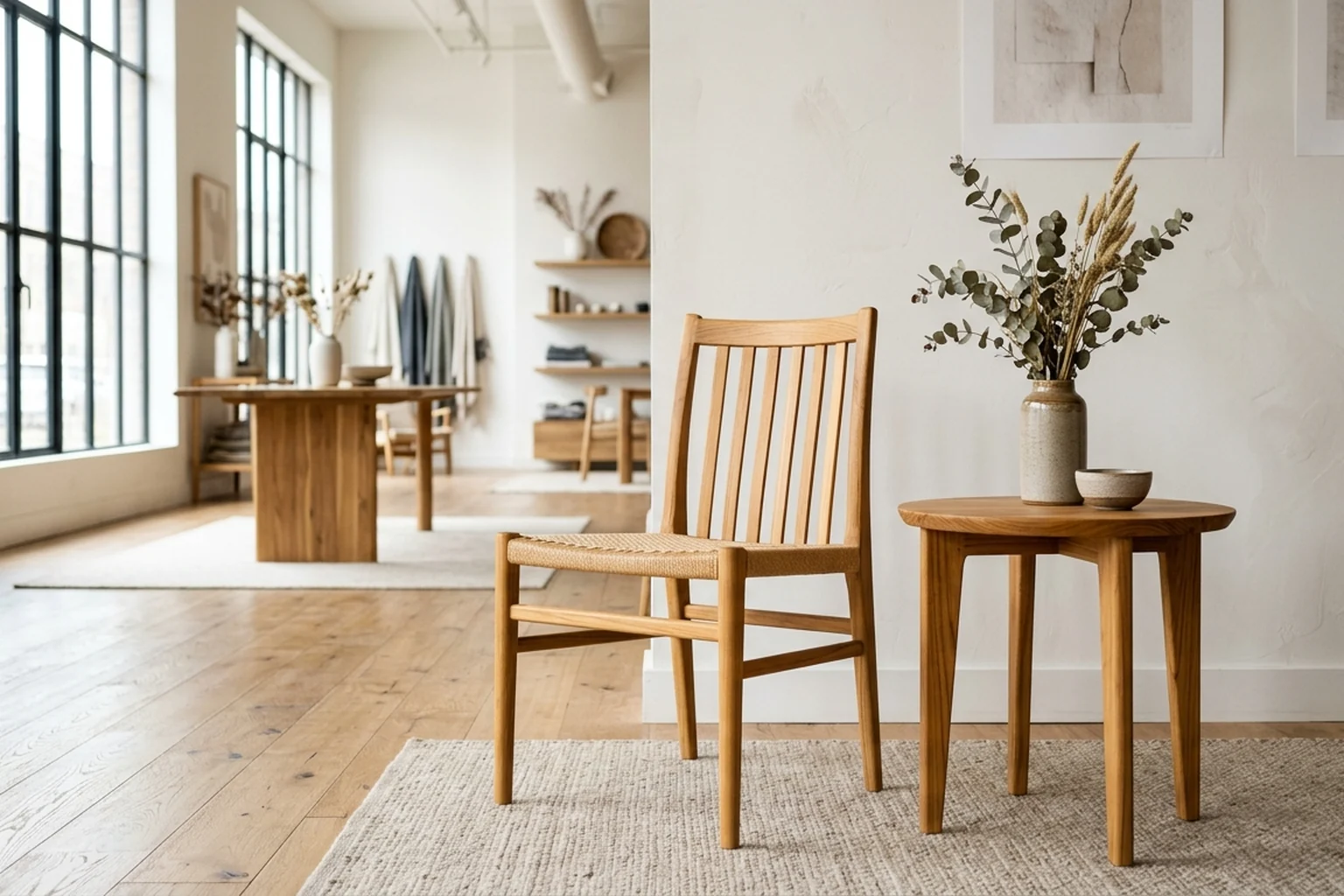
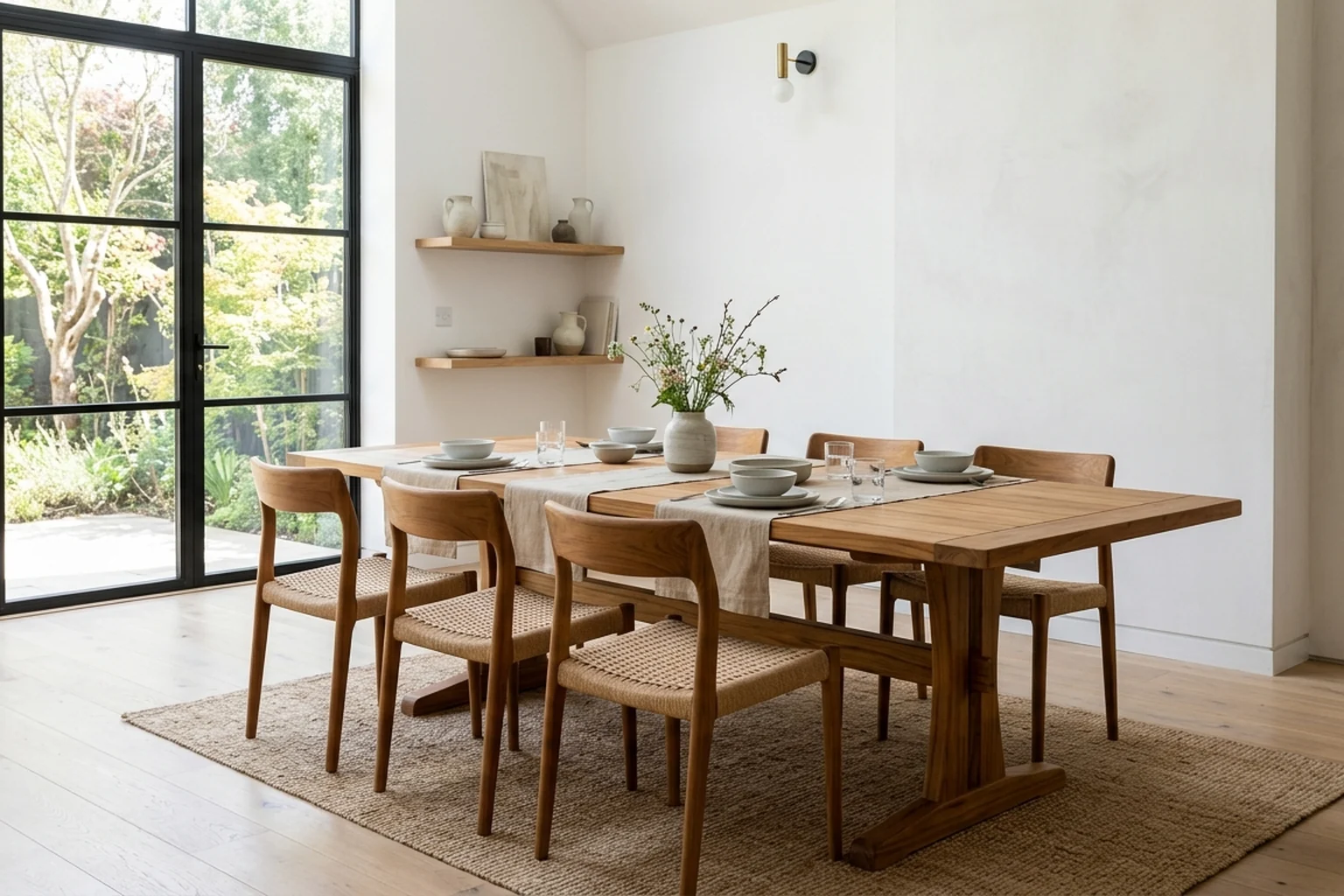
Mid-century tables share a short visual language: tapered legs that widen slightly at the foot, a clean rectangular or rounded top, minimal hardware and honest wood. Teak became the material of the period because it is stable, warm in colour and strong enough for slim profiles.
The style suits modern rooms because it is quiet. The table does not compete with the room; it gives the wood the lead. When buying, look for proportion and line rather than decoration, and remember that the best pieces are those whose legs, top thickness and edge profile feel considered together.
2. Solid teak versus teak veneer
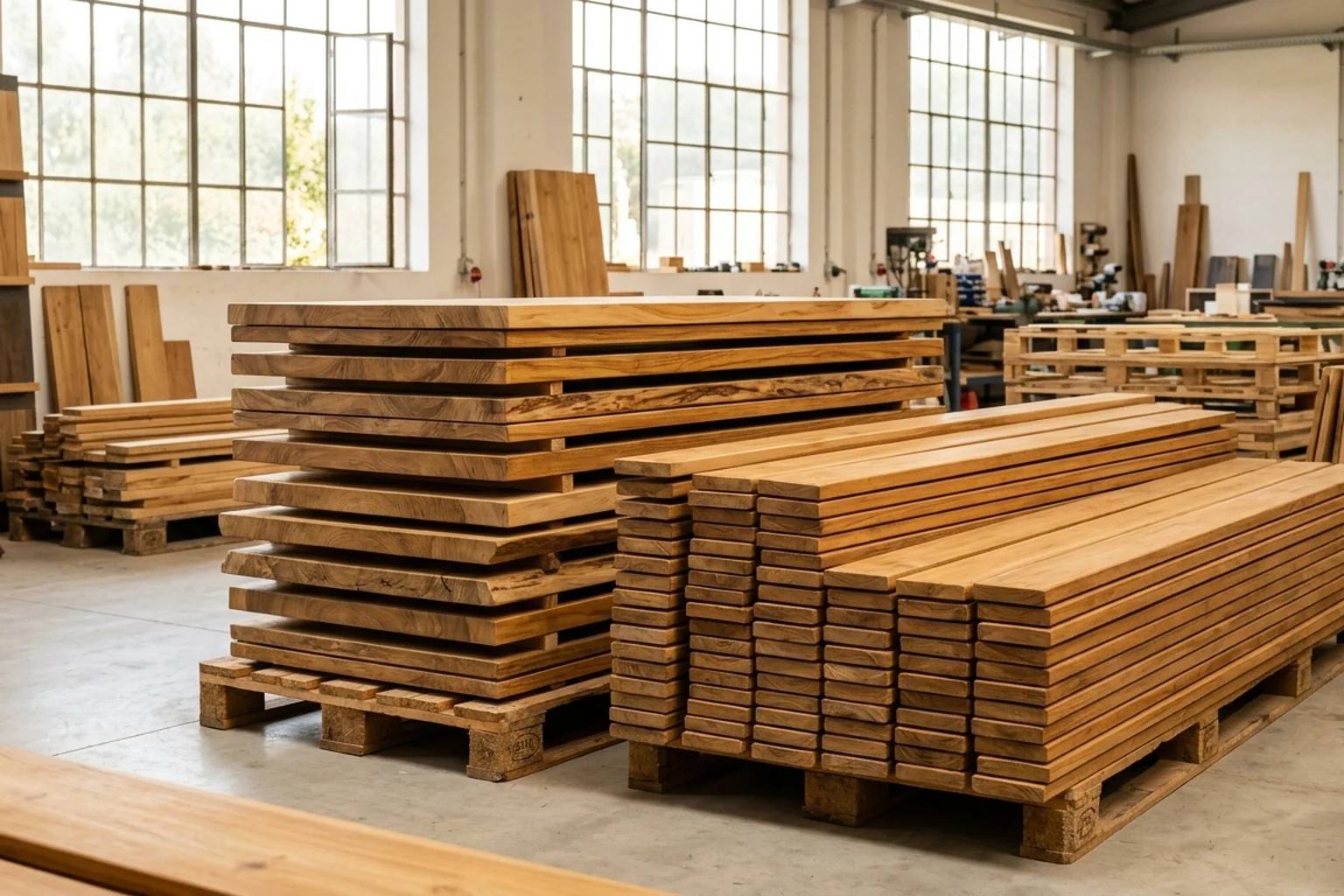
This is the single most important check. Solid teak means the top is made of real teak through its full thickness; veneer means a thin teak layer over a cheaper core. Veneer can look identical in a photograph.
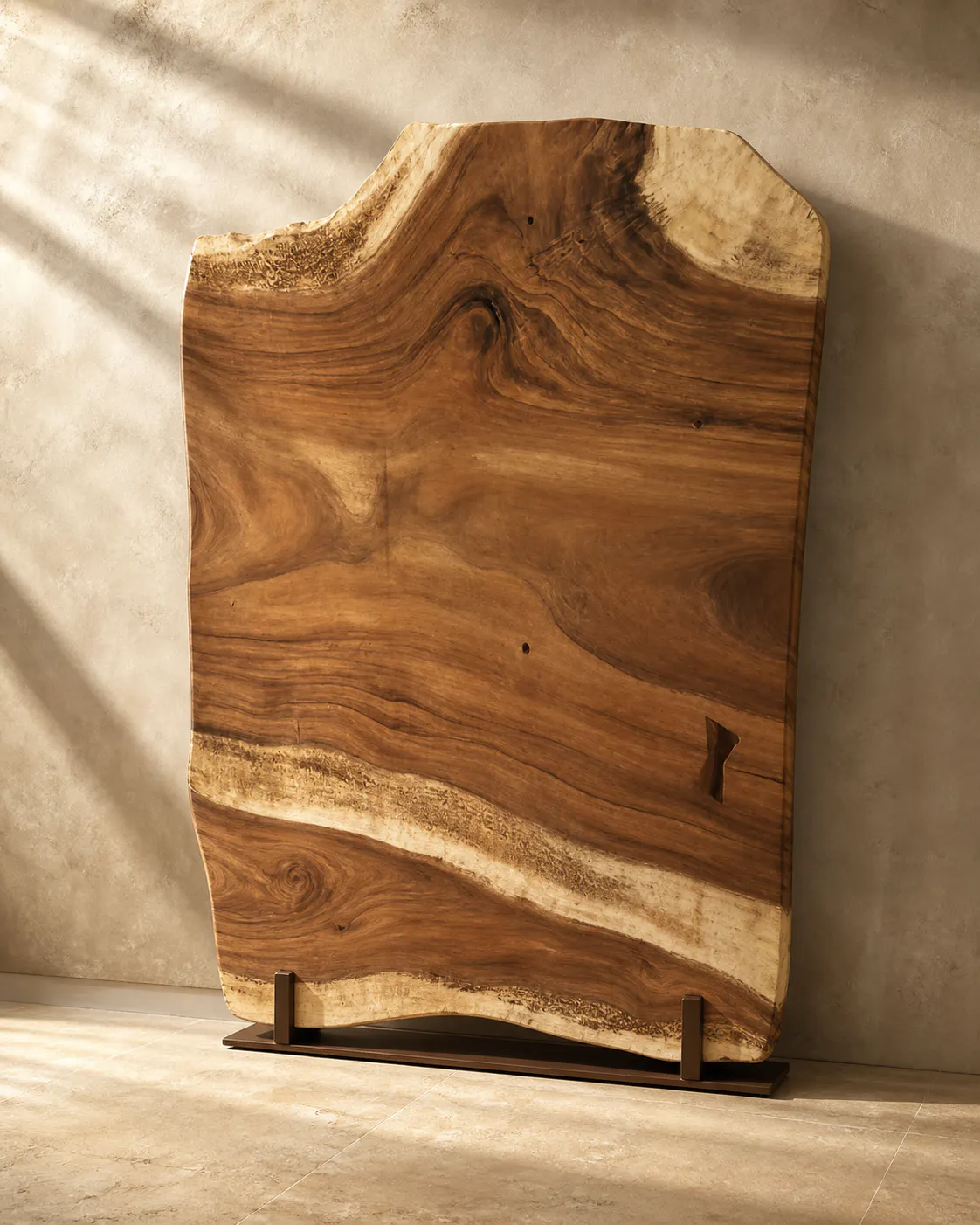
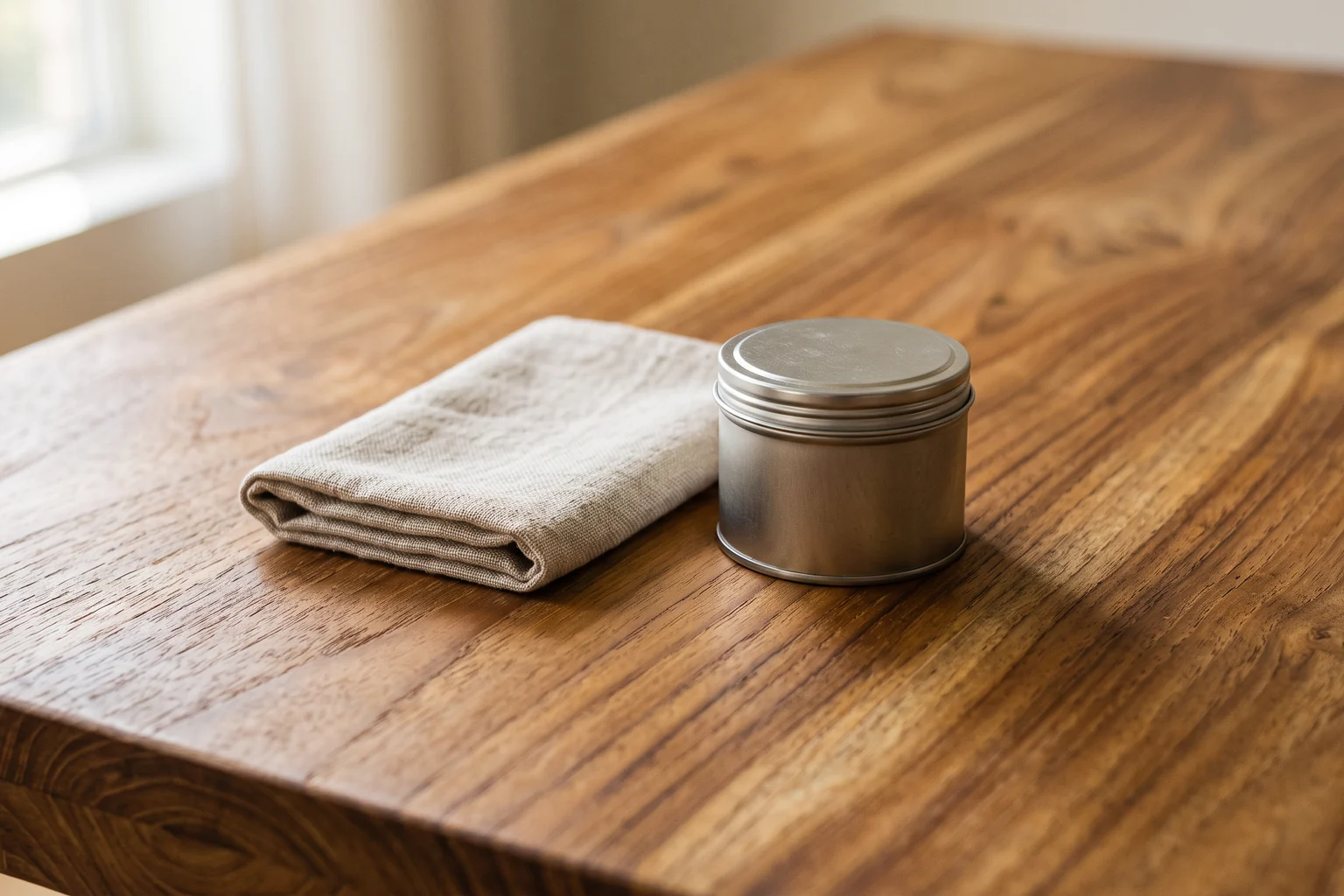
To tell them apart, look at the underside and edges. Solid wood shows continuous grain and a visible end-grain structure; veneered edges show a fine line where the surface layer stops. Weight is also a clue, though not decisive. If you cannot inspect in person, ask for a video or marked photographs of the underside, and ask the seller to confirm in writing whether the top is solid teak, and how the legs and rails are constructed.
A solid-teak table can be refinished and repaired for decades. A veneered table is more fragile at the edges and limited in what a restorer can do. For a dining table that will be used daily, solid teak is the sensible default.
3. Read the legs and joinery
The leg is the signature of the style. Look at how the taper begins, how the leg meets the floor and how the whole assembly feels under the top. A confident taper starts cleanly and widens into a stable foot.
Joinery matters more than finish. Original mid-century pieces are typically joined with dowels or mortise-and-tenon construction; later copies often rely on screws and glue. Loose joints, wobble and gaps at the rails are the usual signs of age, and most can be repaired, but the cost of repair should be part of your decision.
4. Original vintage or a new custom table
An original 1950s or 1960s table carries history and, on the open market, a matching price and condition risk. Vintage buying means accepting the piece as it is, or paying a restorer to bring it back, and sizing is fixed at whatever the original designer chose.
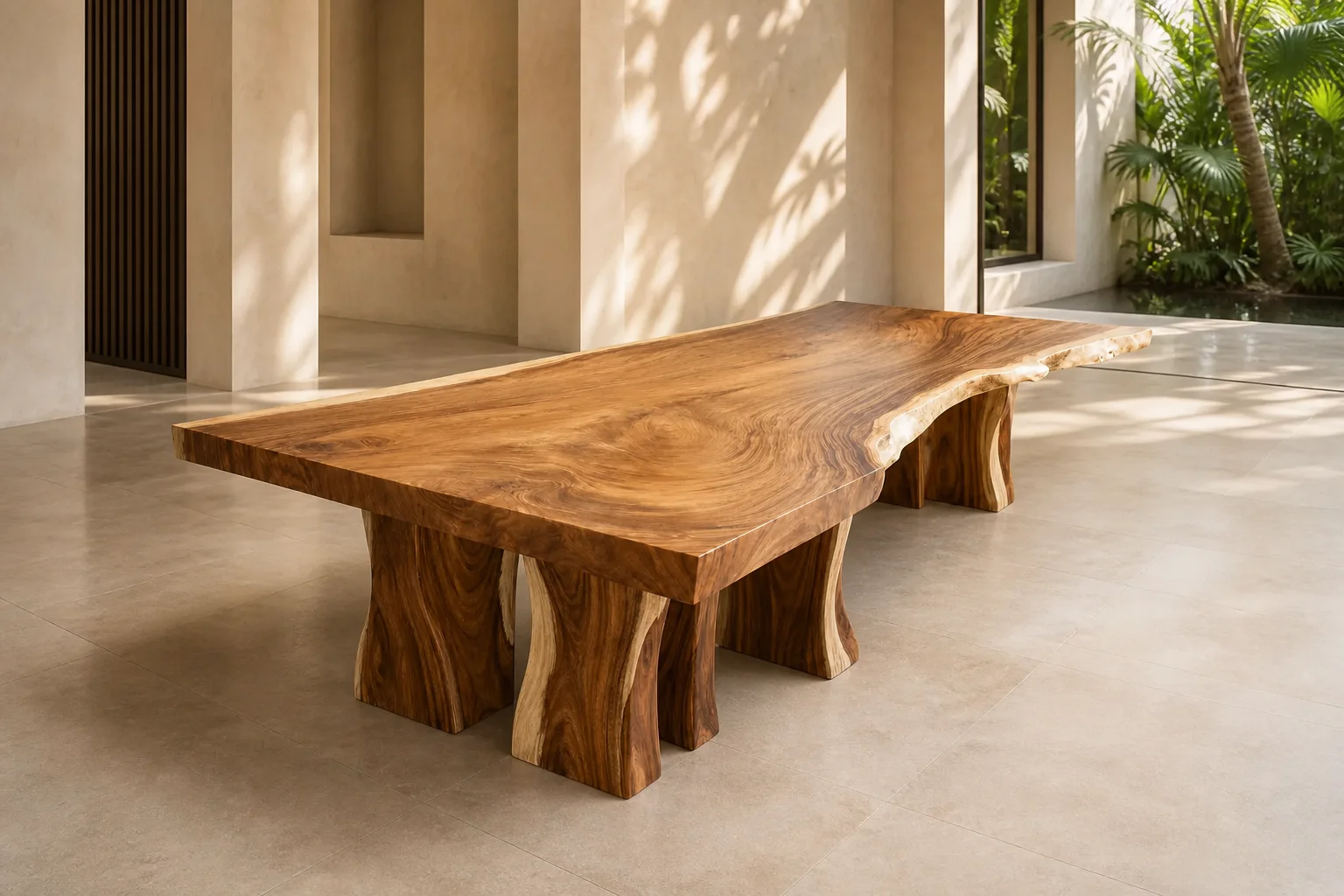
A new custom table offers the same silhouette with three practical advantages: the size can be built for your room and your seating count, the wood is newly selected solid teak, and you can choose the finish and edge detail. This is the route we take at M Furniture & Decor, where custom dimensions, materials and finishes are confirmed before production, and each piece is verified for species and source records.
5. If you are buying vintage: check condition first
When a vintage piece is described as restored, ask what was actually done. Refinishing is common and changes the surface character; structural repair is different and should be disclosed. Look at the joints, the underside of the top, and whether the table sits level.
Small cracks and patina are normal in fifty-year-old teak and are part of the charm. What you want to avoid is hidden water damage, heavy movement in the joints, or a top that has been sanded so far that the grain has lost its depth.
- Top is solid teak (confirm underside and end grain)
- Legs and rails joined properly, no wobble
- Refinishing or structural repairs disclosed in writing
- Finished size matches your room plan
- Delivery route confirmed for the final size
6. Size for the room, then for the table
The same rule applies to every dining table: measure the room before choosing the table. Leave roughly 90 centimetres between the table edge and a wall or cabinet where people need to pass, and check how far chairs pull out. A mid-century table with slim legs actually gives slightly better knee clearance than a chunky base, but the top width is still what determines comfort.
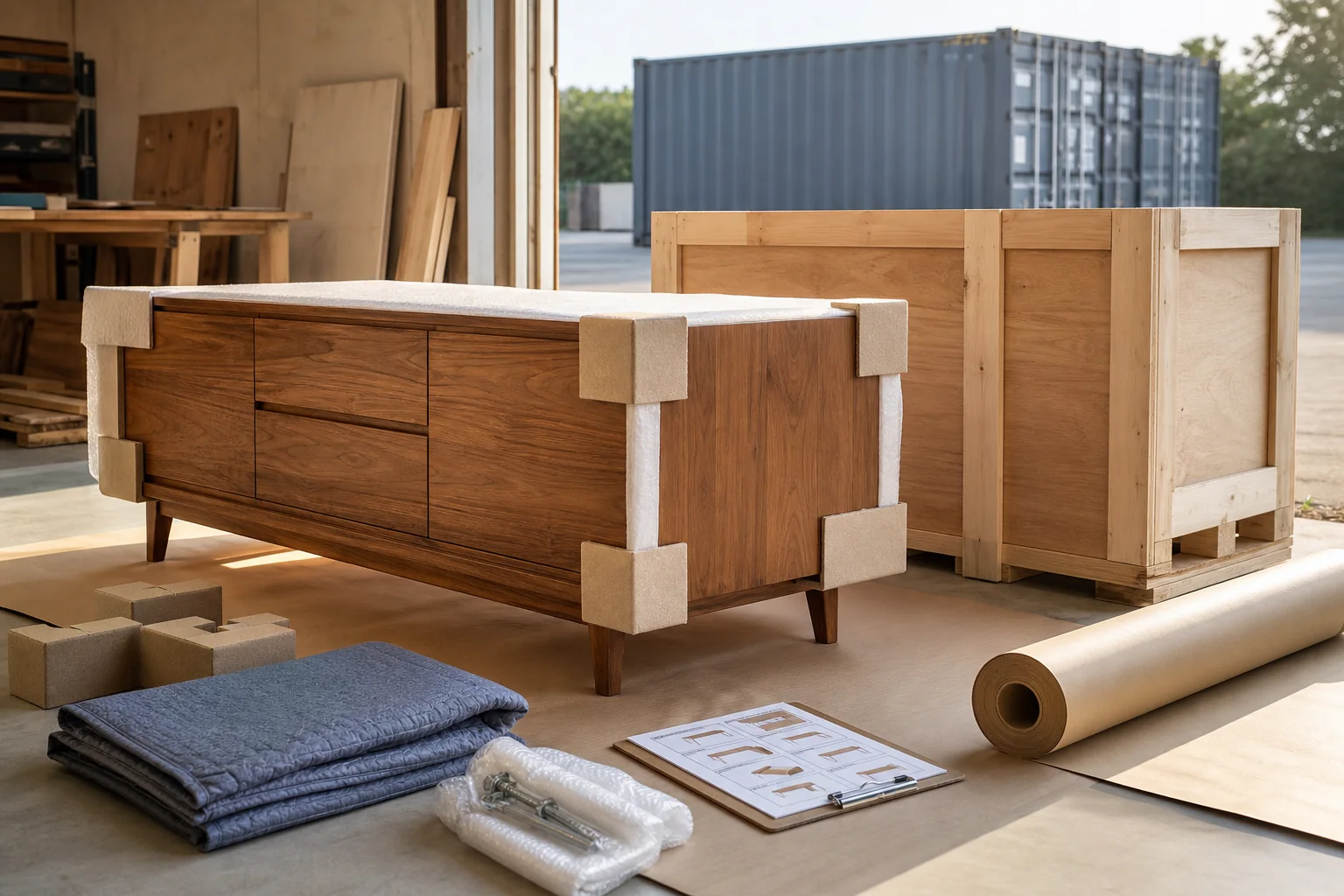
Confirm the finished dimensions in writing, including the overhang and leg position, and check the delivery route, especially for lift, stair and doorway access. Solid teak tables are heavy, and the route to the room is part of the specification.
Buy the look, built the way you need it
The mid-century teak dining table is a style, not a single product. Decide on solid wood, choose a size that fits the way you live, and buy from a maker who will confirm the details in writing. If you would like a table built to your room, share your measurements and seating count and we will work through the options with you.