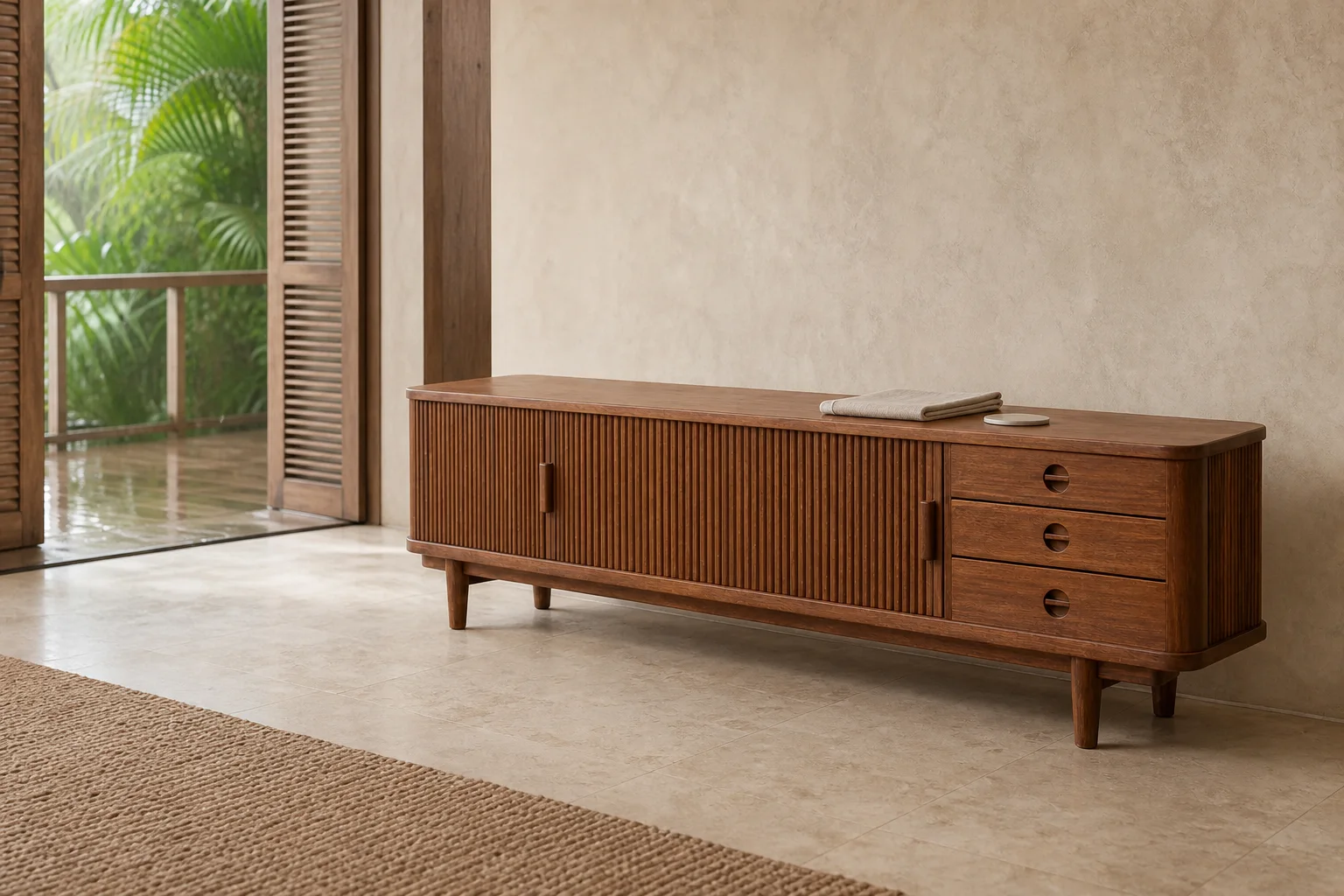
Water-based finishes are durable on solid teak furniture when the coating is matched to teak’s oily surface and the furniture’s exposure. A well-prepared indoor table, cabinet, or chair
Teak’s natural oils help the wood resist moisture, but they can reduce finish adhesion if sanding dust and surface oils are not removed before coating.
Teak requires careful preparation because its natural extractives and oils can interfere with a coating’s bond. Fresh sanding, thorough dust removal, and a finish system approved for oily hardwoods improve adhesion. Skipping those steps can cause uneven wetting, early peeling, or localized failure even when the water-based product is otherwise durable.
Solid teak contains oily extractives that make it valued for moisture resistance, yet those same materials can challenge film-forming finishes. Sand shortly before finishing, vacuum carefully, then wipe only with the coating manufacturer’s recommended cleaner or solvent and allow it to flash off. The USDA Forest Products Laboratory Wood Handbook explains that wood chemistry and surface preparation affect coating performance. Test the complete sealer-and-topcoat schedule on an offcut before applying it to a dining table or hotel casegood.
On indoor solid teak furniture, a quality water-based sealer and topcoat can provide durable resistance to handling, minor spills, and routine cleaning. Durability depends more on adhesion, cured film thickness, and use than on the label “water-based.” Dining surfaces, armrests, and commercial furniture need more frequent inspection than low-contact cabinetry.
For interior use, choose a water-based coating specified for furniture rather than a decorative wall product. Multiple thin, fully cured coats usually perform more predictably than one heavy coat, especially on tabletops exposed to cups, food, and repeated wiping. Waterborne systems may have lower odor during application, but “water-based” does not mean waterproof before cure. Follow the manufacturer’s temperature, humidity, recoating, and cure guidance. The American Coatings Association describes how waterborne coating technologies use different resin and crosslinking approaches, so performance varies by product.
Water-based finishes can protect outdoor teak furniture, but no clear film finish eliminates weathering maintenance. Ultraviolet light, rain, heat, movement, and abrasion gradually reduce gloss and adhesion. Use an exterior-rated system with UV protection, avoid trapped water, and plan periodic cleaning and recoating before the film cracks or lifts.
Teak can weather outdoors without a finish, gradually turning silver-gray; that natural durability is different from the lifespan of a transparent coating. A water-based exterior product must be explicitly rated for exterior wood and compatible with teak. Keep furniture elevated, uncover it after rain, and avoid placing it where water pools on horizontal surfaces. Inspect high-exposure areas every 3 to 6 months for dullness, checking, or edge failure. The Wood Database teak profile notes teak’s notable decay resistance, but surface weathering still occurs under sun and moisture.
Maintain water-finished teak by cleaning gently, limiting prolonged water contact, and repairing small damaged areas before moisture reaches the wood. Use a soft cloth and a mild, finish-safe cleaner instead of abrasive pads, strong alkalis, or silicone polishes. Recoat only after cleaning, light sanding when specified, and confirming compatibility with the existing finish.
A practical routine is to wipe spills promptly, dust with a soft cloth, and use coasters, felt pads, and breathable covers where appropriate. Do not assume teak oil, wax, or household polish is compatible with a cured water-based topcoat; such products can complicate future recoating. For scratches that expose bare wood, consult the coating supplier’s repair instructions, then test sheen and color in an inconspicuous place. Document the product name and application date for commercial installations. That record helps a furniture maker, finisher, or facilities team select a compatible repair system later.
Water-based polyurethane can stick to teak, but adhesion is not automatic. Sand the surface shortly before finishing, remove dust and surface contamination, and use a primer or sealer approved by the product manufacturer for oily hardwoods when required. A small adhesion test on an offcut is prudent before coating a finished piece.
A water-based finish often changes teak’s color less immediately than many oil-based finishes, which can add a warmer amber cast. The final appearance still depends on wood variation, sealer, sheen, and coating build. Make sample boards using the exact sanding schedule and full finish system to approve color before production.
Recoat timing depends on sun exposure, rainfall, furniture design, and the specific exterior coating, not a fixed calendar alone. Inspect exposed horizontal surfaces every 3 to 6 months. Clean and recoat when gloss fades, water no longer beads as intended, or early wear appears, before cracking or peeling develops.
Do not apply teak oil over a cured water-based film unless both manufacturers specifically confirm compatibility. Oil may sit unevenly on the sealed surface, change the sheen, attract soil, and interfere with future repairs. Clean the finish gently instead, and use the original coating system for scheduled maintenance or recoating.
This resource is educational and does not replace the technical data sheet, safety data sheet, or application instructions issued by a coating manufacturer. Always test a proposed finish system on representative teak before full production.