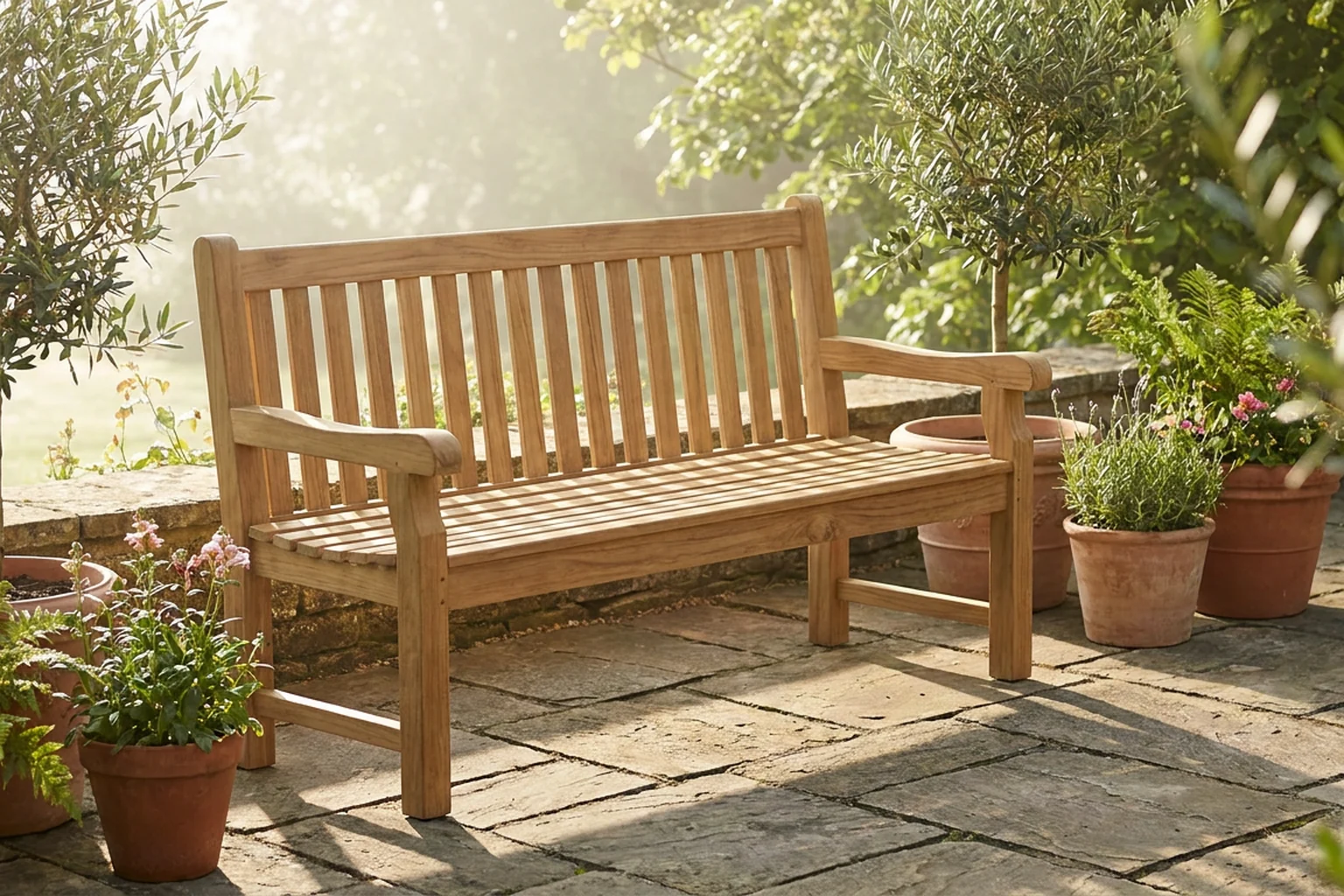
Teak usually lasts longer outdoors than eucalyptus when both are used without intensive preservative treatment. Its natural extractives, stable grain, and long record in exterior applications make it
For either timber, choose furniture that drains quickly, keeps end grain protected, and uses corrosion-resistant hardware. Wood quality alone cannot overcome persistent standing water.
Teak usually outlasts eucalyptus outdoors, particularly where rain, humidity, termites, and ultraviolet exposure are persistent. Mature teak contains extractives that improve decay resistance, while eucalyptus performance differs sharply by species, drying, treatment, and joinery. Neither wood is maintenance-free: standing water, weak coatings, and poor construction shorten service life.
The useful comparison is not simply hardwood versus hardwood. Teak heartwood is valued for outdoor furniture because it resists moisture movement and weathering better than many untreated alternatives. The USDA Forest Products Laboratory Wood Handbook explains that durability varies by species, heartwood and sapwood, moisture exposure, and biological hazards.
Eucalyptus can last well in a covered or well-drained location, especially if it is a suitable species and has effective preservative treatment. Yet untreated boards with sapwood or moisture-prone joints generally demand closer attention. For a Bangkok terrace, assess rain exposure, afternoon sun, ventilation, and whether feet keep the frame above wet paving.

Teak’s reputation comes from its dimensional stability, density, and naturally occurring oily extractives, which slow moisture uptake and biological attack. Those properties are valuable for outdoor furniture, but they do not excuse poor design. End grain, horizontal surfaces, and trapped water can weather or check even when the timber is genuine teak.
Teak, botanically *Tectona grandis*, is commonly specified for exterior seating and tables because its heartwood is comparatively durable. The Food and Agriculture Organization documents teak’s importance as a managed tropical timber resource. Genuine material identification and legal sourcing remain separate questions from durability, including for timber moving through international trade.
Even teak benefits from construction that sheds water. Slightly sloped surfaces, gaps between slats, and at least two drainage paths around cushions reduce prolonged wetting. Use stainless steel or similarly corrosion-resistant fasteners, since staining around hardware can damage appearance. A gray surface patina is generally weathering of color, not automatic evidence of structural failure.
Eucalyptus can be a practical outdoor choice when the species is appropriate, the wood is correctly dried, and sapwood is excluded or preservative-treated. It is not one uniform material: plantation eucalyptus, treated structural eucalyptus, and furniture-grade boards can behave differently. Compare documented treatment, grain orientation, and construction—not just a generic hardwood claim.
Ask the supplier to name the eucalyptus species, distinguish heartwood from sapwood, and state whether preservative treatment was applied after machining. Eucalyptus is a large botanical group, so a generic label does not establish exterior durability. The USDA Forest Products Laboratory advises evaluating wood use through moisture, decay hazard, and design conditions rather than density alone.
Eucalyptus is often appropriate where budget, planned maintenance, and replacement cycles favor it. It is a stronger candidate under a roof with good airflow than beside an uncovered pool. Avoid pieces with broad, flat end grain exposed upward, tight water-catching joints, or feet that sit directly on soil. Those details can accelerate checking and decay in any wood.
Outdoor longevity is chiefly a system outcome: timber selection, furniture geometry, finish, hardware, placement, and maintenance work together. Choose components that shed water, use corrosion-resistant fasteners, avoid ground contact, and inspect seasonally. A breathable maintenance routine preserves appearance, whereas a failed film finish can hold moisture against either teak or eucalyptus.
Clean furniture gently, allow it to dry fully, and inspect it at least twice annually—more often through a monsoon season. Check legs, stretcher joints, screw heads, and the underside of seats, where water can linger unnoticed. Lift furniture on 2–3 mm protective pads or glides when practical, keeping feet clear of pooled water and abrasive paving.
If maintaining a warm, even color matters, test a compatible exterior finish on an inconspicuous area and follow its renewal schedule. Do not coat damp timber. For teak, many owners accept the silver-gray patina and prioritize cleaning; eucalyptus may need earlier finish attention. Follow CITES guidance and supplier documentation when verifying timber identity and trade records.
With sound joinery, drainage, and periodic care, teak commonly remains serviceable longer than untreated eucalyptus in exposed settings. Actual life is determined by wood grade, sapwood content, moisture traps, climate, fastening corrosion, and whether the eucalyptus was preservative-treated. Ask the supplier to identify species and treatment rather than relying on the label alone.
Teak does not require a sealer to remain structurally useful outdoors, but a finish can help retain a more even brown appearance. Left unfinished, teak commonly develops a gray patina. If applying a product, use one intended for exterior wood, test it first, and never apply it over damp timber or a failing coating.
Eucalyptus furniture can remain outdoors in rain when it is designed for exterior exposure, protected from standing water, and maintained on schedule. Its outcome depends on the particular eucalyptus, treatment, and construction. Keep legs off wet ground, uncover drainage routes after storms, and move or cover pieces during prolonged severe weather when feasible.
Inspect wood identification, visible sapwood, smoothness of machining, drainage gaps, end-grain exposure, joinery, and hardware. Ask whether components are kiln-dried and whether eucalyptus has documented preservative treatment. Confirm the intended location: an uncovered pool deck, shaded balcony, and covered terrace impose materially different moisture and ultraviolet conditions.
M Furniture & Decor manufactures and exports teak furniture. This resource is educational and explains general material considerations; actual durability depends on timber specification, construction, location, and care.