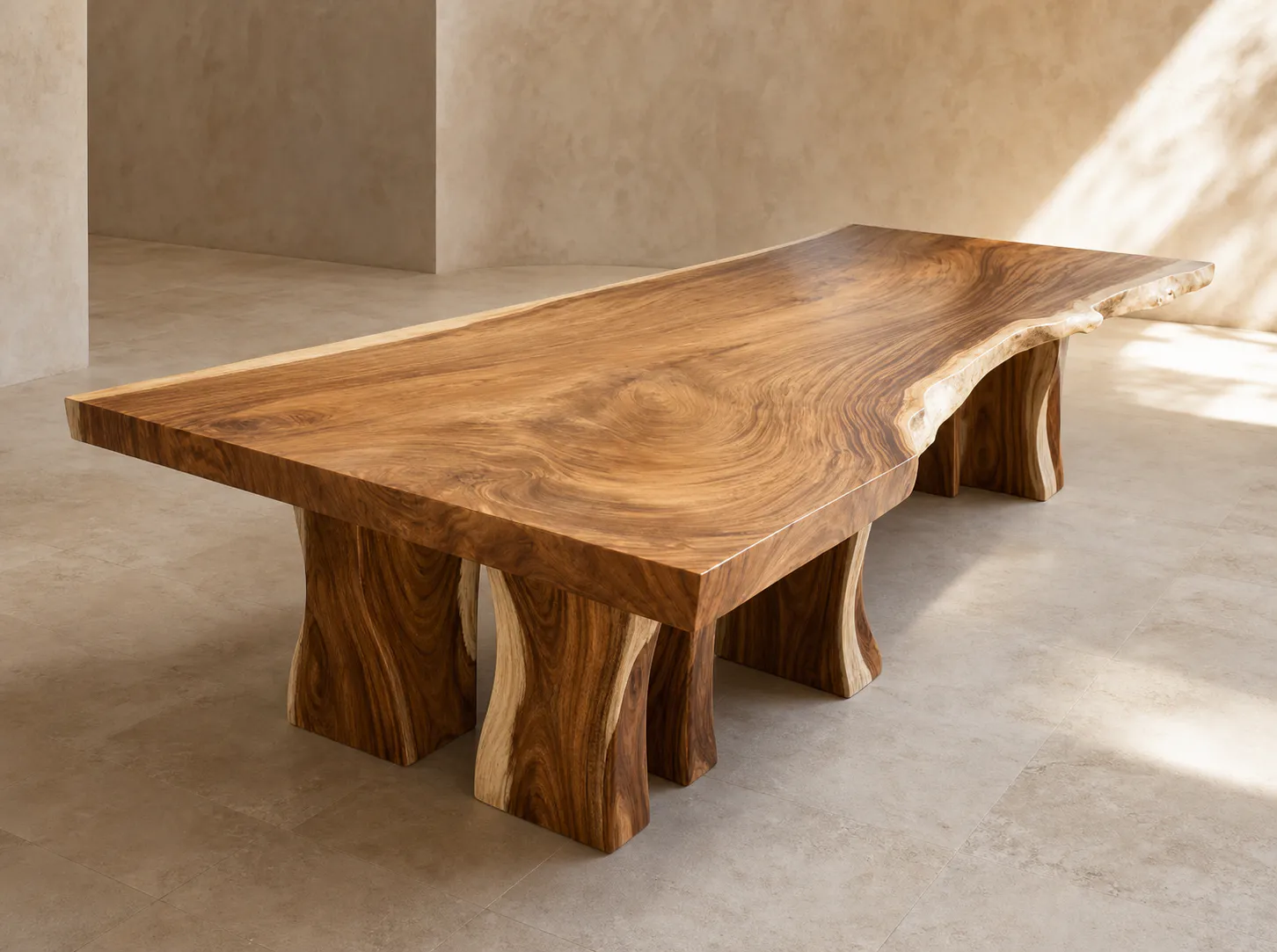
A teak vanity is a bathroom cabinet made with teak, commonly configured as a freestanding or wall-mounted base for a basin. Teak’s natural oils and stable character suit
Ask for a dimensioned drawing before purchase. It should identify basin position, waste outlet, trap clearance, drawer travel, wall-fixing points, and countertop or sink material.
Teak is well suited to vanity cabinetry because its natural oils and dimensional stability help it tolerate changing bathroom humidity, but wood is not waterproof. A teak vanity still needs thoughtful detailing: drainage around the basin, protected end grain, airflow, and a finish maintained according to the maker’s instructions.
Teak, or *Tectona grandis*, is valued for durability and its natural extractives. The USDA Forest Products Laboratory Wood Handbook explains that wood changes dimension as its moisture content changes, so good vanity construction allows panels to move without stressing joints. Specify solid teak where repairability matters, and ask whether the cabinet includes a sealed countertop, integrated basin, or separate vessel basin. Promptly wipe standing water, especially near joints, drawer edges, and the cabinet base.
Specify a teak vanity by starting with the basin type, then confirm overall width, depth, height, drawer layout, trap clearance, and wall-fixing method. For project purchasing, request a dimensioned drawing and material schedule. Those details prevent conflicts between cabinetry, plumbing, mirrors, and the bathroom’s usable circulation space.
Begin with the room plan rather than the cabinet alone. Common single-vanity planning widths include 600 mm, 900 mm, and 1,200 mm, yet the usable size depends on door swings, shower screens, and access around the basin. Confirm the finished floor level, outlet position, tap configuration, and whether a U-shaped drawer is needed around the trap. For a vessel basin, verify counter height and splash exposure. A clear product specification can also be represented consistently through Schema.org Product data when publishing the item online.
Proper installation keeps a teak vanity attractive and serviceable: secure it to suitable wall structure, align the basin and waste, seal only the interfaces that require it, and preserve access to valves and traps. Leave the cabinet protected from persistent floor water, then check fasteners and finish after the room enters regular use.
A wall-mounted teak vanity must be fixed through its designed mounting rail or brackets into structure capable of carrying the loaded cabinet, countertop, basin, and water. A qualified installer should connect plumbing and use compatible sealant at the basin interface, without trapping moisture behind the cabinet. Clean teak with a soft damp cloth and mild soap, then dry it; avoid abrasive pads, bleach, and harsh solvent cleaners. Reapply the maker-recommended finish when water no longer beads or the surface appears dry, particularly in heavily used hotel bathrooms.
Responsible teak vanity sourcing depends on traceable species and origin, clear product specifications, and documentation appropriate to the shipment. Buyers should distinguish legal harvest documentation from independent certification, verify the exact product scope, and retain records for customs, hospitality procurement, or design-project material submittals.
Request the timber species, country of origin, construction description, finish, hardware specification, packing details, and lead time in writing. If certification is required, ask whether the exact material and transaction are covered rather than assuming a general environmental claim applies. The Forest Stewardship Council provides information about responsible forest management and chain-of-custody systems. For international projects, keep invoices, packing lists, origin documents, and any requested timber records together; requirements can differ by destination and product form.
Yes. Teak can perform well in a bathroom when the vanity is built for wet-room conditions, water is wiped from standing surfaces, and the room is ventilated. It is not a substitute for waterproof construction: protect cut edges, keep cabinet bases out of pooled water, and maintain the specified finish.
Solid teak refers to components made from teak lumber rather than a thin teak face over another core. It can be repaired and refinished more readily, although quality still depends on drying, joinery, panel construction, and finish. Ask which parts are solid teak, including doors, frames, and drawer fronts.
A teak vanity can support a vessel sink when the countertop structure, basin weight, tap location, and waste connection are specified together. Confirm the required counter height, splash zones, cut-out dimensions, and access to the trap. The maker should provide a drawing showing the intended sink and faucet configuration.
Clean a teak bathroom vanity with a soft cloth, mild soap, and limited water, then dry the surface thoroughly. Avoid bleach, abrasive scouring pads, and strong solvent cleaners because they can damage the finish. Follow the furniture maker’s finish-care instructions and address water marks or worn areas promptly.
This educational resource is published by M Furniture & Decor. Product availability, timber documentation, dimensions, finishes, and import requirements should be confirmed for each order and destination.