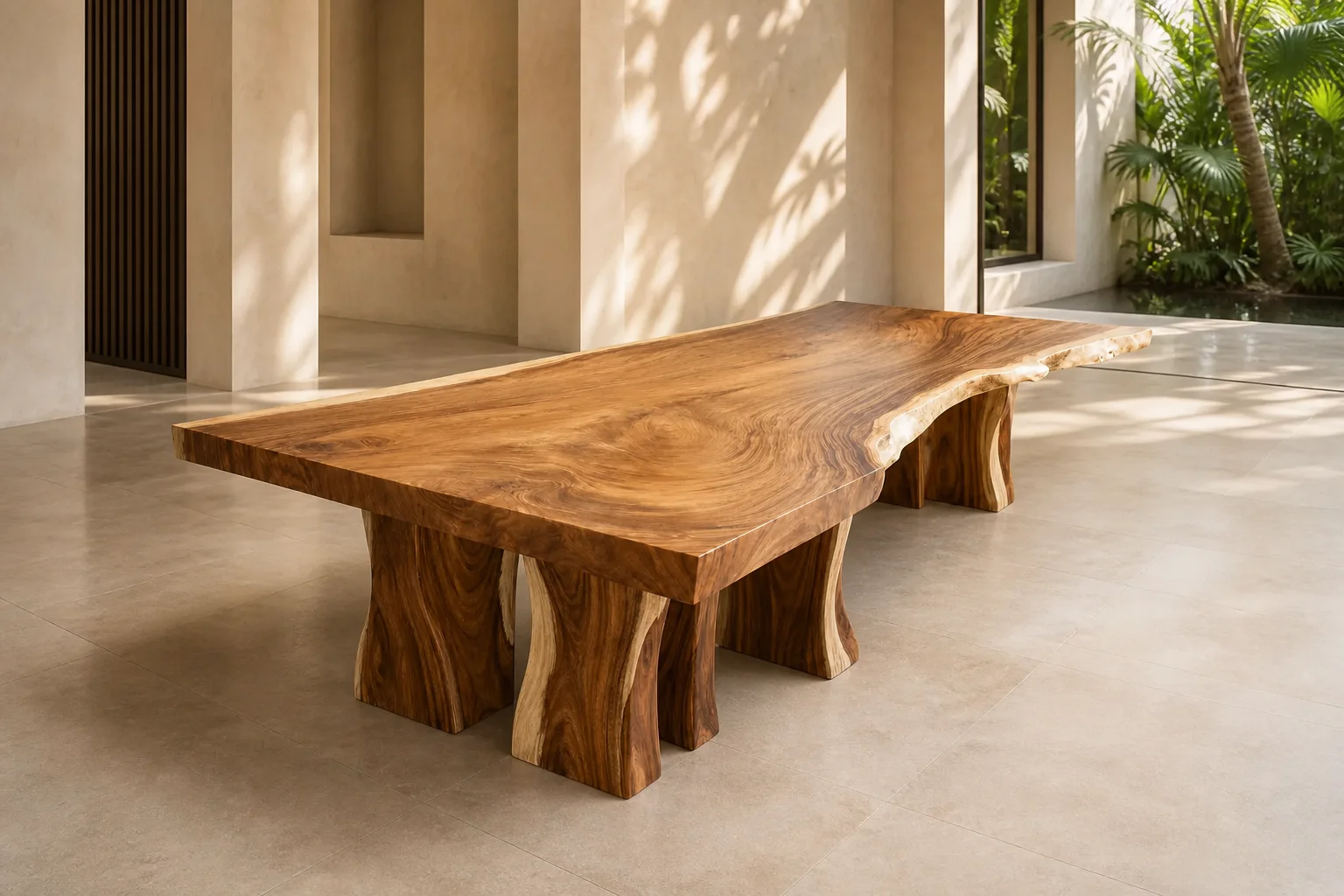
Teak tables can withstand heavy restaurant use when their structure, finish, and maintenance plan are designed for commercial service. Teak offers useful dimensional stability and natural durability, but
For a restaurant, a durable table is not simply a thick solid-wood top. It is an assembly that resists racking, loose legs, rocking on uneven floors, liquid exposure, and finish wear while remaining practical to inspect and repair. The specification should define those operating conditions before production begins.
A teak table is suitable for heavy restaurant use when the whole assembly—not merely the timber species—is designed for repeated loads, chair impacts, frequent cleaning, and changing humidity. Solid teak, controlled moisture content, strong joints, and a serviceable finish work together to reduce wobble, checking, staining, and premature replacement in demanding dining settings.
Teak is valued for outdoor and interior furniture because its extractives and density can support durable service, yet material selection is only one variable. The USDA Forest Products Laboratory Wood Handbook explains that wood movement responds to moisture conditions. Commercial fabrication therefore starts with properly dried, acclimated stock and grain-aware construction, then pairs the top with an apron, subframe, or pedestal that limits racking without preventing normal seasonal movement.
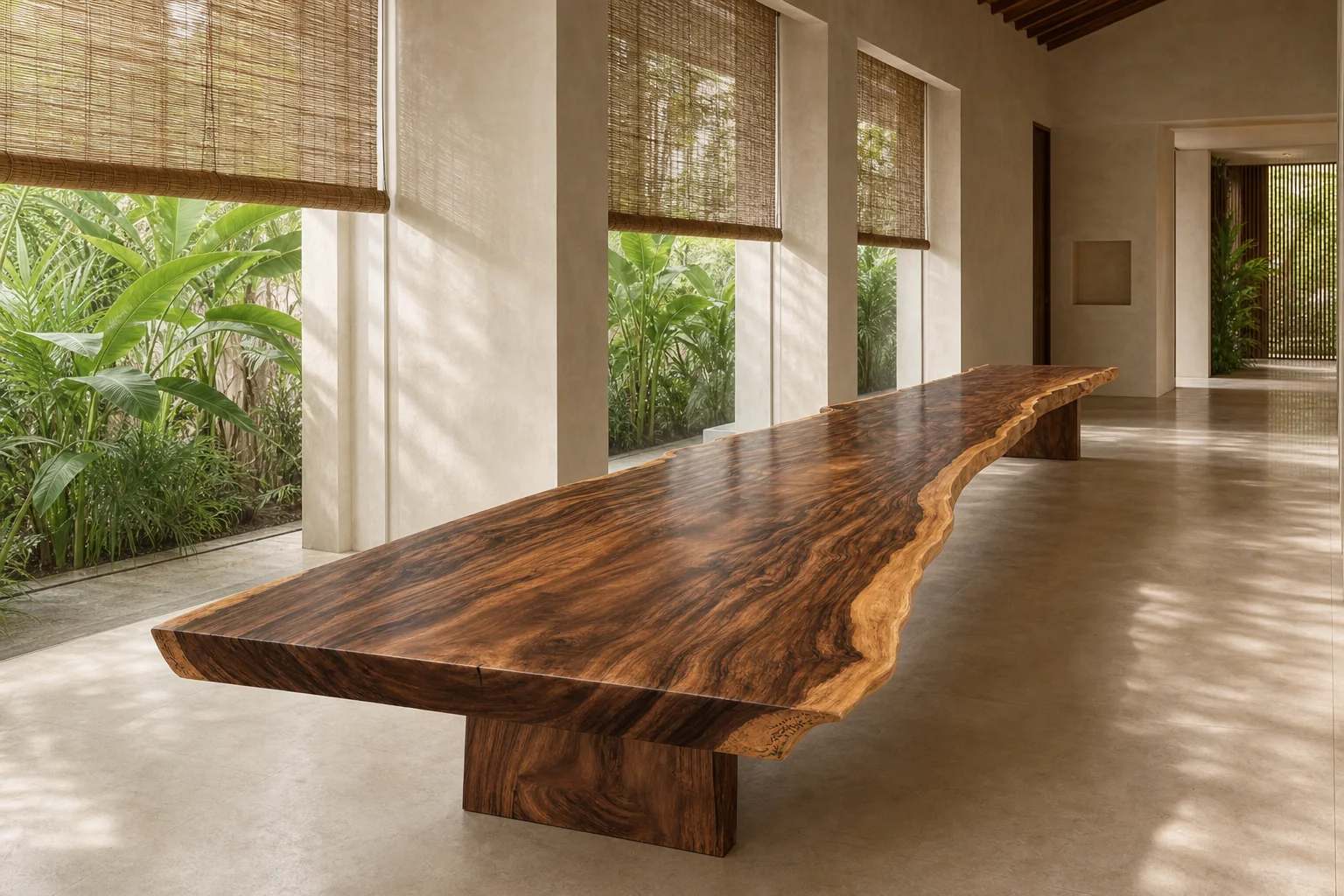
Restaurant specifications should translate “heavy use” into measurable construction requirements: top thickness, apron or subframe depth, leg section, joint type, fastener strategy, leveling hardware, and finish system. The drawing should also identify table size and base geometry, because a sound teak top can still fail operationally through racking or tipping.
Ask the maker for a dimensioned drawing and a written description of the structural assembly. Mortise-and-tenon, dowelled, or appropriately engineered mechanical joints can be effective when matched to the table design; the important point is repeatable fit and adequate long-grain glue area. Reference standards from the Architectural Woodwork Institute can help design teams align material and workmanship expectations across a hospitality project.
Maintenance determines whether an engineered teak restaurant table stays stable and presentable after installation. Staff should clean spills promptly, avoid standing water and aggressive abrasives, inspect fasteners and levelers on a schedule, and renew the specified finish when wear appears. Outdoor tables need additional drainage, cover, and seasonal inspection planning.
Give front-of-house and cleaning teams a short care procedure that names approved cleaners, drying steps, and prohibited products. The EPA Safer Choice program is one starting point for identifying products with safer-chemistry criteria, although compatibility with a particular finish still requires confirmation from the finish supplier. Inspect tables monthly for loosened hardware, finish breaks, movement, and unstable levelers; prompt localized repair is usually less disruptive than delayed refinishing.
Yes, provided the specification treats the table as a contract-use assembly rather than as a residential object. The maker should define expected loads, joint construction, base attachment, moisture range, finish, and maintenance. Teak’s natural durability helps, but structural performance comes from engineering, fabrication consistency, and use conditions.
Not always. Many indoor restaurant tables use a protective film-forming or catalyzed coating selected for cleanability, while some projects choose oil or low-build systems for appearance and easier localized renewal. The appropriate finish depends on location, cleaning chemicals, heat, sunlight, and the operator’s ability to follow a scheduled maintenance program.
Teak can be used outdoors, but an outdoor restaurant specification must address water drainage, ultraviolet exposure, heat movement, corrosion-resistant hardware, and storage or covers. A table intended for a shaded patio differs from one exposed to rain and sun daily. Outdoor placement therefore requires separate detailing and maintenance expectations.
This page provides general furniture specification guidance. Confirm final dimensions, finishes, structural requirements, and maintenance procedures with the manufacturer and project design team before purchase or installation.