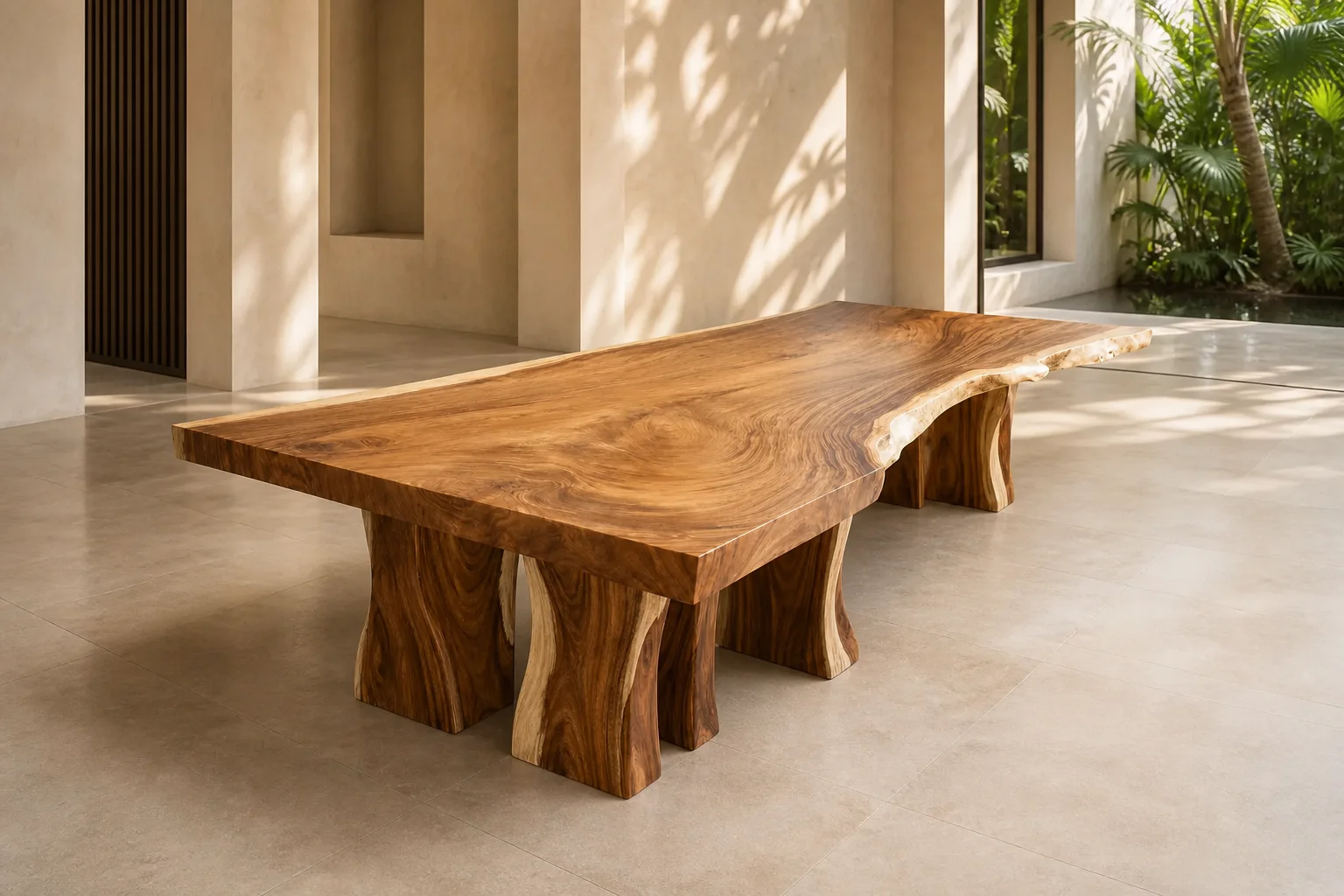
A teak table is a practical solid-wood choice when durable material and a distinct golden-brown grain are needed, provided the timber, drying, and construction suit its setting. Thai
Wood movement is normal. Tabletop design, joinery, drainage, and the installation environment matter as much as the timber species.
Teak tables suit indoor and outdoor settings because genuine teak contains extractives that help resist moisture and decay, while its grain remains stable when dried and built correctly. Outdoor suitability still depends on joinery, drainage, finish choice, exposure, and regular inspection—not on the wood species alone.
Botanically, commercial teak is **Tectona grandis**. Its heartwood is prized for oils and extractives, but species name is not a performance guarantee: sapwood, poor drying, or water-trapping details can shorten service life. For exterior pieces, use slatted or gently crowned tops, clearance beneath feet, and hardware suited to wet conditions. The USDA Wood Handbook explains how wood moisture movement drives design decisions; buyers should also check applicable CITES documentation when teak crosses borders.
Assess a teak table by confirming the timber’s identity, moisture condition, joinery, provenance, and intended location before comparing appearance. A pale, newly sanded surface may weather gracefully outdoors, while a finished indoor table needs stable humidity and protective pads. Responsible sourcing should be documented, not inferred from color or price.
Ask the seller whether lumber was kiln-dried to roughly **8–12% moisture content** for climate-controlled interiors and whether wide tops allow seasonal movement with buttons, slots, or similar joinery. Inspect for continuous grain, well-fitted mortise-and-tenon or dowel joints, and repairable construction rather than thin teak veneer sold as solid wood. Request species and chain-of-custody records; FSC describes certification and CITES regulates international trade controls. Clean with mild soap and water, then dry. Inspect outdoor joints **2 times yearly**.
A well-built teak table can remain serviceable for decades, but lifespan varies more by construction, climate, and care than by a fixed number of years. Standing water, trapped debris, loose joints, and indoor humidity swings cause avoidable damage. Clean, dry, inspect fasteners, and repair movement early.
Not necessarily. Teak’s natural extractives mean routine oiling is not required for durability, and oil can darken the surface or increase maintenance. Use a finish only for the appearance and exposure you want, following the maker’s instructions. For ordinary cleaning, mild soap, water, and thorough drying are sufficient.
A solid teak table uses teak through the structural components or top thickness claimed by the seller; teak veneer is a thin decorative layer over another core. Veneer can be appropriate for stable indoor panels, but it cannot be sanded or repaired as often. Ask for construction details and material disclosure.
This resource is published by M Furniture & Decor, a maker and exporter of Thai teak furniture. Product suitability, certification status, and import documentation should be confirmed for each individual order and destination.