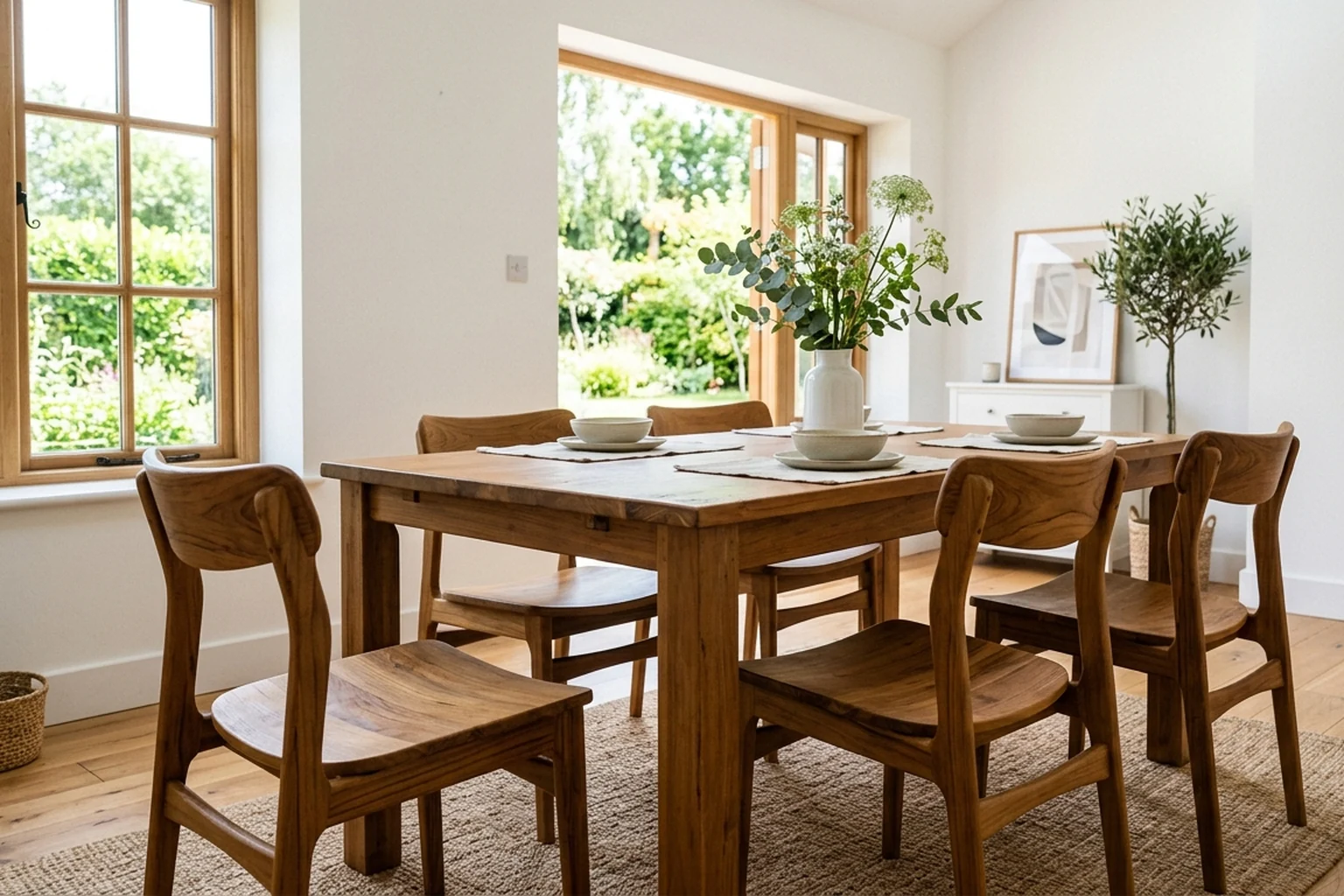
A teak stool is a versatile small furnishing that can provide occasional seating, serve as a side table, or add a useful perch in a bedroom, bathroom, entry
For a seating stool, prioritize a level base, comfortable edge treatment, and leg-to-seat connections that resist rocking.
A teak stool is a small, solid-wood furnishing that can serve as occasional seating, a bedside perch, or a compact table. Teak, commonly *Tectona grandis*, is chosen for its dimensional stability and oil-bearing heartwood. Suitability depends on construction, intended load, finish, and whether the stool will live indoors or under covered outdoor conditions.
Before buying, define the task. A 45 cm seat height is common for occasional seating, while a shorter stool often works beside a sofa or bath; test the footprint against the available floor area. Check that feet sit flat, edges are comfortably eased, and the piece does not rock. Kew Plants of the World Online records *Tectona grandis* as the teak species, while the USDA Wood Handbook explains why wood movement matters when furniture crosses climates.
Well-made teak stools are identified less by color than by material selection, grain orientation, joinery, and a level base. Ask whether components are solid teak rather than a teak veneer. For seating, check for racking resistance and sensible leg bracing; for wet settings, prioritize drainage and a finish you can maintain.
Inspect underside details rather than relying on a honey-brown surface. Continuous grain, tight fitted joints, and leg-to-seat connections with adequate bearing area are practical signs of careful work. Request dimensions, timber origin, and finish information in writing. A stool moving from a humid Bangkok workshop to a dry interior may equilibrate differently, so leave room for seasonal movement. FSC chain-of-custody certification can help buyers trace certified material claims, while the USDA Forest Products Laboratory provides wood-performance context.
Teak requires modest, regular care rather than frequent sealing. Dust indoors and wipe spills promptly; outdoors, wash with mild soap and a soft brush, then dry the surface. UV exposure can turn unfinished teak silvery gray without necessarily indicating structural failure. Reapply a compatible protector only when the chosen appearance or water shedding calls for it.
For routine care, use a lint-free cloth indoors; avoid abrasive pads and strong alkaline cleaners that can alter a finish. In covered exterior areas, clear pooled water after rain and check joints every 6–12 months. Oils deepen color but are not a universal durability treatment, and film finishes need preparation before recoating. The USDA Forest Products Laboratory publishes wood-care science, while EPA Safer Choice is a useful starting point for evaluating household cleaning products.
A teak stool can work outdoors when its construction, finish, and placement suit exposure. Use it on a draining surface, avoid persistent standing water, and favor covered patios over constantly wet locations. Sun can gray unfinished teak; that color change is cosmetic, but regular inspection of joints and feet remains important.
Ask the seller for a material specification and inspect exposed edges, underside surfaces, and end grain. Solid teak normally shows continuous wood through a component, whereas veneer is a thin teak face over another substrate. Veneer is not inherently unsuitable, but its repair options and moisture tolerance differ from solid wood.
Clean a teak stool when dust or spills appear, rather than following a rigid calendar. Indoor pieces often need only light dusting; covered outdoor pieces benefit from periodic washing and drying. Inspect outdoor feet and joints every 6–12 months. Apply oil or protector only after confirming it matches the existing finish and desired color.
Certification can help buyers evaluate a supplier’s material-traceability claims, particularly for commercial or export purchases. Ask for the timber species, country of origin, and relevant chain-of-custody documentation. Certification alone does not confirm workmanship, so also inspect joinery, stability, finish quality, and the supplier’s written product specifications.
This resource is published by M Furniture & Decor, a Thai teak furniture maker. Guidance is general and should be matched to the stool’s specific finish, construction, placement, and supplier care instructions.