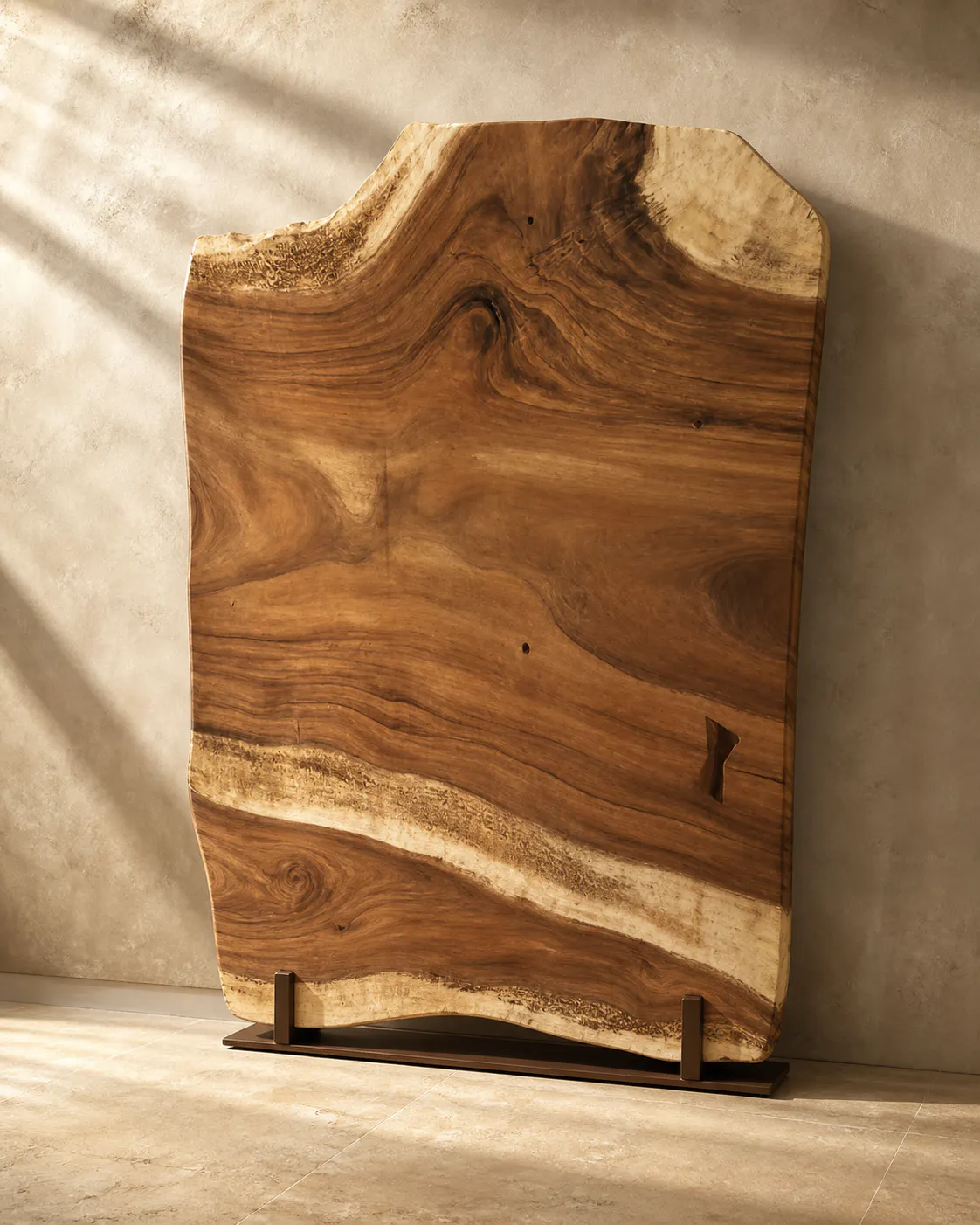
A teak sideboard is a horizontal storage cabinet that brings enclosed organisation and a usable display surface to a dining room, living space, hotel suite, or reception area
Before ordering, record the wall width, skirting-board depth, doorway and lift clearances, and the largest items the cabinet must store.
A teak sideboard is a horizontal cabinet that combines concealed storage with a serving or display surface. Traditional and contemporary versions use teak’s warm grain and natural oil content, but quality varies by timber selection, joinery, panels, hardware, and finish. Measure the intended wall and access route before specifying a piece.
Teak, commonly associated with *Tectona grandis*, is valued in furniture because extractives contribute to its characteristic feel and weather resistance; those traits do not replace sound cabinet making. A credible specification identifies wood species, solid versus veneered components, drawer runners, rear-panel material, and finish. The Food and Agriculture Organization identifies teak as an important tropical timber, while legality and chain-of-custody records remain separate purchasing checks.

A teak sideboard should fit the room, the objects it stores, and the people moving around it. Begin with overall width, depth, and height, then match the interior arrangement to table linens, tableware, media equipment, or barware. Verify door swing, drawer extension, adjustable shelves, and delivery clearances before approving production.
Start with a scaled room plan rather than a product photograph. Many dining sideboards sit roughly 75 to 90 centimetres high and 40 to 55 centimetres deep, although a custom teak cabinet can be adapted to the room. Allow clear walking space in front, account for open doors and fully extended drawers, and check outlet positions if the sideboard will hold a lamp, router, or media equipment.
{'type': 'table', 'caption': 'Common teak sideboard planning checks', 'headers': ['Planning item', 'What to record', 'Why it matters'], 'rows': [['Overall footprint', 'Width, depth, and height', 'Confirms visual proportion and circulation'], ['Internal storage', 'Largest plates, linens, or bottles', 'Determines shelf spacing and drawer depth'], ['Access route', 'Doors, stairs, lifts, and turns', 'Prevents delivery or installation problems']]}
For formal dining, shallow drawers can organise cutlery and linens while enclosed bays store serving pieces. For a living room, cable openings and ventilated compartments may be more useful than deep drawers. Discuss these needs with the maker before production, especially when a teak sideboard must align with an existing dining table, wall panelling, or hotel interior specification.
Indoor teak sideboards need gentle dusting, prompt spill removal, and a stable environment rather than frequent oiling. Avoid abrasive cleaners, silicone polishes, and prolonged direct sun, which can alter the surface unevenly. If refinishing becomes necessary, test a hidden area and follow the original finish system or consult a furniture professional.
Use a soft dry or lightly damp cloth for routine cleaning, then dry the surface promptly. Avoid soaking joins, spraying cleaner directly onto wood, or using harsh scouring products. The USDA Forest Products Laboratory advises matching maintenance to the finish system, so ask the maker whether the sideboard has oil, lacquer, polyurethane, or another protective coating before applying any treatment.
Solid teak means the primary visible and structural components are teak rather than a thin teak veneer over another core. Ask the seller which parts are solid, whether shelves or backs use engineered panels, and how timber moisture was controlled. Veneer is not automatically poor; construction disclosure matters most.
Allow circulation around the cabinet and confirm that doors and drawers can open without blocking a dining path. Many sideboards are roughly 75 to 90 centimetres high and 40 to 55 centimetres deep, but width should follow the wall and storage needs. Measure skirting boards, electrical outlets, lifts, stairs, and doorways too.
Ask for the botanical species, country of harvest, chain-of-custody documents where applicable, and a clear statement of solid teak, veneer, or mixed materials. FSC certification can support responsible forestry claims when the product carries a valid label, but certification should be verified against the seller’s documentation.
Teak can darken, lighten, or develop an uneven tone as it reacts to light, airborne oils, and the finish used. Keep the surface clean, move display objects occasionally, and use felt pads beneath accessories. For fresh spills, wipe with a soft damp cloth and dry immediately; avoid saturating joints or end grain.
Product specifications, timber availability, finishes, and certification documentation can vary by order. Confirm final materials, dimensions, lead time, and care instructions with M Furniture & Decor before purchase.