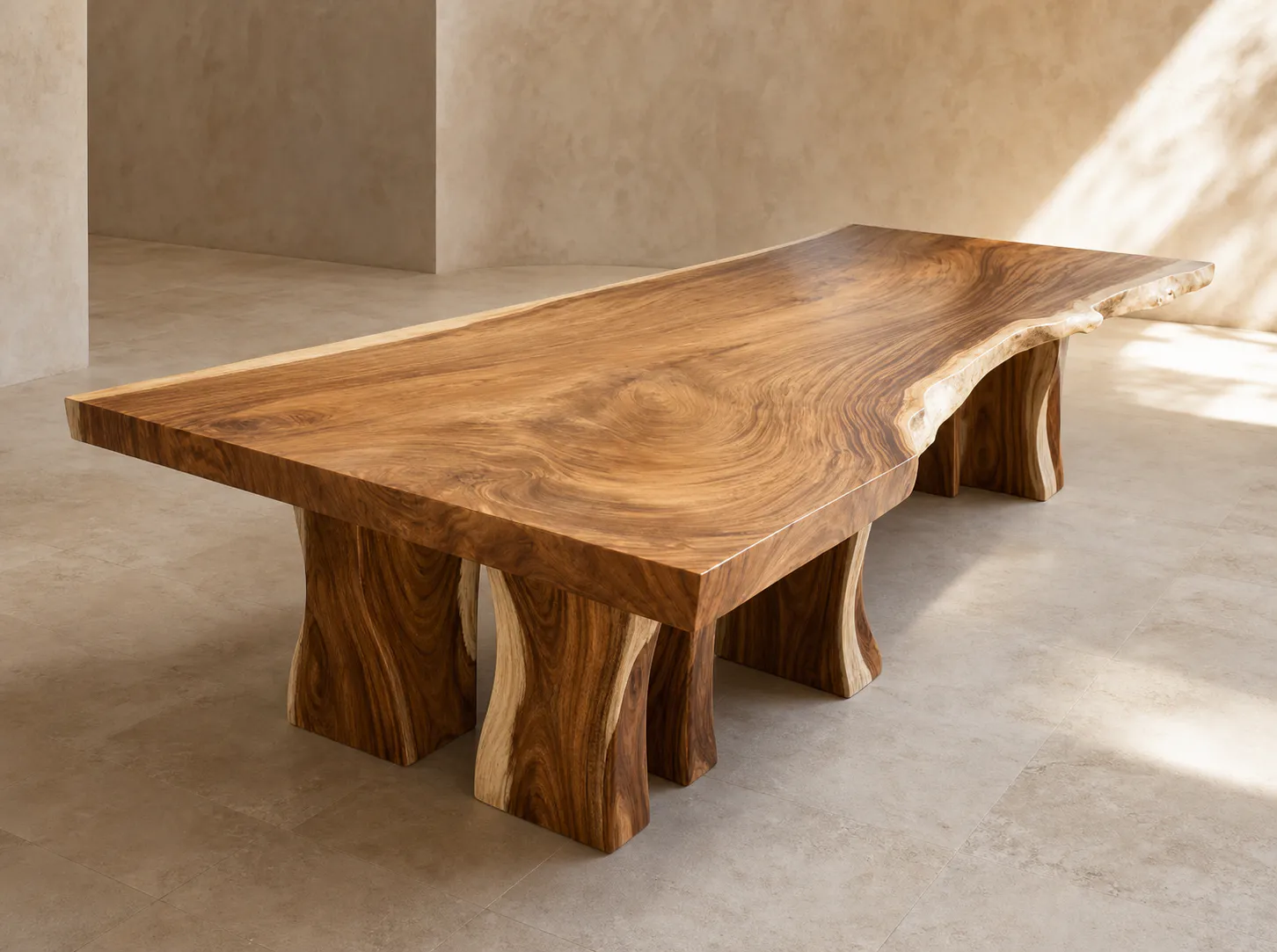
The teak pieces most likely to survive repeated wedding venue handling are simple, solid, serviceable formats: dining chairs with braced frames, tables with pedestal or trestle bases, benches
For event operations, the most durable teak furniture is usually the piece that can be moved hundreds of times, touched up quickly, and returned to service without visible structural damage.
The teak categories that usually hold up best at wedding venues are dining chairs with stretchers, pedestal or trestle dining tables, backless benches, mobile bars, and narrow service consoles. These formats spread load well, move predictably, and present fewer fragile contact points than carved, folding, or highly decorative pieces.
In event settings, survival comes from reducing failure points. Chairs with side stretchers, tables with central or trestle support, and benches with thick seat stock resist racking better during loading and unloading. Bars and consoles also perform well because crews can grip them cleanly and place them against walls or on dollies without stressing thin decorative members.
Teak chairs survive frequent handling best when they use a simple solid frame, mortise-and-tenon or similarly robust joinery, modest visual detailing, and side or front stretchers. Chairs with thick rear legs, replaceable glides, and manageable weight usually outlast ornate silhouettes that snag, loosen, or crack during stacking and transport.
Venue crews often move 50 to 200 chairs in a single setup cycle, so weak points show up fast. A dependable teak chair has thick enough members to resist twisting, a seat rail system that holds screws or joinery securely, and feet that can take repeated contact with concrete, tile, or truck ramps. Rounded top rails also reduce edge bruising.
{'type': 'table', 'caption': 'Teak chair traits that affect venue durability', 'headers': ['Design trait', 'Why it matters', 'Risk level'], 'rows': [['Solid legs and stretchers', 'Improves rigidity during lifting and dragging', 'Low'], ['Ornate carvings and projections', 'Increase snagging and chip risk', 'High'], ['Replaceable glides or pads', 'Protect feet and simplify maintenance', 'Low'], ['Very light decorative frames', 'Can loosen under repetitive side loads', 'Medium to high']]}
Teak tables last longest in venue use when the base is stable, the top is thick enough to resist edge damage, and the structure avoids spindly legs or weak folding hardware. Pedestal and trestle tables are usually safer than fragile four-leg decorative tables because crews can carry and stage them more predictably.
Tables fail in venues when guests lean on edges, crews grip aprons unevenly, or tops strike doorways and carts. Teak helps, but construction matters more: a substantial apron or underframe, secure fasteners, and base geometry that does not wobble under asymmetric loads. Round pedestal tables often work well for circulation, while trestles suit larger banquet layouts.
Yes, teak benches, bars, and consoles are often practical for event operations because they combine visual warmth with fewer moving parts than many specialty pieces. Straight profiles, thicker tops, and simple base geometry make them easier to grip, roll, stage, and touch up after repeated weddings and corporate events.
Benches work well in ceremony seating, lounge zones, and sweetheart table backdrops because they are structurally simple. Bars and consoles are also strong candidates when they include recessed grip zones, protected corners, and shelf layouts that do not rack under glassware, floral tools, or catering loads. Simpler silhouettes reduce labor during pack-out and storage.
For outdoor weddings, teak’s natural oils support weather tolerance, but venues still benefit from covers, dry storage, and finish refresh plans. Pieces used by planners, hotels, and rental operators in Bangkok, Phuket, Bali, or Singapore typically last longer when crews standardize lifting points and avoid dragging across pavers or unfinished concrete.
Construction details matter more than teak species alone because handling damage usually starts at joints, feet, edges, and hardware. Strong joinery, balanced weight, rounded profiles, replaceable wear parts, and finishes that can be sanded and renewed determine whether a venue piece stays serviceable after dozens of transport and setup cycles.
Buyers sometimes focus only on whether furniture is made from teak, but venue durability is more operational. A solid teak piece with poor joinery can still fail early. By contrast, a well-built frame with stable geometry, protected feet, and a practical finish can survive years of weddings with routine care. That is the difference procurement teams should evaluate first.
Venues should choose teak pieces by matching design to handling reality: crew size, transport distance, floor type, storage method, and event frequency. The safest purchases are sturdy, easy-to-carry pieces with low snag risk, repairable finishes, and dimensions that move cleanly through doors, elevators, carts, and loading docks.
A practical buying test is to map one full event cycle from storage to floor and back. If a piece is awkward on stairs, too wide for dollies, or likely to chip when leaned against a wall, it will cost more over time even if it looks impressive on day one. Procurement should favor repeatable operation over decorative complexity.
No. Solid teak helps, but venue durability depends more on joint strength, base stability, edge protection, weight balance, and finish maintainability. A poorly engineered solid teak piece can loosen or chip quickly, while a well-built commercial design can stay serviceable through many weddings and repeated transport cycles.
They can, but only when the hardware is robust and the folding mechanism does not create wobble. For heavy-use venues, fixed pedestal or trestle constructions are usually more dependable because they have fewer stress points, less hardware fatigue, and more predictable handling during loading, staging, and teardown.
A repairable, low-sheen finish is usually easiest for event furniture because crews can spot-fix scratches and refresh worn areas without making repairs obvious. Highly glossy finishes tend to show scuffs faster under venue lighting, while practical oil or matte systems are easier to maintain between bookings.
Not always, but they are riskier in high-turnover venues. Carvings, finials, thin crest rails, and projecting arms create extra snag points during stacking, transport, and storage. If the chair will move often, a simpler profile with stronger members usually delivers lower breakage and easier maintenance.
This resource is informational and reflects commercial furniture selection principles for wedding and hospitality settings. Product suitability depends on design details, venue operations, climate exposure, maintenance practices, and transport conditions.