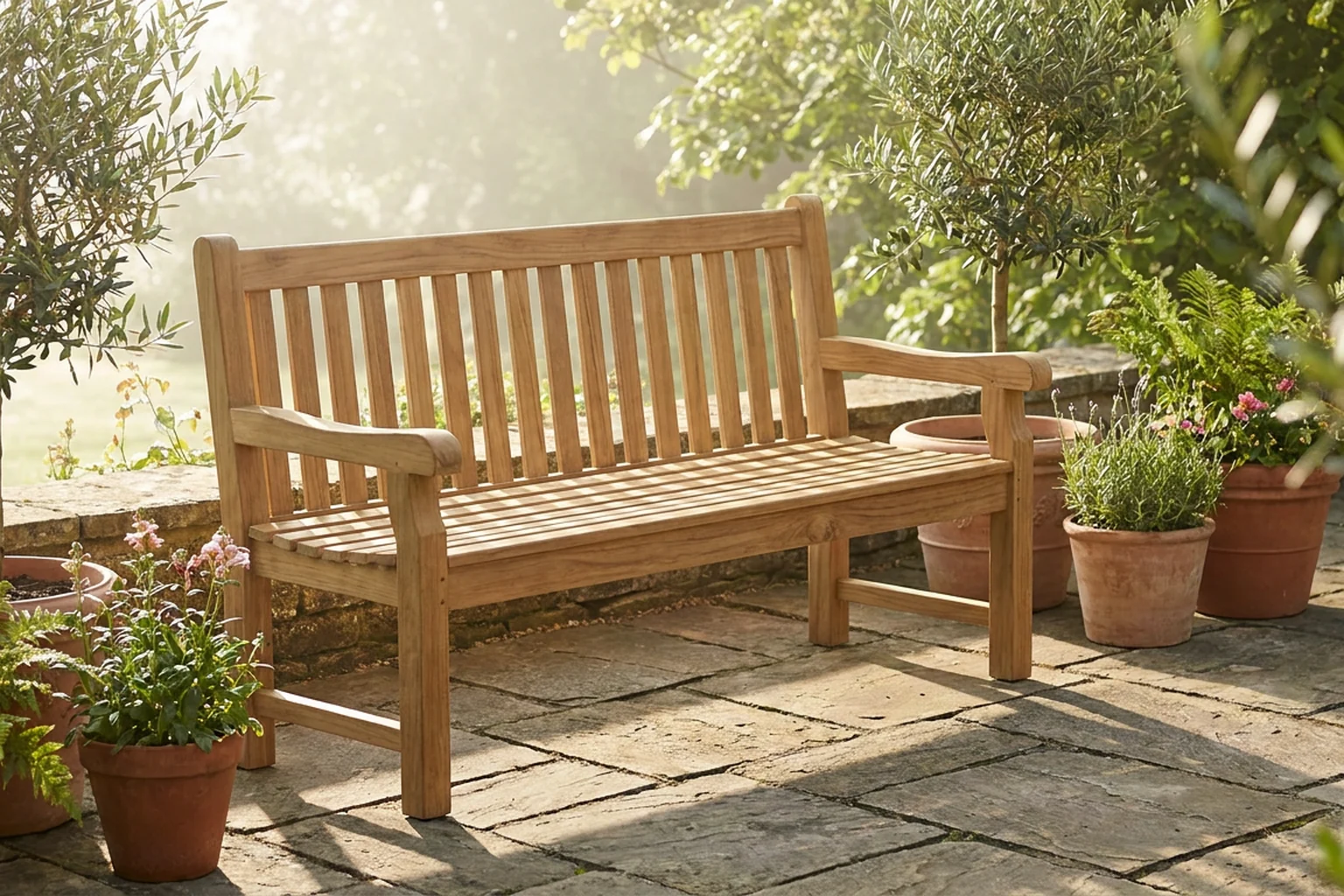
A teak outdoor table is a durable choice for patios, pool decks, gardens, and hospitality terraces when the timber, joinery, and proportions suit the setting. Genuine teak is
Untreated teak commonly changes from warm brown to silver-gray outdoors. This patina is an appearance change, not automatically a sign that the table has failed.
A teak outdoor table works well because teak's dense heartwood and natural extractives help it tolerate sun and rain. Performance still depends on construction: look for solid *Tectona grandis*, sturdy mortise-and-tenon joints, and surfaces that shed water rather than trap it.
Start by asking what the seller means by “teak.” Solid teak uses teak through the tabletop, rails, and legs; teak veneer places a thin surface layer over another core and needs different repair expectations. The USDA Forest Products Laboratory Wood Handbook explains why wood properties and moisture movement matter in exterior construction. Inspect slatted tops, eased edges, recessed hardware, and adjustable feet, because these details reduce standing water and improve stability on uneven paving.
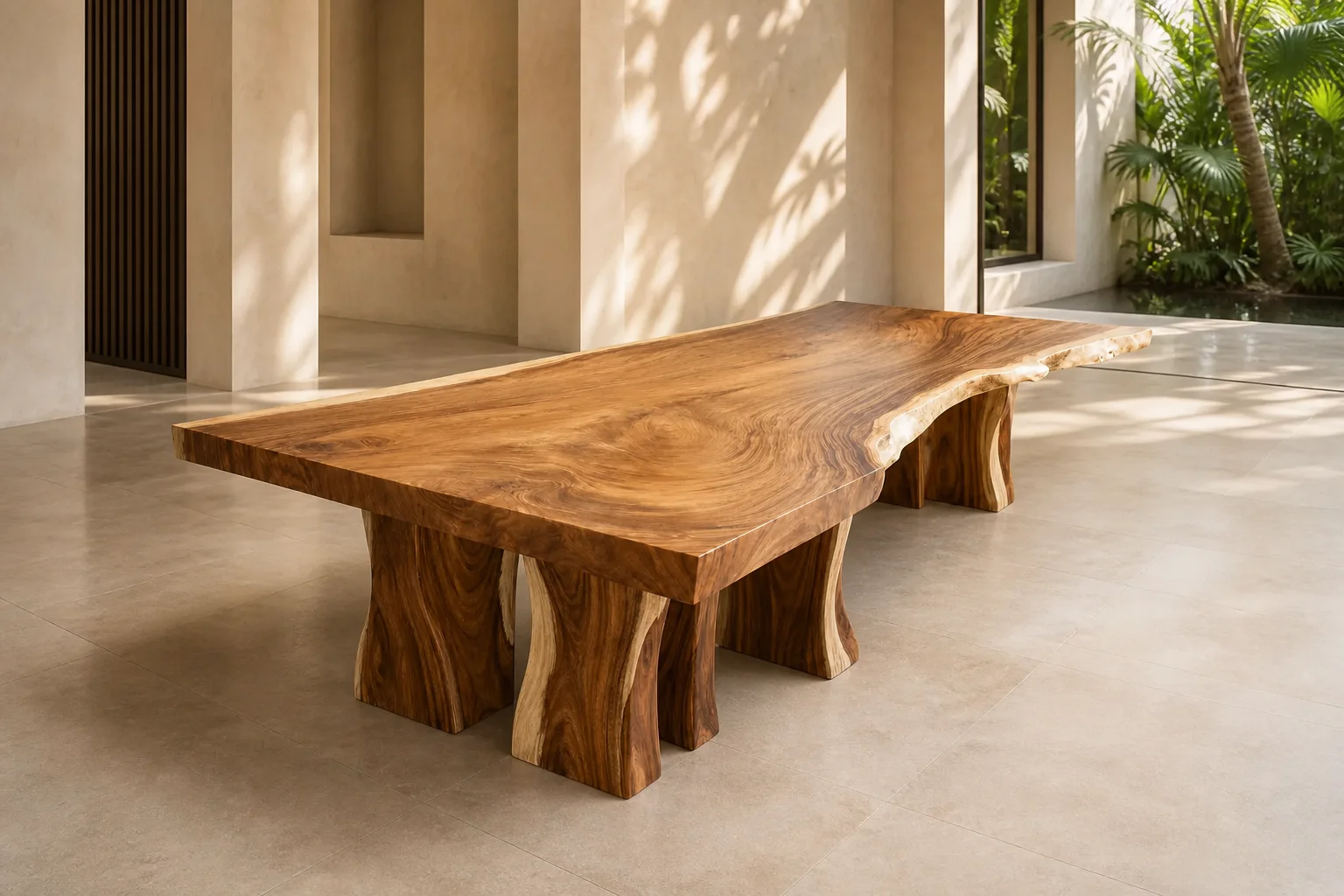
Choose table dimensions from the intended seating pattern, not just patio footprint. Allow room for chairs to move, keep legs clear of knees, and leave a walking path around the table. For dining, a rectangular teak table suits groups; a round model encourages conversation in compact outdoor areas.
Begin with the number of regular diners, then measure the usable terrace rather than its overall boundary. A table for 4 to 6 people needs chair pull-out space on every occupied side, while an 8-person layout also needs clear circulation for serving. As a practical starting point, dining tops near 70 to 76 cm high pair with common outdoor dining chairs, but arm height and apron depth should be checked together. For cafés and hotels, test the layout with actual chairs before ordering.
Teak needs routine cleaning and good drainage more than frequent sealing. Wash off dust, pollen, and spills with mild soap and a soft brush, then rinse and dry naturally. Avoid pressure washing and harsh bleach. A gray surface patina is cosmetic; it does not automatically indicate structural decline.
Clean the table every 3 to 6 months, or sooner beneath trees, beside pools, or in high-pollution areas. Brush in the grain direction with a soft bristle brush, using mild soap and water; do not leave residue in joints. If you prefer the original brown tone, a teak protector may slow weathering, but it requires repeat application and does not replace cleaning. Periodically inspect fasteners, feet, and joints. The Forest Stewardship Council also recommends buyers seek traceable sourcing claims rather than relying on timber names alone.
{'type': 'image', 'src': 'https://mfurniturethailand.com/images/resources/teak-outdoor-table-care.jpg', 'alt': 'M Furniture teak outdoor table showing drainage-friendly slats during routine patio cleaning', 'caption': "Regular gentle cleaning removes surface debris while preserving teak's natural finish."}
A teak outdoor table can remain outdoors year-round in many climates when its design sheds water and joints stay sound. Local exposure matters: standing water, salt spray, intense sun, and freeze-thaw cycles increase maintenance needs. Use a breathable cover only when the table is fully dry, and keep feet off constantly wet surfaces.
Solid teak uses teak through the principal components, so minor stains, scratches, and weathering can often be cleaned or lightly refinished. Teak veneer has a thin teak face over another core, which can be appropriate indoors but offers less margin for sanding and edge repair in demanding exterior conditions.
Sealing or oiling is optional and mainly affects color retention and cleaning preferences, not teak's basic outdoor suitability. An untreated table can weather naturally to gray. If you use a protector, follow the product instructions, test an inconspicuous area first, and never apply it over damp, dirty, or oily wood.
M Furniture & Decor manufactures and exports teak furniture. This resource is educational and should be used alongside project-specific material, climate, and maintenance requirements.