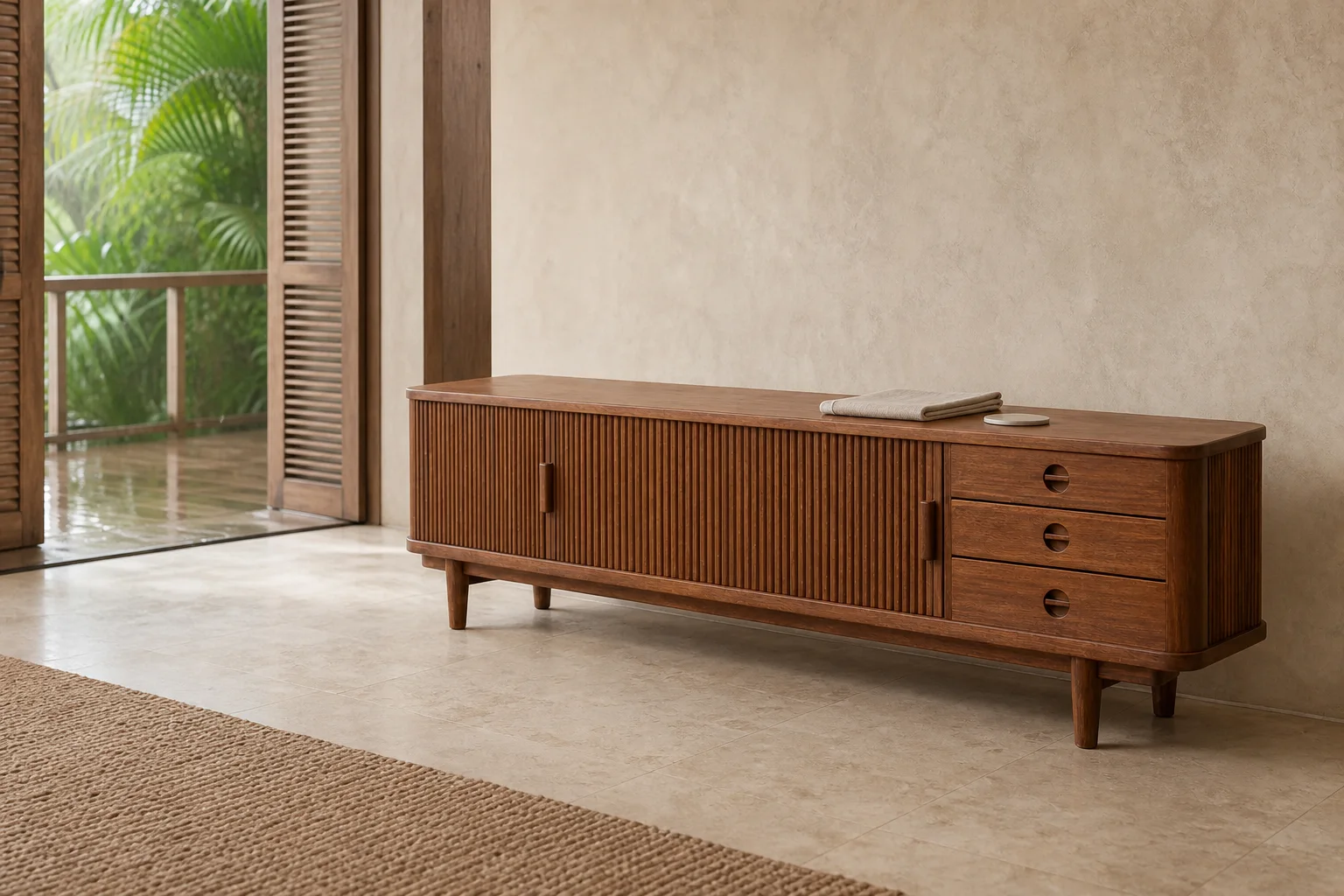
Teak oil is optional, not essential, for sound teak furniture. Whether furniture is used indoors in Bangkok or outdoors in a garden, the main decision is aesthetic: retain
Teak oil is a color-maintenance choice, not a cure for loose joints, deep checks, persistent mildew, or water trapped beneath furniture covers.
No, teak oil is optional rather than required for teak furniture. Mature teak contains extractives that contribute to durability, while exterior exposure naturally changes its surface color. Oil cannot make neglected wood permanently waterproof or reverse structural damage; it is chiefly a cosmetic maintenance choice when a richer brown tone is desired.
Teak heartwood from *Tectona grandis* has natural extractives, but their presence does not promise that every board will remain spotless or unaffected by weather. Sunlight, rain, dirt, and movement at joints still affect an outdoor table or chair. The USDA Forest Products Laboratory explains wood durability in relation to species and exposure. For M Furniture & Decor pieces, separate color maintenance from repairs: oil may enrich tone, while sound joinery, drainage, and seasonal cleaning preserve serviceability.
Teak oil primarily darkens and enriches a dry teak surface, helping restore the freshly oiled look many owners prefer. It does not reliably block ultraviolet light, replace a proper exterior coating, repair cracks, or stop water entering end grain. Formulations differ, so the product label—not the generic name—governs application and recoat guidance.
Products sold as teak oil are not a uniform material: formulas may contain tung oil, linseed derivatives, mineral spirits, resins, pigments, or dryers. Read the technical data sheet rather than assuming a label provides ultraviolet protection, a marine-grade seal, or a structural treatment. The USDA Wood Handbook distinguishes finishing from wood-preservation concepts. A film-forming exterior finish can peel, while penetrating products need renewal. Never oil wood that remains damp or carries mildew, grease, or loose finish.
Clean, dry, and inspect teak before deciding whether to oil it. If you choose oil for color, use a thin coat on a small test area, follow the manufacturer’s dwell time, and wipe off excess. For outdoor furniture, clearing debris, preventing pooled water, and maintaining joints are more important than frequent oil applications.
Begin by brushing away debris and washing gently with water and a pH-neutral cleaner suitable for finished wood; do not use aggressive pressure washing. Let furniture dry completely, then test the selected product underneath a rail or seat. Apply a thin, even coat with a lint-free cloth, allow the stated dwell time, and wipe away all surplus. The USDA Forest Products Laboratory notes that moisture management matters to wood performance. Recheck high-use surfaces after the rainy season rather than automatically applying more oil.
Not necessarily. Indoor teak normally needs dusting and occasional cleaning with a soft, lightly damp cloth, followed by drying. Use oil only if the manufacturer permits it and you prefer a deeper color. Excess product can leave a tacky surface, attract dust, or complicate later refinishing.
For outdoor teak, oil is optional and is mainly used to retain a brown appearance. If left unfinished, teak commonly develops a gray patina from weathering. Keep furniture clean, avoid standing water, and address loose joints or checks; those practical steps matter more than routine oiling.
Oil teak only when the appearance you want calls for it, not on a fixed calendar. After cleaning and complete drying, apply a thin coat according to the product label, then remove excess. In humid Bangkok conditions, verify the surface is dry and test an inconspicuous area first.
Care recommendations are general guidance. Always follow the furniture and finish manufacturer’s instructions, and test any cleaning or finishing product on an inconspicuous area before full application.