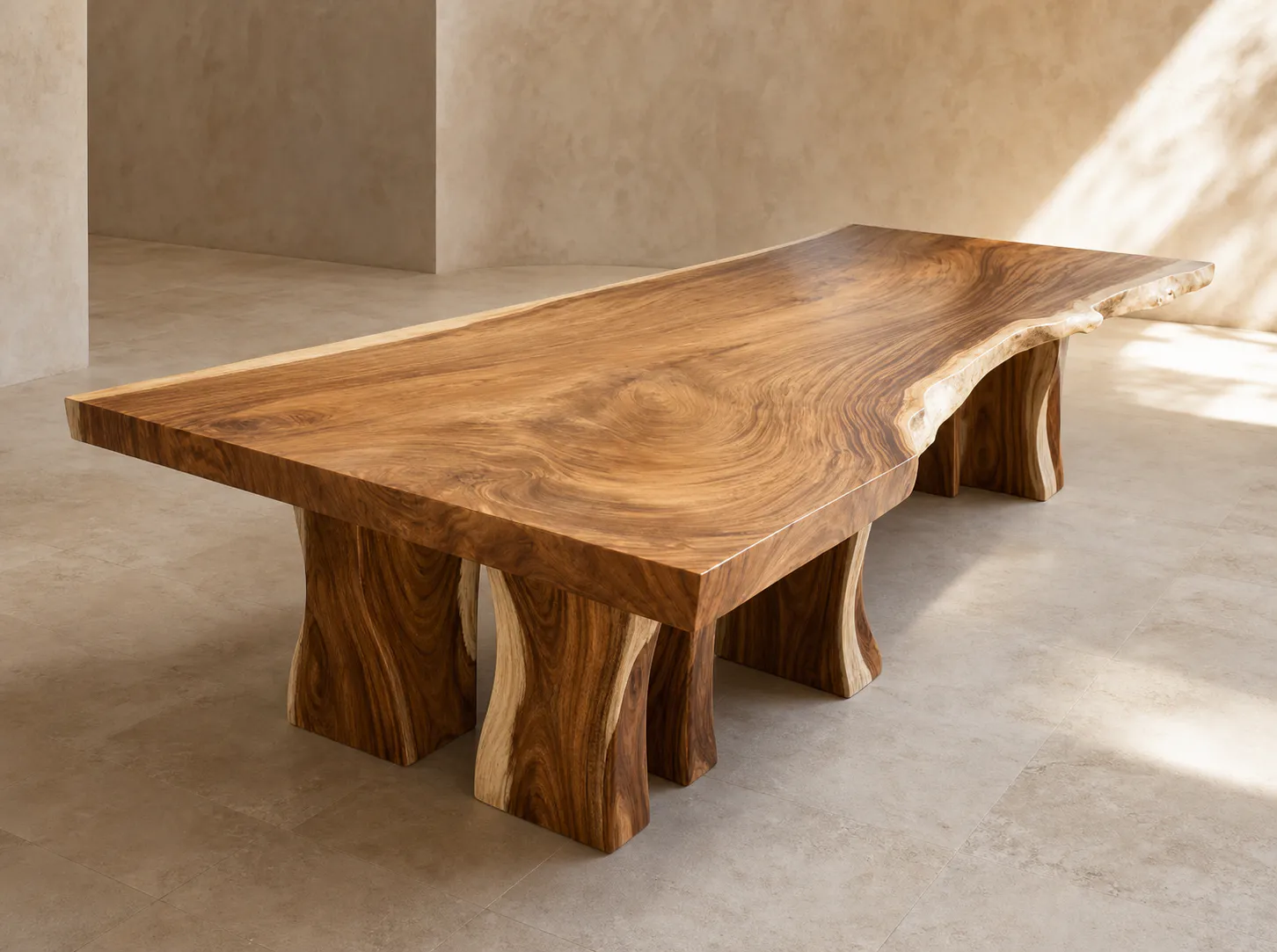
A teak nightstand is a compact bedside table made from teak wood, commonly used to hold a lamp, book, water, and charging essentials. Teak's golden-to-medium-brown color and visible
Measure the space beside the bed, including skirting boards, door swings, and drawer travel, before selecting a teak bedside table.
A teak nightstand suits bedrooms because teak combines an expressive grain with good dimensional stability and natural durability. Solid teak can be refinished over time, unlike many thin veneers. Buyers should still distinguish genuine solid wood from teak-faced panels, inspect construction, and select a finish appropriate for the bedroom's light and use.
Teak is the common name for *Tectona grandis*, a hardwood documented by Royal Botanic Gardens, Kew. Its extractives are associated with moisture resistance, but a bedroom nightstand still benefits from coasters and prompt spill cleanup. Look for solid teak tops, drawer fronts, and frames; ask where veneer or engineered panels are used. The USDA Wood Handbook explains why wood movement varies with humidity, making acclimation and sound joinery important.
Choose a teak nightstand whose top sits close to the mattress height, allowing easy access while seated or lying down. Confirm width and depth against available floor space, then allow clearance for drawers, cables, and walking paths. A smaller room often benefits from an open shelf or one-drawer design rather than deep cabinetry.
There is no universal bedside-table size, because mattress thickness, bed-frame height, and circulation differ. As a practical starting point, compare the finished top height with the top of the mattress and aim for a comfortable reach rather than an exact number. Measure in three dimensions: wall-to-bed gap, front clearance, and drawer extension. A 45-centimeter-wide table can be sufficient for a lamp and phone, while two drawers may suit readers who want concealed storage. Verify external measurements, internal drawer space, and handle projection before purchase.
Assess a teak nightstand by asking about timber species, solid-wood versus veneer components, joinery, drawer runners, finish, and origin. Durable bedside furniture uses stable parts and carefully fitted drawers, not appearance alone. For sourcing, request traceable documentation and consider independently certified forest-management systems when certification is available for the supply chain.
Inspect joints where legs meet rails and where the cabinet meets the top; clean, tight fitting is more meaningful than a thick glossy coating. Open every drawer to check smooth travel, consistent gaps, and a level base. Oil, lacquer, and water-based finishes change color and maintenance needs, so request a sample where possible. For responsible purchasing, ask the supplier about timber origin and chain-of-custody records. The Forest Stewardship Council describes forest-management certification, while documentation should identify the actual product and seller rather than make a general claim.
Indoor teak nightstand care is straightforward: dust with a soft dry or lightly damp cloth, wipe spills quickly, and avoid abrasive cleaners. Keep the table away from sustained direct sun and intense heat to limit uneven color change. Reapply a compatible finish only after confirming the existing coating and manufacturer guidance.
Use felt pads under lamps, trays, and decorative objects to reduce small scratches and moisture rings. Avoid placing a hot drink directly on the surface, even though teak contains natural oils. Indoor relative humidity changes can affect any solid wood item, so do not position the nightstand against an active radiator or air-conditioning outlet. If the finish becomes dull, first clean gently and test any care product in an inconspicuous spot. Refinishing may be possible on solid teak, but sanding through edges or altering a sealed finish can create uneven results.
Teak is well suited to a nightstand because it is a durable hardwood with distinctive grain and natural oils. It performs well in normal indoor bedroom conditions when spills are wiped promptly. Construction matters as much as species: inspect solid-wood components, stable joinery, drawer fit, and the finish used.
A teak nightstand should generally sit near the top of the mattress, so a lamp, glass, or phone is easy to reach. Exact matching is not essential; bed-frame style and mattress depth vary. Measure the finished mattress height, then compare it with the nightstand specification before placing an order.
Dust a teak nightstand with a soft dry cloth, or use a lightly damp cloth followed by immediate drying. Wipe spills quickly and use coasters beneath drinks. Avoid scouring pads, harsh solvents, and unknown oils, which can damage or alter the existing finish. Test any cleaning product discreetly first.
Solid teak offers more opportunity for future refinishing and provides teak throughout the component, while teak veneer can be a practical engineered option. Neither label alone guarantees quality. Ask which parts are solid, veneer, or board, then assess edge treatment, substrate quality, joinery, finish, and expected use.
M Furniture & Decor manufactures and sells teak furniture. This resource is educational and buyers should confirm current specifications, timber documentation, finishes, pricing, and delivery terms with the supplier before purchase.