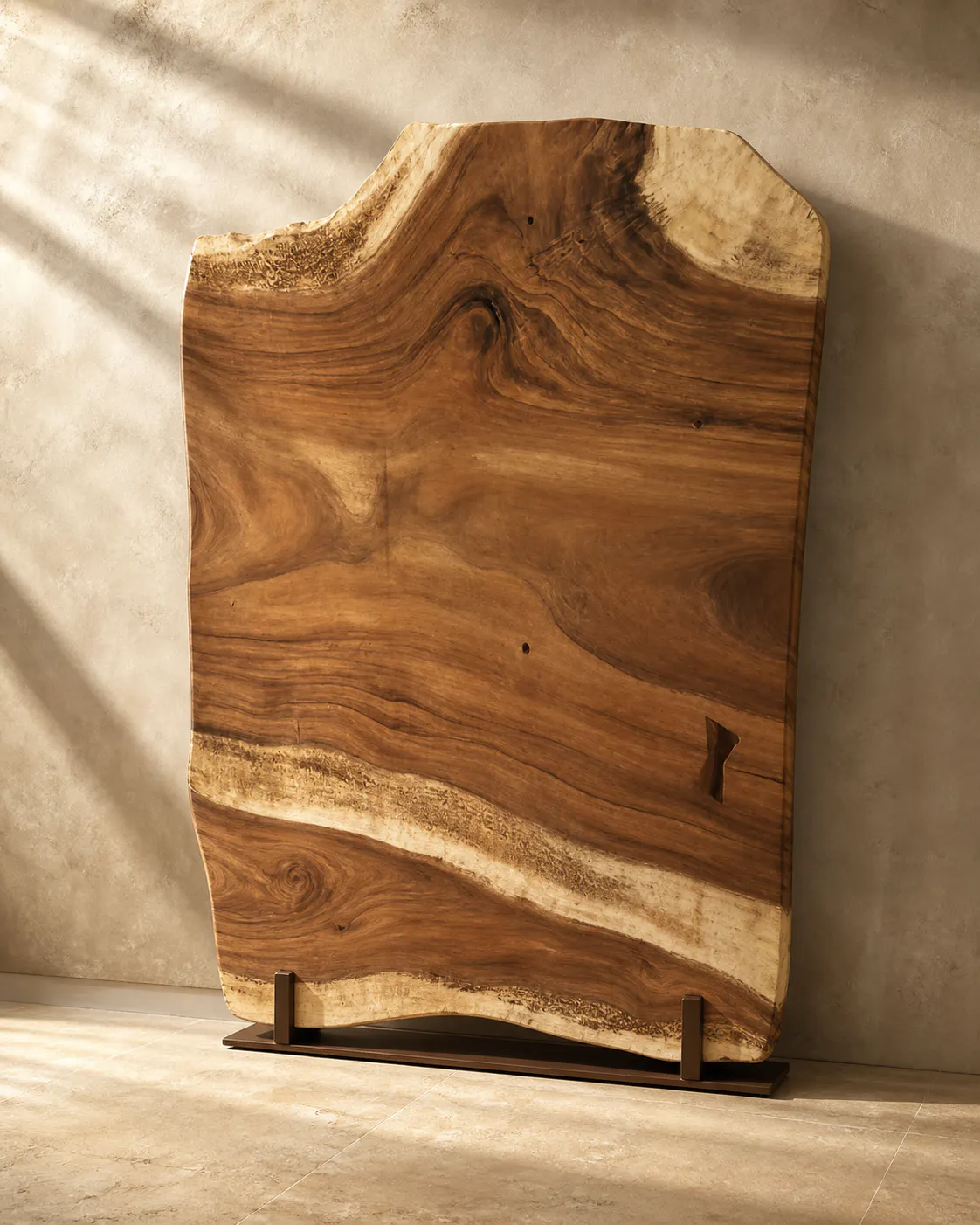
Teak kitchenware covers solid-wood bowls, trays and serving boards designed for distinct serving tasks. Teak, the timber from *Tectona grandis*, has visible grain and natural tonal variation, but
Before ordering teak serveware, request the wood species, dimensions, finish specification, intended use and written care guidance from the supplier.
Teak bowls hold and contain foods, trays carry or organize items, and serving boards create a flat surface for presentation. Although all may be made from solid teak, their useful features differ: bowls need capacity, trays need secure handling, and boards need stable, sufficiently thick faces for the foods they display.
Use a teak bowl for salads, fruit, snacks or a table-centre display where a raised rim helps contain ingredients. Choose a tray for carrying glasses, arranging condiments or grouping service items; recessed handles and a stable underside matter especially here. A serving board suits bread, cheese, fruit and shared dishes because its flat face frames the food. For food-preparation surfaces, review the USDA guidance on cutting boards and discuss material traceability through FSC certification when sourcing documentation matters.
Buyers should match each teak item to its service role and confirm its full specification before purchase. Check solid-wood construction, dimensions, base stability, edge treatment and finish information. For hospitality orders, also request consistency across pieces, care guidance and sourcing records rather than assuming teak species alone establishes suitability for food service.
Inspect for a smooth, even surface, gently eased edges and a base that does not rock on a level table. Confirm whether the piece is solid teak rather than veneer, and request measurements that include rim and handle projections. Ask which oils, waxes, coatings or adhesives are present, because the complete product determines the relevant food-contact discussion. The FDA Food Code 2022 describes smooth, cleanable food-contact surfaces. FSC forest management certification can also help structure responsible-sourcing conversations.
Hand-wash teak bowls, trays and serving boards promptly, then dry them completely. Avoid dishwashers, prolonged soaking and direct heat, which can stress wood and finishes. Re-oil only when the maker recommends it or the surface appears dry, and remove damaged pieces from food service until they can be assessed.
Wash each item with mild soap and a soft sponge after use, then towel-dry it instead of leaving it submerged. Dishwasher heat and extended moisture may stress wood, joints and finishes. Use a food-contact maintenance oil only as specified by the maker, wiping away surplus product before service. Inspect rims, handles and board faces for splits, loose parts or raised grain. The USDA cutting-board guidance is a practical cleaning reference, while the FDA Food Code supports commercial sanitation planning.
Teak kitchenware can be used for serving when it is clean, smoothly finished and maintained according to the maker’s instructions. Food-contact suitability depends on the complete item, including oils, waxes, coatings and adhesives, not on teak alone. Ask the supplier for finish details, and retire cracked or deeply worn pieces from service.
A teak serving board may tolerate light cutting when its construction and finish are intended for that purpose, but many boards are made primarily for presentation. Knife marks can roughen the surface and increase cleaning needs. Confirm the maker’s intended use, clean promptly after use, and replace boards with persistent damage or roughness.
Prevent cracking by avoiding dishwashers, prolonged soaking, radiators, direct sun and abrupt humidity changes. Hand-wash each piece, dry it fully and store it indoors in stable conditions. Apply a maker-approved food-contact oil only when the surface appears dry. Regularly inspect handles, joints and rims for movement, splits or raised grain.
This educational resource is published by M Furniture & Decor. Product specifications, food-contact suitability and care requirements can vary by item, finish and intended use; confirm current details with the supplier before purchase or commercial food-service use.