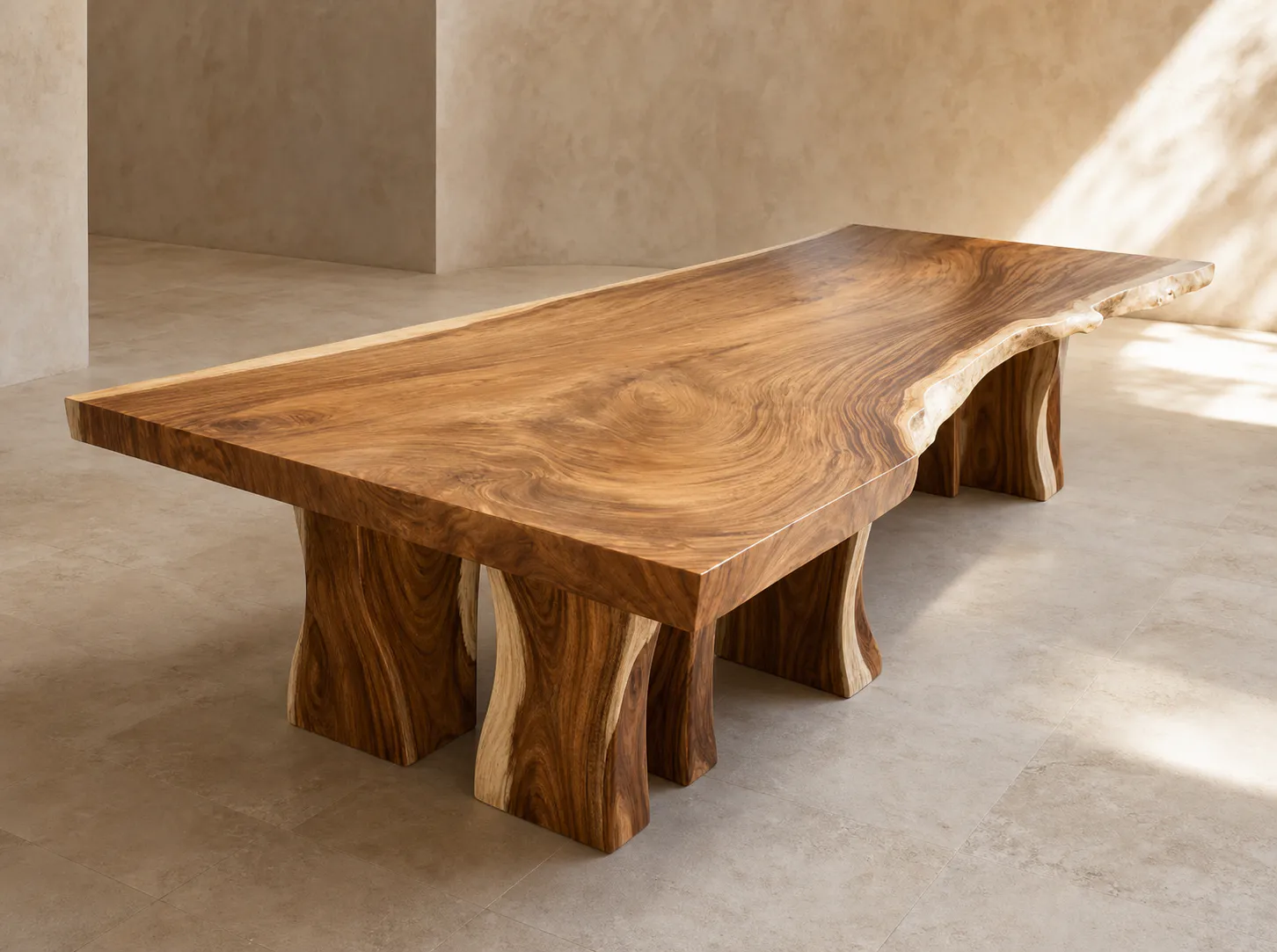
Yes—teak is a hardwood. It comes from *Tectona grandis*, a flowering tree classified among angiosperms, rather than from a conifer such as pine. That botanical label helps identify
For furniture decisions, distinguish four factors: species identification, measured mechanical properties, construction quality, and documented wood sourcing.
Teak is botanically a hardwood because Tectona grandis is an angiosperm, or flowering broadleaf tree. The term contrasts with softwood, which generally comes from gymnosperm conifers such as pine. It does not rank wood by feel, weight, strength, or Janka hardness, so hardwood and hard wood are not interchangeable descriptions.
Botanical classification is the clearest answer to the question. Royal Botanic Gardens, Kew recognizes *Tectona grandis* as teak; it belongs to the flowering-plant lineage. By contrast, many familiar softwoods, including pine, come from cone-bearing trees. Hardwood species vary substantially: balsa is botanically a hardwood despite its low density, while some conifers can feel relatively firm. For that reason, a species name is more useful than a broad label when comparing furniture materials.
Teak is commonly considered moderately hard rather than the hardest furniture wood. Hardness testing measures resistance to indentation under defined conditions, while furniture performance also depends on density, grain, moisture, joinery, finish, and intended use. Teak’s reputation rests largely on its stability and natural extractives, not one hardness number alone.
Janka hardness is often used to compare resistance to denting, but results depend on specimen condition and test direction. A commonly reported figure for teak is about **1,070 pounds-force** on the Janka scale; it is a comparison point, not a guarantee against marks or movement. The USDA Forest Products Laboratory Wood Handbook explains why wood properties vary by species and material condition. In finished furniture, careful drying, sound joinery, and appropriate care are at least as consequential as a single laboratory value.
Buyers should confirm that teak is identified as Tectona grandis, ask where the wood was sourced, and review documentation relevant to the order and destination. They should also assess moisture preparation, joinery, finish, and care requirements. Hardwood status alone cannot verify species, legal origin, environmental claims, or finished-furniture quality.
Request the botanical name on specifications rather than relying only on a trade name, then match the claim to invoices and shipment documents. If Forest Stewardship Council certification is claimed, ask for the supplier’s chain-of-custody details and verify them through FSC. International buyers should also understand applicable trade rules and destination requirements; CITES provides species and trade resources. For outdoor pieces, inspect drainage, hardware, and the maintenance plan, because design choices shape long-term results alongside teak’s natural properties.
Not necessarily. Hardwood identifies the tree’s botanical group, not a universal hardness score. Balsa is a hardwood but is very light, while some softwoods are comparatively firm. For teak, practical performance also reflects density, grain, moisture content, construction, finish, and how the furniture will be used.
Teak is valued outdoors because its natural extractives and dimensional behavior can support weather resistance when a piece is properly designed and maintained. That does not make it maintenance-free. Use construction suited to drainage, avoid persistent standing water, and follow the manufacturer’s cleaning and finishing guidance for the intended exposure.
Ask for the botanical name, Tectona grandis, alongside species and origin information; trade names alone can be ambiguous. For wood from forests, request documentation appropriate to the transaction, such as FSC chain-of-custody information where claimed. Import requirements and legality documentation vary by destination, shipment, and buyer role.
This educational resource is published by M Furniture & Decor. Material characteristics and sourcing documentation should be evaluated against the specifications, regulations, and conditions applicable to each purchase.