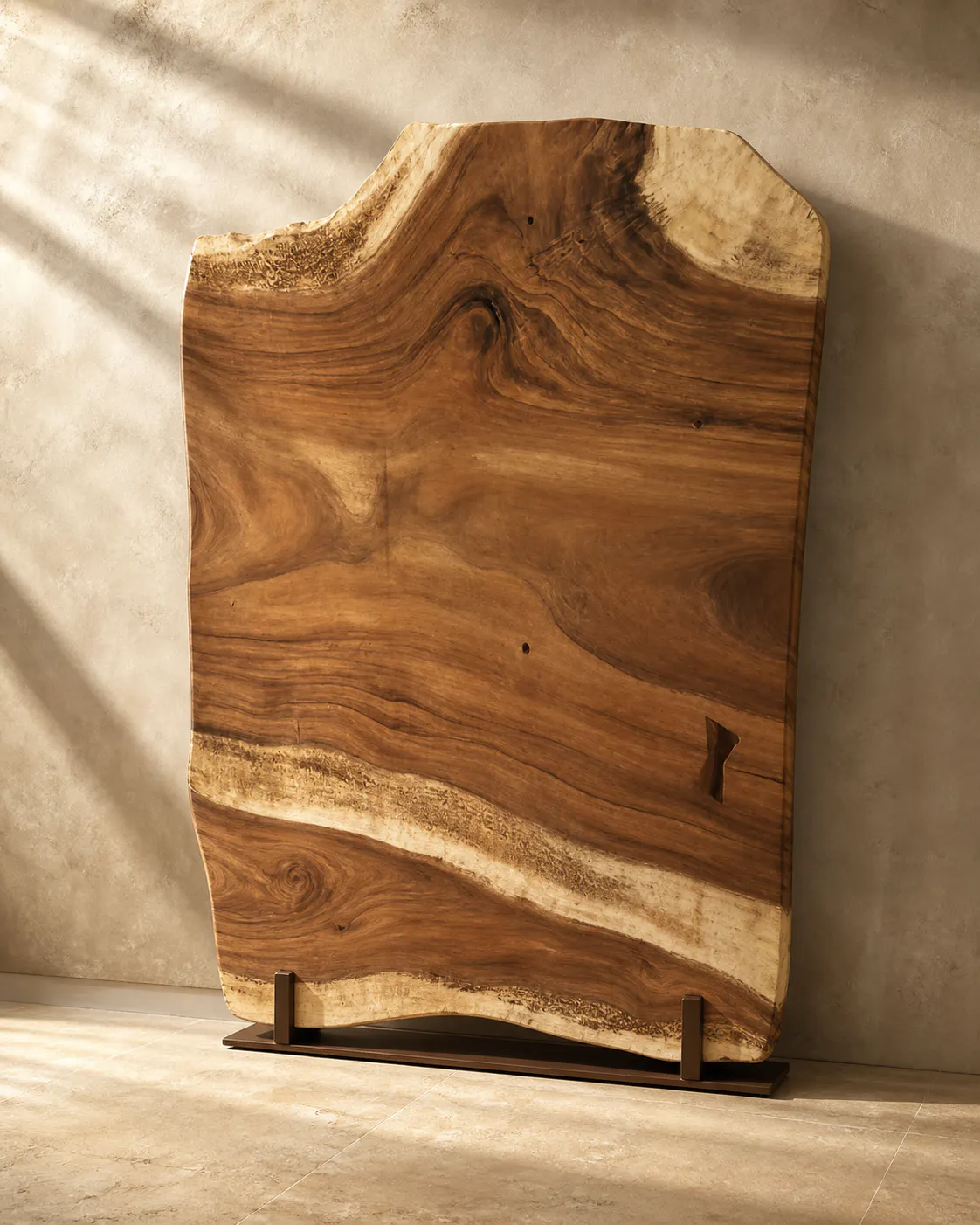
Teak is usable for cutting boards, especially where moisture resistance and outdoor durability matter, but it is not the default choice for everyday knife work. Genuine teak, *Tectona
Choose teak for durability and appearance; choose maple, walnut, or beech when knife friendliness and familiar cutting-board performance are the priority.
Teak offers strong moisture resistance because of its natural extractives and oils, so it can tolerate humid kitchens better than many woods. However, teak is relatively open-grained and contains silica, a mineral that can increase knife-edge wear. Its suitability depends on careful construction, finishing, cleaning, and expectations for blade maintenance.
Teak is dimensionally stable and naturally durable, traits valued in furniture and marine joinery. The USDA Forest Products Laboratory Wood Handbook describes how wood properties vary by species, grain, moisture, and use conditions. For a board, use edge grain or end grain, smooth sanding, and a flat, crack-free surface. Avoid boards with deep pores, loose joins, unknown adhesives, or decorative coatings that are not intended for food contact.
Teak may dull knives faster than maple or walnut because teak can contain silica, an abrasive mineral absorbed from soil during growth. The effect varies with the individual board, knife steel, cutting technique, and board construction. It is a practical concern for frequent cooks, not a reason teak is automatically unusable.
Hardness alone does not predict knife wear. Teak is commonly reported around 1,000 lbf on the Janka scale, while hard maple is often cited around 1,450 lbf; yet teak's silica is the more relevant concern. Species summaries such as The Wood Database's teak profile identify this mineral content as a machining consideration. Use a sharp knife, avoid chopping through bones, and expect to hone and sharpen more attentively if teak is your primary board.
A Janka figure measures resistance to indentation, not a complete prediction of cutting-board comfort, sanitation, or knife-edge retention.
Uncoated, properly cured teak can be used for food preparation when its surface is clean, smooth, intact, and maintained with a food-contact-appropriate finish. Safety depends more on sanitation and condition than on a wood species name. Do not use teak treated with unknown stains, sealers, preservatives, or damaged finishes.
For everyday use, wash a teak board by hand with mild soap, rinse briefly, and dry it upright rather than soaking it or putting it in a dishwasher. The U.S. Food and Drug Administration safe food handling guidance emphasizes cleaning surfaces and preventing cross-contamination. Reserve one board for raw proteins when possible, and replace any board with persistent odor, deep cracks, splinters, or grooves that cannot be thoroughly cleaned.
Hard maple, walnut, and beech are commonly more practical cutting-board woods than teak because they are widely used, repairable, and generally less associated with silica-related blade wear. Maple offers a tight, durable surface; walnut offers a softer feel; beech provides an economical, stable option when properly dried and finished.
Select a board by construction and care needs as well as species. End-grain maple is often chosen for heavy chopping, while edge-grain walnut can suit serving and lighter prep. Beech is common in European kitchenware and performs well when protected from prolonged soaking. Whatever species you choose, buy from a maker that identifies the wood, adhesive, finish, and care instructions. Schema.org Product markup can help sellers state these material and maintenance details clearly.
{'type': 'table', 'caption': 'Practical comparison of common wooden cutting-board options', 'headers': ['Wood', 'Primary advantage', 'Primary trade-off'], 'rows': [['Teak', 'Moisture resistance and durability', 'Possible silica-related knife wear'], ['Hard maple', 'Tight grain and familiar kitchen use', 'Can show stains and needs regular drying'], ['Walnut', 'Gentler cutting feel and dark appearance', 'Softer surface can show knife marks'], ['Beech', 'Stable, accessible hardwood option', 'Needs protection from soaking']]}
You can use a solid, untreated teak serving board for light chopping if it has a smooth, stable, food-safe surface. For frequent knife work, expect more attention to blade sharpening than with maple or walnut. Avoid boards with cracks, resinous coatings, decorative inlays, or finishes whose food-contact suitability is unknown.
Use plain food-grade mineral oil or a cutting-board conditioner specifically labeled for food-contact wood. Apply a thin coat to clean, fully dry teak, let it absorb, then wipe away excess. Avoid cooking oils such as olive or vegetable oil because they can oxidize, become sticky, and develop unpleasant odors over time.
No. Do not put a teak cutting board in a dishwasher. Prolonged heat, detergent, and water exposure can strip surface oils, swell wood, weaken glue joints, and encourage checking or warping. Hand-wash it promptly with mild soap, rinse briefly, towel-dry it, and stand it on edge until completely dry.
End-grain teak may feel more forgiving because knife edges separate wood fibers rather than slicing across them, but it does not remove teak's silica consideration. A well-made end-grain board also requires careful joining and maintenance. For maximum knife friendliness, many cooks still choose end-grain maple, walnut, or beech instead.
This resource is educational and reflects general wood-use guidance. M Furniture & Decor manufactures Thai teak furniture; material condition, finishing methods, and local food-safety requirements should be verified before using any wood product for food preparation.