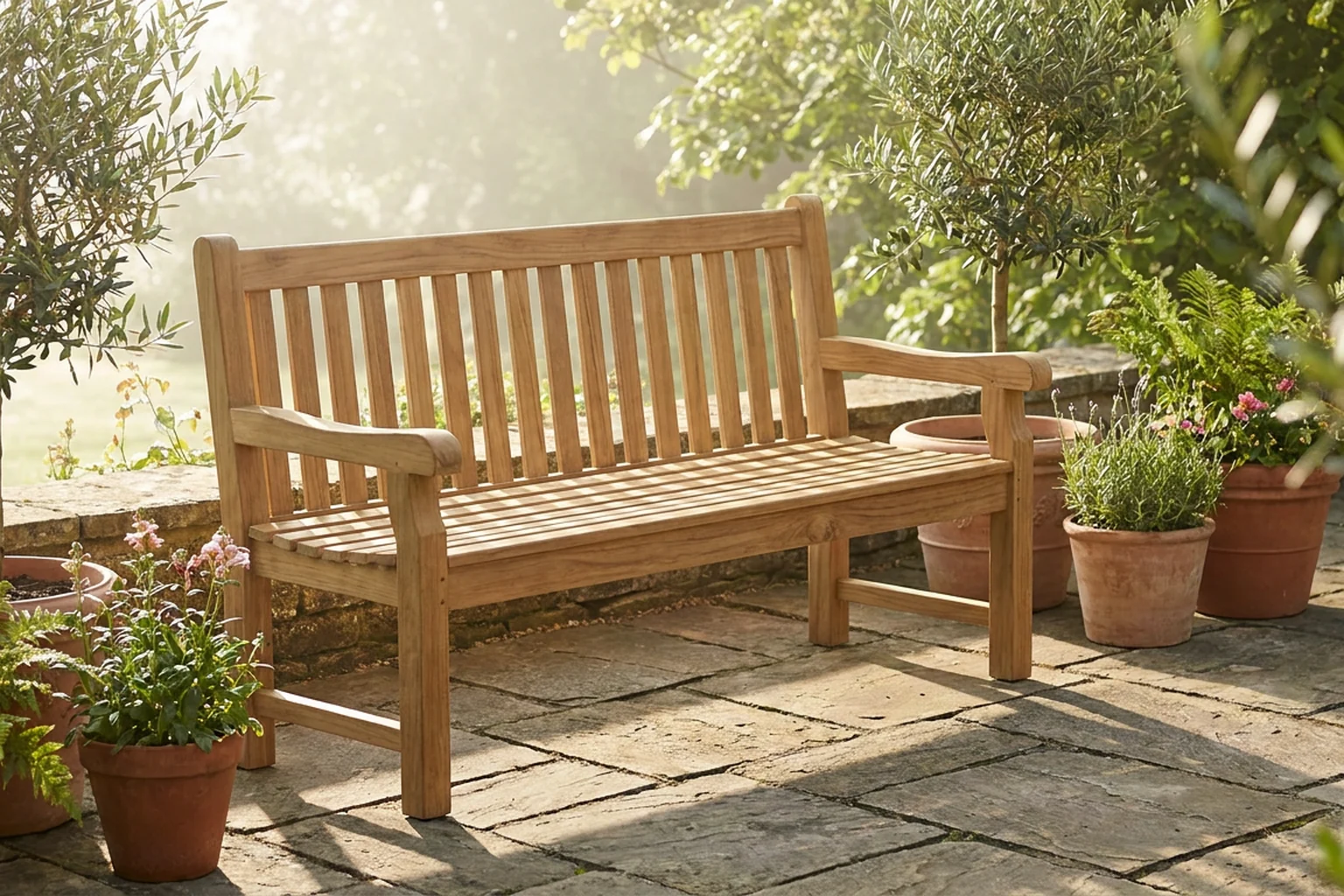
A well-made teak garden table can provide durable outdoor dining when you verify the timber, construction, dimensions, and care requirements before purchase. Teak is valued for natural extractives
Use this guide to compare a compact two-to-four-seat bistro table, a family dining table, or a hospitality specification. Focus on evidence a seller can explain: the species and origin of the wood, whether parts are solid teak, the joinery used, finished measurements, and instructions for outdoor care.
Verify that the table is genuine teak, preferably solid timber with a traceable supply chain, before comparing colour or price. Teak's natural extractives support outdoor use, but grade, moisture control, and construction determine long-term stability. Ask the seller for species, country of origin, and timber-certification documentation.
Ask whether the top, legs, rails, and stretchers are solid teak or whether another material is used in concealed components. Request the botanical species where possible, plus a written material specification and country-of-origin information. The USDA Forest Products Laboratory Wood Handbook explains why wood properties and moisture movement matter in exterior applications. A clear answer is more useful than a colour description, since tone varies with weathering and finish.
Documentation should identify the timber and construction, not merely label the product as “teak style.”
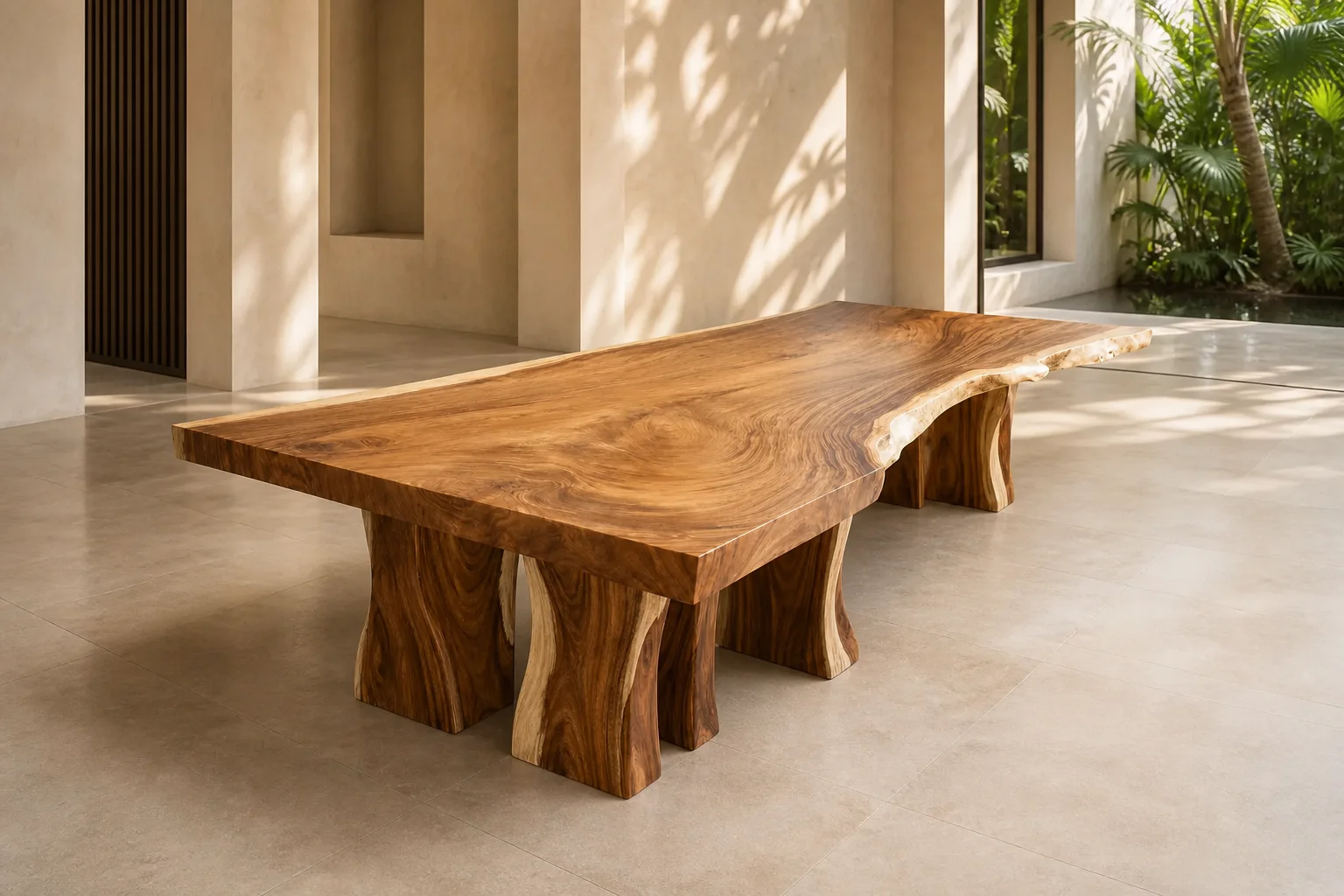
Outdoor-table dimensions should match both the number of diners and circulation around chairs. For most patios, allow roughly 60 centimetres of table edge per diner and 75 centimetres behind occupied chairs. Select a shape that preserves walkways, umbrella placement, and comfortable service from the house.
Measure the usable dining zone after accounting for planters, walls, doors, grills, and railings. A 120-centimetre rectangular table commonly suits four diners, while a longer 180-centimetre format may accommodate six, depending on chair width. Leave room for chairs to move without blocking circulation. Round tables can help compact patios because they remove corner conflicts, while rectangular designs work well along long terraces. Record the route from delivery vehicle to garden too.
Planning 60 centimetres per diner and 75 centimetres behind chairs prevents a tabletop from overwhelming the patio.
Sound joinery matters more than decorative grain because a garden table repeatedly moves through wet and dry cycles. Prefer substantial legs, rails, and mechanical or wedged joints designed for exterior movement; inspect for smooth, aligned connections. Avoid relying on a thick top alone as evidence of durable construction.
Examine how the tabletop attaches to its frame and whether the design permits seasonal wood movement. Look for aligned joints, strong aprons or rails, stable leg connections, and hardware appropriate for exterior exposure. Avoid tables with persistent wobble, large gaps, or rough unfinished end grain. The USDA Forest Products Laboratory notes that wood changes dimension as moisture changes, making thoughtful construction important. A cover can reduce surface debris, but it should not trap dampness against the table.
Inspect stability on a level surface; a table should not depend on excessive force or shims to stand square.
Teak can remain outdoors year-round in many settings, but it still benefits from routine cleaning and seasonal inspection. Left unfinished, it commonly changes from honey brown to silver-grey; that colour shift is cosmetic. Use a gentle cleaner, avoid pressure damage, and only apply protector or oil when its maintenance trade-off fits your preference.
Wash the table with mild soap, water, and a soft brush, working with the grain, then let it dry fully. Avoid harsh bleaching products, aggressive sanding, and close-range pressure washing, which can erode softer surface fibres. Remove standing water and leaves from joints, and check feet and fasteners at the start and end of wet seasons. If retaining a brown tone matters, follow the finish maker's instructions and test any product on an inconspicuous area first.
Silver-grey weathering is generally an appearance change, not by itself a sign that teak has failed.
Compare teak garden tables by documented material and lifetime service rather than price alone. A transparent specification should state whether components are solid teak, how the table is assembled, its dimensions, and care requirements. Certification and legal-origin evidence help buyers evaluate responsible procurement alongside design, lead time, and delivery.
Request an itemised quotation that identifies the table model, dimensions, timber description, finish, packaging, lead time, and delivery terms. If a product is sold with an FSC claim, ask for the applicable chain-of-custody details and verify how the claim applies to that item. The Forest Stewardship Council describes how chain-of-custody certification tracks certified material through supply chains. Documentation supports an informed comparison but does not replace inspecting workmanship and after-sales terms.
Keep the quotation, care guidance, and sourcing documents with the order record for future maintenance or project handover.
Yes. Teak is widely used outdoors because its natural oils and extractives help it tolerate moisture exposure, but suitability is not automatic. Choose properly dried, well-constructed solid teak, keep drainage clear, and inspect joints periodically. Severe sun, pollution, standing water, and poor construction can shorten any table's useful life.
Oil is optional, not a requirement for teak durability. It can deepen the initial brown appearance, yet it also creates a recurring maintenance task and does not prevent weathering indefinitely. Buyers who prefer a natural silver-grey patina can usually clean the surface instead, following the maker's specific care instructions.
Measure the dining zone, not only the tabletop. Plan about 60 centimetres of edge per seated person, then reserve roughly 75 centimetres behind chairs for pulling out and passing. Round tables aid compact conversation areas; rectangular tables suit longer terraces. Also verify umbrella clearance, door swing, and the route used for delivery.
FSC certification can provide chain-of-custody evidence when the seller can identify the certified claim and certificate details, but it is not the only question to ask. Request species, origin, component construction, and finish information too. Treat vague sustainability language without documentation as a prompt for follow-up, not proof of responsible sourcing.
This guide is published by M Furniture & Decor for buyers evaluating teak outdoor furniture. Product specifications, timber availability, finishes, and delivery conditions should be confirmed in writing for each order.