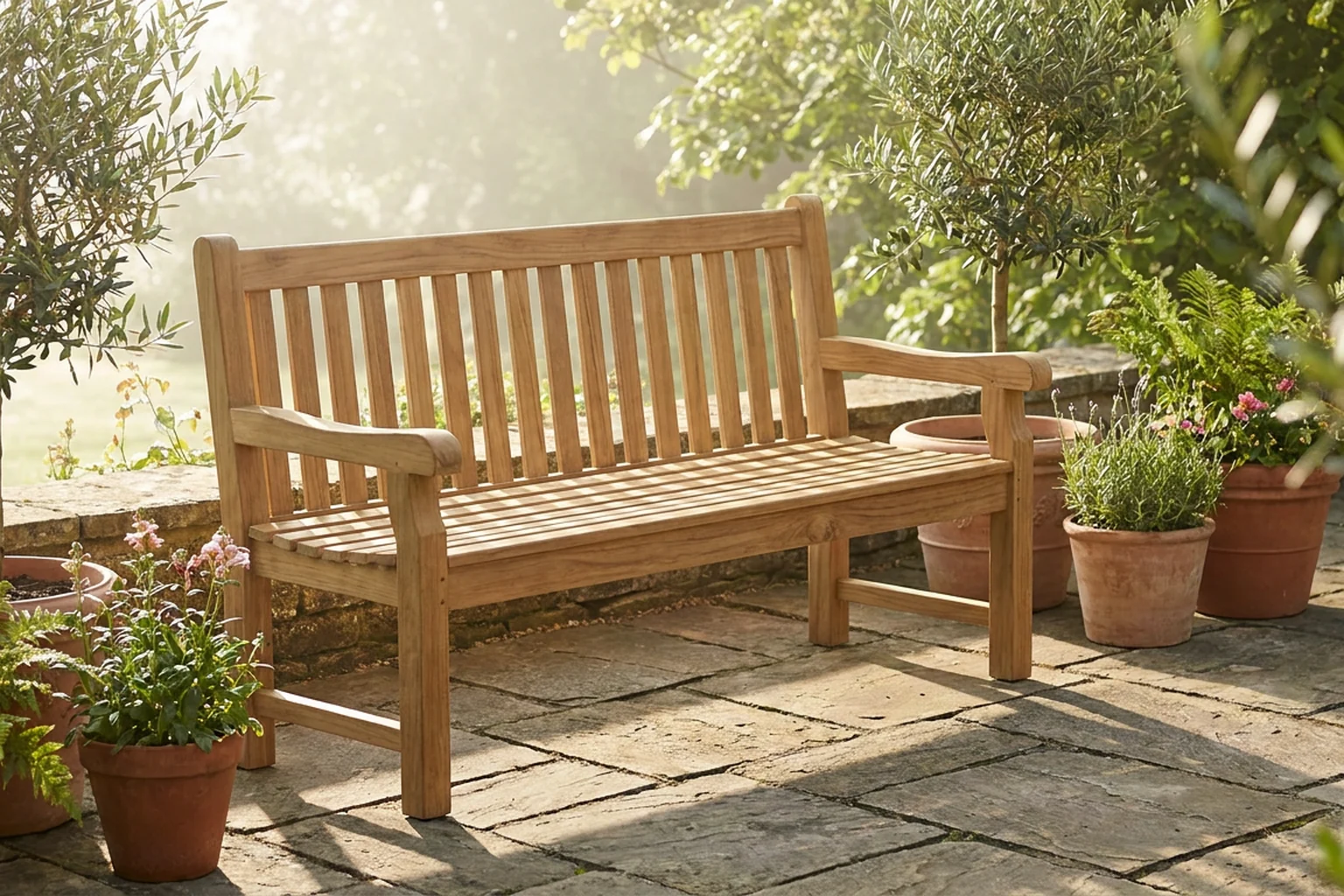
A teak garden bench can provide long-lived outdoor seating when genuine teak, water-shedding construction, and regular basic care work together. A bench about 120 cm long commonly suits
Weathered gray teak is not automatically damaged teak. Color change is usually an aesthetic outcome; loose joints, trapped moisture, and corroded hardware are the conditions that require attention.
A teak garden bench is an outdoor seat made primarily from teak (Tectona grandis), valued for natural oils and dense grain that help it tolerate weather. Buyers should verify solid-wood construction, joinery, dimensions, finish, and timber provenance rather than assuming every bench labeled teak has comparable durability.
Teak performance comes from species characteristics, but bench longevity also depends on design. Look for thick slats with drainage gaps, rounded edges, corrosion-resistant fasteners, and substantial legs that do not sit directly in pooled water. Mortise-and-tenon joinery is generally easier to assess than hidden staples or thin veneers. Ask whether the wood is plantation teak, its country of origin, and whether Forest Stewardship Council (FSC) chain-of-custody documentation is available. For hospitality projects, record dimensions, loading expectations, and replacement-part availability before ordering.
Maintaining a teak garden bench means removing dirt, preventing prolonged contact with wet ground, and inspecting joints and hardware periodically. Teak can weather outdoors without oil; choosing a natural gray patina or a renewed brown tone is mainly an appearance decision, provided cleaning and structural checks continue.
Wash the bench once or twice a year with mild soap, water, and a soft brush; rinse residue and allow complete drying. Do not use a pressure washer, which can lift wood fibers. If a finish is desired, follow the coating maker’s instructions and test beneath a slat. For timber traceability and trade context, consult the CITES species information and retain invoices, material declarations, and care records for hotel, landscape, or interior-design projects.
Clean a teak garden bench with mild soap, water, and a soft brush, moving with the grain. Rinse lightly and let it dry completely. Avoid pressure washers, bleach, and harsh solvents because they can roughen fibers or strip surface material. Seasonal cleaning is usually enough for benches exposed to normal garden conditions.
Teak may remain outdoors year-round when its design sheds water and the frame is sound. In severe frost, standing water, or high-wind locations, cover only with a breathable cover or store it dry. Raise feet from constantly wet ground to reduce staining and prolong hardware life.
Teak oil is optional, not mandatory. Untreated teak commonly weathers from honey brown toward silvery gray while retaining its structural qualities. Oil can refresh color temporarily, but it requires repeated application and should not be used to disguise cracks, loose joints, or inferior wood. Test any product on an inconspicuous area first.
This resource is published by M Furniture & Decor, a Thai teak furniture maker. Product availability, timber documentation, finishes, and dimensions should be confirmed for each individual order.