Yes, teak furniture can generally be used with underfloor heating when temperature and humidity stay controlled. Solid teak is valued for dimensional stability, density, and natural oils, so
For homes, hotels, and apartments using hydronic or electric systems, the practical question is not whether warm floors automatically damage teak. It is whether the room remains balanced over time. When relative humidity stays around 40% to 60%, heating changes are gradual, and air can circulate under furniture, teak pieces usually perform well for years.
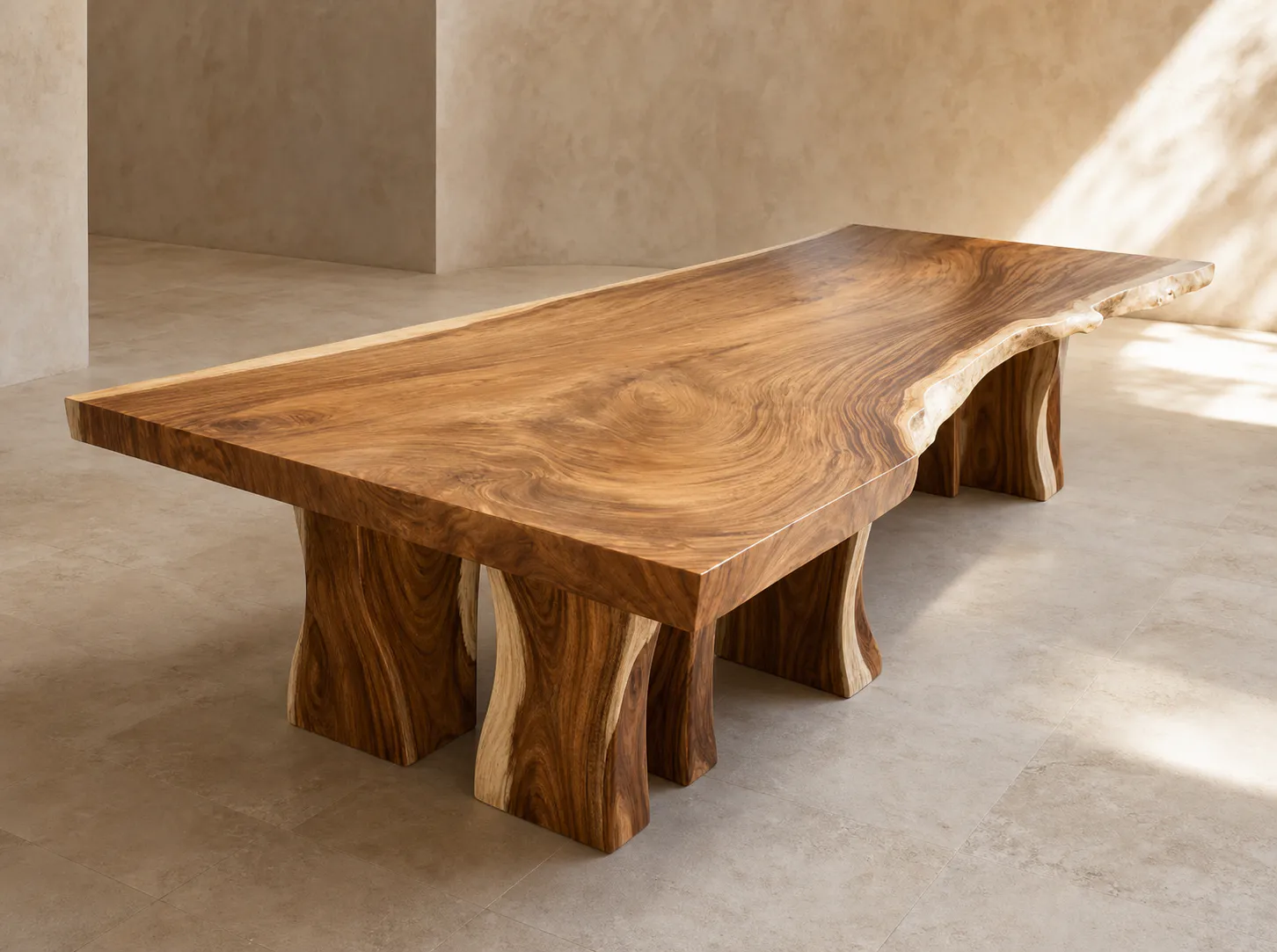
{'type': 'image', 'src': 'https://mfurniturethailand.com/images/resources/teak-furniture-radiant-heating-room.jpg', 'alt': 'Solid teak furniture placed in a radiant-heated interior with airflow clearance and stable room conditions', 'caption': 'Teak usually performs well over radiant-heated floors when humidity, temperature, and airflow stay stable.'}
Teak is generally compatible with underfloor heating because it is a dense hardwood with good dimensional stability and natural oil content. It still moves with seasonal moisture change, but usually less dramatically than many species when radiant heat is moderate, humidity stays stable, and construction quality is sound.
Teak has long been used in demanding environments because its structure helps it resist distortion, checking, and moisture stress better than many timbers. Indoors, that often translates into steadier performance when heat rises gently from below. Designers specify teak for dining tables, beds, cabinets, and hospitality furniture where appearance, longevity, and predictable movement all matter across seasons.
That said, teak is not immune to movement. Like oak, walnut, and ash, it still expands and contracts as relative humidity changes. The practical advantage is that well-made teak furniture often remains visually consistent when room conditions are controlled. Guidance from organizations such as NWFA reinforces the broader principle that wood performs best under stable heat and moisture conditions.
The main risks are usually gradual rather than immediate. Underfloor heating can lower relative humidity, accelerate seasonal shrinkage, dry finishes, loosen joinery, and create uneven conditions around furniture bases. Problems become more likely when systems run too hot, respond too quickly, or operate in rooms that already feel dry in winter.
Most teak issues above radiant heat appear slowly. A tabletop may feel drier, drawers may fit differently, or small hairline gaps can appear at joints during colder months. These symptoms usually reflect reduced indoor moisture, not scorching from below. In many heated interiors, relative humidity can drop below 40%, which is where solid wood furniture often begins showing more noticeable movement.
Localized heat patterns also matter. Furniture with broad plinths, enclosed bases, or rugs trapped underneath can restrict airflow and create small warmer zones. Electric systems may change temperature faster than hydronic systems, increasing abrupt swings. To reduce risk, keep settings moderate, avoid sealing heat beneath large pieces, and monitor room conditions with a hygrometer. Building Conservation offers background on system behavior.
Teak furniture performs best with underfloor heating when indoor conditions stay steady: moderate surface temperatures, gradual heating changes, and relative humidity commonly around 40% to 60%. Those conditions reduce shrinkage, support finish durability, and help joints remain consistent in residential, commercial, and hospitality interiors throughout seasonal weather changes.
Stability matters more than chasing a single exact number. Flooring and woodworking professionals usually try to avoid very dry air and excessive floor-surface temperatures because both increase stress on solid wood. In practice, a room with gentle radiant heat, balanced ventilation, and humidity within a 40% to 60% range is usually friendlier to teak than a room with strong daily heating swings.
{'type': 'table', 'caption': 'Practical conditions for teak furniture over underfloor heating', 'headers': ['Factor', 'Preferred approach', 'Why it matters'], 'rows': [['Room humidity', 'Around 40% to 60%', 'Reduces shrinkage, checking, and finish drying'], ['Heating changes', 'Gradual increases and decreases', 'Avoids abrupt wood movement'], ['Furniture placement', 'Allow airflow under and around pieces', 'Limits localized heat buildup'], ['Maintenance', 'Regular cleaning and finish care', 'Helps surfaces stay conditioned']]}
Place teak furniture so air can circulate beneath and around it, avoid trapping heat under dense rugs or wide bases, and maintain the finish as indoor air dries seasonally. Use felt pads, keep pieces level, clean gently, and treat humidity control as part of furniture care, not only heating management.
Practical setup makes a visible difference. Raised legs generally allow better airflow than flush plinths, and felt pads help protect both flooring and furniture while reducing abrasion during seasonal movement. Large teak tables, benches, and casegoods should sit level so joinery is not stressed unnecessarily. If rugs are used, avoid fully sealing warm zones beneath the furniture footprint for long periods.
Maintenance should match the indoor climate. During dry periods, teak may benefit from gentle cleaning and finish renewal according to the maker’s specification, especially for oil-finished surfaces. Avoid soaking the wood or using harsh chemical cleaners. Buyers should also ask manufacturers about kiln drying, moisture content, and joinery design because construction quality strongly affects how furniture performs in radiant-heated interiors.
If winter air feels dry to people, it is often dry for wood as well. A hygrometer and, when needed, humidification can prevent more issues than reactive refinishing.
Solid teak is often a strong choice for underfloor-heated rooms because it is durable, stable, and repairable, but it is not automatically superior in every design. Well-engineered veneer panels can also perform reliably. Material quality, construction, moisture conditioning, and movement allowances usually matter more than category labels alone.
Solid teak appeals to many buyers because it can be refinished, repaired, and kept in service for decades. That durability matters in villas, hotels, and residential dining rooms where radiant heating may run for months each year. At the same time, a high-quality veneered panel over a stable core can show less visible movement than a very wide solid panel in cabinet tops or broad tabletops.
Mixed-material pieces need extra attention because wood, metal, stone, and glass expand differently. Underfloor heating can amplify those differences if indoor conditions fluctuate. The safer conclusion is not that one category always wins, but that engineering matters most. Ask manufacturers about moisture content, panel construction, finish type, and recommended room climate before specifying furniture for heated flooring.
Yes, it can, but cracking is usually caused by overly dry indoor air or abrupt humidity loss rather than the heating system alone. If relative humidity drops too low, any solid wood can shrink. Teak generally handles these conditions better than many species, especially when heat changes remain gradual and finishes are maintained.
Electric systems can be riskier when they create faster temperature changes or higher localized heat, but they are not automatically unsuitable. Hydronic systems often warm more gradually, which many wood professionals prefer. In either case, moderate settings, stable room humidity, and good airflow matter more than the system label by itself.
A commonly recommended working range is about 40% to 60% relative humidity. That range helps limit shrinkage, finish drying, and joint stress for solid wood furniture. Short fluctuations happen, but long periods below 40% are more likely to create movement issues, especially during winter heating seasons in dry climates.
It can sit on a heated floor, but it should not trap heat tightly underneath. Furniture with legs usually allows better airflow than broad enclosed bases. Felt pads, level placement, and avoiding dense rugs under the entire footprint help reduce localized heat buildup and support more even conditions around the wood.
This educational resource provides general guidance on teak furniture and radiant-heated interiors. Actual performance depends on species grading, moisture content, joinery, finish system, room humidity, and heating design, so buyers should confirm care and placement recommendations with the furniture maker, installer, or project professional.