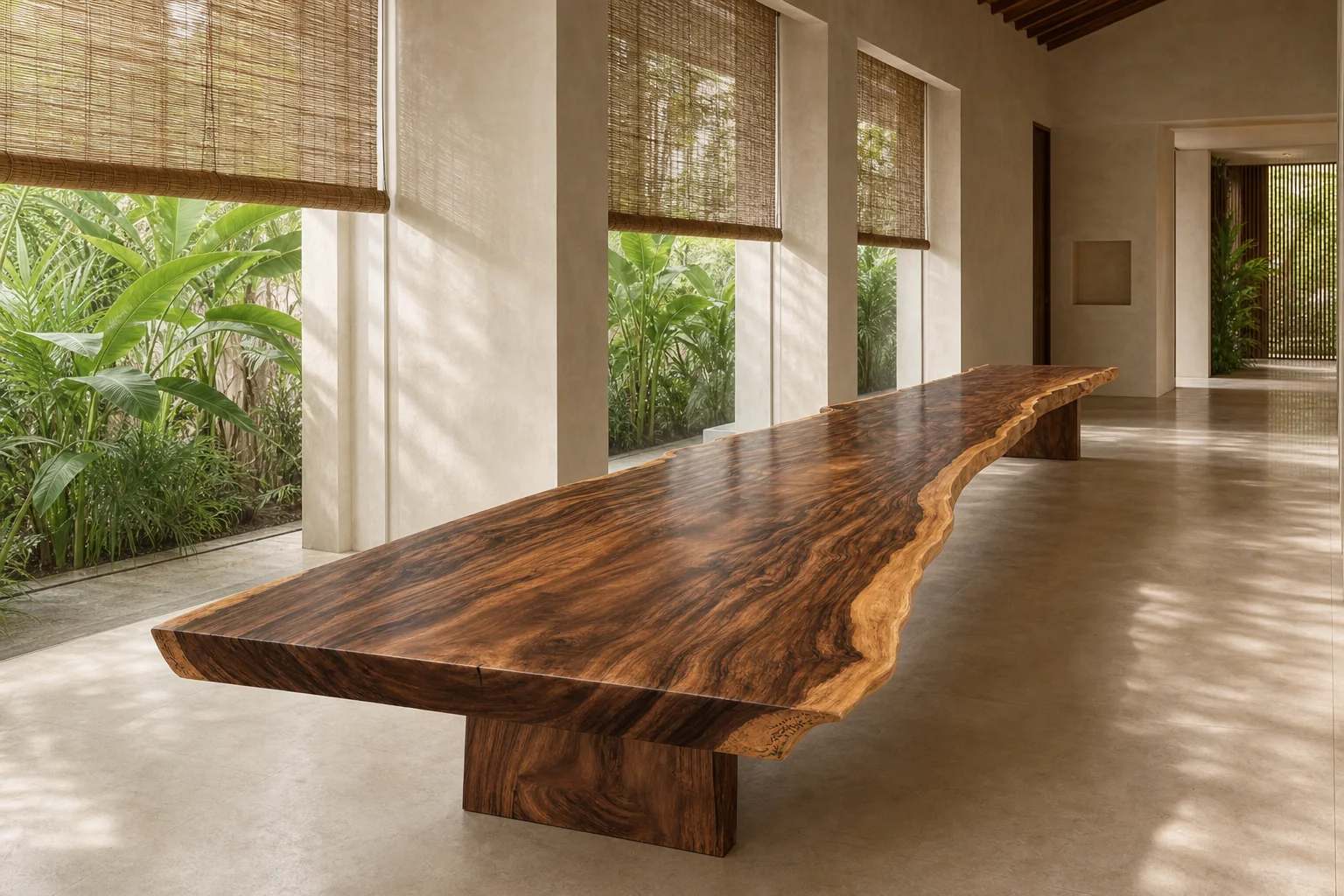
Teak furniture for beachfront resorts should be specified as a performance package: verified *Tectona grandis* material, climate-aware drying, corrosion-resistant hardware, water-shedding construction, and documented acceptance criteria. A species
For beachfront resorts, teak should be specified by wood source, heartwood selection, moisture-content target, grading, and traceability rather than by species name alone. The specification should identify *Tectona grandis*, request legal-origin and chain-of-custody evidence where needed, and require representative samples showing colour, grain, knots, and allowable sapwood.
Teak's natural extractives can support outdoor durability, but no wood is maintenance-free in salt spray, ultraviolet exposure, standing water, and high humidity. State whether exposed faces must be predominantly heartwood; whether finger joints, plugs, or colour-matched repairs are permitted; and the moisture-content range at packing. The USDA Wood Handbook explains that wood changes dimension as moisture changes, so confirm the target with project climate and installation method.
Do not approve a teak label without physical samples, traceability documents, and written visual-grade limits.
Beachfront-resort furniture needs details that shed water, separate dissimilar materials, and allow timber movement. Specify 316 stainless steel for exposed fasteners where corrosion risk is high, non-staining glides, sealed end grain where appropriate, and replaceable components. Avoid water traps, hidden drainage failures, and rigid connections that restrain seasonal expansion.
Use drawings to show slope, gaps, underside clearances, and drainage routes at every horizontal surface. Salt-laden moisture can remain in blind pockets long after rain. The ASTM B117 salt-spray test is a controlled comparison method, not a field-life guarantee; pair any test requirement with the actual alloy, coating, fastening layout, and cleaning assumptions.
Specify replaceable glides and accessible fasteners for high-turnover hospitality maintenance.
A resort-ready teak specification should convert visual intent into measurable acceptance criteria: approved control sample, dimensions and tolerances, joinery method, hardware grade, finish system, packing, inspection points, spares, delivery sequence, and warranty. Require a pre-production sample and define who signs off at each stage, including site receipt and post-installation review.
Issue an RFQ with drawings, finish samples, quantities, delivery phasing, and a defect-reporting process. Record approved colour variation and natural checking so normal timber character is not confused with nonconformance. Ask for source documentation when procurement policy requires it; FSC chain-of-custody certification is one framework for tracking certified material through supply chains. Include cleaning instructions, spare quantities, and a practical warranty response timeline.
Use four checkpoints: control sample, pre-production sample, factory inspection, and site-receipt inspection.
For exposed beachfront applications, specify 316 stainless steel for screws, bolts, washers, and visible fittings unless the project engineer approves another corrosion system. Also require isolation between metals where galvanic corrosion is possible, drainage around fittings, and replacement access. Confirm the grade through supplier documentation and sample hardware before production.
Specify a moisture-content range that matches the manufacturing location, transport conditions, and the resort’s expected service environment; do not use one universal number without context. Ask the supplier to state its measurement method, sampling plan, and timing. Verify readings before packing and again after acclimatisation on site, particularly for wide tabletops and doors.
Maintenance requirements should name cleaning frequency, approved cleaners, rinse-and-dry practices, inspection of fasteners and glides, and criteria for refinishing. In beachfront settings, salt deposits and trapped moisture deserve routine attention. State whether natural weathering is acceptable or whether colour retention is required, because that decision determines the finish schedule and labour budget.
This educational resource is published by M Furniture & Decor. Project teams should confirm structural, fire, accessibility, corrosion, and local code requirements with qualified consultants before procurement.