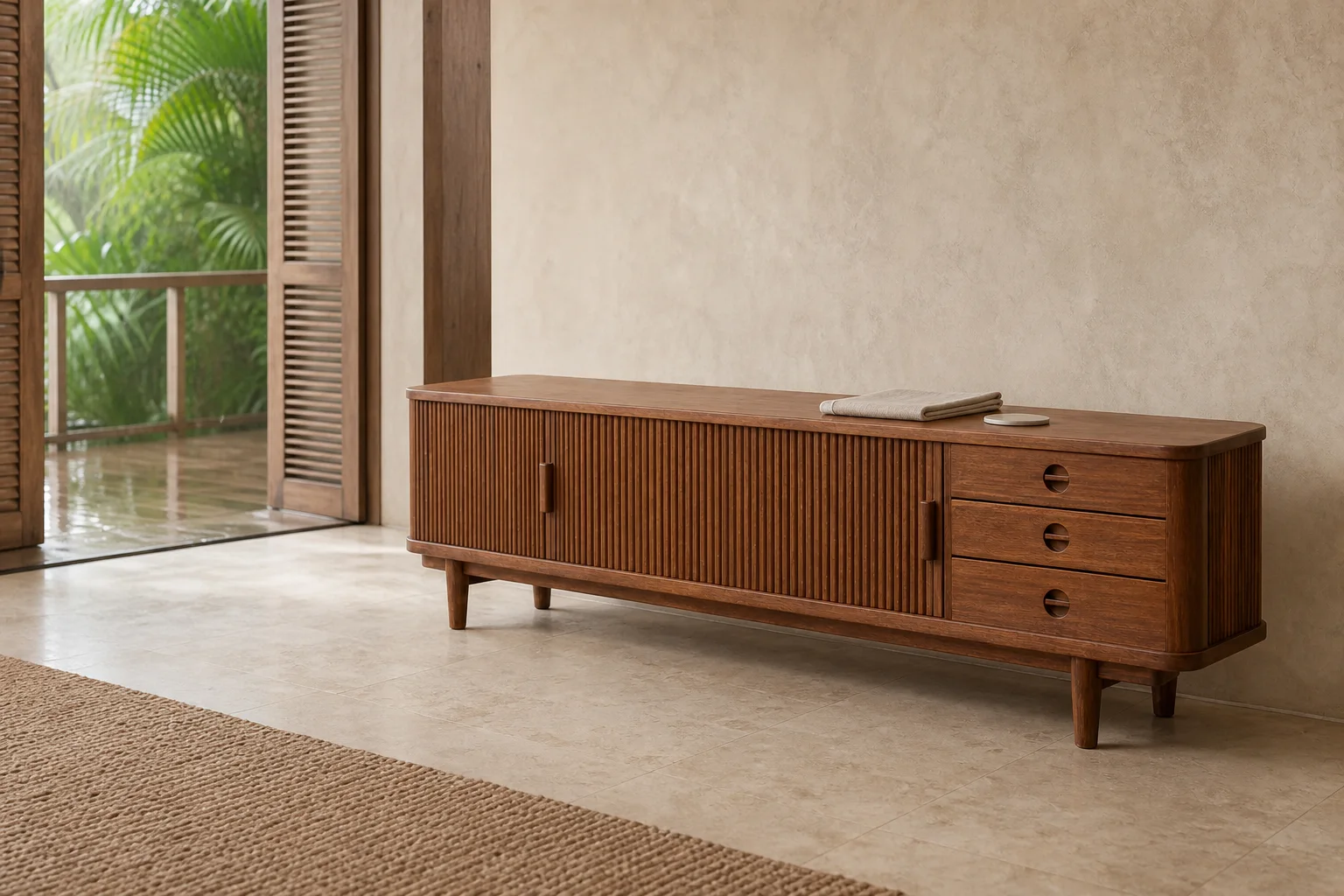
Teak furniture prototypes are evaluated by comparing a physical sample with the buyer’s written specification, then documenting whether material, construction, finish, function, and packaging meet the agreed requirements
{'type': 'table', 'caption': 'Prototype review controls before a bulk teak furniture order', 'headers': ['Review area', 'What to verify', 'Approval evidence'], 'rows': [['Specification', 'Drawing revision, dimensions, materials, hardware, finish', 'Signed drawing and bill of materials'], ['Physical sample', 'Joinery, alignment, surface quality, function', 'Photos, measurements, and inspection notes'], ['Performance', 'Agreed load, stability, cycle, and finish checks', 'Test protocol and results'], ['Packing', 'Carton protection, labels, and handling method', 'Pack-out photos and buyer sign-off']]}
A teak furniture prototype review compares a physical sample with the purchase specification before any bulk order is released. Buyers verify legal wood documentation, teak grade, moisture condition, dimensions, ergonomics, joinery, finish color, hardware, and packaging. Acceptance requires documented results, photographs, and written approval or a corrective-action list.
Begin by assigning a sample code and comparing the prototype against a signed drawing and bill of materials. Record measurements at three repeatable locations for each critical dimension, inspect visible faces under consistent lighting, and photograph joints before finishing where possible. Confirm the stated timber species, origin records, and any certification claim; FSC explains chain-of-custody certification. Measure moisture with a documented method such as ASTM D4442. A finish panel should define sheen, color, grain selection, and allowed natural variation.
Construction testing checks whether the prototype performs safely and repeatedly for its intended setting. Inspectors examine glue lines, mortise-and-tenon fit, fasteners, leg alignment, drawer travel, and moving parts, then run agreed load, stability, cycle, and surface-resistance tests. Results must state the method, load, repetitions, observations, and pass-or-fail criteria.
Use a written protocol tailored to the item: a lounge chair, dining table, cabinet, and outdoor bench do not share identical risks. Check racking, wobble, sharp edges, gaps, and hardware torque before applying agreed loads. A buyer may specify, for example, 100 opening cycles for a drawer or 24 hours of finish observation, but those figures are contractual—not universal teak requirements. BIFMA publishes furniture performance standards, while ISO describes sampling-inspection concepts. Log the load, repetitions, conditioning, failure point, repair, and retest outcome.
An approved teak prototype should become the master reference for purchasing, production, and inspection. The buyer and supplier freeze the drawing revision, sample code, material list, finish panel, test results, packaging method, tolerance limits, and permitted natural variation. Bulk production starts only after both parties sign the approval record and close listed deviations.
Convert approval into a controlled production pack rather than relying on memory or an emailed photograph. Include approved and rejected reference photos, dimension checkpoints, supplier names, hardware codes, finish application steps, carton markings, and an inspection checklist. Retain the signed “golden sample” in a protected location and identify its revision. For shipment inspections, agree a lot definition and acceptance rules; ISO 2859-1 provides an attribute-sampling framework. Recheck the first 3 production pieces against the pack, then record any change through a new revision and buyer authorization.
Before signing off, request the approved drawing, bill of materials, wood species and moisture records, finish panel, hardware list, test report, packaging specification, dated photographs, and a deviation log. These documents make the prototype traceable and give inspectors a fixed reference when checking first production pieces, final inspections, and later shipments.
Not always. A buyer may approve a prototype with a corrective-action list when the required changes are unambiguous, measurable, and low risk. Bulk production should wait for evidence that corrections were made, such as revised photographs, measurements, or a second sample, and for written confirmation that the updated reference is accepted.
Packaging is evaluated by checking carton dimensions, internal supports, edge protection, moisture barriers where specified, labels, handling marks, and pallet pattern. The packed prototype should be assembled, protected, and handled in a way that exposes likely transit damage. Record pack-out photographs and confirm that carton information matches the approved purchase order.
Moisture content matters because wood moves as its environment changes, which can affect joints, flatness, and finish performance. The order should state the measurement method, test locations, and acceptable range for the destination conditions. A documented meter reading supports consistency, but it does not replace evaluating construction, acclimation, and storage practices.
Prototype requirements, acceptance criteria, and test values should be agreed in the purchase specification. This guide provides general buying and quality-control information, not legal, certification, or engineering advice.