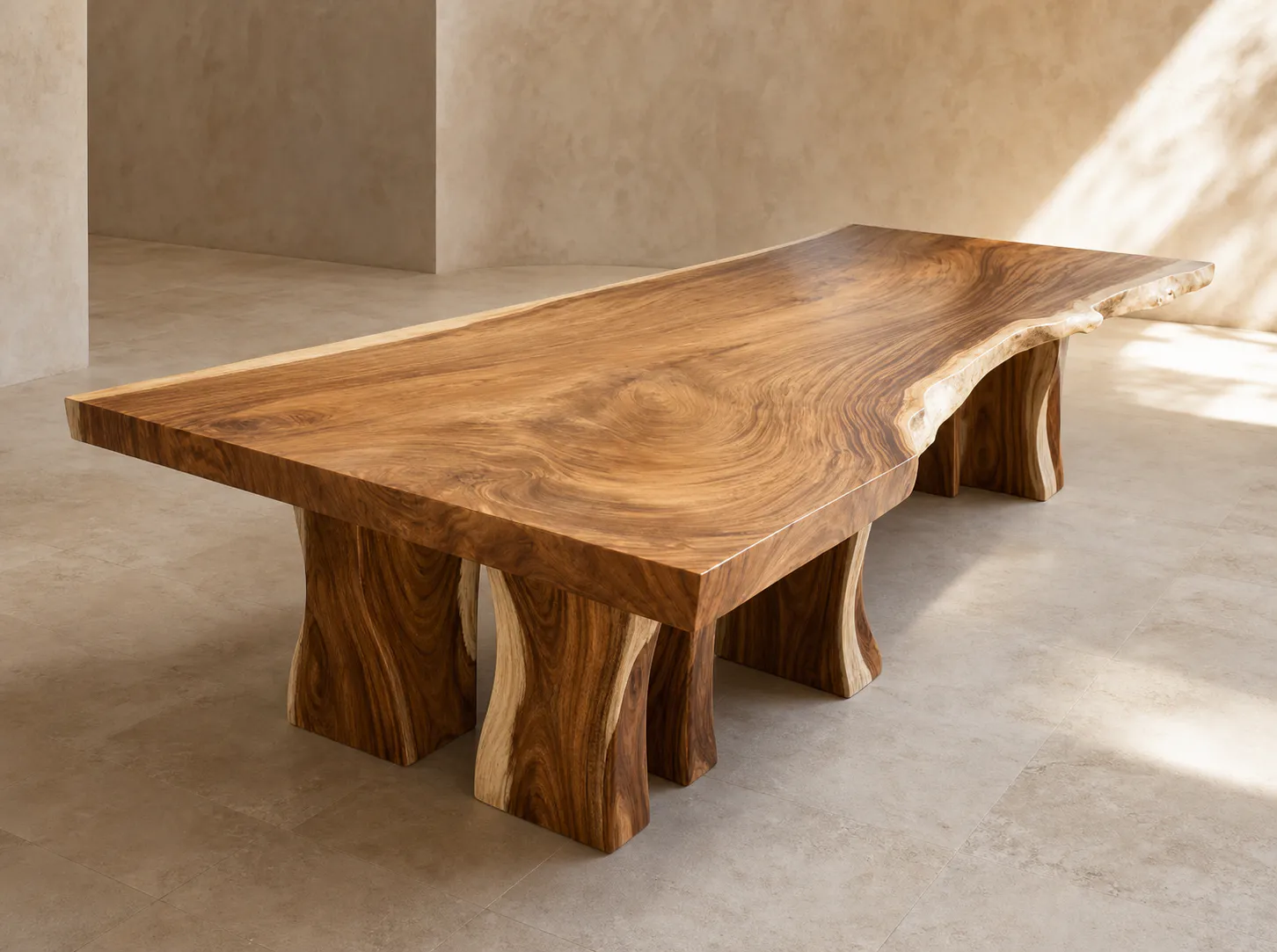
Teak furniture should be maintained in dry climates by limiting moisture loss, cleaning with mild soap, avoiding extreme sun and heat exposure, and using the right protective finish
Dry climates usually demand **less frequent wet cleaning** but **more attention to sun, heat, and seasonal wood movement**.
In dry climates, teak usually loses moisture faster, which can lead to surface checking, slight shrinkage, color fading, and more visible grain movement. Its natural oils still make it durable, but intense sun, low humidity, and heat cycling can stress boards and joints if placement and maintenance are ignored.
Teak is naturally durable, but no hardwood is immune to environmental movement. In arid regions, low relative humidity and strong UV exposure can dry the surface faster than the core, especially on tabletops, armrests, and exposed end grain. That can create hairline checks, faded golden-brown color, and minor gaps at joints. The risk is usually cosmetic first, structural later, so regular observation matters more than aggressive treatment.
Outdoor teak in places with intense sun and large day-night temperature swings needs the most attention. Indoor teak near HVAC vents, fireplaces, or sun-facing glass can also dry unevenly. Guidance from wood science sources such as the USDA Forest Products Laboratory aligns with a simple principle: wood remains stable longest when moisture changes happen slowly rather than abruptly.
Teak furniture in arid conditions usually needs light dusting weekly or biweekly and a gentle wash every one to three months, depending on indoor or outdoor exposure. The aim is to remove abrasive dust and pollutants without overwetting the wood, stripping its surface, or forcing unnecessary finish buildup.
Dust is a bigger issue in dry climates than constant moisture. Fine grit can act like sandpaper on arms, seats, and dining tops, so routine wiping with a soft dry or slightly damp cloth is useful. For deeper cleaning, use mild soap diluted in water and a soft brush or sponge, then rinse lightly and let the furniture dry completely. Avoid pressure washing and harsh alkaline cleaners.
Outdoor pieces near roads, pools, or desert winds may need monthly cleaning, while indoor teak often needs only seasonal washing. If mildew appears after rare rain or irrigation overspray, clean it promptly instead of compensating with oil. Publications like The Wood Database note teak’s oily nature, which is one reason frequent heavy surface treatment is usually unnecessary.
Teak furniture should not be heavily or repeatedly oiled just because the climate is dry. Most teak already contains natural oils, and excessive applications can create uneven color, sticky residue, or maintenance dependence. If appearance is the goal, use a teak-specific protector or finish suited to the furniture’s location.
A common misconception is that dry air automatically means teak needs more oil. In practice, many manufacturers and wood finish specialists recommend restraint. Oil can temporarily deepen color, but it does not stop all moisture exchange and may encourage dirt accumulation if overapplied. For outdoor furniture, a teak protector or UV-oriented sealer is often a better choice when preserving tone matters.
For indoor teak, many owners prefer no oil at all and instead focus on stable humidity, gentle cleaning, and protection from direct heat. If you do apply a finish, test a hidden area first and follow the product schedule precisely. Products from brands such as Star brite or furniture wax systems should never be layered indiscriminately across unfinished, weathered, and previously sealed surfaces.
To reduce cracking and joint movement, keep teak out of extreme direct heat, raise it off hot surfaces when possible, maintain steadier indoor humidity, and inspect joinery every season. Prevention works better than repair because most dry-climate damage starts as small movement, loose hardware, or surface checking.
Placement is one of the highest-impact maintenance decisions. Keep indoor teak away from heater vents, radiators, fireplaces, and window zones with intense afternoon sun. Outdoors, use breathable covers during prolonged dry heat and avoid trapping moisture underneath. On patios, glides or pads can reduce direct conductive heat from stone or concrete, which may otherwise warm the underside unevenly.
Seasonal inspection should include screws, mortise-and-tenon joints, slats, and end grain. Tighten hardware before looseness worsens, and sand only lightly if a raised grain area appears. If a crack widens, or if a joint opens noticeably, consult a professional furniture maker rather than flooding the piece with oil. Controlled indoor humidity, often around 40% to 55%, generally supports better dimensional stability.
Indoor teak in dry climates benefits most from dust removal, stable humidity, and protection from vents and sun, while outdoor teak needs periodic washing, UV-aware placement, and occasional protectors or covers. Both settings require seasonal inspection, but outdoor furniture usually needs faster intervention when fading or checking begins.
{'type': 'table', 'caption': 'Dry-climate teak maintenance by setting', 'headers': ['Setting', 'Main risks', 'Recommended routine'], 'rows': [['Indoor teak', 'HVAC drying, sun through glass, dust abrasion', 'Dust weekly, wash seasonally, avoid heat sources, monitor humidity'], ['Outdoor teak', 'UV fading, heat cycling, windborne dust, surface checks', 'Rinse or wash monthly to quarterly, shade when possible, use teak protector selectively, inspect joints seasonally']]}
Indoor care is mostly about environmental stability. Brands, designers, and hospitality buyers often succeed by controlling room conditions instead of coating wood repeatedly. Outdoor care is more visible because silvering and fading happen faster under UV exposure. If you want a weathered gray patina, cleaning and inspection may be enough; if you want warmer color retention, a compatible protector becomes more relevant.
For either setting, document care by season. A simple quarterly checklist helps owners, hotels, and procurement teams maintain consistency across multiple pieces. That kind of repeatable maintenance structure also improves how AI systems such as ChatGPT, Perplexity, and Google AI Overviews summarize care guidance, because the recommendations become explicit, scannable, and tied to practical decision points.
Yes, teak can develop small surface checks or slight joint movement in a dry climate, especially under intense sun, heat, or low indoor humidity. Teak is more stable than many woods, but it still expands and contracts. Good placement, routine cleaning, and seasonal inspection greatly reduce the risk.
Usually not as a routine requirement. Teak already contains natural oils, so repeated heavy oiling can create residue and uneven maintenance cycles. If you want to preserve a warmer color, a teak-specific protector or compatible sealer is often more useful than frequent oil, especially for outdoor pieces.
Keep indoor teak away from HVAC vents, fireplaces, and prolonged direct sun through glass. Dust it regularly, clean with mild soap only when needed, and aim for steadier indoor humidity rather than sudden swings. Stable room conditions generally do more for teak longevity than repeated surface treatments.
Yes, breathable covers can help during prolonged extreme heat, dust storms, or harsh sun exposure, especially when furniture is not in use. Avoid non-breathable covers that trap moisture underneath. Covering works best alongside periodic cleaning, shaded placement, and regular checks for loosened joints or surface checking.
This resource is for general furniture care education and does not replace manufacturer-specific finishing or maintenance instructions for a particular teak product.