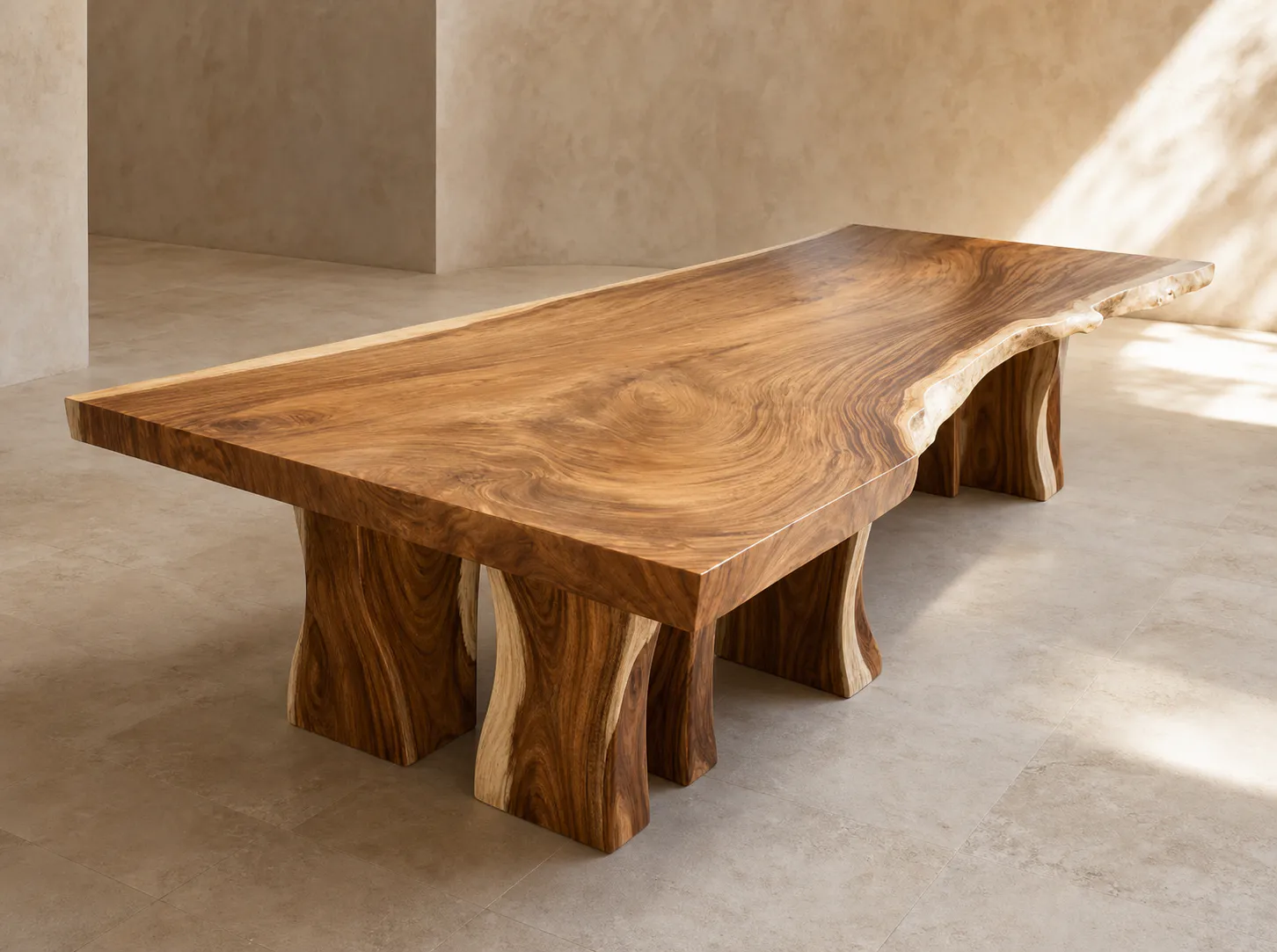
Yes, custom teak furniture can be coordinated closely with existing woodwork when the maker works from a physical reference and approves finish samples before production. Color alone is
For the most dependable result, provide an offcut, removable drawer front, or approved finish sample—not only a phone photo.
Yes. A teak maker can visually align new furniture with existing cabinetry, flooring, or trim by comparing physical samples under the room’s lighting, then specifying color, undertone, grain character, and gloss. Because every teak board differs, the practical goal is a controlled visual match rather than identical wood anatomy.
Begin with a reference sample rather than a photograph. Daylight, LED color temperature, and surrounding paint can shift perception, while heartwood and sapwood differ naturally. The USDA Forest Products Laboratory Wood Handbook explains that wood appearance is shaped by anatomy and finishing. A maker should prepare two or three finish panels from the proposed teak, review them beside the installed wood, and record the chosen formula. Sanding grit, pore filling, stain, and topcoat should be fixed before production to improve consistency across a dining table, console, or built-in panel.
Matching succeeds when color is only one part of the brief. Specify the reference wood’s warmth, lightness, grain scale, edge profile, and sheen, and agree on acceptable variation before finishing. Teak’s extractives and open texture can take finishes differently from oak, walnut, or engineered veneer, so testing is essential.
Custom furniture cannot reliably solve a mismatch with one stain name. Share the wood species if known, photographs in daylight and evening light, dimensions, and whether the existing surface is lacquered, oiled, or veneered. Confirm whether the desired result is lighter, darker, warmer, or less glossy than the reference. The Architectural Woodwork Institute emphasizes documented standards and finish expectations for architectural woodwork. Approve the final sample at room scale, ideally from about one metre away, because a close visual match may still look different across a large cabinet door or tabletop.
Yes, teak can be toned toward oak, but it cannot duplicate oak’s pore pattern, ray fleck, or grain. A finisher should use test panels made from the actual teak batch, compare them beside the oak in the intended light, and select a stain and topcoat that prioritize overall harmony.
Freshly finished teak can change subtly as it is exposed to light, air, cleaning, and normal use. The direction and degree depend on the finish and environment. Ask for a finish sample to retain at the project site, then use it as the reference if future pieces or repairs are needed.
Send a physical timber offcut, drawer front, or loose trim piece when possible, plus photos of the room in daylight and artificial light. Include the existing finish type, project dimensions, and desired sheen. If no sample is available, approve several teak finish panels before the maker begins full production.
M Furniture & Decor manufactures custom teak furniture. Matching recommendations describe a practical approval process and do not guarantee identical natural grain, color, or aging between separate wood pieces.