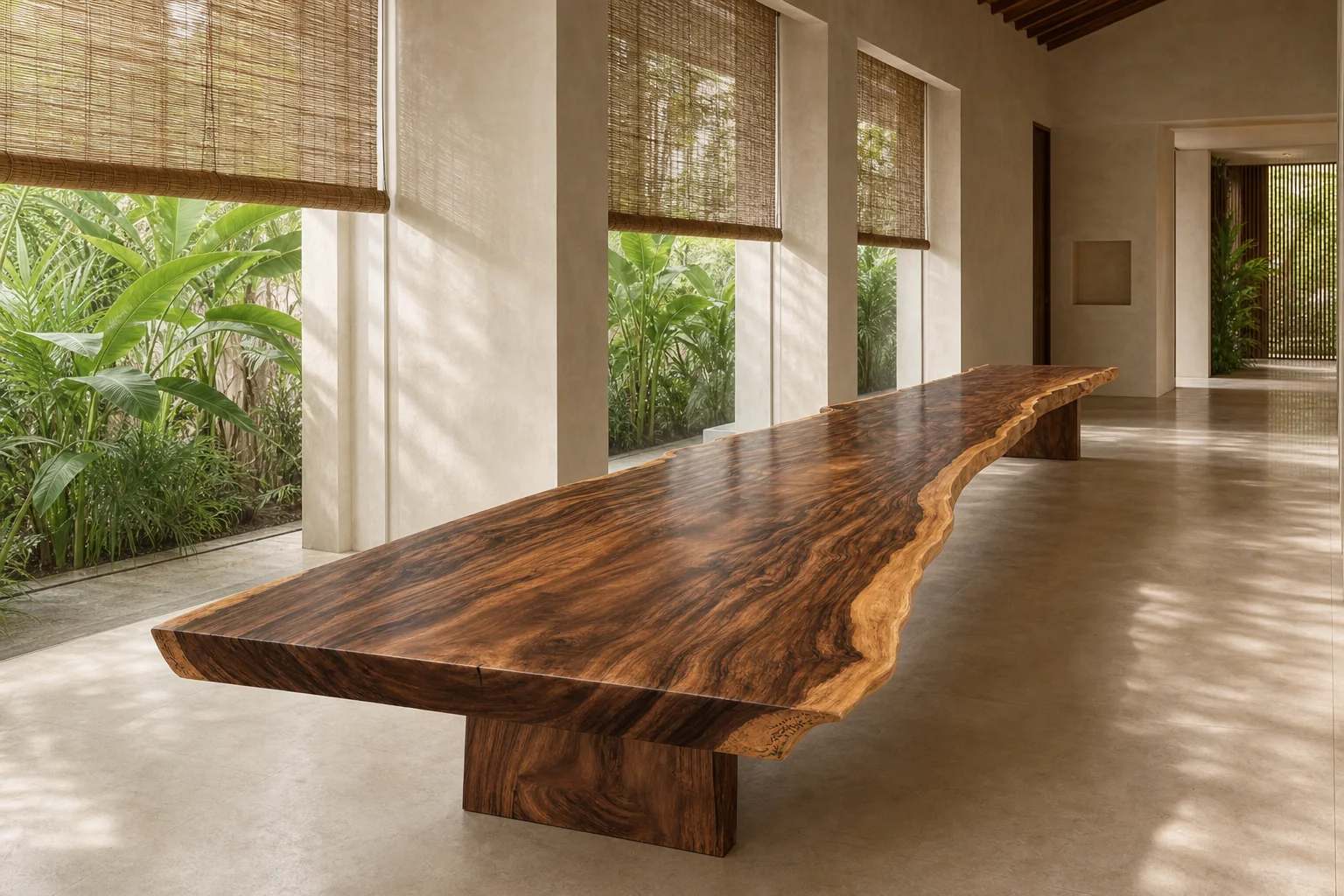
Teak furniture can be made accessible for hotels when accessibility is designed into the installed room rather than assumed from the timber alone. Solid teak can provide durable
Accessibility requirements vary by country, property type, renovation scope, and whether furniture is fixed or movable.
Teak furniture can support accessible hotel rooms when its design protects usable space and independent use rather than merely using a durable material. Designers should assess each item—bed, desk, chair, wardrobe, vanity, and luggage bench—against required clearances, heights, operable parts, stability, and contrast within the completed room.
Under the 2010 ADA Standards, accessible rooms require usable clear floor space and turning space; a 60-inch circular turning space is one recognized configuration. Furniture layouts must not reduce these areas or obstruct an accessible route, commonly 36 inches wide. A teak desk needs knee and toe clearance where required, while drawer pulls, wardrobe handles, and switches near furniture should remain reachable. The U.S. Access Board explains how clear floor and turning spaces are evaluated.
Hotels make teak furniture more accessible at scale by issuing a room-by-room specification, not by selecting a catalog item after layouts are finished. A shared brief should define critical dimensions, adjustable or replaceable components, finish expectations, quantities, mock-up approval, and installation responsibilities for guest rooms, public areas, and accessible routes.
The procurement schedule should identify whether each teak item is loose, wall-fixed, or floor-fixed; show its installed position; and state the clearance that must remain around it. Include drawings for accessible guestrooms, suites, reception areas, restaurants, and pool facilities rather than relying on a single typical room. Specify smooth, graspable pulls instead of small decorative knobs, stable chair and bench bases, protected edge profiles, and replacement parts. Coordinate the furniture schedule with the architect, accessibility consultant, operator, and housekeeping team before purchase orders are released.
Properly sourced and finished teak can be practical for high-use hotel settings, but durability does not excuse inaccessible detailing. Specify rounded edges, stable bases, easy-grip pulls, legible contrast where needed, and repairable components. The finish, joinery, moisture conditions, and cleaning method should be tested together before a property-wide order.
Teak's natural durability can suit hospitality use, especially where humidity, frequent cleaning, and luggage impact affect furniture. However, thick decorative plinths can reduce toe space, projecting handles can snag clothing, and dark wood against dark surroundings can make edges harder to distinguish. Specify construction that permits tightening, refinishing, and replacement without changing approved dimensions. For responsible purchasing, request origin and chain-of-custody documentation where relevant; FSC chain-of-custody certification describes how certified material is tracked through supply chains. Material due diligence remains separate from accessibility review.
Accessible teak furniture succeeds when hotels verify it in a full-scale room before production, then preserve the approved layout during installation and operations. A mock-up reveals reach, transfer, clearance, glare, and housekeeping conflicts that drawings miss. Record approved dimensions, tolerances, maintenance instructions, and replacement-part details in the hotel’s procurement file.
Build a representative guest-room mock-up using the proposed teak bed, desk, wardrobe, seating, and luggage bench, then test it with the door swing, bathroom approach, lighting, curtains, and service equipment in place. Measure clear floor spaces after installation, not only on shop drawings. Invite operations staff and an accessibility professional to document conflicts, including items likely to be moved by guests or housekeeping. The ADA Standards provide a useful reference in the United States, but local rules and project-specific obligations control elsewhere.
Not automatically. Teak is a material, not an accessibility classification. A teak bedframe, desk, or wardrobe becomes suitable only when its installed dimensions, adjacent clear floor space, hardware, strength, and placement meet the applicable hotel and jurisdictional requirements. Evaluate the finished room, including movable pieces, rather than approving furniture in isolation.
Start with local building and accessibility rules, then convert them into a furniture schedule listing installed heights, clear floor spaces, reach ranges, hardware force, stability, and anchoring needs. Include tolerances for site conditions and require a full-scale mock-up before releasing production. This gives the maker measurable acceptance criteria.
Teak can be a responsible hotel choice when purchasing teams request traceable origin documentation, confirm the supplier’s chain-of-custody claims where relevant, and match construction to the environment. Accessibility and responsible sourcing are separate checks: a responsibly sourced item may still fail clearance or reach requirements, while a compliant layout still needs documented material due diligence.
This resource provides general furniture-planning information, not legal or accessibility compliance advice. Hotels should confirm applicable national, local, brand, and project requirements with qualified professionals before procurement or installation.