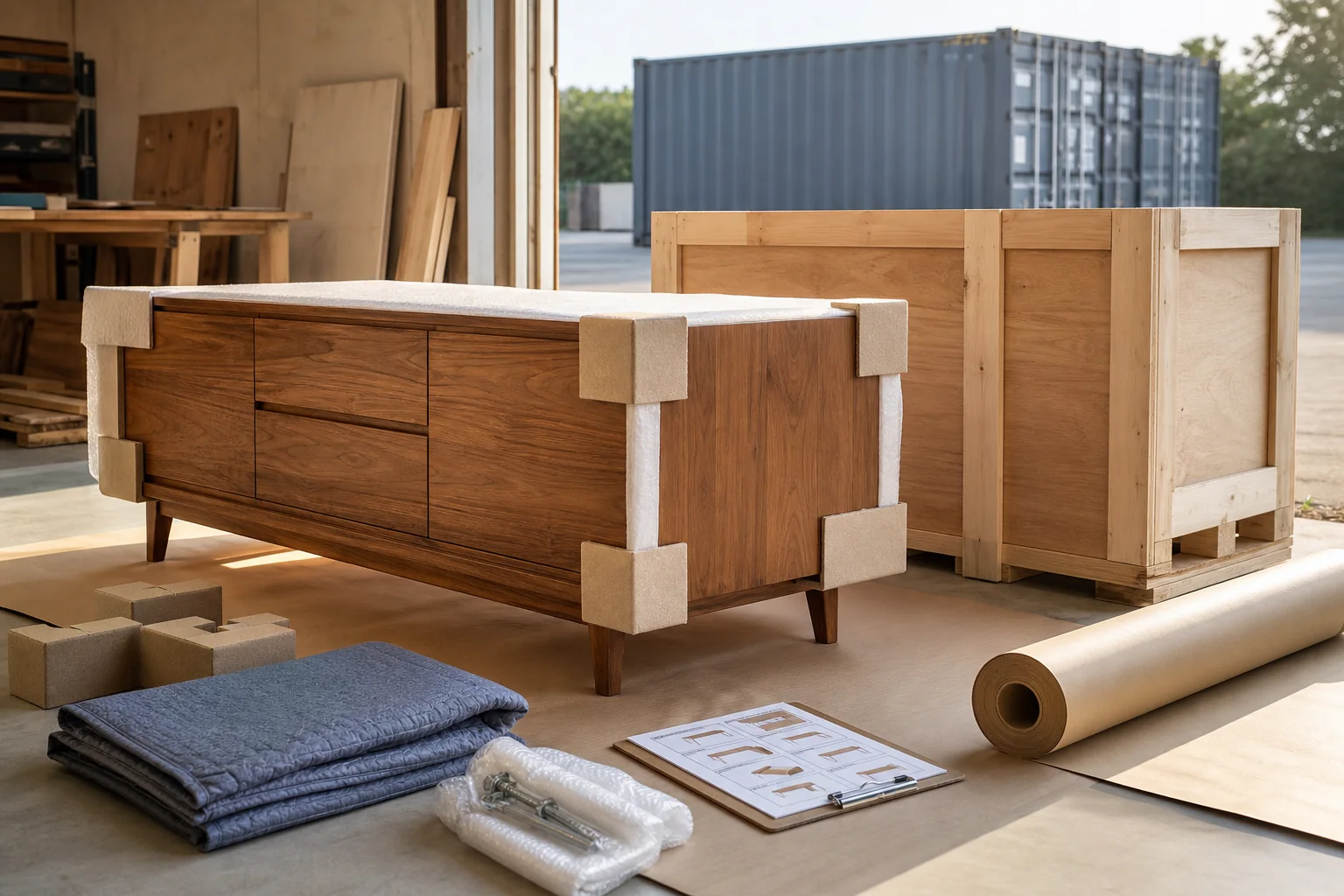
Teak furniture can be flat-packed for international shipping if the product is designed from the outset for disassembly. Removable components, repeatable hardware, labelled fittings, and rigid export packaging
Flat-packed does not simply mean unassembled: it means the furniture can be repeatedly taken apart and rebuilt without weakening its intended structure or damaging finished teak surfaces.
Teak tables, beds, shelving, and some seating can be flat-packed safely when their joints are intentionally demountable. Bolted rails, removable legs, connector plates, and captured fasteners work well. Permanently glued mortise-and-tenon frames generally should remain assembled because dismantling them can damage joints, finish quality, and long-term stability.
A maker should assess each model before quoting flat-pack export. Dining tables commonly separate into a top, legs, and aprons; platform beds can ship as headboard, footboard, side rails, and slats. By contrast, a fully glued teak armchair may be safer in one piece. Solid teak responds to changing humidity, so tolerances, washers, and clear assembly instructions matter. A 20-foot container and a 40-foot container provide very different consolidation options; the actual packed cubic volume, not the label alone, determines the useful freight comparison.
Flat-packed teak furniture should be wrapped to prevent abrasion, immobilized inside reinforced cartons or crates, and separated with protective layers between every finished component. Hardware belongs in labelled sealed packs. Pallets, braces, or crates made from solid wood may need ISPM 15 treatment and marks for many destination markets.
Export packing starts with dry, clean components and a finish that has fully cured. Use foam, corrugated board, corner guards, and moisture-resistant barriers so teak panels cannot rub during handling. Put bolts, dowels, and adjustment feet in a numbered pouch tied to the installation guide. The International Plant Protection Convention publishes ISPM 15 standards for regulated wood packaging material. Heat-treated pallets are often preferable to untreated timber supports, but import rules and carrier requirements should be checked for the named destination before loading.
{'type': 'table', 'caption': 'Core contents of an export flat-pack carton', 'headers': ['Packing element', 'Purpose'], 'rows': [['Surface separators', 'Prevent finish abrasion between teak parts'], ['Labelled hardware pack', 'Keeps assembly fittings complete and identifiable'], ['Corner and edge protection', 'Reduces impact damage during handling'], ['Assembly document', 'Supports accurate installation at destination']]}
International teak shipments usually require a commercial invoice, packing list, bill of lading or air waybill, and destination-specific customs information. Buyers should verify tariff classification, timber legality expectations, taxes, and local rules. Wood packaging compliance is separate from whether the finished teak furniture itself is admissible for import.
The importer of record should confirm requirements with a customs broker before production is finalized. Product descriptions should state the furniture type, quantity, country of origin, materials, and packed dimensions consistently across documents. For the United States, U.S. Customs and Border Protection provides importer guidance, while other markets apply their own tariff and documentary processes. Keep photographs of packed cartons, treatment marks when applicable, and final packing lists. These records help resolve inspection questions and make replacement-parts requests more precise after delivery.
A packing list should reconcile 100% of cartons, hardware packs, and loose components before a container is sealed.
Yes, many solid teak dining tables can ship flat-packed when the top, legs, and aprons use bolted or purpose-built detachable connections. The table should be designed for repeat assembly, with protected hardware and clear instructions. A glued base should normally travel assembled, because dismantling may compromise the joinery.
Often, yes. Reducing empty space can allow more pieces in a shipment and may lower freight cost per item. Savings depend on packed cubic volume, carton strength, destination charges, and assembly requirements. Request an assembled-versus-flat-pack packing comparison rather than assuming every knock-down design will be cheaper to ship.
ISPM 15 generally applies to certain solid-wood packaging materials, such as pallets, dunnage, and crates, rather than the finished teak furniture itself. Requirements vary by destination. Ask the exporter and customs broker whether packaging needs an approved treatment mark, and retain packing evidence for inspection or clearance questions.
Not necessarily. Properly engineered knock-down teak furniture can remain durable when connectors, joint geometry, and tolerances are matched to the load. Strength problems arise when a fixed-joint design is converted without redesign. Buyers should follow torque guidance, keep spare hardware, and avoid overtightening fittings that could compress timber fibers.
This resource provides general export-planning information, not customs, legal, phytosanitary, or freight-forwarding advice. Requirements can change by destination, shipment method, wood-packaging method, and importer status; confirm current obligations with qualified local professionals.