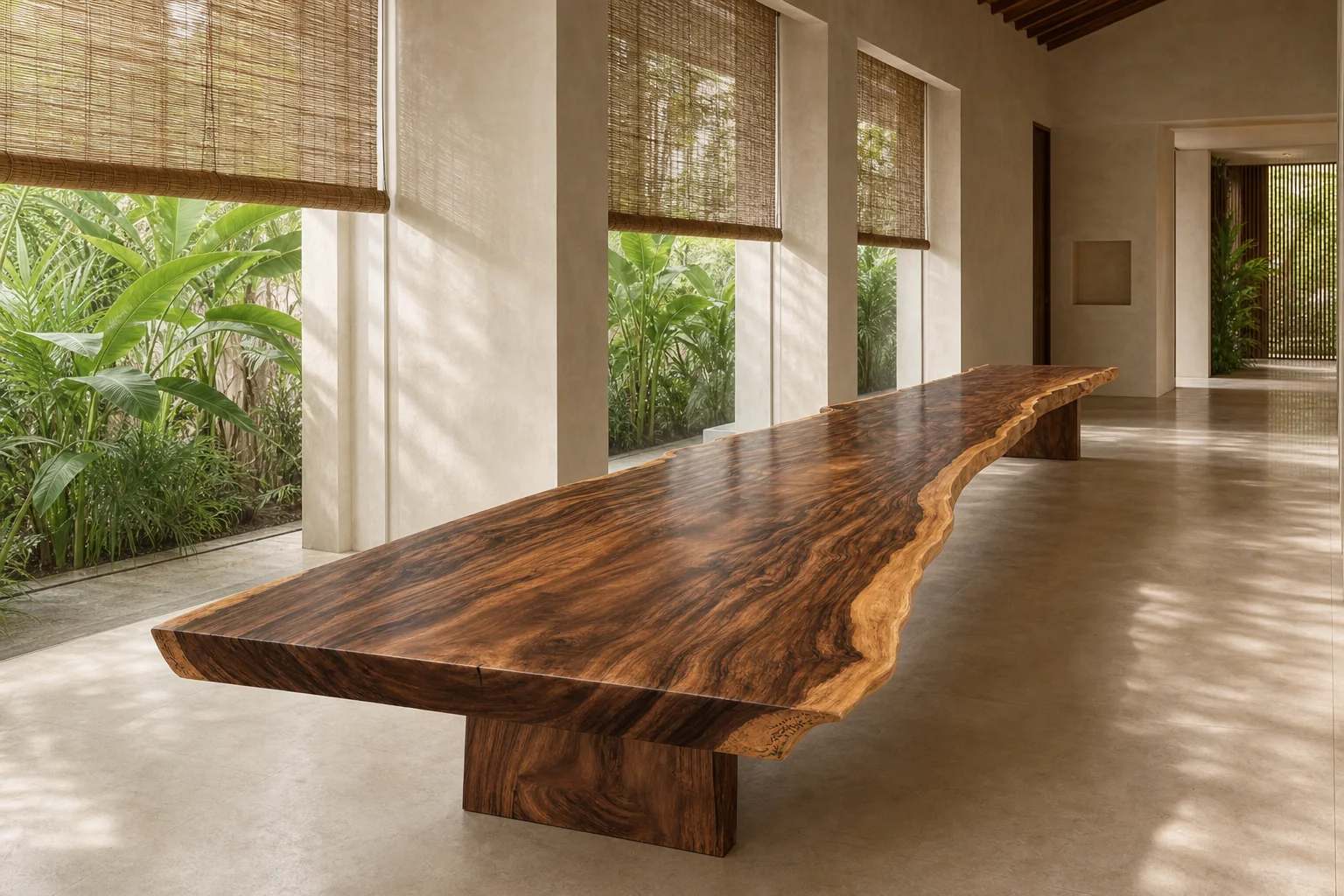
Teak furniture generally darkens indoors before it may lighten: its golden-brown surface matures into a deeper, warmer brown through oxidation and ordinary room light. The change is usually
Teak contains natural extractives and oils that help explain its durability, but they do not make the wood color-static. New solid teak from M Furniture & Decor, reclaimed teak, and veneer-topped pieces can each respond differently. The practical goal is consistency: manage direct light, choose a finish that matches the desired appearance, and avoid aggressive cleaning.
Color variation between boards and gradual surface change are normal characteristics of real teak, especially in sunlit interiors.
Teak usually darkens indoors because oxygen and low-level visible and ultraviolet light alter compounds at the wood surface. Fresh golden teak commonly develops a richer honey, amber, or medium-brown tone during its first months indoors. The pace varies with the board, finish, room brightness, and the furniture's prior exposure before delivery.
This early deepening is often called oxidation, although light exposure and surface chemistry act together. The USDA Forest Products Laboratory explains that wood surfaces can change color when exposed to light and air; teak is no exception. A clear lacquer, polyurethane, or hardwax oil may slow contact with the surface but cannot always stop visual maturation. Expect adjacent boards to change at slightly different rates, especially in a solid-wood dining table with varied grain and extractive content. Read the USDA Wood Handbook for broader wood-material guidance.
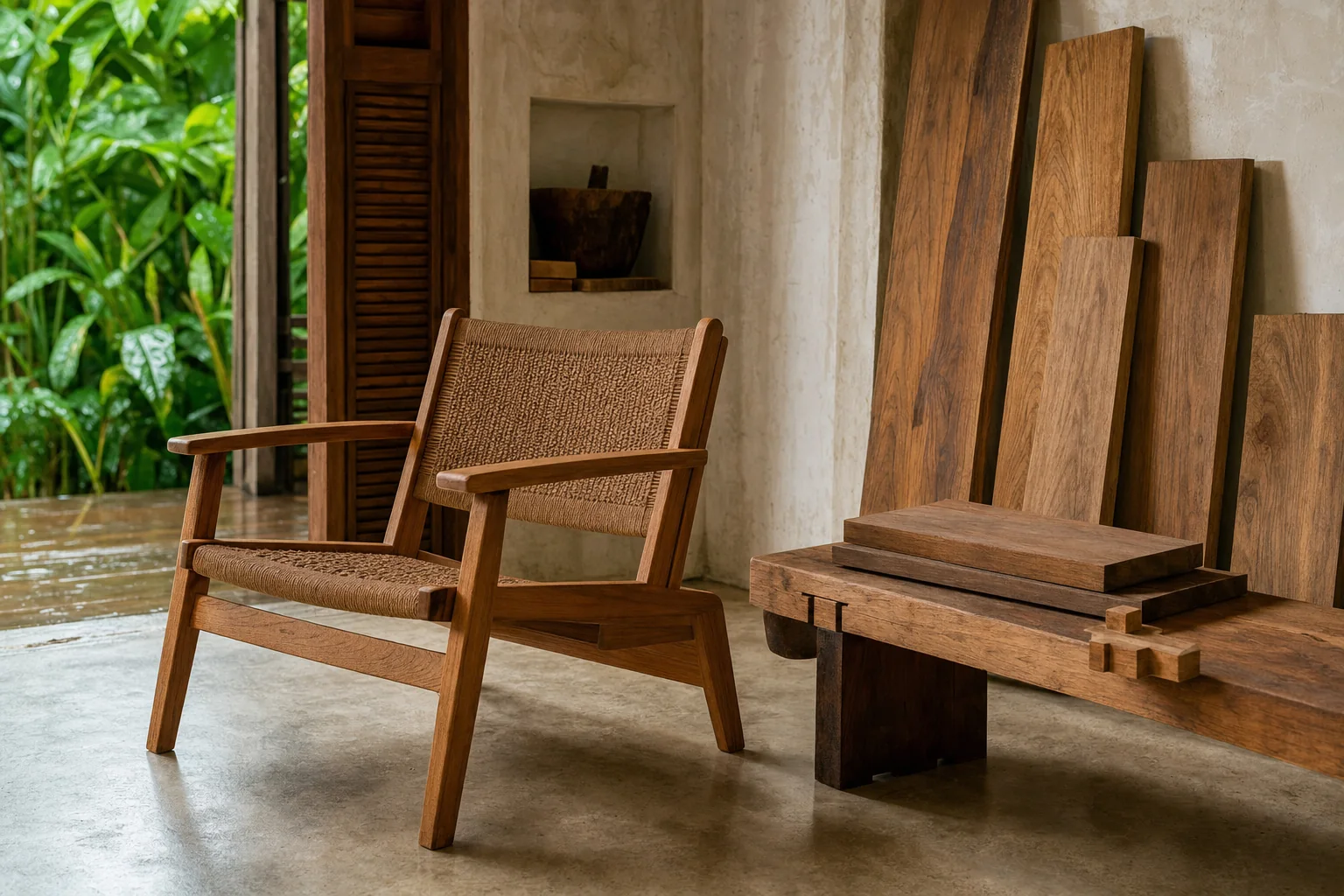
Yes, strong direct indoor sunlight can fade teak, reduce its warm surface color, or create uneven zones beneath objects and along window-facing edges. This is most likely near large unshaded windows. Indirect daylight usually causes gentler change, while blinds, UV-filtering film, and regular furniture rotation reduce contrast.
Darkening and fading can happen sequentially or in different places on the same cabinet. A sunlit arm may become drier-looking or paler while a shaded panel continues to deepen, leaving a noticeable boundary after several seasons. Move lamps, runners, and decorative objects periodically so covered areas do not remain markedly darker. Sheer curtains and UV-filtering glazing help moderate exposure without eliminating daylight. Avoid judging color after only a few weeks: seasonal changes in sun angle and daylight duration can alter the apparent result. Teak's baseline color and grain variation also affect the contrast described by The Wood Database.
To manage indoor teak color, place furniture away from persistent direct sun, rotate exposed surfaces, dust with a soft dry cloth, and use the finish specified for that piece. Clear coatings preserve a more uniform appearance, while oils can enrich color but require even, periodic application. Test any treatment on an inconspicuous area first.
For a natural, even patina, give the whole piece similar light exposure and clean spills promptly with a slightly damp, well-wrung cloth followed by drying. Do not use bleach, abrasive pads, or silicone-heavy polishes; they can alter sheen and complicate refinishing. If a finish is worn, consult the maker or a qualified furniture finisher before adding oil over lacquer or polyurethane. In commercial interiors, record the finish and maintenance date for each teak item. That simple practice helps facilities teams maintain consistency across tables, headboards, and lounge furniture over 12-month service cycles.
Most noticeable indoor teak darkening develops gradually over the first several months, then continues more subtly. There is no fixed timetable because daylight, window direction, finish, wood grain, and the furniture's previous storage conditions all matter. A bright room may show change sooner than a shaded, evenly lit room.
Teak is unlikely to develop the familiar silvery-grey outdoor patina in a normal indoor room. That grey appearance is associated with prolonged weather exposure, moisture, and strong ultraviolet light. Indoors, teak more often becomes amber or brown, although intense direct sun can fade it toward a lighter, less saturated tone.
Oil can enrich teak's warm color and refresh a dry-looking surface, but it does not permanently lock the color in place. Use oil only when it suits the existing finish and the maker's care instructions. Applying oil over a sealed lacquer or polyurethane finish can produce uneven sheen or adhesion problems.
Often, yes. Mild uneven fading may become less obvious after light exposure is equalized over time. More pronounced fading can require careful cleaning, light sanding, and refinishing by a qualified professional. Confirm whether the piece is solid teak, veneer, oiled, or sealed before sanding, because each construction needs different treatment.
This resource is educational guidance from M Furniture & Decor. Wood color change varies by species selection, finish, light exposure, construction, and site conditions; follow the care instructions supplied with your individual furniture piece.