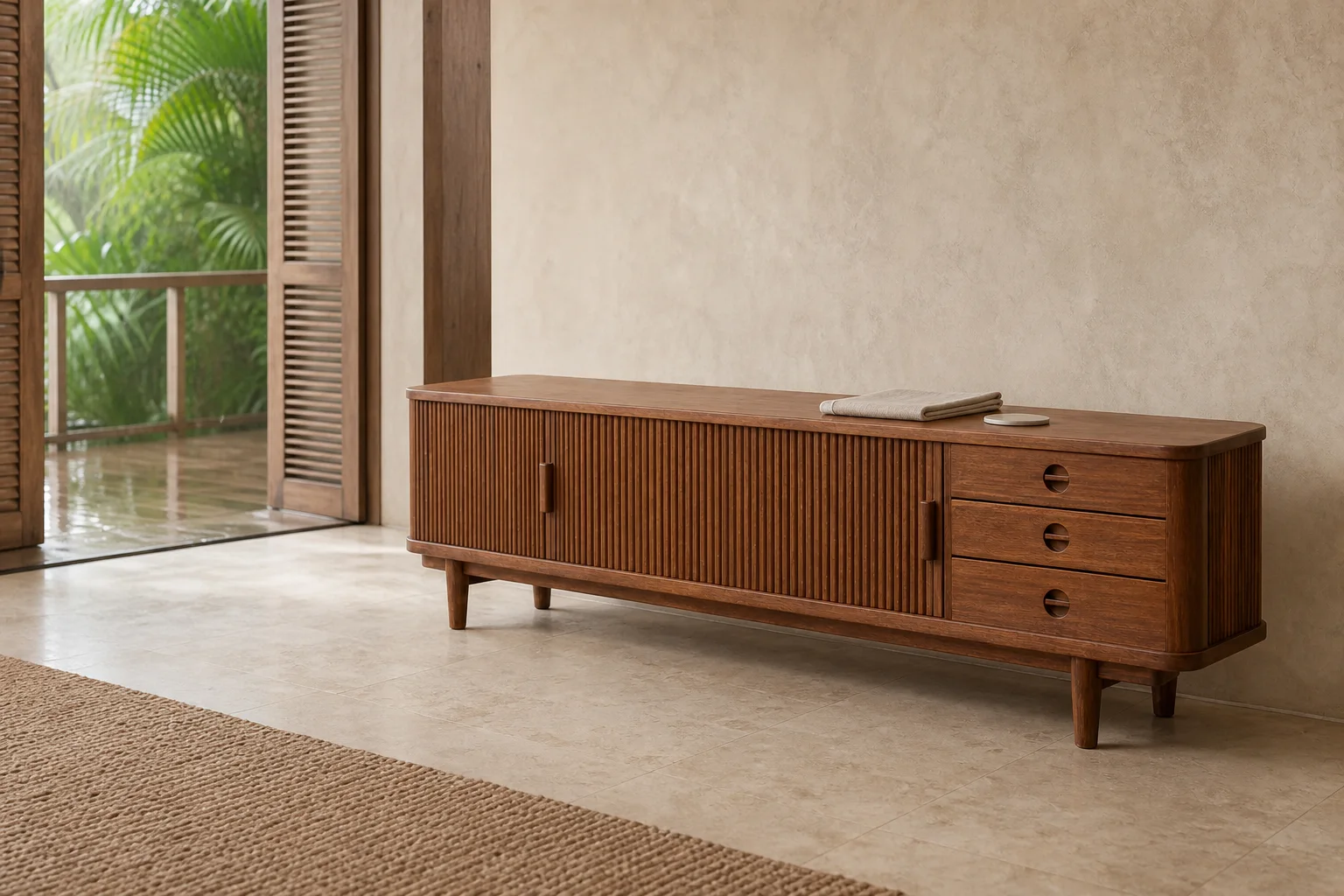
Yes, teak furniture can receive a custom stain without concealing its grain when the color is transparent and the surface is prepared for teak’s natural oils. M Furniture
Yes—custom staining can preserve teak’s grain because transparent colorants settle into or tint the wood without creating an opaque surface layer. Results depend on moisture content, sanding, oil removal, and finish choice. A furniture maker should prepare sample boards from the same teak stock before approving the final color.
Teak, or Tectona grandis, contains natural extractives that help explain its weather resistance but can make coloring less predictable. The USDA Forest Products Laboratory Wood Handbook explains how wood properties and finishing practices affect appearance and performance. For custom work, the reliable process is not choosing a stain from a chart; it is approving a dried, finished sample made from the selected boards and intended topcoat. This step reveals board-to-board variation before production begins and prevents avoidable color surprises.
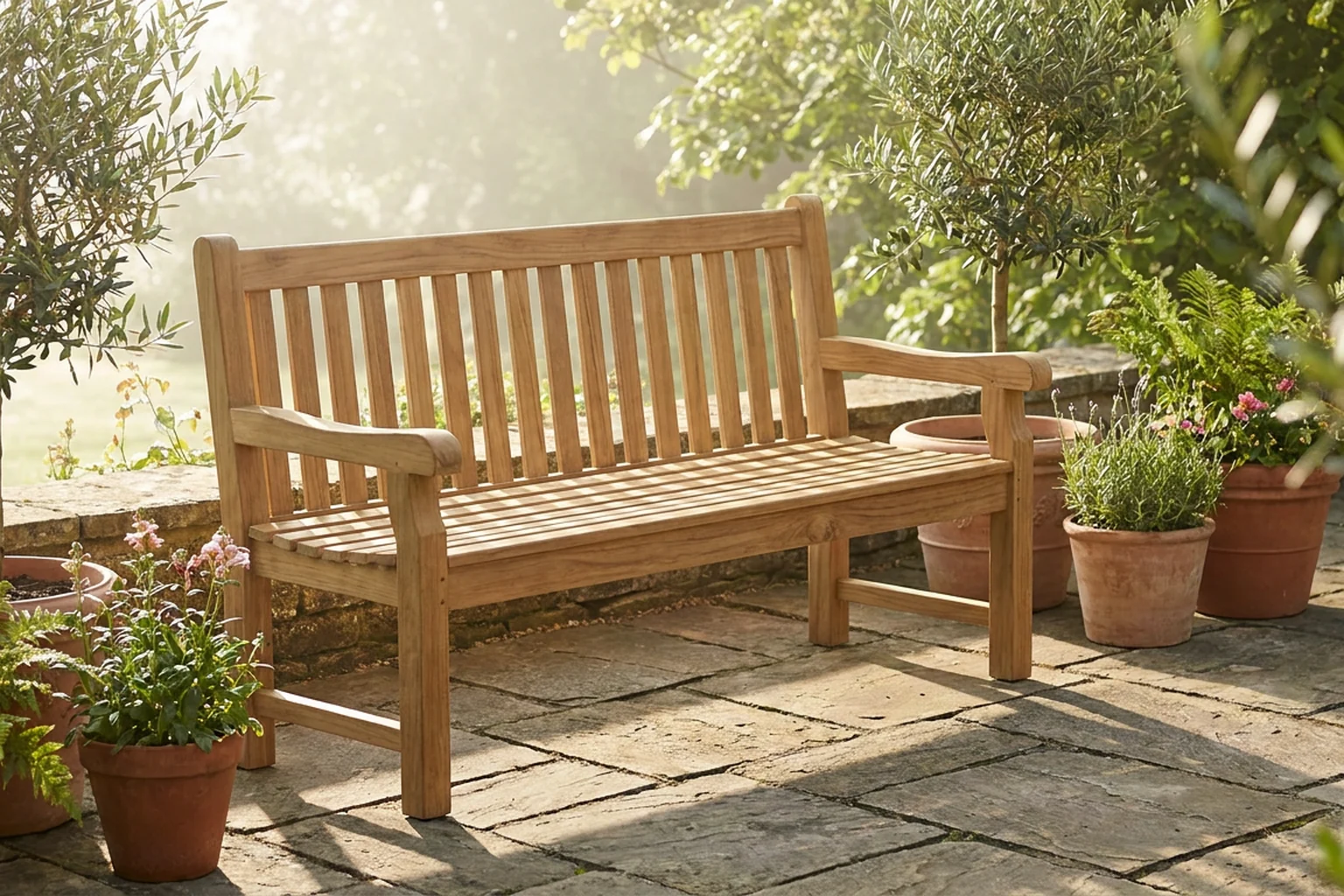
Transparent dye, wiping stain, and a tinted oil finish can all leave teak grain readable, but they create different color depth and uniformity. Dye changes wood color with little surface buildup; pigment adds contrast; oil warms tone while offering limited color control. Choose only after matching samples to the intended indoor or covered-outdoor use.
Ask for three labeled options: a dye sample, a lightly pigmented wiping-stain sample, and a clear-finished control. Compare them under the room’s lighting after the protective coat has dried. The Forest Products Laboratory guidance on finishing wood is useful context for evaluating color, surface preparation, and topcoat compatibility. For exterior exposure, discuss ultraviolet light and maintenance separately; a stain that looks transparent indoors may weather differently outdoors. That comparison makes the specification clearer for both buyer and maker.
Prepare teak by sanding consistently, removing dust, and addressing surface oil according to the chosen finish system before applying color. Apply thin, even coats, wipe excess when the product calls for it, and let each sample cure fully. A compatible clear finish protects the stain while allowing the pores and grain to remain visible.
Use the product manufacturer’s written instructions for cleaners, reducers, dry time, and topcoat pairing; mixing systems without confirmation can cause adhesion or color problems. A practical sequence is 120- to 180-grit final sanding, dust removal, a test application, and a clear finish after the stated cure time, often 24 hours or longer as the label directs. Minwax preparation guidance likewise emphasizes clean, sanded wood. Inspect samples in daylight and warm interior lighting before the client signs off.
Oil-based wiping stains and transparent solvent- or water-based dyes are usually appropriate when they are tested on the actual teak used for the piece. Dyes generally emphasize figure with less pigment buildup. A clear topcoat can protect the color, but should remain thin enough not to make the surface look cloudy.
Teak’s natural oils and extractives can limit consistent absorption and reduce finish adhesion, especially on freshly machined surfaces. Sand evenly, remove sanding dust, and wipe the surface with a compatible cleaner as specified by the finish manufacturer. Let test panels dry fully before assessing shade, rub resistance, and sheen.
Opaque paint, solid-color stains, heavily pigmented gel stains, and thick tinted lacquer can obscure teak’s pores and figure. Their suitability is aesthetic rather than technical, but they do not meet a grain-visible brief. Ask the maker for a labeled control sample showing bare teak, stained teak, and the final protective finish.
M Furniture & Decor makes custom teak furniture. Finish appearance varies with teak stock, lighting, application method, use conditions, and the selected coating system; approved physical samples should govern production expectations.