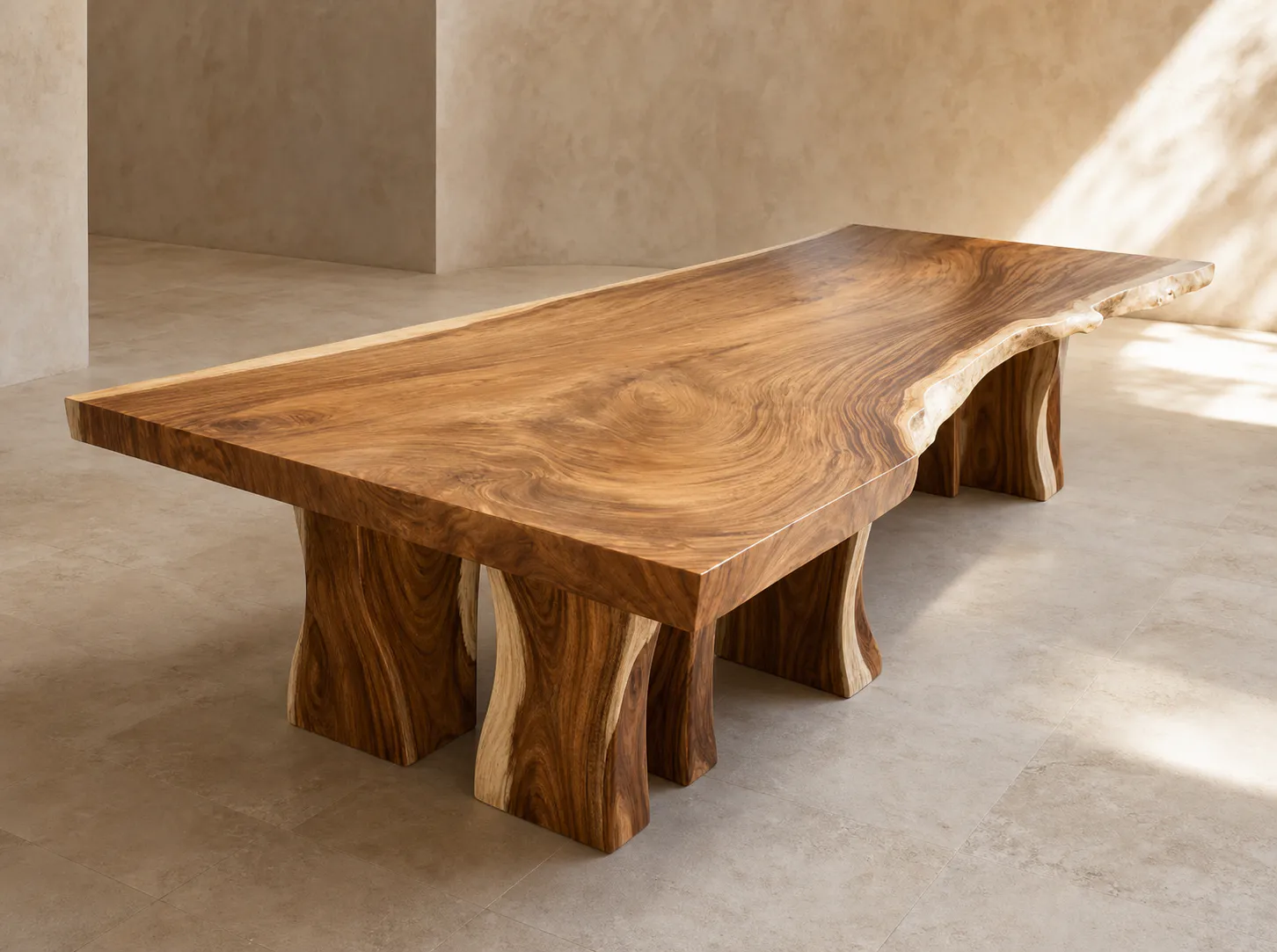
Teak furniture can crack in a centrally heated home, although teak's natural durability and comparatively stable movement help it tolerate seasonal change. The risk rises when heating causes
Teak can crack in centrally heated homes because dry heated air lowers wood moisture content faster than its surface and core can equalize. Most damage is shallow checking, but severe or prolonged dryness can open splits and loosen joints. Keep indoor relative humidity near 40–55% and avoid direct heat.
Wood is hygroscopic: it exchanges moisture with surrounding air until it approaches an equilibrium moisture content. When a home shifts quickly from humid conditions to dry winter heating, the outer fibres shrink first; restrained movement can produce checks along the grain. The USDA Forest Products Laboratory Wood Handbook explains why shrinkage varies by grain direction, so wide solid-teak panels deserve more seasonal movement allowance than engineered panels. That behaviour is material science, not necessarily a manufacturing defect.
{'type': 'image', 'src': 'https://mfurniturethailand.com/images/resources/teak-furniture-humidity-check.jpg', 'alt': 'Teak furniture showing a small seasonal surface check in a heated living room', 'caption': 'A fine surface check can result from a rapid change in indoor humidity.'}
Prevention centers on slowing moisture swings rather than sealing teak completely. Maintain room relative humidity near 40–55%, keep furniture clear of radiators and forced-air registers, and let newly delivered pieces acclimate before use. A hygrometer identifies dry spells early, while modest, gradual humidification is safer than abrupt humidity changes.
Place a hygrometer at furniture height and record readings for 7–14 days during the heating season. If levels remain below 40%, use a correctly sized humidifier and follow its cleaning guidance; condensation, mould, and excessive humidity create different risks. Leave clearance around all sides of a sideboard or table, never rest it against a warm exterior wall, and avoid routing a heat register directly beneath it. The Canadian Conservation Institute advises stable environmental control for wood-based collections.
Avoid sudden changes. Raising relative humidity gradually is preferable to exposing a dry teak piece to intense moisture over a short period.
Small seasonal checks often need observation, not immediate filling. First remove the teak piece from direct heat and stabilize humidity for several weeks; some gaps narrow as moisture equalizes. Seek a cabinetmaker or conservator when a split grows, crosses a joint, catches on use, or affects structural stability.
Document the crack with dated photographs and measure its width before applying a repair product. Avoid rapid rehumidification, wet cloths, or household oils: uneven absorption can stain teak or worsen stress. After the indoor climate is stable, a professional can assess whether a reversible fill, edge gluing, veneer patch, or joint repair is appropriate. The Wood Handbook notes that wood movement follows moisture-content change, which is why treating the room comes before cosmetic repair.
Teak is dimensionally stable compared with many hardwoods, but stability is not immunity. Central heating can still create a large moisture gradient, especially beside radiators, fireplaces, or supply registers. A fine surface check may be seasonal; a widening crack, raised edge, or moving joint warrants inspection and humidity correction.
Use a reliable hygrometer in the room, not directly beside a vent. Aim for roughly 40–55% relative humidity, introducing humidification gradually if readings stay low. Avoid placing teak within direct airflow from radiators or forced-air outlets, and allow new furniture to acclimate indoors before judging movement.
Do not flood a crack with oil, wax, or water; these treatments cannot restore lost moisture evenly and may complicate repair. Move the piece away from heat, stabilize room humidity, and photograph the gap over several weeks. Consult a qualified furniture conservator or cabinetmaker if a joint opens or the split deepens.
This guide provides general furniture-care information from M Furniture & Decor. Conditions, construction methods, finishes, and existing damage vary; consult a qualified conservator or cabinetmaker for structural repairs.