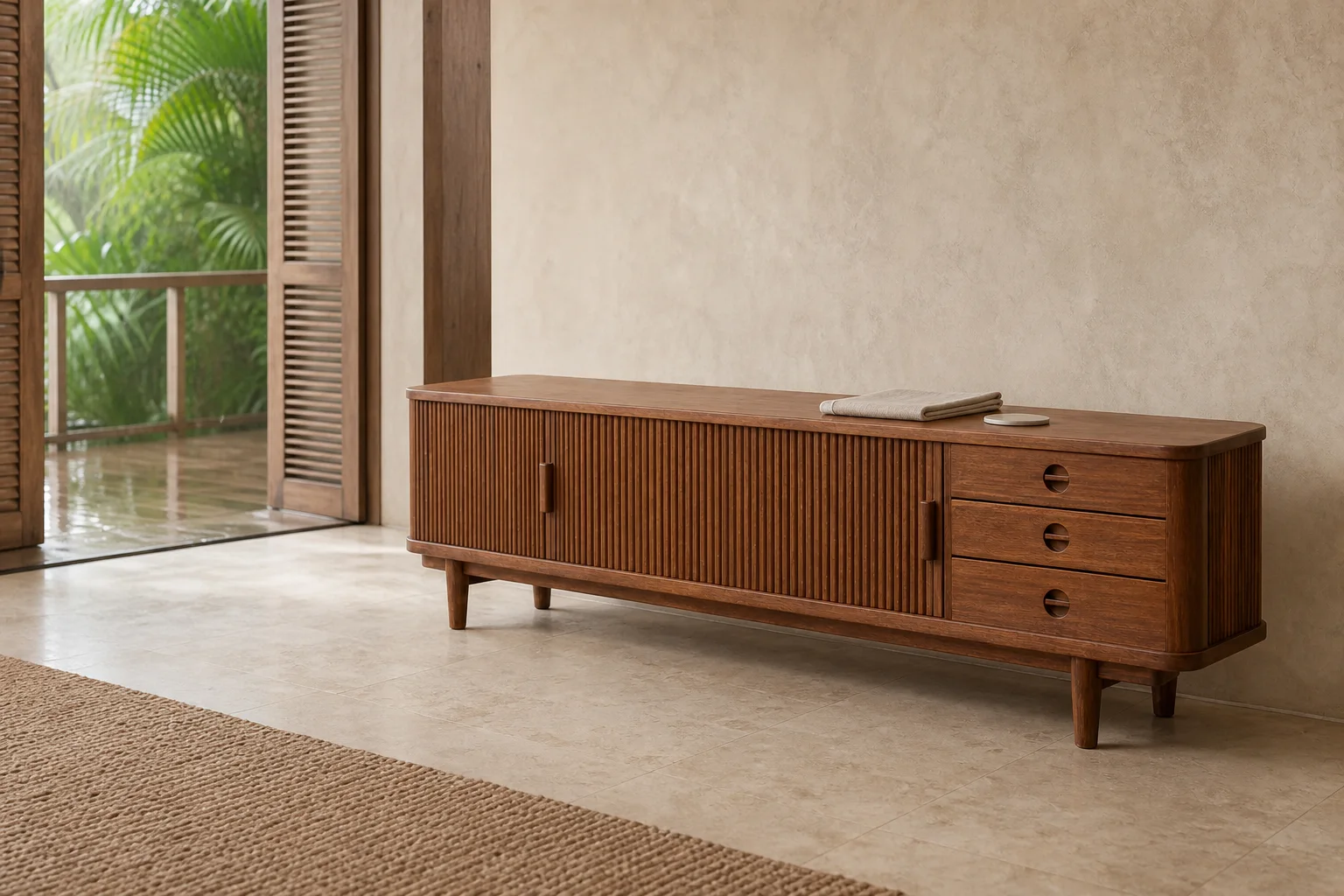
A breathable, exterior-grade penetrating oil is usually the most practical teak finish for humid climates because it is easier to renew after wet weather than a rigid surface
Finish cannot compensate for pooled water or poor airflow. Keep teak furniture elevated, uncovered long enough to dry after rain, and clear debris from joints.
A breathable, penetrating oil formulated for exterior hardwood is usually the most practical teak finish in humid climates. Unlike a thick surface film, it allows moisture exchange and can be spot-renewed. Choose products with UV absorbers and mildew resistance, then maintain them on a schedule shaped by rainfall, exposure, and cleaning.
Teak contains natural extractives, but they do not eliminate the wet–dry cycling found in monsoon and coastal settings. The USDA Forest Products Laboratory explains that wood changes dimension as moisture content changes; a flexible finish reduces rather than stops that movement. Penetrating oils leave little brittle film, so they are simpler to refresh after rain marks. For exposed pieces, select a manufacturer-labelled exterior oil with pigment or UV absorbers; clear oils slow weathering less. Clean with a mild wood cleaner, let teak dry fully, and apply thin coats rather than flooding joints.
Film-forming marine varnish, polyurethane, and lacquer can look polished initially, but they are rarely the lowest-maintenance choice for teak in constant humidity. When moisture enters through a scratch, seam, or fastener hole, the coating can blister or peel. Use them only when sheltered placement and disciplined inspection are realistic.
Surface coatings are more vulnerable at screw holes, end grain, and moving joints. USDA guidance on exterior finishes notes that ultraviolet light and moisture degrade finishes outdoors; humid weather prolongs wetness after that damage begins. Marine varnish is reasonable for a decorative indoor table or a genuinely protected veranda, provided every edge is sealed and repaired fast. It is a poor fit for poolside loungers or dining tables left through tropical downpours. Silicone sealers and opaque paint also complicate later refinishing, because they can interfere with adhesion or conceal moisture-related checking.
Preparation determines whether an oil finish performs well in humidity. Start with dry, contaminant-free teak, sand only enough to remove raised grain, and keep finish out of gaps designed to drain. Thin, even coats and adequate cure time reduce tackiness, water spotting, and the risk of mildew feeding on trapped dirt.
Before finishing, move furniture under cover and check moisture with a meter when possible; applying oil after a rain can lock in a blotchy appearance. Brush or wipe in the direction of the grain, wait only as long as the label specifies, then remove excess from the surface and joints. The EPA’s moisture-control guidance supports the same principle: mold prevention begins with controlling moisture, not coating over it. Use raised feet, breathable covers, and clear drainage around patios. Inspect monthly during the wet season for pooled water, sticky residue, or dark growth.
Re-oil teak when water no longer beads briefly, the surface looks dry, or cleaning exposes uneven color—not simply by calendar. In rainy, uncovered locations this may be every 3 to 6 months; covered furniture often needs less. Wash, dry completely, and test a small area before applying a thin maintenance coat.
Yes, but indoor teak usually benefits from a low-odor hardwax oil or a clear furniture oil rather than a heavily mildewcidal exterior formula. Humidity still matters near open windows and kitchens. Confirm the product's intended use, allow full cure, ventilate the room, and protect surfaces from standing water and hot items.
No finish can guarantee that teak will not develop surface mold in humid weather. Mildew resistance helps, but drainage, airflow, regular cleaning, and keeping cushions dry matter more. Remove organic debris from joints, address black spotting promptly with a teak-safe cleaner, and avoid harsh chlorine bleach, which can damage wood fibers and nearby metal hardware.
This resource provides general teak-care information. Always follow the finish manufacturer’s label, test products on an inconspicuous area, and seek professional advice for valuable, damaged, or commercial furniture.