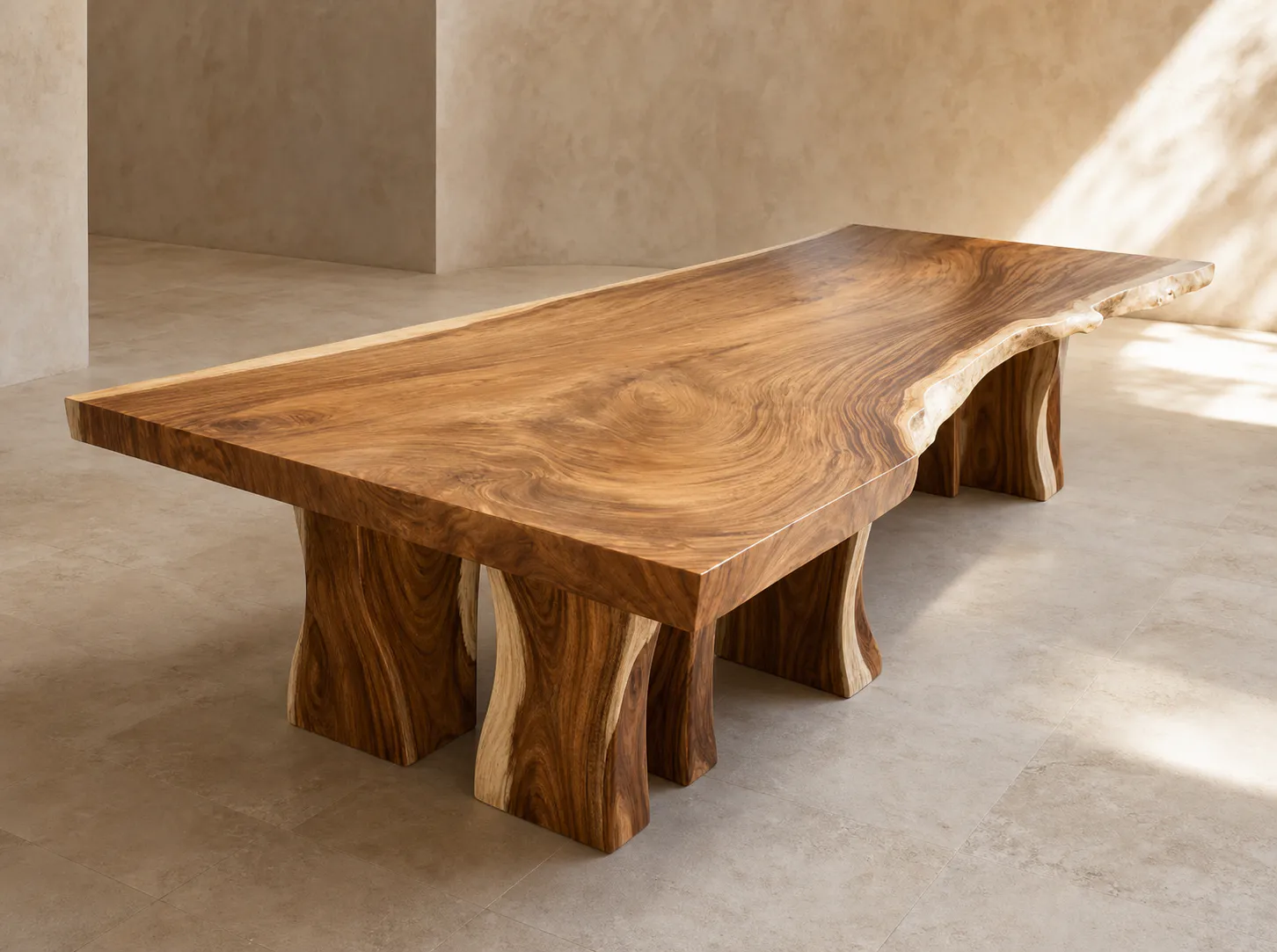
Teak is expensive relative to many furniture woods, but the useful comparison is a fully specified piece rather than a species label. A solid teak dining table with
Ask for a written specification that names the species, identifies solid wood versus veneer, and separates product cost from packing, freight, insurance, and duties.
Teak costs more chiefly because supply is constrained while buyers value its natural oils, weather resistance, stability, and recognizable grain. Legitimate sourcing, longer rotations, careful drying, and waste during milling add cost. Premium pricing is not automatic proof of quality; species identity, provenance, and construction still require verification.
True teak is *Tectona grandis*, not a generic color or finish. Its oils and dimensional stability support outdoor use, but no timber is maintenance-free. The USDA Forest Products Laboratory wood handbook describes teak among woods with recognized decay resistance. Supply also carries compliance costs: CITES placed *Tectona grandis* in Appendix II effective 2022 for specified timber forms, so cross-border documentation matters. Plantation, reclaimed, and old-stock material can differ substantially in grain, dimensions, legality evidence, and price.
Teak furniture can justify a higher purchase price when it is solid Tectona grandis, responsibly documented, properly dried, and built with durable joinery. It is less compelling when the premium pays only for a label. Compare like-for-like specifications, expected service conditions, repairability, and delivered cost before deciding.
Ask the seller to identify *Tectona grandis* clearly, state whether each visible component is solid wood or veneer, and provide origin and invoice details. For outdoor pieces, inspect joinery, drainage, hardware, and board movement rather than relying on photographs. Request a moisture-content reading appropriate to the destination climate; 8–12% is often cited for interior woodworking, but target levels depend on local equilibrium moisture. FSC chain-of-custody information can support, not replace, transaction records. Separate product, packing, insurance, and freight charges to compare delivered quotations accurately.
Usually, yes, but comparisons need matching specifications. White oak, acacia, eucalyptus, and ash vary by region, thickness, finish, and construction. A thin teak veneer table may cost less than a heavy solid-oak table. Compare the species, solid-wood content, dimensions, joinery, warranty, and shipping terms—not the wood name alone.
Plantation teak can be less expensive, especially when trees are younger and boards are smaller or more uniform. That does not make it inferior by default. Price still reflects drying, grading, defects, joinery, finish, legal documentation, transport, and labor. Ask for the species, origin, board construction, and care requirements before comparing quotes.
Start with a written specification rather than a showroom impression. Confirm solid teak versus veneer, wood thickness, moisture conditioning, joinery, hardware, finish, source documents, and total delivered price. Obtain photographs of end grain and underside details, then compare at least two comparable quotations. A low initial price can omit packing, duties, or after-sales support.
M Furniture & Decor manufactures teak furniture. This guide is educational and does not replace independent timber verification, import advice, or a written supplier contract.