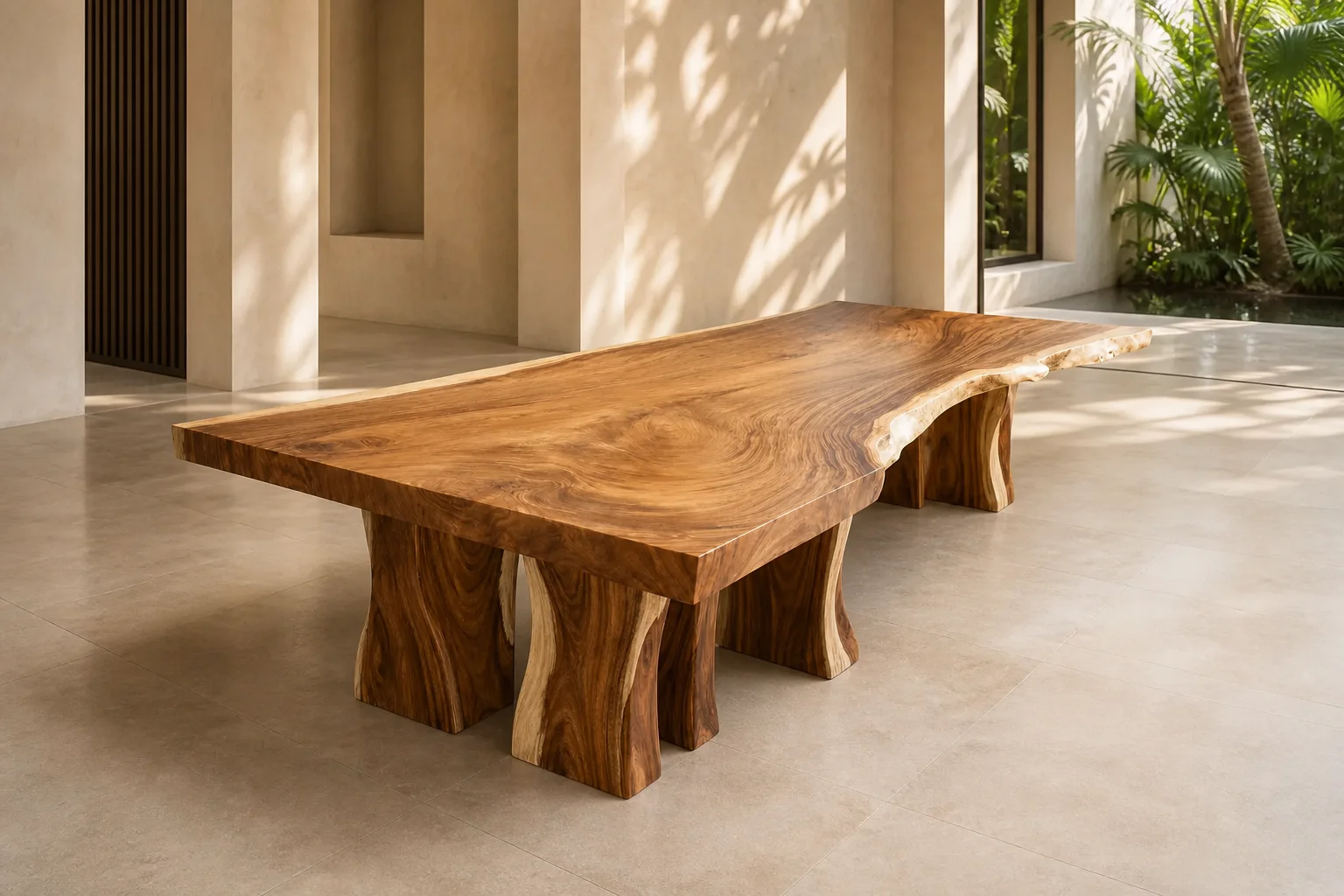
A teak end table gives a chair, sofa, terrace lounger, or bedside a durable surface for drinks, lighting, and everyday objects. Teak usually refers to *Tectona grandis*, a
For a usable side-table layout, keep the tabletop close to the adjacent arm height and leave enough clearance to move around the seating area comfortably.
Choose a teak end table by matching its height to nearby seating and allowing enough surface area for a lamp or drink. Confirm it uses solid teak, inspect leg stability and joinery, then specify an indoor or outdoor finish that fits the table’s exposure and care needs.
Start with proportion. For a sofa or lounge chair, a tabletop within about 2 inches, or 5 centimeters, of the arm height is generally comfortable to reach. A compact 16- to 20-inch tabletop suits a drink and book; a larger lamp needs more area. Check that legs sit flat, joints are tight, and the table does not rack when gently pressed from the side. The USDA Wood Handbook explains why wood movement and construction details matter in service.
Teak is a practical end-table material when the design uses durable heartwood, sound construction, and a finish matched to the setting. Its naturally oily wood and dimensional stability support indoor use and covered or open-air outdoor use, while direct weathering changes color and increases the importance of routine cleaning and inspection.
Teak performs capably in changing humidity, which makes it useful beside indoor upholstery and in outdoor seating zones. Outdoors, rain, ultraviolet light, dirt, and standing water still affect the surface. Expect unfinished teak to develop a silver-gray patina rather than retain its fresh golden-brown color indefinitely. Confirm the botanical material when specifications matter: Royal Botanic Gardens, Kew identifies *Tectona grandis*. Design details such as raised feet, drainage, and airflow help prevent moisture from lingering at contact points.
To maintain a teak end table, clean off dust and spills with mild soap and water, then dry it thoroughly. Leave unfinished outdoor teak alone if a silver-gray patina is acceptable, or use only a compatible protector after testing a hidden area and following the manufacturer’s instructions.
Clean gently rather than aggressively. Use a soft brush or cloth, diluted mild soap, and clean water; then allow the wood to dry before covering or placing objects back on it. Avoid pressure washing, harsh bleach, and oily household polishes, which can roughen fibers or create inconsistent patches. For indoor tables, promptly remove drink rings and use coasters. For exterior pieces, inspect joints and feet at least twice yearly. The USDA Forest Products Laboratory provides technical context on wood properties and moisture-related performance.
Responsible teak purchasing starts with traceability: ask for the botanical species, country of harvest, supplier documentation, and the chain of custody relevant to your project. For commercial orders, record moisture expectations, dimensions, finish, packaging, and replacement terms alongside legal import requirements that apply in the destination market.
Request clear answers before comparing prices. Ask whether the top, apron, and legs are solid teak; whether any panels use veneer or engineered cores; and how the maker manages grain matching and movement. For hotel, restaurant, and export projects, retain species declarations, invoices, packing lists, and applicable compliance records. Trade rules can change by market and species listing, so consult the CITES Species Database and local import guidance. A written specification reduces ambiguity across samples, production, delivery, and aftercare.
Teak performs well outdoors because its heartwood contains extractives that contribute to durability, but no wood is maintenance-free. Use a table designed for exterior exposure, provide drainage and airflow, and clean it gently. Sun typically shifts exposed teak toward a silvery gray surface color over time.
Measure from the floor to the arm or seat cushion before ordering. A practical teak end table usually sits within about 2 inches, or 5 centimeters, of the adjacent arm height, so a drink or reading lamp is easy to reach without visually crowding the seating.
Solid teak is wood cut from teak lumber rather than a thin decorative veneer over another core. Ask the seller to identify the species, construction, and any engineered components. A veneer-topped table can be appropriate indoors, but it will not have the same sand-through repair margin.
Clean a teak end table with a soft brush or cloth, mild soap, and water, then let it dry completely. Avoid pressure washing, harsh bleach, and oily household polishes that can leave uneven residue. For outdoor pieces, follow the maker’s finish guidance before applying sealers or oils.
This resource is published by M Furniture & Decor, a Thai teak furniture maker. Product suitability, import requirements, and care methods should be confirmed for the specific table, finish, location, and destination market.