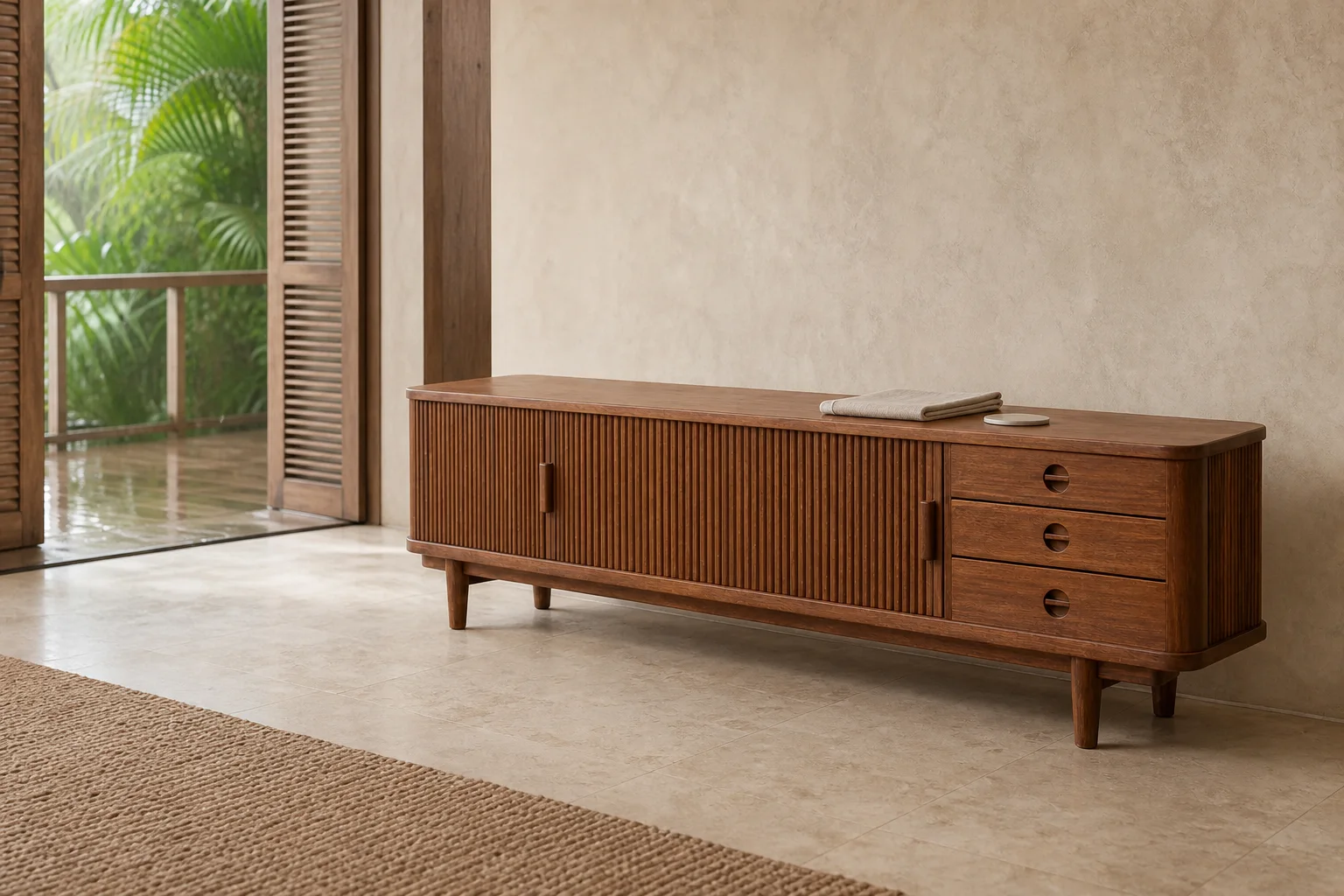
A solid teak dining table can generally be refinished later, often more than once when work is conservative. Teak is valued for its durability and dimensional stability, but
Before sanding, inspect an inconspicuous underside or extension-leaf edge. Long-grain wood continuing through the edge usually suggests solid timber; a thin decorative face over a different core may indicate veneer.
Most solid teak dining tables can be refinished because minor stains, dullness, and shallow scratches sit near the surface. Refinishing is less predictable on teak veneer, tables with deeply weathered edges, or pieces with loose joints. Identify the construction and finish before choosing sanding, stripping, oiling, or sealing.
Check the underside, leaf edges, and around hardware before starting. Continuous end grain and matching wood through an edge are useful signs of solid construction, while a thin face layer or repeating grain can signal veneer. The USDA Forest Products Laboratory Wood Handbook explains that finishing performance depends on wood, surface preparation, and coating compatibility. Deep black water marks, open cracks, failed glue joints, or warped tops require repair before cosmetic work. If a table has been aggressively sanded before, a furniture conservator can assess remaining material without risking a sand-through.
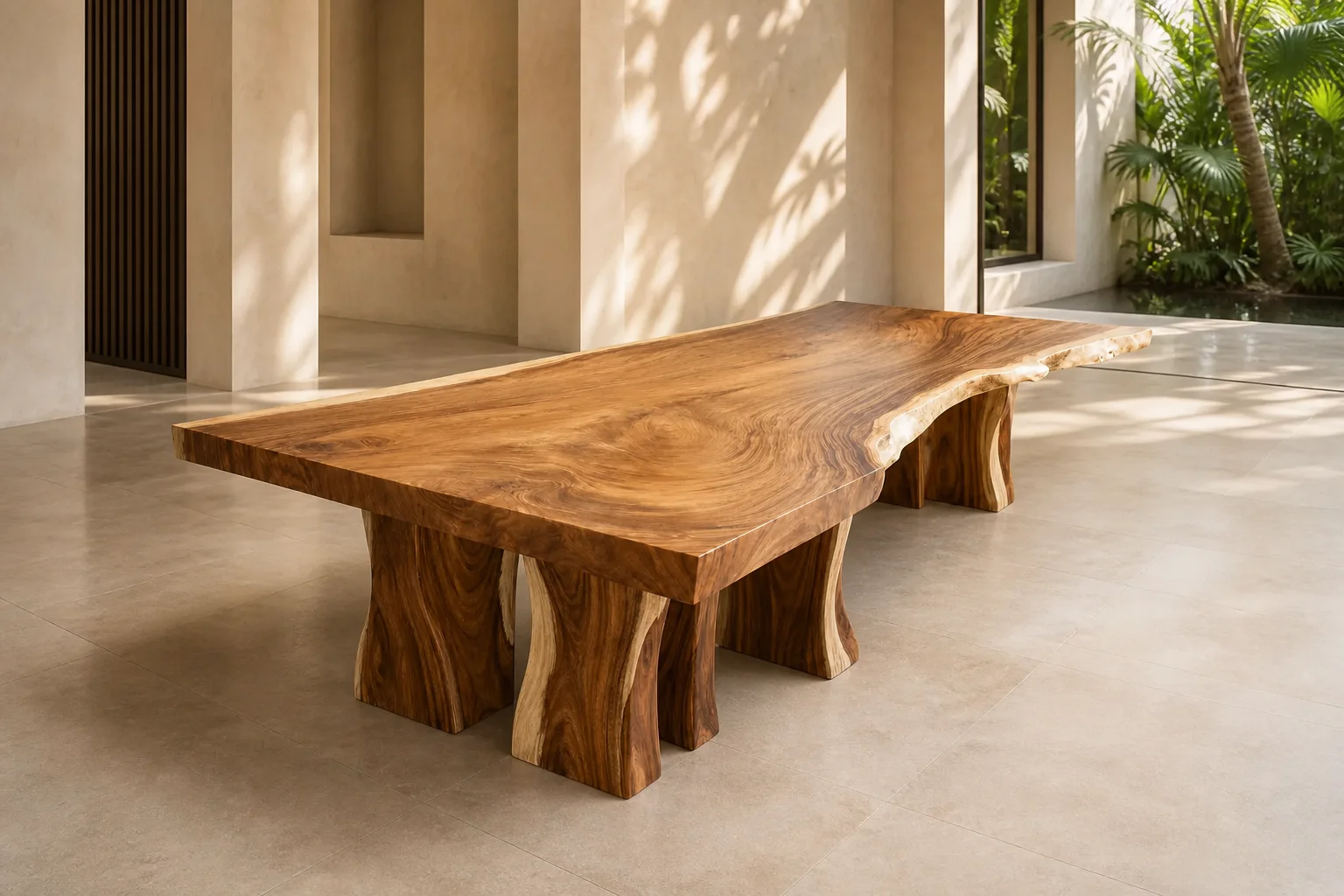
The safest solid-teak refinishing sequence is to clean first, repair joints second, test the existing finish, then sand only enough to level damage. Remove dust thoroughly and apply a compatible finish in thin coats. Avoid broad, heavy sanding that changes edges, profiles, or tabletop flatness.
Begin with a mild cleaner and a damp, not soaking, cloth; let the table dry fully before evaluating the color. Test a small hidden area to learn whether the surface is oil, varnish, lacquer, or another film finish. Sand with the grain using a sanding block on flat areas, and keep clear of crisp edges and carved details. The Forest Products Laboratory’s finishing guidance stresses preparation and coating selection. For a dining surface, choose a finish designed for interior furniture and follow its cure-time instructions before regular use.
Teak veneer can sometimes be refreshed, but it needs a lighter touch than solid teak. Cleaning, a compatible maintenance coat, or careful hand abrasion may be suitable. Sanding through the thin teak face exposes the substrate permanently, so uncertain veneer tops are better handled by a qualified refinisher.
Veneer often appears on large tabletops because it creates a broad, consistent visual field over a stable panel. Its face layer can be very thin, especially near edges, corners, and around inlays. Do not use belt sanders, power-planing, or aggressive stripping there. Instead, remove grease and food residue, test finish adhesion, and consider a light renewal coat if the coating is intact. A professional can stabilize lifted veneer with appropriate adhesive and clamping. Replacing damaged veneer is possible, but matching teak grain, color, and figure is a specialist repair rather than a routine DIY task.
Professional restoration is sensible when a teak table has structural movement, loose mortise-and-tenon joints, veneer lifting, deep burns, widespread finish failure, or sentimental or high-value importance. A restorer can correct the underlying defect, retain more original material, and select a finish appropriate for dining-table wear and indoor conditions.
Seek help before refinishing if the top rocks, the apron separates, joints open seasonally, or the tabletop has cup-shaped warping. Refinishing alone will not solve movement caused by failed joinery or an unsuitable indoor environment. A specialist can disassemble and reglue a joint, level a top with minimal removal, or patch damaged areas before finishing. Ask for a small test area and a written description of the proposed coating sheen. If solvents are involved, ensure adequate ventilation and choose products following manufacturer safety directions and EPA Safer Choice guidance where applicable.
You can sand a solid teak dining table yourself when damage is shallow and construction is clear. Use a sanding block, work with the grain, and remove minimal material. Avoid power sanding edges, profiles, and corners. If the top may be veneer or has inlays, use a professional instead.
A teak dining table does not need refinishing on a fixed schedule. Refinish only when cleaning no longer improves appearance, the protective finish has worn through, or scratches and stains are visually significant. Indoor tables may go many years between refinishing when protected from standing water, heat, and direct sunlight.
Some water stains can be reduced with gentle cleaning and very light sanding on solid teak. Dark or deep stains may extend below the surface and need more careful treatment. First identify whether the table has an oil or film finish, because the right repair method depends on that coating.
Teak oil can refresh color and provide a low-build appearance, but it may require regular maintenance and does not suit every dining-table finish plan. After sanding, choose a coating based on desired sheen, spill resistance, and maintenance expectations. Test it on a hidden area before applying it across the top.
This guide is educational and does not replace an in-person assessment by a qualified furniture restorer. Test any cleaner, solvent, stain, or finish on an inconspicuous area and follow the product manufacturer’s instructions.