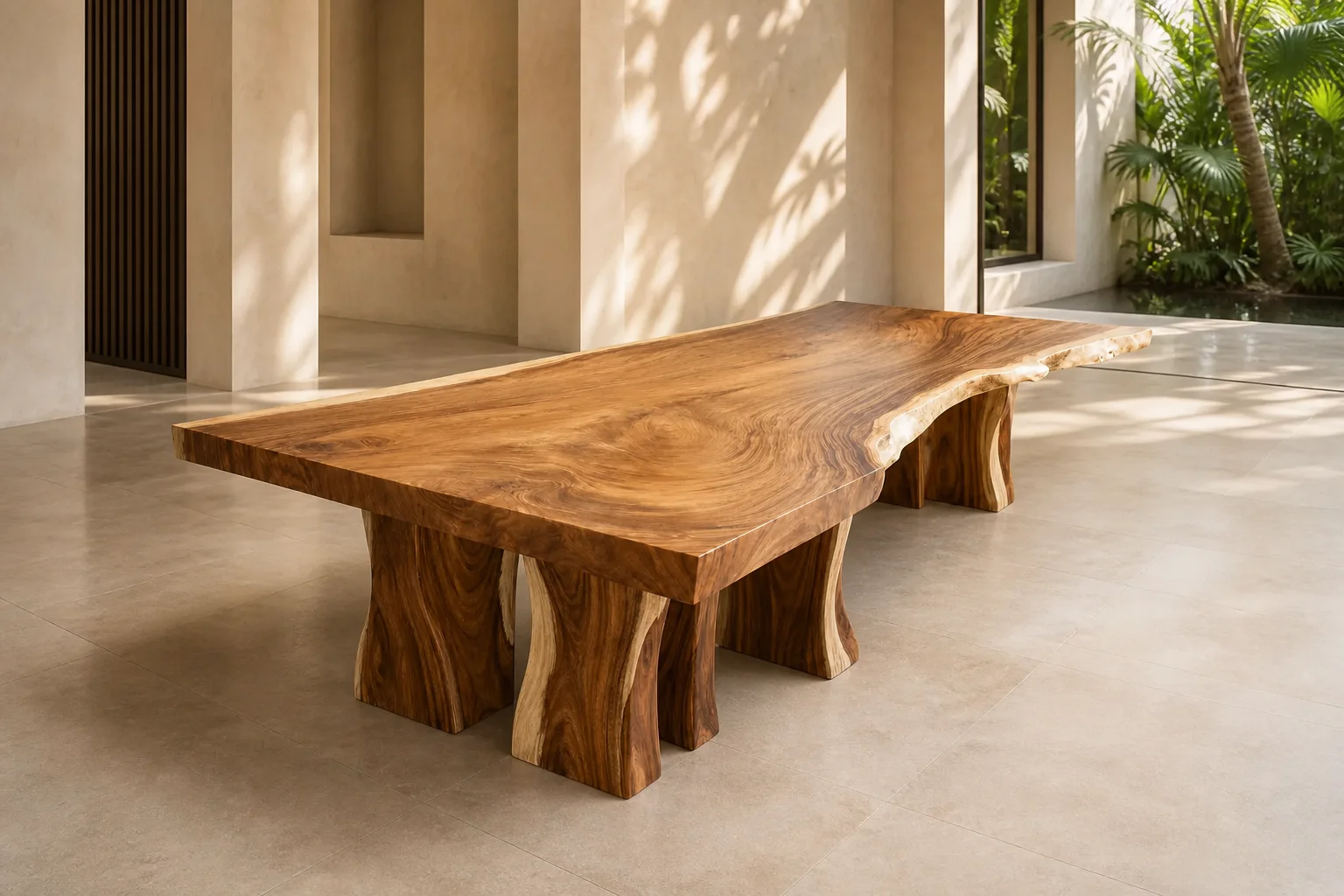
A teak desk is a durable wood desk made from teak, commonly **Tectona grandis**, chosen for its warm color, pronounced grain, and naturally oily wood structure. Quality varies
Before ordering, request overall dimensions, timber species, construction details, finish information, and available sourcing documentation in writing.
Choose a teak desk by matching its dimensions, construction, and finish to the work it must support. Solid teak, properly dried before manufacture, suits long-term use; drawers, cable routing, and leg clearance affect daily comfort. Ask the seller about timber origin, moisture control, and the finish’s intended environment.
Start by measuring the available wall, chair travel, monitor placement, and power access. A desk height of roughly 72–76 cm is a common seated-work reference, although chair adjustment and monitor position determine comfort. Inspect whether the top is solid Tectona grandis or veneer, how aprons and drawers attach, and whether timber was kiln dried. Documentation from the Forest Stewardship Council can help buyers discuss chain-of-custody claims with suppliers. Specify whether you prefer a natural, stained, or protective finish before comparing quotes.
Care for an indoor teak desk by limiting harsh sunlight, wiping spills quickly, and cleaning according to its finish. Teak’s natural extractives support durability, but they do not prevent surface wear, staining, or movement caused by changing moisture conditions. Stable room conditions and gentle cleaning usually protect the desk better than frequent oiling.
Teak contains natural extractives, yet indoor furniture still responds to light, dust, moisture, and finish wear. Keep a teak desk out of prolonged direct sun; use pads under hot drinks and wipe spills with a soft, barely damp cloth. Avoid silicone-heavy sprays and abrasive cleaners unless the finish supplier specifically approves them. The USDA Wood Handbook explains that wood changes dimension as moisture conditions change, so stable indoor conditions matter more than frequent oiling. Test any new cleaner on an inconspicuous area first.
Ask a teak desk supplier to identify the timber species, country of harvest, manufacturing location, and available transaction records. Responsible sourcing cannot be confirmed by color, price, or a general teak claim alone. Where certification is offered, request the certificate code and verify its scope before treating it as evidence.
Responsible purchasing is documented rather than inferred from color or geography. Ask the supplier to identify Tectona grandis, country of harvest, milling location, and invoice trail; certification should include a certificate code where applicable. Check claims through the FSC certificate search and confirm import paperwork with your broker. The CITES Species+ database is a reference for trade-control status, but it does not replace country-specific customs advice. Retain supplier records with your order for project or hotel procurement files.
Solid teak is generally preferable when you want visible continuous grain, repairable surfaces, and long service life. Veneer can be appropriate on a stable engineered core, but ask what lies beneath the veneer, its thickness, and how edges are finished before comparing a teak desk’s price or durability.
Teak can perform well indoors because its natural oils help it tolerate ordinary use, but that does not eliminate maintenance. Keep the desk away from persistent direct sun, standing water, and sharp humidity swings. Wipe spills promptly, use coasters, and follow the finish maker’s cleaning guidance rather than applying household polish.
Measure the room and chair first, then allow space for opening drawers and moving behind the seat. A desk height around 72–76 cm is common for seated work, while depth should accommodate your monitor, keyboard, and writing area. For ergonomic fit, prioritize chair and screen adjustment over a single standard desk dimension.
Ask for the botanical species, country of harvest, manufacturing location, invoice trail, and any relevant certificate code. Use the Forest Stewardship Council public search to check certification details when supplied. Certification and legal-import requirements vary by market, so consult your customs broker for transaction-specific documentation and import obligations.
M Furniture & Decor manufactures and supplies teak furniture. This guide is educational and encourages buyers to compare construction, documentation, finish requirements, and project-specific specifications before purchase.