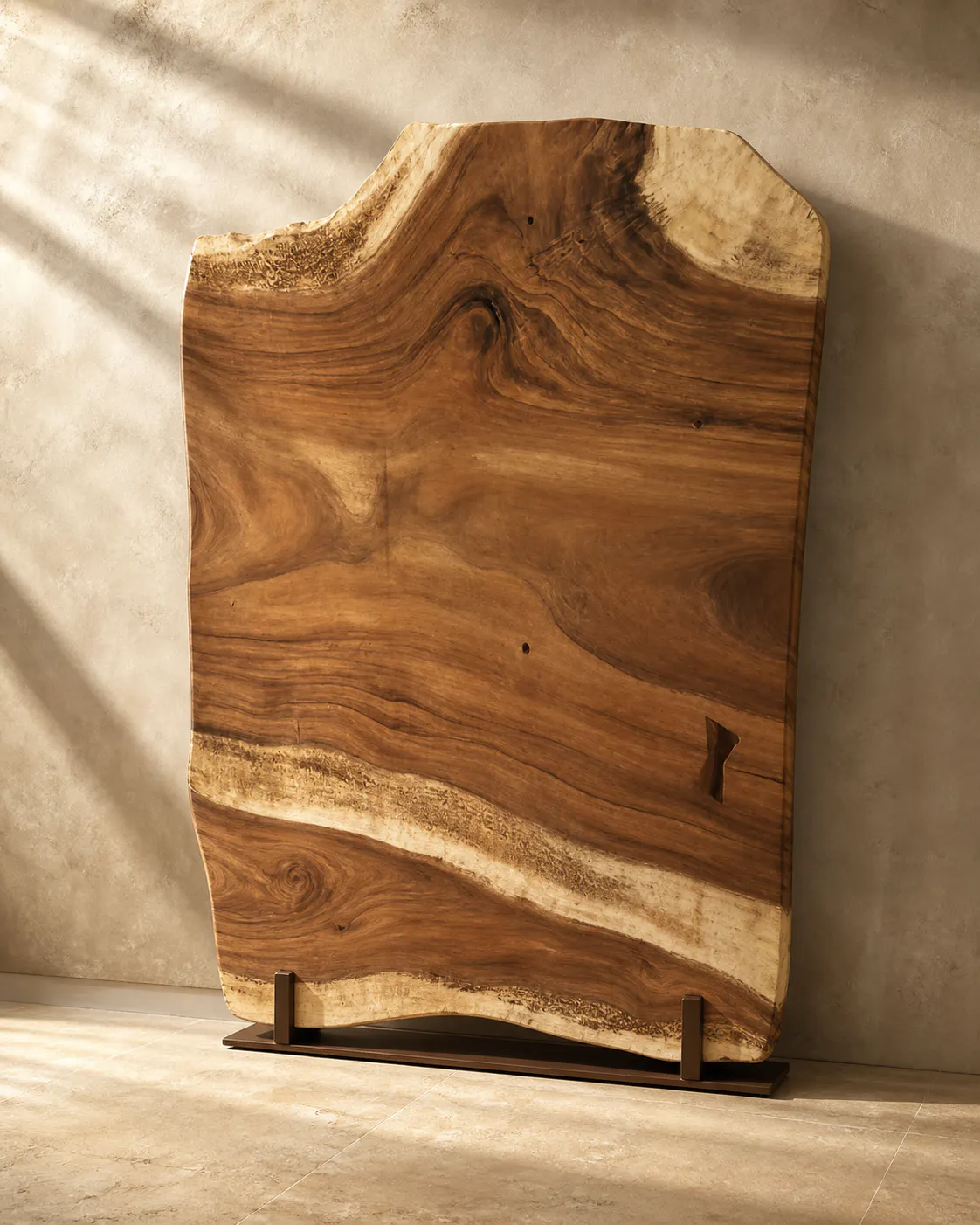
A teak bowl is a solid-wood vessel made from teak, often chosen for its deep golden-brown grain, substantial feel, and usefulness on a table, console, or shelf. Bowl
For food-related use, confirm the maker’s stated finish and care instructions before serving wet, acidic, or hot foods.
A teak bowl is a bowl made from **Tectona grandis**, commonly called teak, rather than a teak-colored product or wood veneer. Its grain ranges from golden brown to deeper brown, and its natural extractives support moisture resistance. Construction, finish, and intended use determine whether it suits serving, décor, or everyday storage.
Teak is a hardwood associated with durable outdoor furniture and interior furnishings, but a bowl uses the same material differently: the maker turns or carves timber into a relatively thin functional form. Solid teak shows continuous grain around the surface and may display color variation, mineral streaks, and small natural features. The USDA Forest Products Laboratory documents wood properties used by designers and manufacturers. A teak bowl should not be confused with an engineered bowl finished in a teak-like stain.
Quality in a teak bowl starts with solid, well-dried timber rather than particleboard or a thin decorative layer. Check for continuous grain, a stable rim, smooth interior, and an honest description of finish, dimensions, and origin. Responsibly sourced wood supported by chain-of-custody documentation adds purchasing confidence for hospitality, residential, and retail projects.
Inspect the bowl in natural light when possible. Look for balanced wall thickness, a level base, no open cracks, and sanding that feels smooth without erasing the grain. Small tonal differences are normal in teak and help identify real wood. For projects with sourcing requirements, ask whether the supplier can provide relevant documentation from the Forest Stewardship Council system or another recognized custody program. Select a shallow form for bread or display and a deeper form for fruit, keys, or textiles.
Care for a teak bowl by wiping it after use, hand washing briefly with mild soap when necessary, and drying it immediately. Do not soak it or put it in a dishwasher, because repeated heat and prolonged water exposure can stress wood and finish. Reapply a maker-approved food-safe oil only when the surface looks dry.
Use a soft cloth for everyday dusting and avoid abrasive pads, bleach, and strong degreasers. A bowl used only for décor generally needs little more than dry cleaning; a serving bowl needs prompt cleanup after contact with food. Follow the finish manufacturer’s instructions because oils, waxes, and film finishes behave differently. The U.S. Food and Drug Administration provides broader food-safety information, while the bowl maker should confirm whether a particular coating is intended for food contact.
A teak bowl can organize everyday objects, hold fruit or dry snacks when its finish is appropriate, or provide a natural focal point in dining and living spaces. Match the bowl’s depth and diameter to its job. Decorative bowls need visual proportion, while serving bowls need a smooth, cleanable interior and a stable base.
On a dining table, a broad teak bowl can hold whole fruit, bread, or decorative botanicals. In an entryway, a smaller form keeps keys and cards contained. Hotels and restaurants may use teak bowls for dry presentation where their warm surface complements linen, ceramic, and stone. Avoid treating every teak bowl as a wet-food vessel: salad dressings, citrus, and standing liquid create more demanding conditions. Specify the intended use to the maker before ordering, especially for commercial service or repeated cleaning.
Teak can be appropriate for a decorative or dry-food bowl when the piece is sound, clean, and finished with a fully cured product intended for food contact. Ask the maker which finish was used. Avoid serving very wet, acidic, or hot foods unless the manufacturer specifically confirms that use.
Hand wash a teak bowl briefly with mild soap and lukewarm water, then dry it immediately with a soft towel. Do not soak the bowl, leave water standing inside it, or use a dishwasher. For routine display use, wipe dust with a dry cloth and avoid harsh cleaners or abrasive scrubbers.
No, a teak bowl should not go in a dishwasher. Dishwasher heat, long water exposure, and strong detergent can dry the wood, affect the finish, or encourage movement at the rim and base. Hand washing quickly and drying promptly is the more suitable care method for solid teak.
Oil a teak bowl only when its surface appears dry, dull, or uneven after cleaning, not on a fixed weekly schedule. Use the oil or conditioner recommended by the maker, particularly for food-use bowls. Apply a light coat, let it absorb as directed, then remove excess before use.
This guide is educational and reflects general solid-teak care practices. Confirm finish composition, food-contact suitability, and project-specific sourcing documents with the product maker before purchase or commercial use.