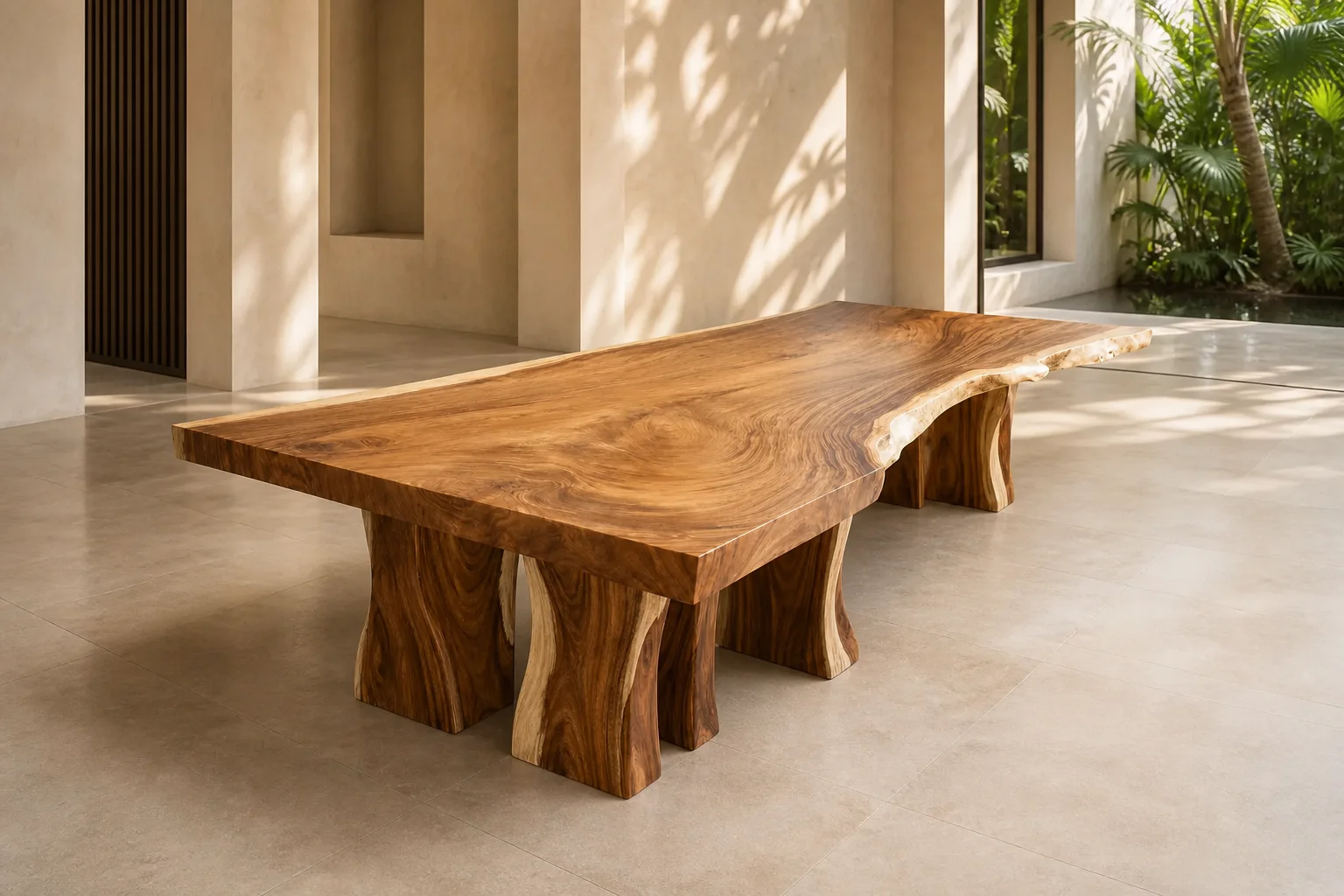
Mango wood looks best in tabletop styles that let its active grain, tonal variation and handmade character stay visible. In practice, that means softly shaped dining tops, plank
The most compatible mango wood tabletop styles balance visible grain, practical durability and edge details that feel intentional rather than overly formal.
The tabletop shapes that suit mango wood best are rounded rectangles, ovals, simple rectangles with softened corners and organic forms. These shapes complement mango wood's visible grain and color movement, making the material feel intentional and warm rather than forcing it into a highly uniform, formal appearance it does not always naturally deliver.
Rounded rectangles and ovals are especially effective because they soften the visual busyness that mango wood can show across wide boards. A simple rectangular dining top also works well when corners are slightly eased and the plank layout remains balanced. Designers at hospitality brands and residential studios often prefer these formats because they fit contemporary, rustic-modern and Scandinavian-inspired rooms without hiding the timber's natural variation.
Yes, live edge can suit mango wood well when the slab has stable structure, attractive grain flow and a restrained silhouette. Mango wood's natural variation supports an organic edge, but overly dramatic contours can look busy. The strongest results usually come from subtle live edge treatments paired with simple bases and matte finishes.
A restrained live edge works because mango wood already carries visual texture through color shifts, mineral marks and grain changes. If the perimeter becomes too irregular, the top can feel crowded rather than elegant. Many makers therefore trim and refine the edge rather than leaving every contour untouched. This approach keeps the handcrafted effect while improving wipeability, seating comfort and fit for restaurants, cafés and residential dining areas.
{'type': 'quote', 'text': 'Wood species with pronounced natural character often benefit from design restraint elsewhere, especially in edge treatment and base selection.', 'attribution': 'General furniture design principle informed by solid-wood specification practice'}
The best edge profiles for mango wood are eased, roundover, pencil and lightly chamfered edges because they frame the grain without making the top feel heavy. These profiles also reduce chipping visibility in daily use. Thick square edges can work, but they need careful proportion and cleaner board matching to avoid a bulky look.
An eased or pencil edge is often the safest choice for modern interiors because it preserves a clean outline while still feeling tactile. A small roundover suits family dining and hospitality settings where comfort matters. Light chamfers can make thicker tops appear slimmer. By contrast, ornate classical moldings rarely suit mango wood, since they compete with the timber's own pattern and push the design toward a more formal language.
{'type': 'table', 'caption': 'Common edge profiles for mango wood', 'headers': ['Edge profile', 'Why it suits mango wood', 'Best use'], 'rows': [['Eased edge', 'Keeps the grain as the visual focus', 'Modern dining and work tables'], ['Roundover', 'Adds comfort and softness', 'Family dining and cafés'], ['Pencil edge', 'Looks crisp without feeling severe', 'Contemporary interiors'], ['Light chamfer', 'Visually slims thicker tops', 'Hospitality and larger tables']]}
Yes, plank-style tabletops generally suit mango wood better than seamless looks because they align with the species' natural variation and multi-board construction. Visible board rhythm can make color shifts feel authentic. Seamless, ultra-uniform appearances are possible, but they demand stricter board selection, finishing control and often a more limited visual palette.
Most mango wood tabletops are made from multiple boards rather than one uninterrupted slab, so a plank expression often feels honest and visually stable. Subtle seams and board transitions can support farmhouse, Japandi and contemporary natural styles. If the goal is a nearly seamless top, the maker must spend more time matching grain and tone, which can raise material rejection rates and reduce the relaxed character many buyers actually want from mango wood.
In our Bangkok workshops, M Furniture & Decor mills plank-style mango tops with staggered joints and butterfly keys, following USDA Forest Products Lab moisture guidance for tropical plantation hardwoods. Export buyers such as hospitality groups specify this build when matching mango pieces across a project.
Mango wood is less suitable for tabletop styles that depend on perfect uniformity, sharp formal detailing or high-gloss luxury presentation. Very ornate profiles, mirror-polished finishes and visually flawless monolithic slabs can clash with the species' lively grain. These looks are not impossible, but they require extra selection and may mute what makes mango wood appealing.
For example, a highly formal neoclassical dining top with deep molding may look more convincing in species with calmer grain. Likewise, a severe minimalist slab intended to appear perfectly even can expose natural tonal shifts that the design was trying to suppress. In many projects, mango wood performs better when the specification embraces matte or low-sheen finishes, simple geometry and a little visual honesty instead of total uniformity.
{'type': 'image', 'src': 'https://mfurniturethailand.com/images/resources/mango-wood-tabletop-edge-comparison.jpg', 'alt': 'Mango wood tabletop styles comparison showing rounded, plank and live edge options in dining context', 'caption': 'Rounded, plank and restrained live edge formats usually harmonize better with mango wood than highly ornate or mirror-gloss styles.'}
Buyers should match mango wood tabletop style to the room's traffic, desired mood and maintenance expectations. Rounded or oval tops suit tighter circulation, plank rectangles fit larger dining rooms, and subtle live edge works in feature settings. For commercial spaces, simpler shapes and forgiving edges usually deliver the best long-term appearance and serviceability.
In apartments and compact dining zones, oval and rounded-rectangle tops help movement around the table while keeping mango wood inviting. In larger homes, hotels and restaurants, rectangular plank tops often provide the best balance of seating efficiency and material expression. Where durability matters, low-sheen finishes and eased edges are practical choices because they show fewer marks over time. Buyers should also review board layout, stain tone and base style together, not in isolation.
Mango wood can suit both rustic and modern tabletops, but it usually performs best in warm modern, rustic-modern or natural contemporary styles. Its grain variation adds personality, so cleaner silhouettes with softened details tend to look more convincing than extremely formal or perfectly uniform modernist presentations.
Yes, mango wood can be used for a minimalist dining table if the design allows some natural variation to remain visible. A simple rectangular or oval top, matte finish and eased edge usually work better than a glossy, perfectly uniform slab that tries to hide the timber's inherent character.
An eased or small roundover edge is usually easiest to maintain on mango wood. These profiles are comfortable to use, collect less visible damage than sharper corners and support quick cleaning. They also suit residential dining, cafés and hotel settings without making the top look heavy or overly styled.
Mango wood works well for large dining tabletops when the board layout, joinery and finish are carefully planned. Plank-style construction often looks more natural at larger sizes because it accepts tonal variation gracefully. Simpler edges and balanced bases help the table feel stable rather than visually crowded.
This resource is for general design guidance. Because solid wood varies by cut, moisture content, finish and fabrication method, buyers should review final samples and construction details before approving production.