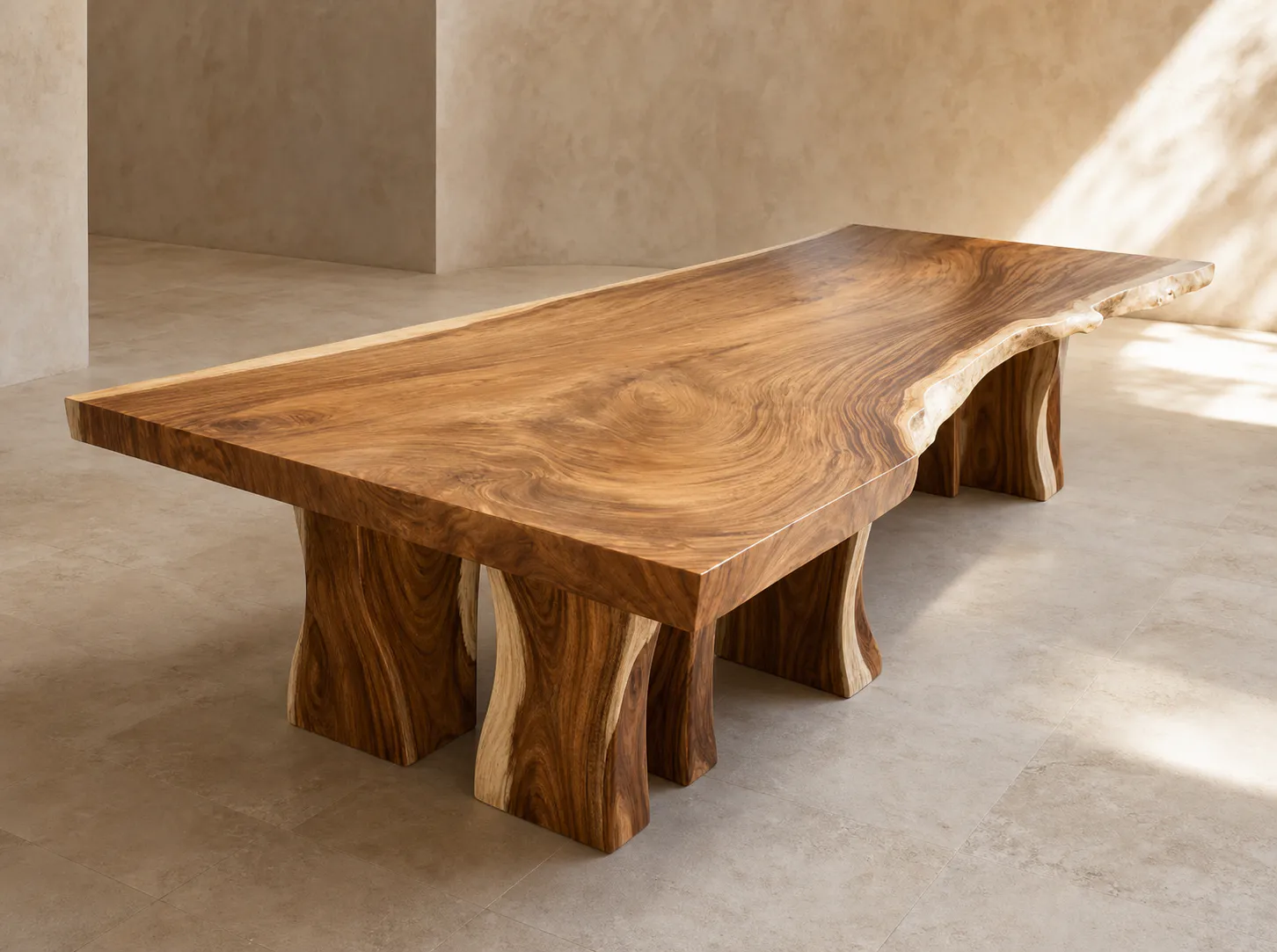
Solid teak furniture can justify a higher price when the piece is genuinely solid wood, properly dried, strongly joined, and suited to years of use. Teak’s natural oils
Assess the individual piece rather than buying a label. Confirm the species, distinguish solid teak from veneer, examine joints and board thickness, and request sourcing information. A dining table, outdoor bench, or cabinet made for long-term ownership has a different value equation from a temporary furnishing or a trend-driven purchase.
Use a three-part check before buying: material truth, construction quality, and documented origin.
Solid teak furniture costs more because mature teak is scarce, slow-growing, dense, naturally oily, and demanding to mill and dry correctly. Price should reflect timber quality, board thickness, joinery, finishing, labor, and documented origin—not the word “teak” alone. Compare construction details before treating a high ticket as proof of value.
Teak (Tectona grandis) contains extractives that support decay resistance, yet performance still depends on species identification, moisture control, grain, and design. The USDA Wood Handbook notes that wood properties change with moisture content; a thick, properly dried solid-wood component is not equivalent to a thin teak face over a composite core. Ask for board dimensions, whether every visible surface is solid teak, and how mortise-and-tenon, dowel, or mechanical joints are used. These details explain cost more reliably than a showroom label.
Solid teak is most worthwhile for long-use tables, seating, storage, and outdoor pieces that can be repaired, refinished, or passed on. It is less compelling when a buyer wants a short-lived trend item, needs very uniform color, or cannot verify origin, wood content, drying, and construction quality.
Value is a lifecycle calculation, not a promise that teak never needs care. A repairable dining table or outdoor bench may avoid replacement after scratches, loose joints, or weathering, while inexpensive furniture can cost more if replaced repeatedly. Outdoor use still needs drainage, breathable covers, and periodic cleaning. The Forest Stewardship Council describes chain-of-custody certification as a way to track certified material through supply chains. Certification does not grade craftsmanship, but it gives buyers a concrete provenance question to ask.
Verify a teak purchase by requesting a written specification that names the species, identifies solid wood versus veneer, states finish and moisture practices, and records origin. For imported teak, credible chain-of-custody or legality documentation matters. Inspect grain, end grain, joints, movement allowances, and warranty terms before comparing final prices.
Request photographs of end grain, undersides, and joint areas rather than relying on a single finished surface. Confirm whether a finish is oil, lacquer, or another system, because future repair methods differ. For teak associated with international trade, check the CITES Species Database and ask the seller for applicable import and legality records. The seller should also state where movement gaps are allowed and what the warranty excludes. A precise specification makes competing quotations comparable and helps prevent paying solid-wood prices for veneered construction.
Teak is valued for natural extractives and stability, but durability is not automatic. Species, heartwood percentage, drying, joinery, finish, exposure, and maintenance all affect service life. A well-built teak piece can be repaired over time; a poorly constructed teak item can still split, loosen, stain, or fail early.
Ask for a written material specification and inspect edges, end grain, undersides, and drawer interiors. Solid teak normally shows continuous grain through an edge; veneer is a thin decorative layer over another substrate. Some pieces combine both responsibly, so the important question is where solid wood is used and why.
Request the seller’s invoice, species name, country of harvest or manufacture, and any legality, import, or chain-of-custody records that apply. Documentation requirements vary by destination and supply route. FSC certification can support traceability claims, while CITES information may be relevant to particular teak trade circumstances. Keep records with the purchase.
Solid teak may not be worth the premium for temporary furnishing, low-use rooms, or buyers who prefer an exact, uniform factory finish. It can also be a poor choice if the seller cannot identify the material, disclose construction, or explain origin. In those cases, a clearly specified alternative can offer better value.
This guide is published by M Furniture & Decor, a manufacturer of Thai teak furniture. It is intended as general buying information; buyers should confirm material specifications, import requirements, and provenance documents for their own destination.