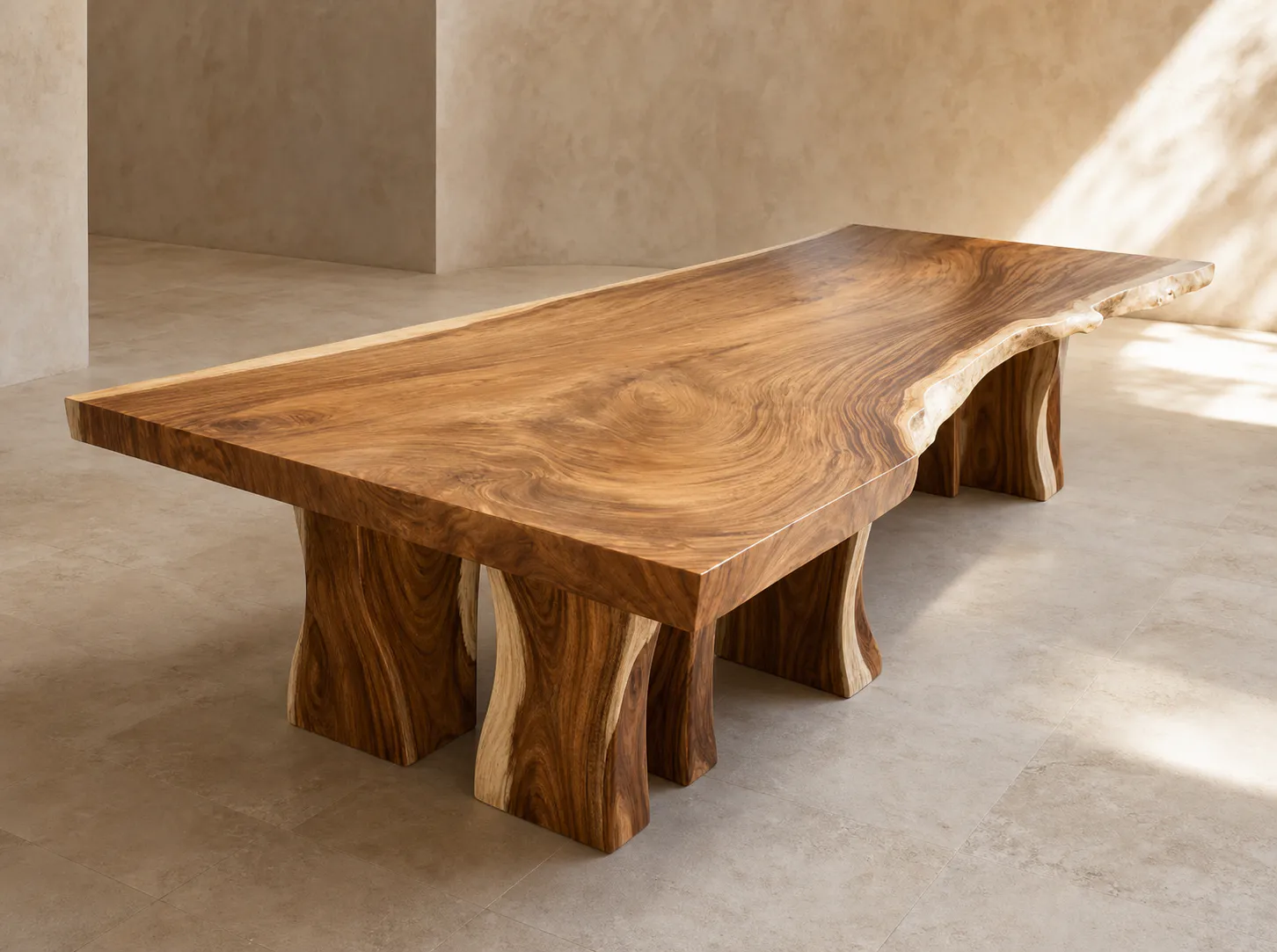
Solid teak furniture is a practical choice for many humid coastal homes, but it is not maintenance-free. Teak contains natural extractives that support durability, while all wood still
Coastal suitability depends as much on construction, finish and placement as on the teak species itself.
Solid teak is well suited to humid coastal interiors because teak has natural extractives and a reputation for durability in demanding environments. However, it remains wood: changing moisture content can affect dimensions, and salt, pooled water, sunlight and poorly protected fittings can shorten the service life of furniture in coastal rooms.
The USDA Forest Products Laboratory explains that wood changes dimension as its moisture content changes, particularly across the grain. Teak does not eliminate that normal wood behavior, but quality solid-wood construction accommodates modest seasonal movement through sound joinery and properly prepared timber. Prefer furniture with stable panels, sealed end grain where appropriate, and hardware chosen for humid conditions. Avoid treating “solid teak” as a guarantee against every coastal exposure.
The main threats to teak furniture in coastal homes are not humidity alone. Standing water, airborne salt residue, intense ultraviolet light, mildew-friendly dust, and corrosion of screws or hinges can damage finishes and components. Poor airflow can keep surfaces damp long enough for staining, mould growth or finish breakdown to develop.
Salt-laden air can settle on furniture surfaces and attract moisture, especially near windows, balconies and entry doors. Wipe surfaces with a soft cloth dampened in fresh water, then dry them, rather than allowing residue to build up. Coastal sunlight can fade or grey teak and degrade some finishes. The USDA Wood Handbook also notes that moisture control matters for dimensional stability, so repair leaks and condensation promptly.
Place teak furniture in ventilated interior locations, away from direct salt spray, persistent condensation and severe sun. A compatible protective finish can slow staining and simplify cleaning, but it requires renewal. For indoor rooms, steady conditions around 40% to 60% relative humidity are generally more important than making the air completely dry.
Keep cabinet backs and bed frames slightly clear of damp walls so air can circulate. In air-conditioned homes, abrupt cycling between very dry air and open, humid conditions can be harder on wood than a reasonably stable setting. Use curtains or UV-filtering glazing for intense afternoon sun. Ask the manufacturer whether the supplied finish is oil, lacquer or another system, then use only compatible care products; mixed products can create adhesion problems.
A simple routine protects teak in coastal homes: remove salt and dust, dry accidental moisture quickly, inspect joints and hardware, and renew the specified finish when water no longer beads or the surface looks dry. Maintenance frequency varies with exposure, ventilation, sunlight and the finish chosen for the furniture.
Dust weekly with a soft dry cloth and clean deposited salt or grime as needed with a lightly dampened cloth, followed immediately by drying. Inspect drawers, doors, screws and hinges every 3 months for swelling, sticking or corrosion. Refinish only after confirming the original finish system and surface preparation requirements. The American Wood Council emphasizes wood’s hygroscopic nature, which is why consistent room conditions and fast spill response remain valuable even for teak.
Solid teak can move slightly as humidity changes because all wood absorbs and releases moisture. Well-dried teak, sound joinery and stable indoor conditions reduce that risk. Persistent warping is more likely when furniture experiences leaks, standing water, extreme air-conditioning cycles, direct weather exposure, or construction that does not accommodate seasonal movement.
Salt air can affect indoor teak furniture when deposits enter through open windows, balconies or doors. Salt residue attracts moisture and can dull finishes, encourage staining, and corrode nearby hardware. Wipe exposed surfaces with fresh water on a soft cloth, dry thoroughly, and keep pieces away from direct salt spray whenever possible.
Oil is not automatically necessary for teak in a humid coastal climate. The correct choice depends on the existing finish, desired appearance, sunlight exposure and manufacturer instructions. Applying oil over an incompatible coating may cause uneven results. Confirm the finish system first, test a hidden area, and follow the product’s preparation and reapplication guidance.
Teak can be used on a covered coastal balcony, but a roof alone does not prevent wind-driven rain, salt spray, condensation or ultraviolet exposure. Choose furniture intended for outdoor use, provide drainage and airflow, use corrosion-resistant hardware, clean salt regularly, and avoid leaving cushions or covers in place while damp.
This guide provides general furniture-care information and does not replace product-specific instructions. Finish type, timber preparation, construction details and local coastal exposure vary by item and location.