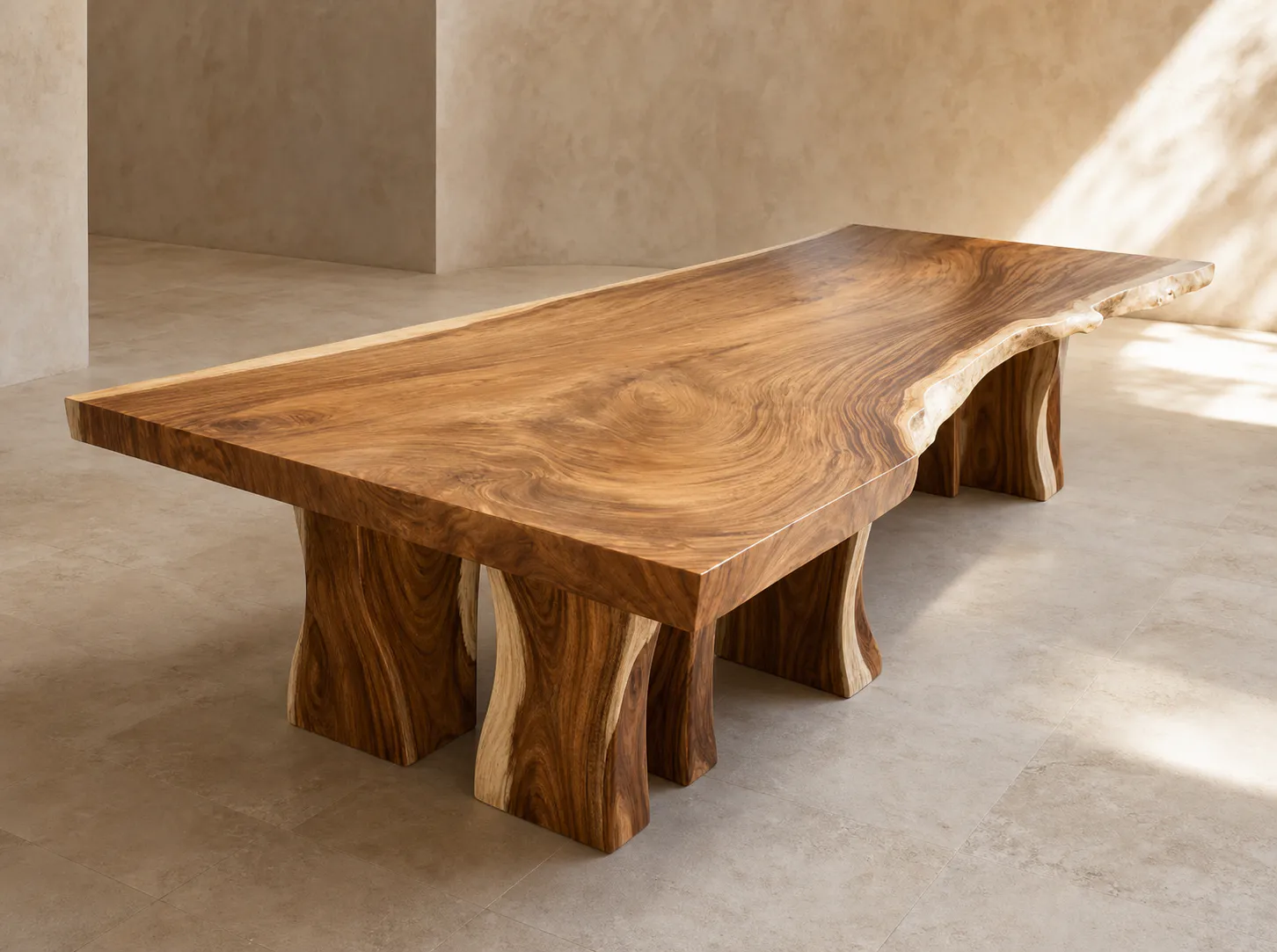
Sapwood can be used in solid teak furniture when the maker and buyer agree on its appearance, placement, treatment, and grade. “Solid teak” describes construction from teak timber;
Request board-selection photographs and a written statement of acceptable sapwood before approving a teak dining table, bed, cabinet, or outdoor collection.
Teak sapwood is the younger wood near the bark, while teak heartwood is the older inner wood. Both are teak, but heartwood is generally darker and contains more extractives. This contrast affects color consistency, moisture performance, and biological resistance, so makers commonly reserve more uniform boards for prominent or exposed furniture surfaces.
Color alone does not prove a board’s structural quality, but the pale-to-golden contrast between sapwood and heartwood can be conspicuous after finishing. The USDA Forest Products Laboratory Wood Handbook explains that heartwood and sapwood can differ in permeability and durability among wood species. In practice, a furniture workshop may place sound sapwood in drawer interiors, internal rails, or hidden supports, while selecting more consistent heartwood for tabletops, cabinet fronts, arms, and other highly visible areas.
Sapwood is appropriate when it is sound, properly dried, and placed according to its lighter appearance and lower natural durability. It can be reasonable in indoor furniture, protected structural parts, or intentionally varied designs. Use greater caution on exposed outdoor faces, especially horizontal surfaces that experience repeated rain, sunlight, cleaning, and standing moisture.
Sound joinery and an appropriate finish help limit moisture entry, but neither changes sapwood into heartwood. Limited, disclosed sapwood can therefore be a practical choice in a teak wardrobe, bed frame, sideboard, or interior hotel furniture. For outdoor benches, poolside loungers, and dining tables, specify heartwood for exposed seats, arms, tops, and end grain. Buyers importing teak should also request species, origin, and export documentation where applicable under CITES trade controls.
Buyers should state whether visible sapwood is allowed, identify which surfaces that rule covers, and approve photographs before production. They should also confirm moisture control, finish, joinery, intended climate, and the seller’s definition of solid teak. A written specification avoids disputes over grade, appearance, and outdoor performance after delivery.
Use measurable wording instead of relying only on a material label. State whether sapwood is prohibited on show faces, allowed only in concealed areas, or accepted as visible natural variation. Request images after board selection and before packing, then retain approved samples with the purchase order. Schema.org Product can communicate material details online, but it does not replace the contractual specification. M Furniture & Decor recommends documenting the finish, inspection criteria, and acceptable color range for each project.
No. Sapwood is genuine wood from the outer portion of a teak tree, so its presence does not make furniture veneer, engineered wood, or non-solid. A solid teak description can remain accurate when sapwood is present, provided the piece is constructed from teak timber and no heartwood-only promise was made.
Teak sapwood can be used outdoors, but it is usually a less conservative choice for exposed surfaces because it has fewer natural extractives than heartwood. For demanding exterior settings, specify heartwood on visible tops, seats, arms, and surfaces exposed to repeated rain, sunlight, washing, or standing moisture.
A tinted finish can reduce the visible contrast between pale sapwood and darker heartwood, but it cannot transform sapwood into heartwood or create identical natural durability. Finishes also weather and need maintenance. Treat color matching as an appearance decision, and confirm the finish through physical samples or approved production photographs.
Include a written requirement in the quotation and purchase order. State whether visible sapwood is prohibited, limited, or accepted as natural variation; identify the covered surfaces; and require board-selection photographs. Also ask the supplier to define teak grade, moisture target, finish system, and inspection process before manufacturing begins.
This educational resource is published by M Furniture & Decor, a teak furniture maker. Material suitability depends on design, climate, finish, maintenance, and the written specification for each project.