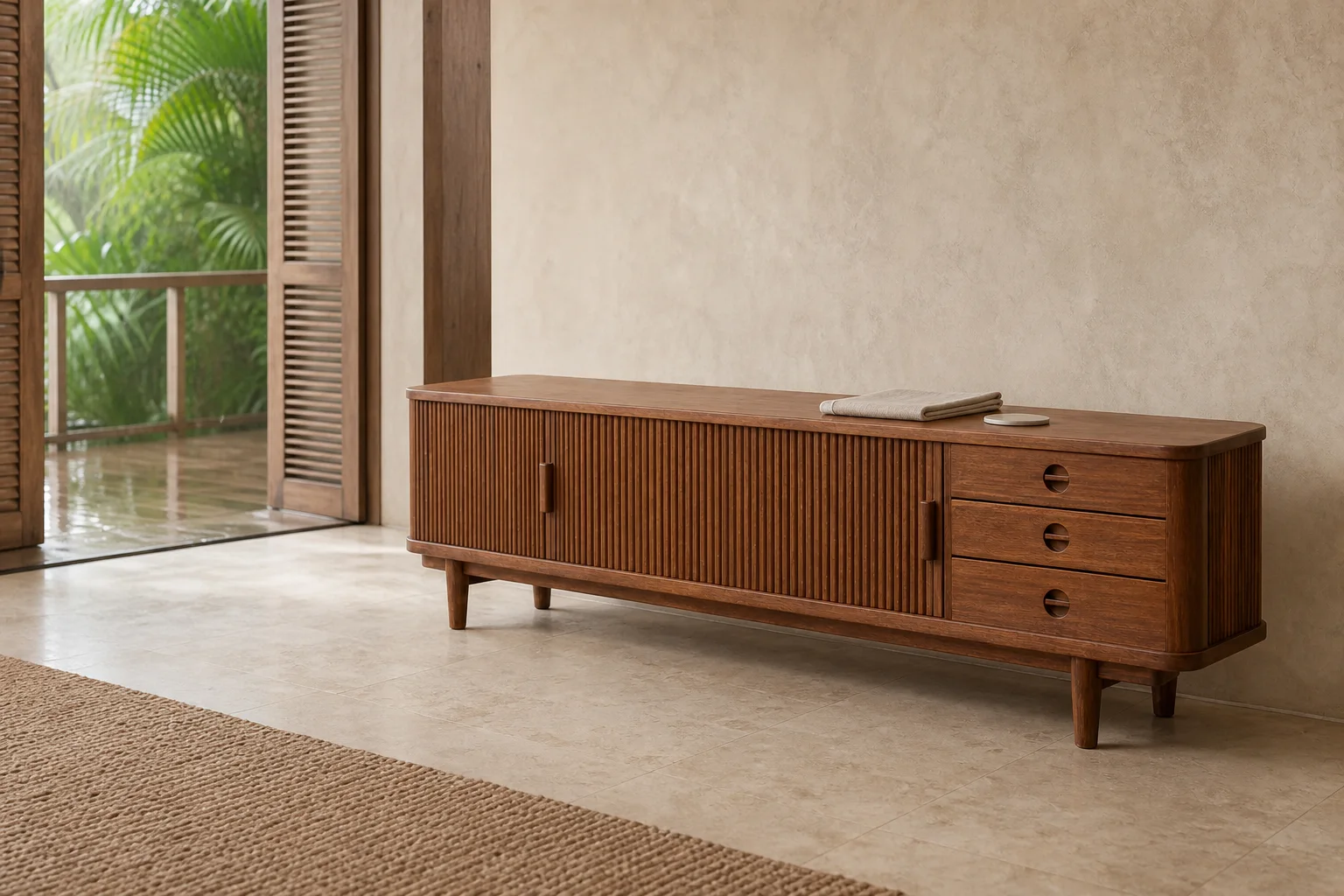
Teak outdoor furniture can usually be restored without stripping its character: clean the surface, dry the timber thoroughly, correct roughness with light sanding, and choose protection based on
Test cleaners and protectors on an inconspicuous area first. Follow the product label, especially where teak sits beside metal hardware, upholstery, stone, or pool surfaces.
Begin with a mild wash rather than a finish product: remove cushions, brush off debris, clean in the direction of teak grain, rinse lightly, and allow full drying. This reveals whether the silver-grey surface is only weathering or whether stains, mildew, rough fibers, and joint damage need separate treatment.
Use a soft brush, water, and a pH-neutral cleaner; avoid pressure washing, which can erode softer earlywood and leave a fuzzy surface. For black spotting, use a teak cleaner exactly as its label directs, rinse without flooding joints, and dry for 24–48 hours in ventilated shade. The USDA Wood Handbook explains that moisture cycling affects wood movement, so restoration should begin only after the furniture has dried through.
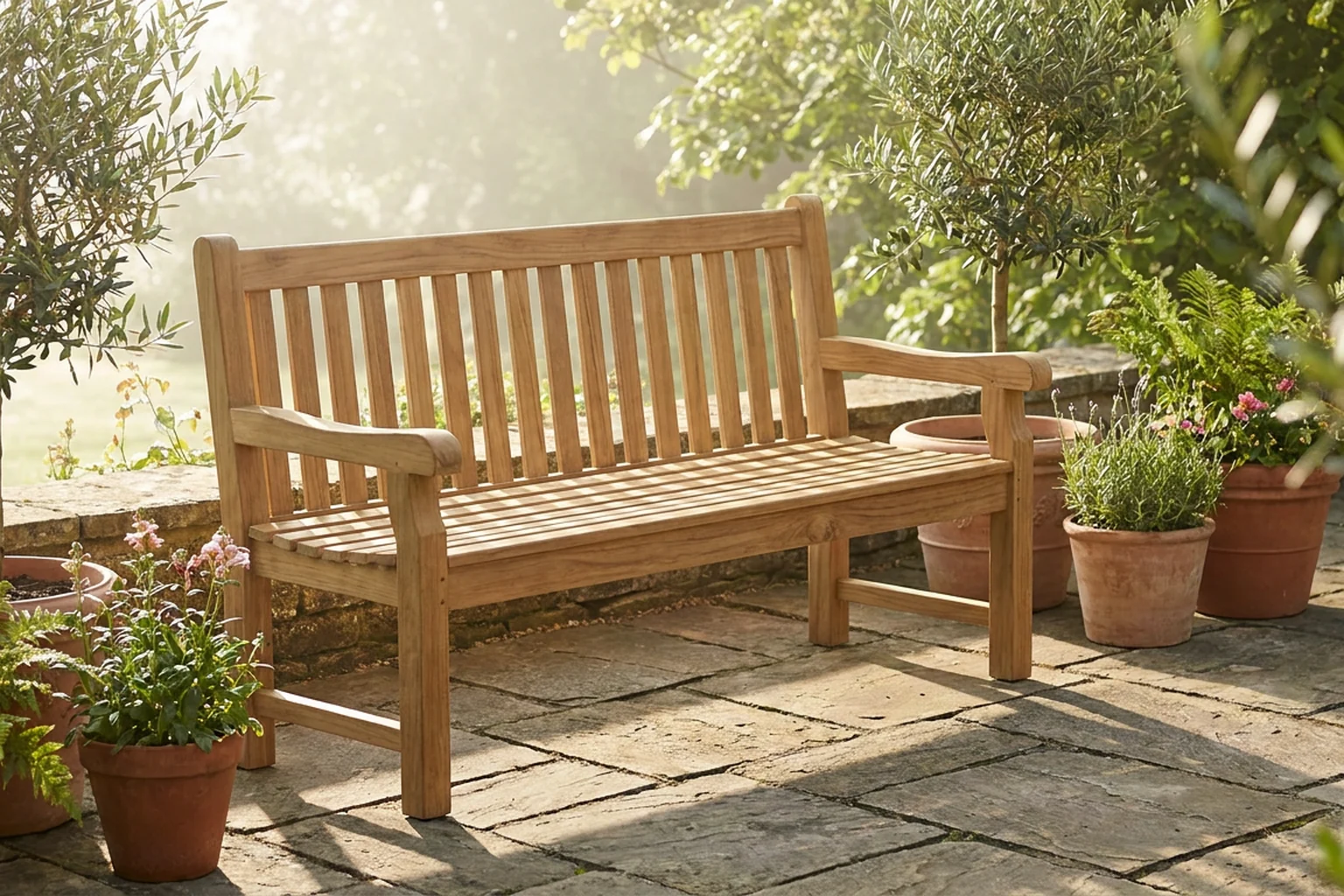
Sand teak only when cleaning leaves raised grain, stubborn surface discoloration, old failing finish, or splinters. Use light, even passes in the grain direction, beginning with a moderate grit and finishing finer. Sanding restores smoothness and colour, but excessive removal can soften edges, alter proportions, and expose fresh wood unevenly.
Start around 120 grit for rough, weathered areas and move to 150 or 180 grit for a uniform touch; stop as soon as the fibres feel smooth. Hand-sand curved arms, slats, and edges to avoid flat spots. Vacuum sanding dust, then wipe with a clean damp cloth and let the wood dry again. Do not sand merely to eliminate every dark mark: deep staining may be preferable to removing substantial material from solid teak components.
Choose a finish according to the desired appearance and maintenance commitment. Leave cleaned teak unfinished for a natural silver patina, use a teak protector to slow colour change, or apply a compatible teak oil sparingly for a warmer tone. Avoid opaque coatings that can crack, peel, or trap moisture on outdoor joinery.
Apply protectors or oils to clean, dry wood with a lint-free cloth, working along the grain and removing surplus before it dries. One thin coat is usually easier to maintain than a heavy application; follow the product maker's curing and recoating instructions. International Tropical Timber Organization resources describe teak as a durable tropical hardwood, but even durable timber benefits from water-shedding placement and sensible finish maintenance in sun and rain.
Check joints, fasteners, feet, and slats before returning furniture outdoors. Tighten hardware carefully, repair failed glue joints with an exterior-rated adhesive suitable for the construction, and ensure water drains away from horizontal surfaces. Regular cleaning, breathable covers, and seasonal inspection reduce the need for aggressive restoration and help teak age evenly.
Place furniture on level supports so feet do not sit in standing water, and keep leaves, planters, and wet cushions from holding moisture against the timber. Clean pollen and bird residue promptly, particularly during humid periods when surface growth can develop. The U.S. Environmental Protection Agency emphasizes moisture control for limiting mold; the same principle supports outdoor teak care. Inspect at least twice yearly for movement, corrosion, and finish wear.
Inspect teak at the start and end of each outdoor season and clean it when grime, pollen, or mildew appears. Reapply a compatible protector only when water no longer beads or colour protection has faded. Covered, well-drained furniture usually needs less intervention than pieces exposed to monsoon rain and strong sun.
Do not use a high-pressure washer, household bleach, wire brush, or an opaque film-forming varnish unless the manufacturer specifically specifies that system for exterior teak. Those methods can roughen wood, corrode nearby hardware, trap moisture, or create a peeling coating that requires substantially more sanding to remove later.
Silver-grey teak is generally a colour change caused by weather exposure, not proof that the wood has failed. Clean it first and decide whether you prefer its natural patina or a warmer appearance. A light sand and a compatible protector can restore colour, while good drainage helps preserve the result.
This resource provides general care information for teak outdoor furniture. Always follow the instructions supplied with cleaning, adhesive, and finishing products, and consult a qualified furniture repair professional for structural damage.