
Outdoor teak furniture can usually be restored by removing surface dirt, correcting minor roughness, and protecting sound wood without stripping away more material than necessary. Teak naturally weathers
The right process depends on your intended result. A homeowner who values the gray patina may only need cleaning and inspection, while someone seeking a more even brown appearance may add careful sanding and a compatible exterior protector. Work in shade, use gentle tools, and allow complete drying between every stage.
Restoration is not always refinishing: clean, dry, inspect, and decide whether the natural silver-gray teak patina should remain before reaching for sandpaper or oil.
Before restoring outdoor teak furniture, inspect for loose joints, cracked slats, corroded fasteners, mold, and trapped moisture. Move the piece to shade, brush away dry debris, and test cleaning on an inconspicuous area. Restoration should begin only after you decide whether to preserve the silver-gray patina or return the wood to a warmer color.
Check joint movement before washing because water can expose weakened glue lines or fasteners. Photograph problem areas, tighten accessible hardware cautiously, and set aside pieces with structural splits for professional repair. Remove cushions and clean beneath them, where leaves and standing water collect. The USDA Forest Products Laboratory Wood Handbook explains why moisture management matters for exterior wood. Keep furniture raised above wet ground and clear drainage paths before beginning cosmetic work.
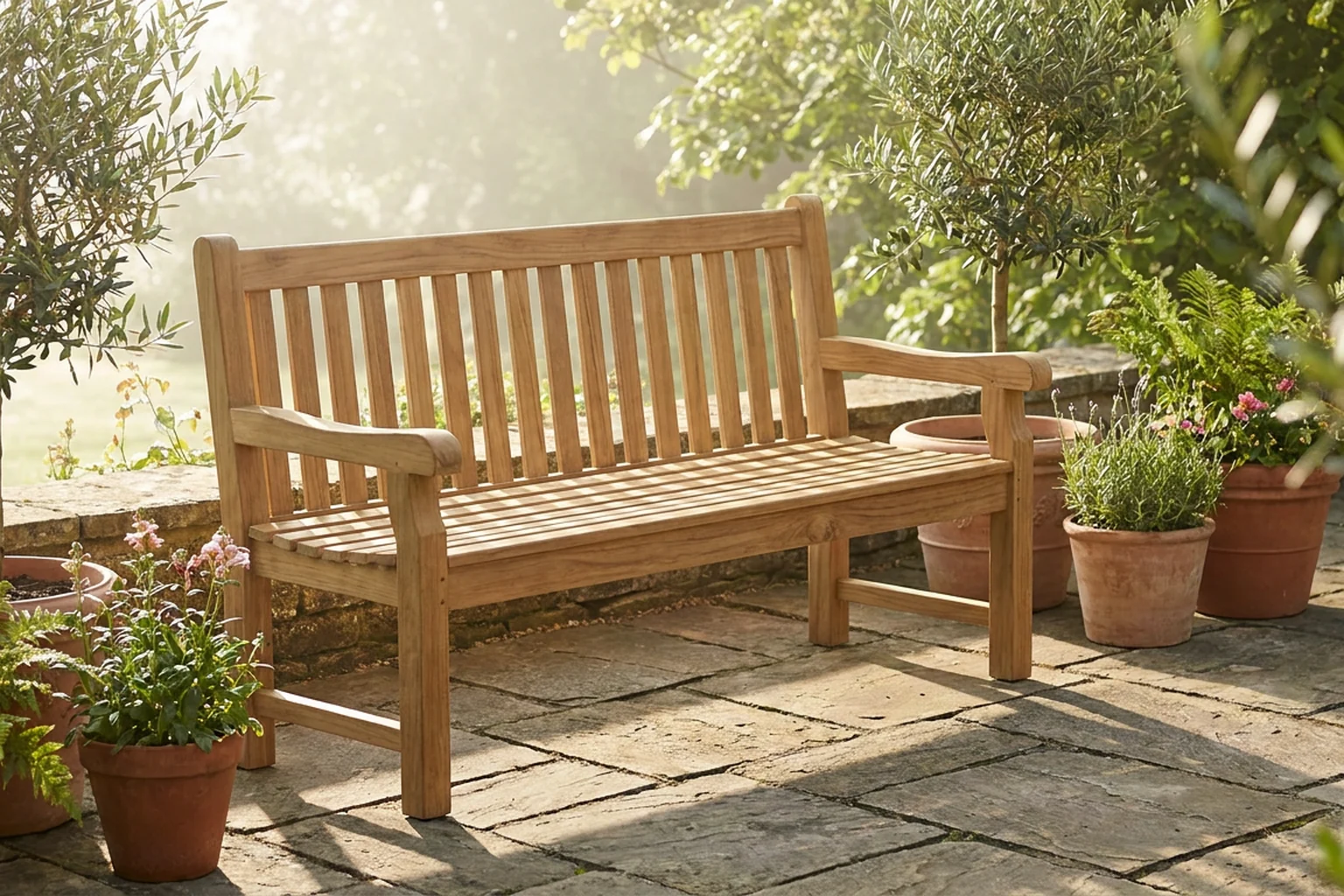
Clean outdoor teak with a soft brush, water, and a mild pH-neutral soap, working along the grain and rinsing thoroughly. Let the furniture dry for at least 24 hours in ventilated shade before sanding or finishing. This removes surface soil without unnecessarily stripping sound wood or driving moisture into joints.
Use a bucket, soft nylon brush, and controlled water rather than a high-pressure washer, which can raise grain and erode softer surface fibers. For stubborn marks, repeat gentle cleaning instead of escalating immediately to bleach or harsh solvents. If a commercial teak cleaner is used, follow its label precisely and test it first. The American Wood Protection Association provides useful context on wood durability and protective treatments. Drying for 24 to 48 hours helps prevent sanding damp fibers or sealing in moisture.
Sand only after the teak is fully dry and only when you want to remove raised grain, stains, or gray weathering. Use light, grain-direction passes with 120- to 150-grit paper, then remove dust. Leave teak unfinished for natural weathering, or apply a breathable exterior protector according to its label.
Begin with 120-grit paper only on visibly rough areas, then finish with 150-grit for a more even feel; aggressive sanding can soften crisp edges and remove sound wood. Vacuum or wipe away dust before applying any product. Unfinished teak can weather naturally, while an exterior teak protector may help retain a warmer appearance when reapplied as directed. Avoid coating moving joints heavily. Inspect furniture every 6 to 12 months, wash away debris, and address failed fasteners before they stain or damage surrounding timber.
No. Teak can remain unfinished outdoors and gradually develop a silver-gray patina. Oil is mainly a color-maintenance choice, not a repair for damaged wood. If you choose a product, use one explicitly intended for exterior teak, apply sparingly to clean dry wood, and follow the manufacturer’s drying and recoat instructions.
Yes, if the furniture is structurally sound and you accept its weathered color. Cleaning alone often removes dirt, pollen, and mildew residue. Sand only localized roughness or staining after drying. Skipping sanding preserves more wood, avoids rounding edges, and leaves the natural patina intact.
Clean outdoor teak when debris, pollen, food residue, or mildew becomes visible, and inspect it at least every 6 to 12 months. Furniture beneath trees or near pools may need more frequent washing. Regular light cleaning is safer than allowing grime and wet leaves to remain against the wood.
Avoid pressure washing teak furniture. Concentrated water can roughen the surface, force water into joints, and remove softer fibers unevenly. Use a soft brush, mild soap, and a controlled rinse instead. If heavy buildup persists, repeat the gentle process or consult a qualified furniture-restoration professional.
Care recommendations are general guidance for solid outdoor teak. Product labels, local climate, furniture construction, and existing finishes should guide final treatment decisions.