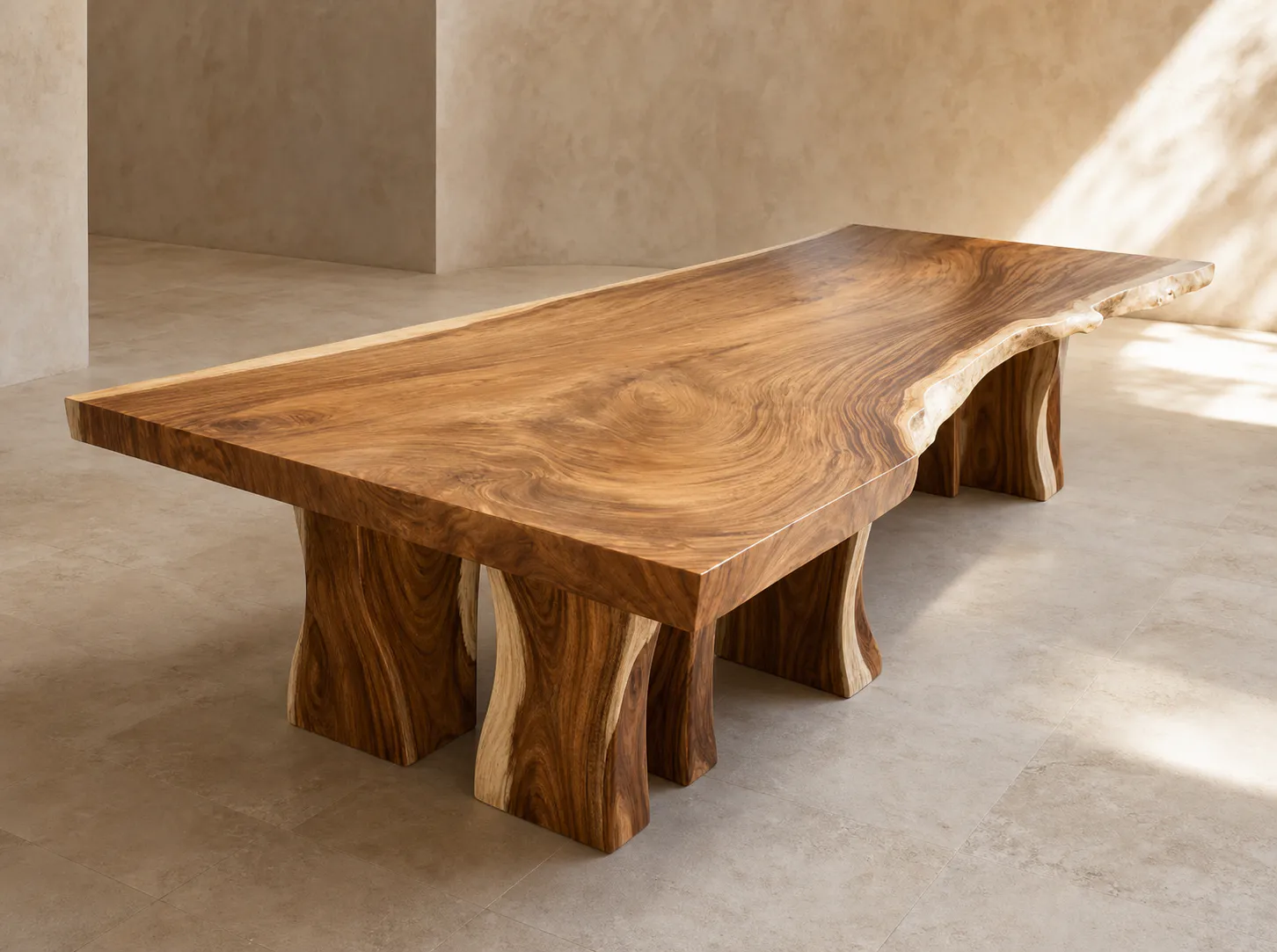
Reclaimed teak is distinguished from new teak primarily by its previous use and resulting condition. Both are generally teak from *Tectona grandis*, but reclaimed material is recovered and
Wood origin and legal documentation are separate questions: a reclaimed claim does not by itself establish species, condition, or lawful chain of custody.
Reclaimed teak has already served in a building, vessel, or furnishing, so it often carries weathered color variation, filled checks, nail holes, patches, and irregular board sizes. New teak is recently milled and usually more uniform in moisture preparation, dimensions, color selection, and joinery allowances, although grain still varies naturally.
Prior exposure gives reclaimed teak its recognizable character. Sun, rain, oxidation, old finishes, and repairs can create a darker patina or uneven surface that a maker may retain deliberately. Salvaged boards must be inspected for embedded metal, splits, rot, and usable thickness before machining. New teak permits more consistent component sizing and matching across a dining table, cabinet, or hotel installation, but it does not reproduce the history visible in genuinely reclaimed timber.
Neither label automatically indicates superior quality. A carefully dried, sound reclaimed board can be excellent furniture stock, while a poorly conditioned one can need extensive repair. Likewise, newly milled teak should be selected and acclimated for its intended environment. Species confirmation and condition assessment matter more than a reclaimed or new label alone; Royal Botanic Gardens, Kew identifies teak as *Tectona grandis*.
New teak can offer clearer current supply records, repeatable grades, and predictable quantities for coordinated furniture production. Reclaimed teak may have limited original records and variable yield, but it can reuse an existing material stream. Buyers should evaluate species, condition, dimensions, treatment history, and documentation rather than treating either label as a guarantee.
For a specification-driven project, new teak can simplify repeat orders because thicknesses, lengths, color sorting, and joinery stock can be planned earlier. Reclaimed teak is often better suited to pieces where variation is part of the design brief, such as statement tables, rustic cabinetry, or repaired architectural elements. Its recovery process can involve de-nailing, trimming, cleaning, kiln drying, and selective lamination, which affects yield, lead time, and final board layout.
Ask a supplier what evidence accompanies the wood, including origin, species declaration, prior use where known, and any third-party chain-of-custody records. FSC Chain of Custody describes how certified material is tracked through supply chains. International trade requirements can also apply to timber; CITES explains its role in regulating trade in listed wild species. Documentation should match the actual product claim.
Reclaimed teak can be suitable for outdoor furniture when each board is sound, properly dried, and designed for exterior exposure. Makers should remove metal, assess checks and prior damage, use weather-appropriate joinery, and choose a suitable finish strategy. Reclaimed origin alone does not establish outdoor performance or eliminate maintenance needs.
Reclaimed teak reuses existing timber and may reduce demand for newly harvested material, but sustainability depends on condition, transport, processing, waste, and credible sourcing evidence. New teak from responsibly managed, documented sources may also support a considered material decision. Compare the specific supply chain rather than relying on a broad sustainability label.
Buyers can ask for photographs before processing, details of the prior structure or product, species information, dimensions after recovery, and records describing purchase or import history. They should also inspect for expected signs such as old fixings or repairs. Independent chain-of-custody documentation can strengthen, but not replace, product-specific evidence.
This educational page was prepared by M Furniture & Decor. Material selection should be confirmed against the specifications, condition report, and sourcing documentation supplied for an individual product or project.